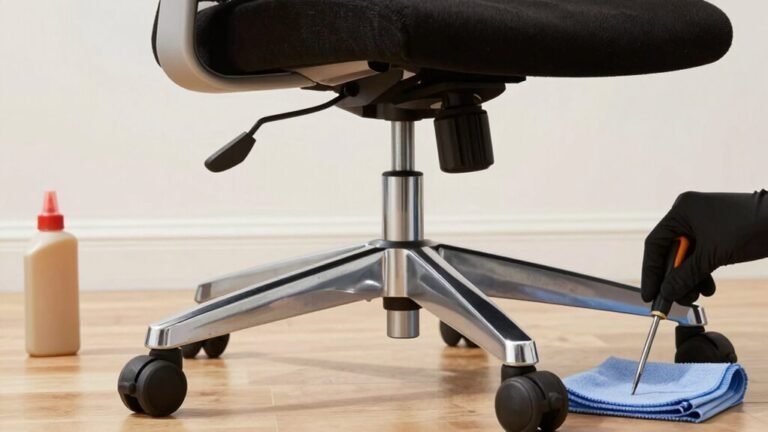
How to Choose the Right Executive Chair for Comfort
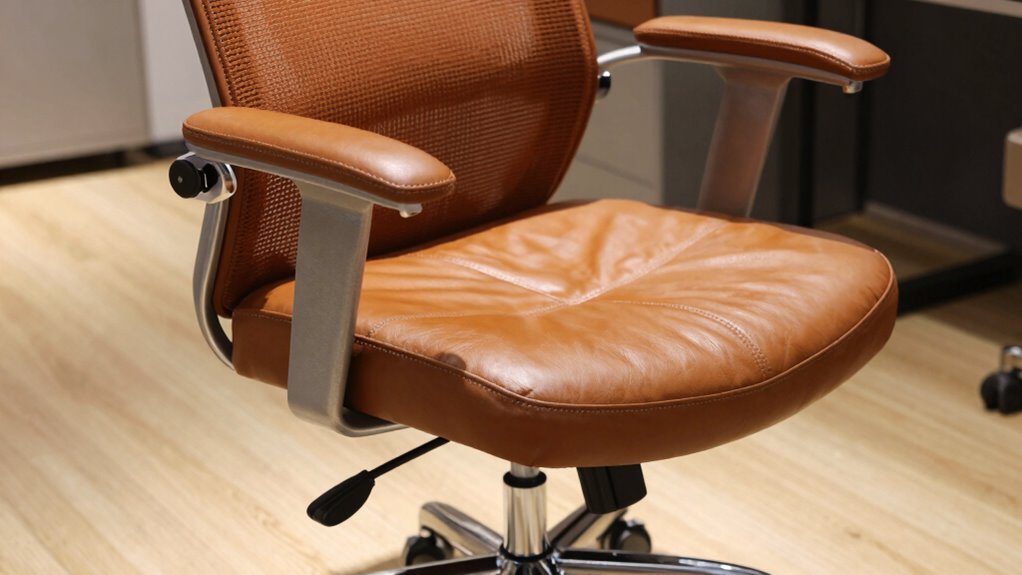
You want a chair that treats your back right and keeps you comfy through long workdays, so start by picking one with solid lumbar support and a high-back design. Adjust the seat height so your feet sit flat and your knees bend at 90°—no tippy-toeing! Choose breathable mesh or durable fabric, spin smoothly in all directions, and dial in recline tension like a pro. And hey, your butt deserves foam that fights flatness, not joins it. There’s a sweet spot for every body—and you’re about to find yours.
Understand Your Sitting Needs and Work Habits
Ever wonder why your back throws a fit after a long day at the desk?
Well, it’s probably because you’re sitting more than you realize—maybe even 8 hours or more!
If that’s you, your chair better have high-back support and solid cushioning, or you’ll feel it in your spine and energy levels.
But if you’re up and moving often, a mid-back design might be just right.
Think about how you work: are you glued to calls, hunched over emails, or spinning to grab files?
Track your patterns—your body will thank you.
You’re not just picking a chair; you’re matching it to *your* moves, posture, and quirks.
And hey, nobody wants numb legs or a stiff neck, so consider your comfort like you’d pick the perfect pair of jeans—fit is everything!
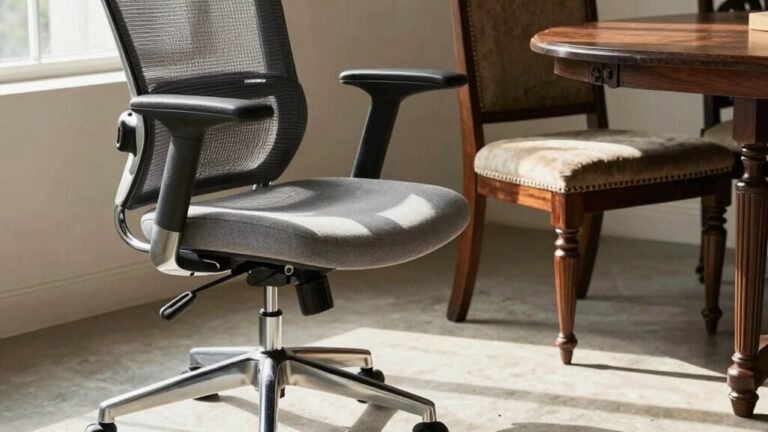
An executive chair typically offers high-back support, which is ideal for maintaining proper posture during extended sitting sessions.
Prioritize Adjustable Height for Proper Ergonomics
How’s your chair treating your legs and back right now? If your feet dangle or your knees scream after lunch, it’s time to prioritize adjustable seat height. Getting your seat just right means your feet plant firmly on the floor, knees at 90 degrees, and thighs level—hello, happy hips! Proper height boosts circulation, eases back strain, and keeps you alert. Plus, eye level should hit the top third of your screen so you’re not hunching like a goblin. Look for smooth, sturdy adjustments that lock in place. Need a visual? Here’s your cheat sheet:
| Body Part | Goal | Pro Tip |
|---|---|---|
| Feet | Flat on floor | Use a footrest if needed |
| Knees | ~90 degrees | Avoid tippy-toe sitting |
| Hips | Level with thighs | Prevents thigh numbness |
| Eyes | Top third of screen | No neck crane, just brain gain |
Adjust early, adjust often—your body will thank you. Choosing a chair with adjustable height ensures proper ergonomic alignment for users of all sizes.
Choose the Right Backrest Style for Spinal Support

Now that you’ve nailed the right seat height—feet flat, knees happy, back singing—let’s give your spine the VIP treatment it deserves.
With a backrest that’s got your back, literally.
- Pick single-piece for smooth, reliable support—it’s like a cozy spine hug with fewer moving parts to break
- Go multi-piece if you want zone-specific comfort—firm where you need it, soft where you don’t, and bonus points for adapting as you shift
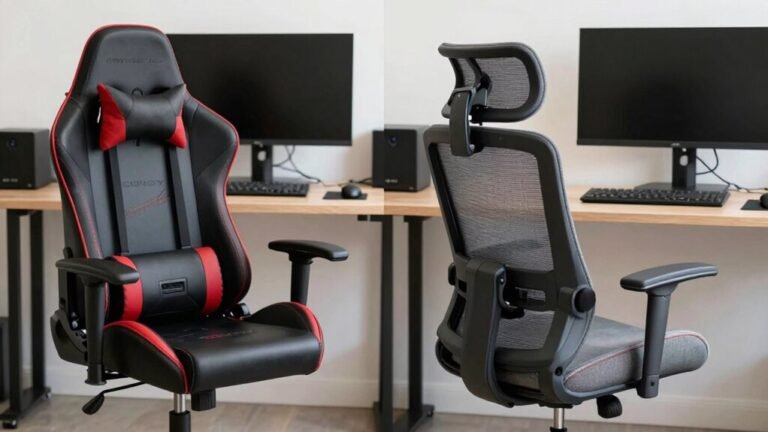
- Choose high-back for full-on lounging or long sessions—your neck and shoulders will thank you during those 3 p.m. slumps
- Opt for mid-back if you’re up and down a lot—it’s sleek, nimble, and won’t weigh you down (literally or visually)
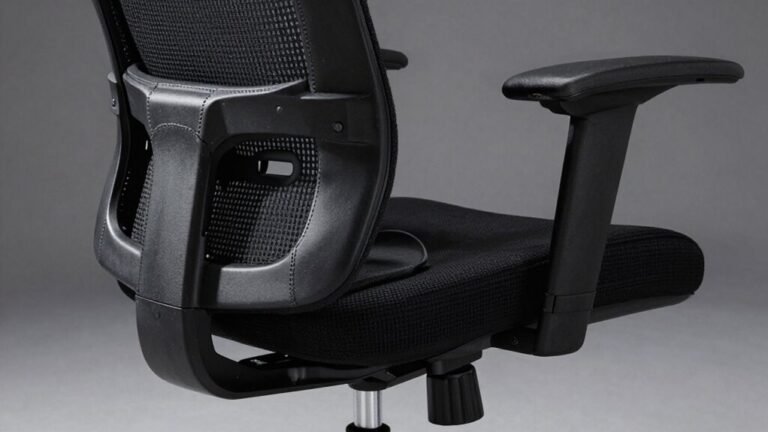
Maintaining proper spinal alignment reduces strain on discs and muscles, especially during extended sitting, and chairs with targeted back-focused design help sustain this alignment throughout the day.
Match the contour to your curve, breathe easy with mesh, and boom—you’re sitting like a pro.
Evaluate Lumbar Support Customization Options
What if your chair could read your back’s mind, giving it just the right amount of squeeze when it needs it most?
With air lumbar systems, you’re in control—just pump the paddle to adjust firmness and support on the fly.
These smart features sync with your spine’s natural curve, easing pressure where you need it most.
You can tweak height, too, so the support hits *your* sweet spot, not someone else’s.
Whether you’re upright or leaning back, weight-activated recline and thoracic padding keep things comfy all day.
Chairs like Hexy or Focus 2.0 even build it right in—no knobs, just smart design hugging your lower back like it knows you better than your therapist does.
Customizable support means no more slouching, less ache, and way more “ahhh.”
Select Armrests That Fit Your Body and Desk Setup

While your dream chair mightn’t come with a built-in masseuse, nailing the right armrests can be just as satisfying—because nothing kills a productive groove like hunched shoulders or arms dangling like you’re trying to flag down a parking space.
Get these right, and your shoulders stay relaxed, your posture stays sharp, and your focus stays strong.
- Adjust height so your elbows rest at 90°, snug to your sides, with forearms level to the floor
- Slide or widen armrests to match your shoulder width—no pinching or stretching allowed
- Check desk clearance: armrests should tuck low enough to glide under your desk, not shove you forward
- Pick padded, contoured rests that support your forearms without cutting off circulation or blocking mouse moves
Nail these, and you’re not just sitting—you’re *supported*.
Explore Materials for Comfort and Long-Term Use
You’ve got your armrests dialed in just right—elbows at 90 degrees, shoulders relaxed, no awkward desk jousting—so now let’s talk about what you’re actually sitting *on* and leaning *against* all day.
Mesh keeps you cool with breathable weave that fights sweat puddles, hugs your spine, and lasts if you pick high-grade stuff—just don’t ignore dust buildup or edge wear.
Fabric feels cozy fast, especially with dense foam underneath, but can trap heat and stains unless it’s treated.
If you snack (or spill) often, go for solution-dyed fibers and vacuum like a champ.
Leather? It ages like fine wine—softening and molding to you—but needs conditioner love to avoid cracks and can feel like a warm hug in summer.
Faux leather looks sharp and costs less, but peels over time, kind of like a bad sunburn.
Pick based on your sweat level, style, and how long you plan to park there.
Test Seat Depth and Cushioning for Pressure Relief

Slide into your chair like you’re testing a hammock at a furniture store—because how it feels in the first few seconds isn’t just about comfort, it’s about preventing tomorrow’s back-to-work groans.
Get the seat depth right: aim for 14–18.5 inches so there’s a 1–2 finger gap between the edge and your knees.
Too deep? Hello, knee pressure.
Too shallow? Say goodbye to thigh support.
Cushioning matters too—air cushions beat foam at lowering high-pressure hotspots, especially over 125 mmHg.
Keep your posture neutral to reduce strain, and remember, reclining boosts back contact and eases load.
- Look for adjustable depth that matches your leg length
- Choose multi-cell air cushions for smarter pressure relief
- Sit with feet flat to avoid shifting pressure wrong
- Test how pressure feels after 20 minutes, not just 20 seconds
Consider Swivel and Mobility Features
A great executive chair doesn’t just sit still like a statue in a boardroom—it moves with you, spins on a dime, and glides like it’s got a mission. If you’re constantly reaching for files, shifting between desks, or chatting with colleagues, go for a 360° swivel and smooth-rolling casters that match your floor—hard wheels for hardwood, soft ones for carpet. Need stability for deep focus? Look for lockable casters or a wide base that won’t tip when you pivot. Ball-bearing swivels spin smoothly without squeaking—perfect for meetings where you don’t want to sound like a haunted floorboard. And hey, if you love multitasking, make sure armrests and lumbar support stay in place while you move. Choose replaceable casters, too—your chair will thank you later. With the right mobility, you’ll glide through work like you’re on wheels. Because let’s face it, no one ever closed a deal while stuck in spin-free limbo.
Check Weight Capacity and Build Durability

When it comes to picking a chair that won’t quit on you, skimping on strength is like bringing a cardboard box to a weightlifting competition—just not smart.
You need a chair that laughs in the face of gravity, so check the weight capacity and build quality first.
Don’t just guess—trust the rating.
Here’s how to spot a real powerhouse:
- Look for chairs rated at least 300 lbs if you’re heavy or want long-term toughness.
- Choose steel or reinforced bases—they’re the unsung heroes holding everything together.
- Grab one with a thick gas lift and sturdy mechanism; cheap cylinders sag when the pressure’s on.
- Wider, denser cushions (think 4+ inches and thick foam) keep you lifted, not lumped.
Your back—and your pride—will thank you every time you sit down.
Assess Tilt and Recline Mechanisms for Dynamic Sitting
How does your chair respond when you lean back to think through a tough problem or zone out during a long meeting?
Does it fight you, flop too far, or feel just right?
A good tilt mechanism makes all the difference.
You want something like synchronous tilt—it rocks your back more than your seat, so your feet stay grounded and your legs don’t tingle.
Knee-tilt’s great too, pivoting near your knees to keep the seat level and comfy.
If you love moving while you work, go for free-float or multi-function controls that let you sway, lean, and shift freely.
Don’t forget tilt-tension—you’ll want to adjust how stiff or smooth the lean feels.
And hey, locking your recline? Perfect for when you’re typing hard or pretending to focus in a virtual meeting.
Choose smart, sit better, and make reclining an art form—your back will thank you.
Frequently Asked Questions
How Long Should I Sit in an Executive Chair Without Taking a Break?
You shouldn’t sit in an executive chair more than 50–60 minutes without a break—your body’ll thank you!
Set a timer, then bounce up for a quick 2–5 minute stretch or stroll.
Even with the comfiest chair, your back, blood flow, and brain need movement.
Try the 50–10 rhythm: focus hard, then move.
Trust me, a little dance break beats back pain any day!
Can Executive Chairs Be Used on Carpeted and Hardwood Floors Equally Well?
Yeah, you can absolutely use executive chairs on both carpet and hardwood—no need to pick sides in the great floor debate!
Just swap in rollerblade or polyurethane casters, and you’re golden.
They glide smoothly on hardwood without scratches and roll easy on carpet without mats.
Throw down a dual-surface mat if you want extra protection, and boom: you’ve got comfort, style, and floor-friendly freedom rolling your way.
Do Executive Chairs Come With Warranties for Mechanical Parts and Materials?
Yes, they do, and you’re covered well!
Most brands, like Welax and ERA, include mechanical parts—think gas lifts, bases, casters—in their warranties, often for years.
Materials are typically protected too, though wear-and-tear isn’t.
You’ll love the peace of mind, especially if your chair decides to act up.
Just keep your receipt, snap a pic if needed, and you’re golden—no circus acts required for claims!
Are There Eco-Friendly Executive Chair Options Made From Sustainable Materials?
Yes, you can totally find eco-friendly executive chairs made from sustainable stuff!
Did you know some brands use up to 99% recycled materials?
You’ll love sitting on chairs crafted from ocean-bound plastics, reclaimed wood, and natural foams—they’re comfy *and* kind to the planet.
With sleek designs, easy-clean fabrics, and cool features like adjustable arms, they prove saving the Earth doesn’t mean ditching style or comfort.
Who knew doing good could feel so good?
What’s the Average Lifespan of a High-Quality Executive Office Chair?
You can expect a high-quality executive chair to last 7 to 15 years, especially if you treat it right.
With solid materials, comfy foam, and proper care, it’ll stay supportive and sleek far longer.
Daily use? No problem—it’s built for that.
Just don’t hog the chair like it’s your throne 24/7, and it’ll reward you with years of back-friendly comfort.
Conclusion
You just found your perfect workday partner—the chair that gets you. It’s like it reads your mind, cradling your back, lifting your mood, and swiveling with your every move. Comfort meets cool, and hey, your cat even approves. Who knew sitting could feel this good? Go ahead, lean back, laugh a little, and own your throne. You’ve earned it.