Chair Ergonomics Explained: Why Lumbar Support Matters
You’re probably slouching right now, but don’t worry—your chair’s got your back, literally. Good lumbar support hugs your lower spine, keeping its natural curve happy and healthy. It reduces fatigue, cuts back pain, and even boosts energy. Add adjustable seats, armrests, and a breathable backrest, and boom—you’re sitting like a pro. Think of it as a pit crew for your posture. You’ll feel the difference the moment you sit down… and there’s even more where that came from.
Understanding the Role of Lumbar Support in Chair Design
Ever wonder why your back feels like it’s throwing a silent protest after hours at your desk?
That’s your lower spine begging for support!
Lumbar support cushions the natural inward curve of your back, keeping things aligned and comfy.
Without it, your spine flattens, muscles strain, and discomfort creeps in—like an uninvited office roommate.
But here’s the good news: ergonomic chairs fight back with smart design.
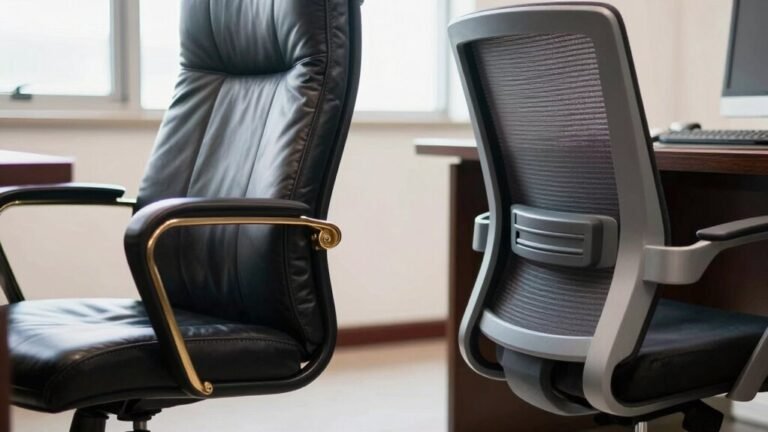
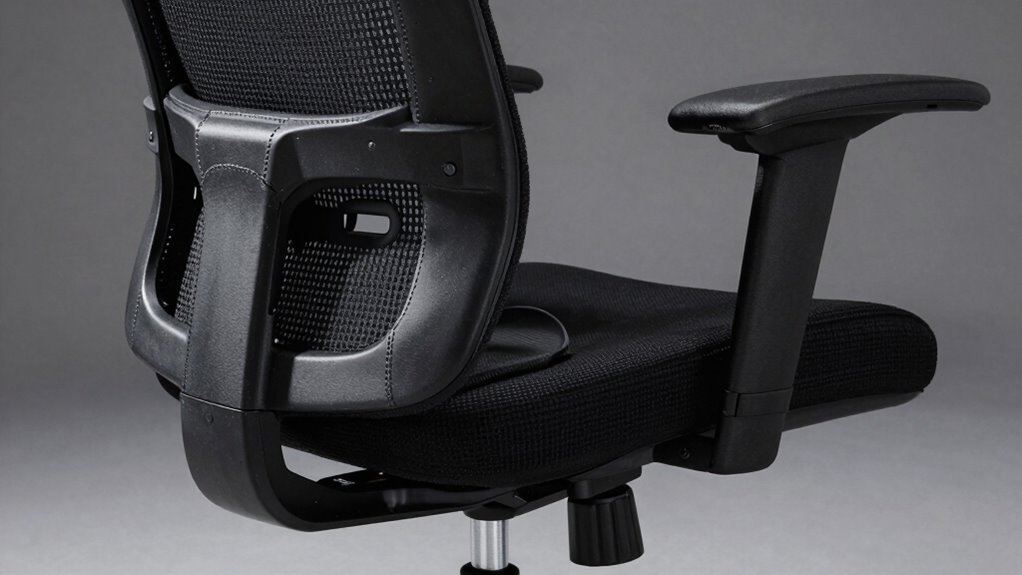
They feature contoured backrests, adjustable height and depth, and cushy yet firm materials that hug your spine just right.
High-back styles even extend support up to your shoulders.
Add tilt and swivel functions, and boom—you’re moving freely, staying supported.
It’s not just about comfort; it’s about giving your back the daily care it deserves.
Think of it as a pit crew for your posture, keeping you energized, pain-free, and ready to tackle the workday—with a little less groaning when you stand up.
Proper lumbar support helps maintain a neutral spine, which reduces muscle fatigue and promotes pain relief and comfort.
How Proper Spinal Alignment Enhances Posture and Comfort
You’re not imagining it—sitting actually feels better when your spine is lined up like a well-organized stack of blocks instead of a slumped-over Jenga tower.
When your back keeps its natural curve, your discs aren’t squished, your muscles don’t have to work overtime, and everything just *fits* right.
That slight inward bend in your lower back? It’s doing you a solid by spreading weight evenly and sparing your nerves from pressure.
Your pelvis should tilt forward just a bit—think happy, not hunched—so your chair does the heavy lifting, not your spine.
Proper alignment means less fatigue, better blood flow, and no mystery tingles in your legs.
You’ll sit longer without feeling like a pretzel.
Plus, your neck and shoulders stay relaxed, not coiled like springs.
It’s like your body finally got the memo: comfort isn’t luck, it’s design.
And honestly, why *wouldn’t* you want to sit like that?
This alignment significantly reduces the risk of musculoskeletal disorders by up to 75%.
Reducing Back Pain Through Targeted Lumbar Cushioning

While your chair might claim to support your back, chances are it’s not doing much beyond collecting crumbs and holding your weight. You’re not stuck with aching lower back pain, though—targeted lumbar cushioning can help. Studies show you could slash discomfort by up to 60%, especially if you’re sitting nine hours a day. Imagine fewer sore days and better posture—yes, please! Check this out:
| Benefit | Evidence | Real-Life Win |
|---|---|---|
| Less back pain | 84% lower pain incidence | IT pros log fewer painful days |
| Better posture | 2.88° closer to ideal curve | No more slouching like a cartoon shrimp |
| Improved comfort | Lower discomfort scores | Stay comfy in office, car, or couch |
| Stronger core | Enhanced muscle endurance | Stability that rivals your gym goals |
| More energy | Reduced fatigue | Stay focused, not frazzled |
An effective lumbar cushion maintains the spine’s natural lumbar curve, helping prevent postural deterioration over time.
The Importance of Adjustable Features for Personalized Fit
- You feel seenwhen your feet flatly meet the floor with knees at 90°, no tippy-toeing or floating legs
- You sigh in relief as the backrest hugs your spine just right, moving withyou, not against you
- You laugh when you realize your armrests finally stop digging into your shoulders or hovering uselessly
- You lean in—literally—knowing seat depth and tilt cradle your hips like a pro, not a afterthought
Supporting the Natural Curve of the Lower Spine

When your lower back gets the support it craves, something magical happens—your whole body relaxes, like it’s finally breathing easy after holding its breath for years. You’re not just sitting—you’re *supported*, spine happily in its natural S-shape. That gentle inward curve in your lower back? It’s called lumbar lordosis, and it’s doing essential work: absorbing shock, balancing your weight, and keeping everything from your hips to your neck in harmony.
| Curve Type | Location |
|---|---|
| Lordosis | Lower back & neck |
| Kyphosis | Upper back & sacrum |
| Healthy Range | 20–60 degrees |
| Loss of Curve | Can cause pain |
Keep that curve happy, and your body will thank you—no dramatic spine monologues required.
Key Ergonomic Features That Complement Lumbar Support
How’s your chair pulling its weight—literally and ergonomically?
Great lumbar support isn’t a lone hero—it’s part of an all-star team.
When your chair gets the full suite right, you feel it from head to toe, not just in your lower back.
Imagine sitting longer, working easier, and actually *wanting* to sit down.
That’s the magic of smart design working together.
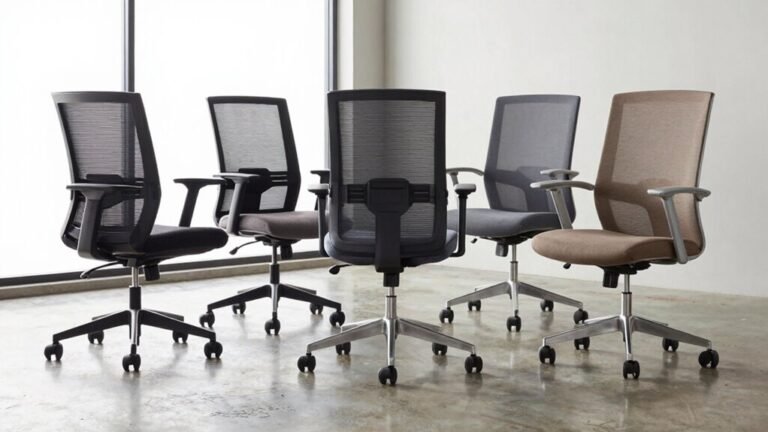
- Adjustable armrests cradle your arms so your shoulders stay relaxed, not tense.
- Seat height you can tweak keeps your feet grounded and legs happy all day.
- Smooth recline options let you lean back without losing that sweet lumbar hug.
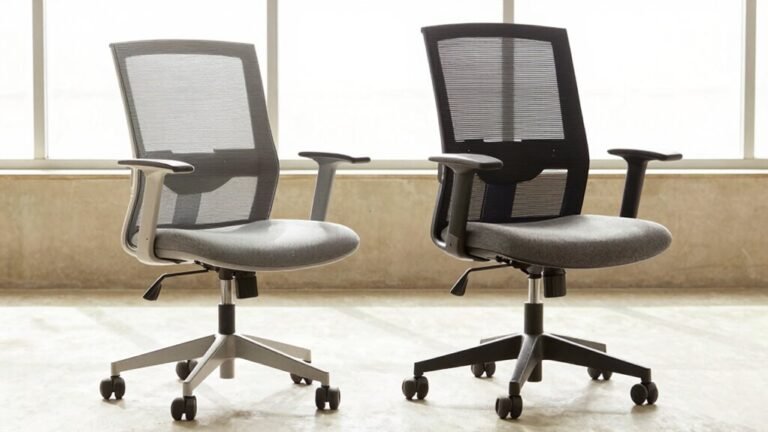
- Breathable mesh keeps you cool, even when you’re deep in the zone.
Pair these with solid lumbar support, and boom—sitting just got supercharged. Your spine will thank you.
The Impact of Seat and Backrest Adjustability on Spinal Health

You’re not just sitting—you’re engineering your spine’s comfort with every tweak of your chair. Adjusting your seat height, depth, and backrest isn’t fussy—it’s fundamental. Get it right, and you’re giving your spine a VIP pass to long-term health.
| Feature | Why It Matters | Your Body Wins When… |
|---|---|---|
| Seat height | Keeps hips and knees at 90° | Your feet stay flat, and your lumbar disc pressure drops |
| Seat depth | Stops thigh pressure | Your pelvis sits back, protecting your lower back |
| Backrest recline | Lowers spinal load | You lean back safely, with support always in place |
| Lumbar adjustability | Fits your unique shape | You avoid awkward curves and sore spots |
| Sync tilt | Keeps back support during recline | You relax without losing spine alignment |
Tweak away—your back will thank you later!
Evidence-Based Benefits of Ergonomic Seating Solutions
While your chair mightn’t hand you a coffee or crack a joke, it’s quietly doing way more than just holding you up—especially when it’s built with smart ergonomics.
You’re not imagining it—your body and brain really do work better when you’re comfy.
Just look at what happens when your seat supports you right:
- You feel lighter, focused, and actually want to tackle your to-do list
- Your aching back finally gets relief, and those neck kinks start disappearing
- You’re in a better mood, more energized, and weirdly excited to show up to work
- You miss fewer days, save your company cash, and score a win-win
It’s not magic—it’s science. Ergonomic chairs boost productivity, cut pain, lift spirits, and keep you around longer.
Frequently Asked Questions
Can Lumbar Support Cause Discomfort if Overused?
Yeah, lumbar support can backfire if you overdo it.
Wearing it too long or too tight might weaken your core feelings, make muscles stiff, or mess with your natural posture.
It’s like your back gets lazy and forgets how to work on its own.
You might feel sore or off-balance when you take it off—kind of like taking off a cast and wiggling stiff fingers.
Mix in movement breaks, don’t rely on it 24/7, and let your muscles do their job too.
Does Lumbar Support Help With Sciatica Symptoms?
Yes, lumbar support can be a game-changer for sciatica, like giving your spine a gentle hug that fights nerve pressure.
It helps maintain your back’s natural curve, reducing strain on discs and calming irritated nerves.
You’ll sit smarter, not harder, especially during long stretches.
Just don’t treat it like a magic fix—pair it with movement, and you’re golden!
Is Lumbar Support Necessary for Short Sitting Sessions?
You bet it is—even short sits need lumbar support!
Skimping on it for just a few minutes can still strain your back, especially if your posture slumps.
Think of your spine like a stack of blocks: without support, everything wobbles.
Proper lumbar care keeps things aligned, cuts muscle fatigue, and dodges those “why’s my back mad?” moments.
Your spine’ll thank you later—with high-fives, probably.
How Often Should Lumbar Support Settings Be Adjusted?
You should tweak your lumbar support every 20–30 minutes when you shift tasks or notice discomfort—think of it like stretching for your spine.
Adjust it daily to match your morning groove, refine it weekly to find that sweet spot, and give it a tune-up monthly.
If your back whispers (or yells) for help, fix it fast—your spine will thank you with fewer aches and more pep in your step.
Can Poor Lumbar Support Affect Breathing During Sitting?
Yes, poor lumbar support can mess with your breathing while sitting.
Slouching flattens your lower back, tightens your back muscles, and blocks your diaphragm from moving freely—like trying to take deep breaths with a seatbelt too tight.
You end up breathing shallowly, which stresses your body.
Good lumbar support keeps your spine neutral, so your lungs have room to expand.
Breathe easy, sit happy!
Conclusion
You’re not just sitting—you’re cradling your spine like a favorite rocking chair hugs your soul. With lumbar support, your lower back stays cozy, pain stays lost, and good posture feels as natural as morning coffee. Adjust it, lean in, let your body say “ahhh.” Think of your chair as your back’s best buddy, not its boss. Stay comfy, stay healthy, and hey—your spine will thank you with every happy wiggle.