Managing Office Temperature Smartly for Focus
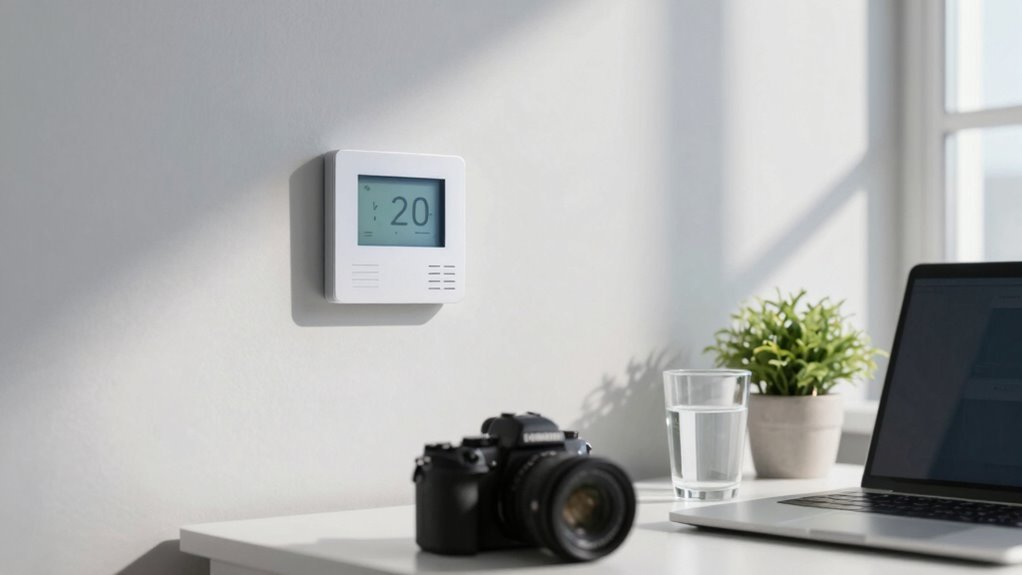
You stay sharper when the office feels just right—around 22°C is your brain’s happy place. Crank it higher, and focus fizzles, especially on tough tasks. Cool air keeps your thinking quick and mistakes rare. Everyone’s different though—some run hot, others cold—so having a fan or sweater handy helps. Smart zones and personal control make a big difference. Want to know how to tweak your space for peak performance without wasting energy? There’s a fun way to level up your comfort game.
Finding the Sweet Spot: Temperature and Cognitive Performance
Ever wonder why you feel sharper on some days than others—and it’s not just your morning coffee talking?
Turns out, the office thermostat might be your brain’s best friend or worst foe.
You’re at your mental peak when the room’s around 22°C to 24°C—just right for focus, speed, and accuracy.
Crank it up, and things go south fast: above 24°C, your reaction time slows, processing power dips, and errors creep in.
For every degree past 22°C, accuracy drops over 1%.
Yikes.
But if it’s too chilly, don’t panic—your smarts stay steady unless it dips below the comfort zone.
Your heart might work harder at 18°C, but your brain’s still in the game.
The sweet spot? Hold steady near 22°C, where your mind stays quick, sharp, and ready.
It’s not magic—it’s science, and your focus will thank you.
This so-called optimal range aligns with the widely adopted 22℃ as the “magic number” in office environments worldwide.
How Task Complexity Influences Thermal Sensitivity
You’re already knows the sweet spot for focus—around 22°C—where your brain fires on all cylinders, but here’s the twist: not all work feels the heat the same way.
Heavy mental lifting, like problem-solving or juggling tasks, crumbles faster when it’s warm, while simple stuff—like clicking buttons or basic math—shrugs it off.
Your brain’s executive crew (planning, focus, decisions) gets sluggish in the heat, especially during complex tasks that demand working memory or quick switches.
Think of it like running a marathon while texting: heat makes both harder, but the mental multitasking suffers most.
Even your fine motor skills dip when things get toasty.
So when you’re deep in a tough project, a cooler room isn’t just comfy—it’s your secret weapon.
Keep the temperature in check, and your brain stays sharp, not stewing.
Hot desk? Cool your brain, crush your work.
Accounting for Individual Differences in Thermal Comfort

While everyone’s chasing the perfect office temperature, the real secret isn’t one-size-fits-all—it’s *personal*.
You feel the chill more than your coworker? That’s normal— women often prefer it 2°C warmer than men, especially in those overcooled offices.
Your last job was in Arizona? No wonder you’re hot when others are bundled up—past climates shape what feels “just right.”
And yes, your mood might sneak into the mix—though it’s not game-changing, temperament plays a quiet role.
You tweak your sweater, grab a cardigan, or crank your space heater—smart moves.
Clothing and tiny habits like standing or pacing help you adapt fast.
But here’s the kicker: you *want control*. Nothing beats tweaking your own thermostat—studies show it buys comfort even at lower temps.
Women report higher dissatisfaction with office temperatures, making gender-inclusive thermal settings critical for comfort and productivity.
Balancing Energy Efficiency With Workplace Productivity
When the thermostat starts climbing, you might reach for your water bottle—and maybe curse the AC less when you realize it’s trying to save pennies and productivity alike.
You see, cranking up the heat too high costs more than just energy; it zaps focus.
At 22°C, your brain fires on all cylinders, but every degree above 25°C chips away at performance—up to 5% per degree!
And while bumping the temp saves about $2 per worker hourly, going too far backfires fast.
Sure, cutting cooling cuts bills, but sweating at your desk? That’s a hidden productivity killer.
Keep it around 21–22°C and you’re golden: minds stay sharp, errors drop, and energy use stays reasonable.
It’s not just comfort—it’s smart business.
Think of it as tuning an engine, not just flipping a switch.
Performance peaks at 22 °C, where office productivity reaches its maximum before declining at higher temperatures.
Using Data to Guide Smart Temperature Adjustments

So you’ve got your office humming along at a cozy 22°C, saving energy and keeping minds sharp—nice work. But don’t just guess the perfect temp—let data lead the way! Surprisingly, studies show no clear link between typical office temps and performance, so what feels right might be better than what you’ve heard. Still, heat’s no joke: too much leads to more injuries and lost productivity. Check this out:
| Temp Threshold | Injury Risk Increase |
|---|---|
| Above 90°F | 6–9% |
| Above 100°F | 10–15% |
Smart tools now use real-world data, climate trends, and worker feedback to fine-tune settings. Machine learning helps, but sometimes simple observation wins. You’re not flying blind—you’ve got stats, interactive databases, and predictive models in your pocket. Play with the numbers, stay cool, and keep that office running like a dream. After all, smart adjustments mean happier (and safer) teams!
Designing for Personal Control and Local Adaptability
You’ve got the power to turn your workspace into a personal comfort zone, and it’s time to use it!
Split your office into smart zones based on sun exposure, how often rooms are used, and what people do there—no more freezing the conference room when it’s empty.
Use micro-zones and desk-level controls like VAV boxes so your cube-mate’s ice-cube preferences don’t freeze you out.
Install sensors at desk height (not up near the ceiling where no one lives) to actually measure *your* air, not the space above.
Grab a personal fan or heater that turns off when you leave—because nobody likes a ghost heating an empty chair.
Override settings when needed, but stay within limits so you don’t turn the whole floor into a sauna.
Arrange desks to dodge brutal sunbeams and banish warm printers to the corner—treat your office like a board game where comfort wins.
Integrating Thermal Comfort With Broader Indoor Environmental Quality

What if your office could feel just right—not just temperature-wise, but in every breath you take, every sound you hear, and every ray of light that hits your desk?
You’re not just battling the thermostat; you’re managing a whole ecosystem.
Hot rooms can ramp up VOCs from furniture, while stuffy air slows your brain—talk about a bad combo.
Keep humidity between 30–60%, and you’ll dodge mold, dust mites, and that “too dry” winter zombie look.
Open a window for fresh air? Great, but it might wreck your ideal temperature unless systems work together.
Noise and glare make heat stress worse—like a sensory pile-on.
But when HVAC, lighting, and acoustics team up? Magic.
You stay sharp, comfortable, and way less grumpy.
Smart controls, zoned systems, and coordinated design don’t just balance comfort—they boost focus.
Think of it as your office’s superhero squad, all synced up to help you win the workday.
Frequently Asked Questions
What Temperature Minimizes Sick Leave in Offices?
You’ll cut sick leave best by keeping your office between 21–23°C (70–73°F)—it’s the sweet spot for comfort and health.
Too cold, and people feel sluggish or sniffling; too hot, and focus fizzles.
Pair that temp with good airflow and 40–60% humidity, and you’ve got a recipe for fewer colds, happier brains, and way less “I’m not feeling well today.”
Stay cool, but not *too* cool—you’ve got work to do!
Do Colder Offices Increase Typing Errors Significantly?
Oh, absolutely—you’ll love this—colder offices don’t just make you reach for sweaters, they make your fingers fumble like you’re typing in mittens.
At 68°F, errors jump 74%, output drops nearly half—yep, your boss saves on AC but pays more in mistakes.
Warm it up to 77°F, and boom: fewer typos, faster work.
Who knew comfort wasn’t just cozy—it was cash money? Sweet irony, right?
How Quickly Does Heat Affect Decision-Making Speed?
You start making quicker decisions within just minutes of heat exposure—yep, as fast as five to ten!
Your body speeds up, reactions get snappier, and time feels like it’s sprinting.
But don’t celebrate yet—those fast choices often come with more mistakes.
Heat cranks your urgency, making you feel pressed for time, even if you’re not.
So while you’re zipping through tasks, your brain’s cutting corners.
Speed? Up.
Smarts? Not so much.
Can Humidity Levels Influence Focus Independently of Temperature?
Absolutely, humidity can mess with your focus like a sneaky brain fog machine.
You feel stickier, yeah, but it’s not just sweat—your brain’s working harder just to keep up.
Even if the temperature’s fine, high humidity cranks up mental fatigue, slows reactions, and zaps attention.
You’re juggling tasks like plates, and suddenly one slips.
Gross, right?
Keep that air dry enough to stay sharp and silly.
Are There Long-Term Cognitive Effects of Working in Overheated Spaces?
Yeah, working in overheated spaces can subtly chip away at your brainpower over time, especially if you’re stuck with no relief.
You’ll notice it first in focus, memory, and decision-making—your brain’s like “nope, too hot to think.”
Complex tasks get harder, and irritability sneaks in.
Think of it as mental sunburn: not obvious at first, but repeated sizzling leads to lasting damage.
Stay cool, stay sharp!
Conclusion
You’ve got the power to tweak that thermostat, and guess what? Studies show offices at 72°F boost productivity by up to 40% compared to stuffy 80°F zones. Cool, right? You’re not just chasing comfort—you’re supercharging focus, saving energy, and dodging the dreaded “afternoon slump.” With smart controls and a little personal flair, you’re turning workspaces into happy spaces. Stay cool, stay sharp—and maybe skip the sweater cannon.