5 Best Room Dividers for a Sleek Home Office Setup
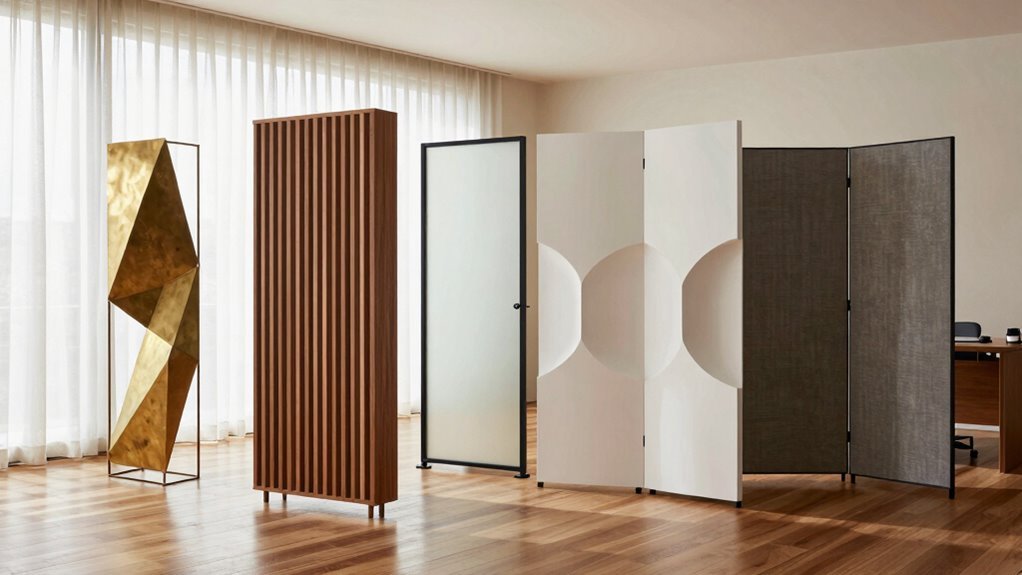
A room divider is the quiet architect of your home office—shaping space without saying a word. You want privacy, yes, but also clean lines and a setup that won’t eat up your square footage.
Can something both block your roommate’s view and look like it belongs in a design catalog?
The right room divider balances opacity, width (think 34–36 inches per panel), and flexibility in configuration.
Your Zoom background shouldn’t look like an afterthought. A well-chosen room divider enhances both function and style in your workspace.
| MAYOLIAH 6-Panel Privacy Screen Divider (Black) | Best Overall | Panel Count: 6 | Frame Material: Iron | Fabric Weight: 180gsm | VIEW LATEST PRICE | Read Our Analysis | |
| Room Divider 6FT 4-Panel Privacy Screen | Most Durable | Panel Count: 4 | Frame Material: Steel | Fabric Weight: 240gsm | VIEW LATEST PRICE | Read Our Analysis | |
| Room Divider 4-Panel Fabric Screen with Wheels | Most Portable | Panel Count: 4 | Frame Material: Steel | Fabric Weight: 240gsm | VIEW LATEST PRICE | Read Our Analysis | |
| JVVMNJLK 3-Panel Room Divider (102″ W x 71.3″ H) | Best Compact Design | Panel Count: 3 | Frame Material: Iron | Fabric Weight: 300D Oxford | VIEW LATEST PRICE | Read Our Analysis | |
| Spurgehom 4-Panel Room Divider Privacy Screen | Best Custom Fit | Panel Count: 4 | Frame Material: Iron | Fabric Weight: 180g/m² | VIEW LATEST PRICE | Read Our Analysis |
More Details on Our Top Picks
MAYOLIAH 6-Panel Privacy Screen Divider (Black)
If you’re working with tight spaces or need flexible privacy without permanent construction, the MAYOLIAH 6-Panel Privacy Screen Divider (Black) is a solid pick. Measuring 120W x 17.7D x 71H when fully expanded, it’s large enough to carve out a quiet zone in an open floor plan.
Yet it’s compact enough—folding down to a single panel—to stash behind a door or under your bed when not in use. You’ll appreciate the rustproof iron frame and 180gsm polyester fabric, which is water-resistant, tear-resistant, and totally non-see-through.
This provides real privacy, not just a visual nudge. Need two panels for a closet hack or all six to block lamplight? You’ve got freedom.
While it won’t stop yelling, it will tame chaos. Plus, MAYOLIAH answers concerns within 24 hours, which beats most landlords.
- Panel Count:6
- Frame Material:Iron
- Fabric Weight:180gsm
- Privacy Level:Non-see-through
- Portability:Foldable; easy to move/store
- Coating Type:Powder coating
- Additional Feature:Free panel combinations (2–6)
- Additional Feature:Forms small temporary room
- Additional Feature:1-year warranty + 24hr support
Room Divider 6FT 4-Panel Privacy Screen
You’ll get the most out of this 6FT 4-panel privacy screen if you’re working with tight spaces—like a studio apartment or a cramped home office—where smart, adaptable design makes all the difference. Let’s be honest, does anyone actually have a perfectly spacious setup these days?
You’ll appreciate the stable steel frame—powder-coated, scratch-resistant, and rust-resistant—paired with wider feet for serious stability that reduces wobbling or tipping. The 240g polyester fabric, enhanced with PA coating, offers true privacy (no see-through), resists wrinkles, wear, and even water—just wipe it clean.
Triple-buckle hinges let you fold or adjust it easily; at 88L x 71.3H inches fully open (22L when folded), it’s ideal for reconfiguring living rooms, offices, or classrooms. Designed by HOMSCREENER, it ships with all needed parts—report any post-transit fabric folds or damage promptly for fast support.
- Panel Count:4
- Frame Material:Steel
- Fabric Weight:240gsm
- Privacy Level:Non-see-through
- Portability:Folding design; portable
- Coating Type:Powder coating
- Additional Feature:Triple buckle hinges
- Additional Feature:Longer, wider feet pads
- Additional Feature:Fabric folded in transit notice
Room Divider 4-Panel Fabric Screen with Wheels
You’re getting serious about your home office setup when you invest in the 4-panel fabric room divider with wheels—especially if you need flexible space management without permanent construction. You’ve got 10 universal castors (with PE rollers) ensuring silent, floor-safe movement, plus brakes on every wheel—so no, it won’t mysteriously drift during Zoom calls.
The φ20mm steel tube frame has a frosted, corrosion-resistant coating, and the 240gsm fabric? Triple-layered with PA coating, so it resists tears, wrinkles, and even light—ideal for privacy or shading. Plastic double hinges let panels pivot freely, letting you shape it into L, C, Z, or W configurations—perfect for tight spaces.
You can wipe the fabric clean with a damp cloth (because coffee spills will happen). Want more coverage? Add a middle panel to build a temporary wall.
It’s modular, functional, and surprisingly sturdy—though you wouldn’t lean a bookshelf on it. Used as a room divider, backdrop, or sunblock, it’s versatile without overpromising.
If a wheel arrives loose or a hinge is damaged (hey, shipping happens), their after-sales team responds fast—no corporate runarounds. You’re not just buying a screen; you’re buying adaptability.
- Panel Count:4
- Frame Material:Steel
- Fabric Weight:240gsm
- Privacy Level:Blocks light
- Portability:Foldable; wheels for mobility
- Coating Type:Frosted coating
- Additional Feature:10 universal castors with brakes
- Additional Feature:Silent PE rollers
- Additional Feature:Folds into L/W/C/Z shapes
JVVMNJLK 3-Panel Room Divider (102″ W x 71.3″ H)
The JVVMNJLK 3-Panel Room Divider (102″ W x 71.3″ H) stands out as the go-to solution for remote workers and urban dwellers craving a defined workspace without committing to permanent walls—especially when square footage is tight and aesthetics matter. You get a sturdy iron frame with a frosted coating, smart for resisting scratches and rust.
Paired with 300D Oxford fabric that’s both waterproof and fully opaque, this divider ensures privacy—so no one’s seeing through your makeshift office. At 8.5 feet wide and nearly 6 feet tall, it creates real separation, yet folds compactly for storage or repositioning.
It’s lightweight and easy to move, making rearranging your space effortless. The durable clamps let panels pivot smoothly, with no awkward wobbling during adjustments.
Setup takes minutes, thanks to clear instructions and a handy video guide—seriously, who reads manuals anymore? Email support’s there if you hit a snag, and they stick with you until it’s right.
It’s not a permanent wall—but honestly, do you really want one? This flexible, well-built divider delivers privacy, style, and function without nailing a single thing into drywall.
- Panel Count:3
- Frame Material:Iron
- Fabric Weight:300D Oxford
- Privacy Level:Opaque
- Portability:Lightweight; foldable
- Coating Type:Frosted coating
- Additional Feature:300D Oxford fabric
- Additional Feature:Installation video available
- Additional Feature:Durable clamps for free rotation
Spurgehom 4-Panel Room Divider Privacy Screen
Looking for a room divider that pulls double duty as both a privacy shield and a sleek design element in your home office? The Spurgehom 4-Panel Room Divider gives you 136.6 inches of flexible space, perfect for customizing your layout.
Each 34-inch panel is made from tear-resistant, 180 g/m² polyethylene with a waterproof PA coating—ensuring it’s totally non-see-through and built to last. The solid iron frame adds durability and keeps the divider stable, especially when zig-zag installed to prevent wobbling during video calls.
Whether you’re blocking glare from a window or creating a quiet zone in a studio, this divider is highly functional. It’s portable, easy to assemble with just a screwdriver, and folds down flat for storage—ideal for spaces where clutter is a concern.
- Panel Count:4
- Frame Material:Iron
- Fabric Weight:180g/m²
- Privacy Level:Non-see-through
- Portability:Foldable; moveable
- Coating Type:Not specified (implied rust-resistant)
- Additional Feature:Zig-zag install for stability
- Additional Feature:Suitable for balcony use
- Additional Feature:Screwdriver-required assembly
Factors to Consider When Choosing Room Dividers for Your Home Office

You’ll want to size up your space first—standard dividers range from 48 to 72 inches wide and 60 to 72 inches tall, so measuring your area guarantees a clean fit without cramping your workflow. Think about how much privacy you actually need: solid wood or fabric panels block sightlines completely (great for Zoom calls), while slatted or mesh designs offer partial separation—ideal if you still want light and airflow. And don’t forget, nobody wants to wrestle with tricky hardware, so go for models that snap together in under 10 minutes and fold flat for storage when you’re switching up the room.
Size and Dimensions
While you might not think a folding screen needs a game plan, picking the right size matters more than you’d guess—especially when you’re working with tight spaces or high ceilings. You’ll typically choose between 3, 4, or 6-panel models, with expanded widths running from 88 to 120 inches—so measure your zone before committing.
Each panel spans roughly 34–36 inches, and at 71–72 inches tall, most block seated sightlines without overwhelming a room. Need to stash it behind a door or under the bed? Folded, these dividers can shrink to the width of a single panel—surprisingly space-smart.
And since many offer adjustable layouts—zig-zag, straight, or angled—you’re not locked into one footprint. Wondering if it’ll fit that awkward corner or narrow hallway? With hinge flexibility and real-world tolerances, minor tweaks make all the difference.
Material Durability
A flimsy divider won’t last a month in a high-traffic home office—especially when you’re constantly folding it between meetings or dodging coffee spills during marathon work sessions. You need powder-coated metal frames that resist rust, because humidity and daily use will chew through unprotected steel faster than you’d think.
Trust me, that sleek look means nothing if it flakes in six months. Go for fabrics with a PA coating; they fight tears and wrinkles better and keep looking sharp after hundreds of folds.
You’ll want at least 240 g/m² (or 300D Oxford) fabric weight—anything lighter sacrifices durability and long-term opacity. And let’s be real, what good is a sturdy screen if the hinges snap?
Reinforced joints and rust-proof fasteners make all the difference when you’re resizing daily. Sure, it’s not glamorous, but would you rather replace it every year?
Durable hardware keeps everything tight, smooth, and functional—exactly what your workspace deserves.
Privacy Level
When choosing a room divider for your home office, how much privacy you actually get isn’t just about height or placement—it hinges on material choices and structural design that either block sightlines completely or leave you exposed. You’ll want non-see-through fabrics with higher opacity, like 180gsm to 240gsm density, since they stop visual bleed and reduce light transmission.
Thicker options—240gsm with PA coating or 300D Oxford—offer even better concealment, masking movement and screen glare effectively. That PA coating? It’s not just for durability; it resists wrinkles and moisture, so your divider stays flat and private-looking over time.
And let’s be real—what good is a divider if light seeps through like it’s auditioning for a lantern? Solid, opaque surfaces prevent silhouettes and distractions.
Also, check how the panels fold: tighter angles and fewer gaps mean fewer sneaky sightlines. You’re not just blocking space—you’re crafting quiet, focused separation without building a wall.
Ease of Assembly
Getting your room divider up and running in under 15 minutes isn’t just a sales pitch—it’s a realistic expectation if you pick a model designed with user-friendly assembly in mind. You’ll usually find all necessary hardware and clear instructions tucked inside the box, so you won’t need to hunt for screws or guess at steps.
Many dividers use a foldable design—just pop the panels open and lock them into place, no tools required. Some let you snap modular panels together like puzzle pieces, which means you can adjust width or reconfigure layouts on the fly.
Step-by-step manuals (or even quick online videos) help you align panels straight the first time—because nobody enjoys a wobbly wall. Sure, cheaper models might leave you muttering at mismatched parts, but solid picks make setup feel effortless.
Why spend an hour building a wall when you can do it in ten?
Portability and Storage
Since you’ll likely want to shift your workspace now and then—or stash the divider during movie night—choosing one that’s built for portability makes more sense than lugging around a permanent partition. Look for folding models that collapse down to just 12–18 inches wide and often weigh under 30 pounds, so you can slide them behind a door or under a bed without straining your back.
Models with smooth-rolling castors let you pivot between rooms effortlessly—just push and go, no lifting required. Think lazy Susan logic: effortless rotation and relocation with minimal effort.
Hinged multi-panel designs fold like accordion shortcuts, letting you reconfigure corners or straight lines in under a minute. Lightweight doesn’t mean flimsy—many are made from aerospace-grade aluminum or reinforced composites weighing as little as 18 lbs while still standing tall at 7 feet.
You’ll appreciate quick setup if you’re rearranging weekly—some pop open in 20 seconds flat. Who says adult furniture can’t be as easy as Lego?
Stability and Safety
Choose a divider with a heavy, reinforced iron or steel frame for maximum stability. A powder-coated finish not only resists rust but also helps prevent bending over time.
Look for models with wide, extended feet or nonslip pads to increase ground contact. These features can reduce wobble on uneven floors by up to 40%.
Models with triple buckle or double flexible hinges lock panels together more securely, ensuring the unit moves as one solid piece. This rigidity enhances overall stability during use.
If mobility is needed, opt for dividers with locking wheels. Brakes prevent unwanted movement on slopes or during contact.
Prioritize safety with a low center of gravity and evenly distributed panels to minimize tipping risk. This is especially important if you or a child might lean against it during use.
Would you trust a wobbly wall to hide your laundry pile during a client call? Probably not.
Design Flexibility
How often do you rearrange your workspace—once a month, after a renovation, or whenever inspiration strikes? If your answer isn’t “never,” then design flexibility matters.
Choose room dividers with 2–6 panels so you can resize boundaries as your needs shift—perfect for quarterly refreshes or sudden layout experiments. Look for freely angle-able hinges that let you form L-, W-, C-, or even Z-shaped configurations, especially useful in uneven rooms or around built-in desks.
Models with removable or expandable panels help you tweak height and width down to the inch, adapting to spaces from 6 to 12 feet wide. Strong triple-buckle hinges and wider base feet keep things stable, even when repositioned daily.
Sure, folding and unfolding takes 30–60 seconds per setup, but that’s a small trade-off for a divider that moves as fast as your ideas—without wobbling, leaning, or quitting mid-video-call.
Light Block Capability
A sleek setup means nothing if afternoon sun spills across your monitor, turning focused work into a squinting contest. So while your divider might bend into a perfect C-shape for that creative corner—thanks to those sturdy triple-buckle hinges—it won’t help much if light bleeds right through.
You need opaque, high-density fabric—think 240gsm polyester with a PA coating. It blocks more glare than thinner 180gsm options and keeps lamp or daylight from leaking across panels.
Waterproof or tear-proof weaves aren’t just durable; their tight, non-see-through construction enhances privacy and consistent shading. Sure, a single panel’s nice, but why stop there?
Use multiple folding sections to minimize side gaps and adjust coverage. Angled configurations can cut stray light by up to 40% compared to freestanding partitions.
Bottom line: if your eyes keep twitching from screen glare, the issue isn’t your monitor—it’s that your divider’s fabric just isn’t cutting it.
Frequently Asked Questions
Can Room Dividers Be Used Outdoors?
Yes, you can use room dividers outdoors if they’re made from weather-resistant materials. You’ll need to secure them against wind, and you shouldn’t leave them outside long-term unless they’re designed for outdoor use.
Are Room Dividers Fire-Resistant or Flame Retardant?
You can’t assume room dividers are fire-resistant or flame retardant—most aren’t. Check labels and manufacturer specs; some metal or glass models resist heat better, but fabric-covered ones often aren’t treated. Always verify if fire safety matters in your space.
Do Room Dividers Block Sound Effectively?
No, most room dividers don’t block sound well—you’ll still hear noise through them. For better results, choose ones with extra padding or solid cores, but even then, they only reduce some sound, not eliminate it entirely.
Can I Hang Artwork on Fabric Room Dividers?
You can’t hang artwork on fabric room dividers—they’re too flimsy. *Don’t nail silk to a hurricane*—use frames or wall-mounted rails instead. Secure pieces to solid walls, not soft panels. They won’t stay put, and you’ll waste time fixing slips.
Are Room Dividers Safe for Homes With Pets?
Yes, they’re safe if you secure them. You’re preventing tips by anchoring panels, choosing sturdy materials, and avoiding small, chewable parts. Monitor your pet’s behavior, and opt for pet-resistant finishes to keep both your divider and furry friend safe.
Conclusion
You’ve got options that blend function and form—like a well-timed drumbeat, these dividers keep rhythm in your workspace. Whether it’s the 34-inch panels of the MAYOLIAH or the 102-inch width of the JVVMNJLK, each fits like a puzzle piece. Wheels? Check. Tool-free setup? Check. But—will any truly vanish when you need more space? Probably not. Still, for privacy without permanence, they strike a solid chord.