Managing Time Effectively When Working From Home

You’ve got this—design a cozy, clutter-free workspace and time-block your day like a pro to crush tasks without the chaos. Match hard work to your energy peaks, use quick Slack updates, and keep meetings short (or skip ’em!). Schedule breaks, hit your deadlines, and track real wins. Add a lamp-off ritual so your brain knows work’s done. Oh, and coffee chats? Book ‘em like VIP dates. Stick with it, and you’ll wonder how you ever worked any other way—there’s even more where that came from.
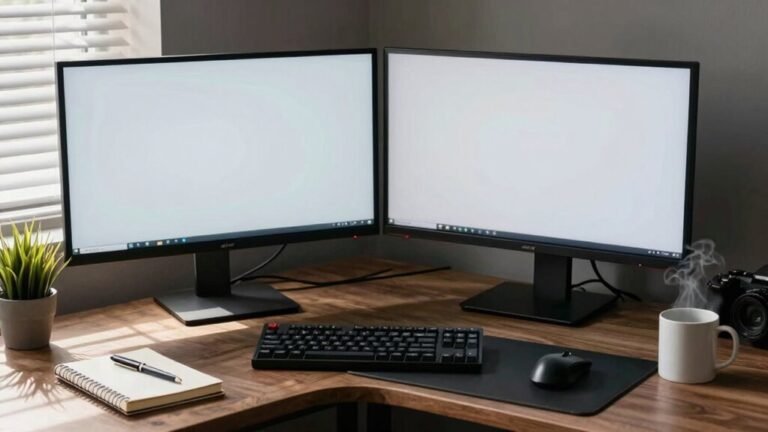
Design a Dedicated Workspace for Maximum Focus
Imagine this: you’re lounging on the couch with your laptop balanced on a wobbly coffee table, your cat batting at the keyboard while the TV hums in the background—sound familiar? It’s cozy, sure, but your brain knows it’s not *work* time.
Carve out a dedicated space, even if it’s just a corner, and watch your focus soar.
A quiet, personalized spot with good light, comfy furniture, and minimal noise cuts stress and boosts productivity.
Natural light? Huge win. Calm blue walls? Yes, please.
Keep your gear handy—no more 20-minute treasure hunts for chargers.
Noise? Block it. Focus? Lock it in.
You’ll sleep better, feel sharper, and actually enjoy work.
Turn that cluttered corner into your command center, and let your brain know: it’s game time.
30% stress reduction comes from natural light exposure, so position your desk near a window if you can.
Trust us, your cat can wait.
Optimize Your Daily Schedule With Time-Blocking
How do you reclaim your day when hours vanish into endless scrolling, stray errands, and that one email chain that just won’t end?
Simple: time-block your way back to sanity.
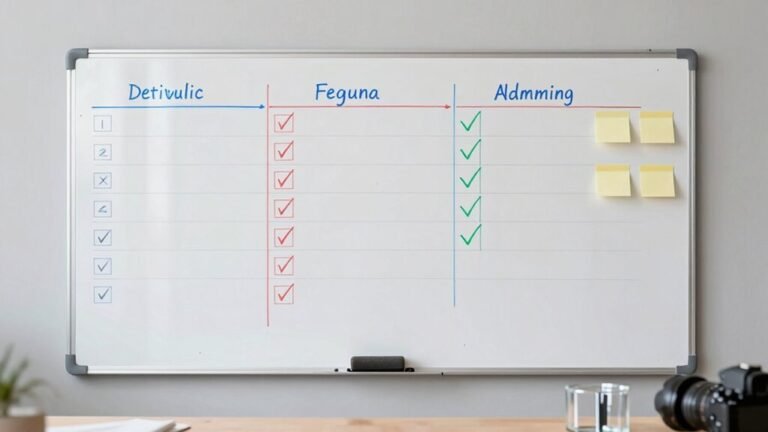
Instead of a chaotic to-do list, carve your day into named, focused chunks—like “Draft Report” or “Answer Emails”—right in your calendar.
Visual blocks stick better than vague plans.
Match hard tasks to your peak energy times (yes, track that for a week!), and save low-effort stuff for your 3 p.m. slump.
Need a meeting? Batch it.
Stack them early so you free up big, beautiful blocks of solo time.
Use timers, label blocks with clear goals, and toss in five-minute buffers—because surprise chaos *will* happen.
End each block with a quick note so you don’t lose momentum.
Treat your schedule like a playlist: well-organized, energizing, and totally yours.
With 72 minutes saved daily from no commute, you gain valuable time to design a more intentional and productive workday.
Boom—done.
Set Clear Communication Expectations With Your Team

Where should you start when your team’s messages are piling up like laundry you keep meaning to fold? By setting clear communication expectations—right from the start. You’ll save time, reduce stress, and keep everyone on the same page. Decide together: use Slack for quick updates, email for official notes, and video for tough topics. Pick one main tool for each type of chat so nothing gets lost. When communication channels are clearly defined, it prevents confusion and aligns with the need for structured communication protocols in remote work. Here’s how simple choices create big clarity:
| Purpose | Tool | Benefit |
|---|---|---|
| Quick questions | Instant chat | Fast, focused answers |
| Formal updates | Clear record, less noise | |
| Complex talks | Video calls | Better connection, fewer mix-ups |
Async updates and regular check-ins help too—just keep them predictable. When you define etiquette and respond promptly, trust grows. Clear expectations aren’t strict rules—they’re freedom in disguise.
Leverage Task Management Tools for Better Organization
Juggling tasks from your kitchen table or home office couch?
You’re not alone—and there’s a smarter way.
Tap into task management tools like Trello, Asana, or ClickUp to turn chaos into clear, colorful game plans.
Drag tasks across Kanban boards, color-code deadlines, or build nested to-dos in GoodDay—no more mental gymnastics!
Tools like Hubstaff or Clockify track time quietly in the background, so you’ll know where minutes go (spoiler: way fewer lost to “Wait, what was I doing?”).
With real-time updates and shared views, everyone stays in sync, even across time zones.
Need to balance workloads?
Gantt charts and AI-powered insights spot bottlenecks before they blow up.
Plus, automatic logging means you’re not babysitting timers.
These tools don’t just organize work—they make you *feel* in control, cut clutter, and actually enjoy checking things off.
Who knew productivity could be this fun?
Establish Strong Work–Life Boundaries

When your home doubles as your office, it’s way too easy to let work creep into your personal time—like that moment you glance at emails during dinner or answer a “quick” message at 8 p.m.
“just to clear the inbox.”
But here’s the good news: you don’t have to live in work mode 24/7.
Set clear start and end times, and stick to them like your favorite show’s on the line.
Claim a dedicated workspace—even if it’s just a corner—and shut it down with a lamp-off ritual.
Block breaks, lunch, and personal time on your calendar like they’re VIP meetings (because they are).
Use status updates and auto-replies to signal, “I’m out!” and actually disconnect.
Your brain will thank you, your family won’t think you’ve moved into the spare room, and your after-hours self will finally relax—without one eye on the inbox.
Boundaries aren’t bossy; they’re brilliant.
Minimize Meeting Fatigue With Smart Meeting Practices
You’ve carved out your space, set your boundaries, and now you’re ready to take back your time—one meeting at a time.
Let’s face it, you’re spending nearly half your week in meetings—11.3 hours, to be exact—and 48% of them probably didn’t need to happen.
Yikes.
Ditch the fatigue by shortening video calls to under 44 minutes; your brain will thank you.
Avoid back-to-backs, skip the 9–11 a.m. and 1–3 p.m. focus zones, and add quick breaks to recharge.
Ask yourself: “Could this just be an email?” (Spoiler: 55% of remote workers think so.)
Trim unnecessary attendees, rethink recurring meetings, and don’t be afraid to mute and stretch.
Oh, and if you’ve ever dozed off in a meeting—no judgment, 19% of us have.
Stay sharp, stay skeptical, and make every meeting earn its spot on your calendar.
Prioritize Tasks to Maintain High-Impact Output

Sorting your to-do list like a pro isn’t just satisfying—it’s your secret weapon for crushing what matters most.
You’ve got limited time and sky-high goals, so why waste energy on tasks that barely move the needle? Try these smart moves to stay focused on what truly counts:
- Use the Eisenhower Matrix to split urgent from important—skip the busywork traps.
- Hunt for the 20% of tasks that deliver 80% of results, then tackle them first.
- Rank tasks by impact × effort: go for high-impact, low-effort wins like a productivity ninja.
- Apply the “one-decision” rule on tiny tasks—5 minutes max, then move on!
Rethink your priorities daily, and watch your output soar.
It’s not about doing more—it’s about doing *right*. Think of it as working smarter, not harder (and yes, that means you can keep snacking guilt-free).
Incorporate Regular Breaks to Sustain Energy
You crushed your priority list like a boss—now let’s make sure you don’t crash right after.
Sneak in regular microbreaks every 50–60 minutes to recharge your brain and body.
Just 30 seconds to stretch or take a quick walk around the house boosts energy and cuts mental fatigue faster than scrolling through social media.
Movement breaks beat passive ones every time—your back, mood, and focus will thank you.
Studies even show short bursts of activity improve sleep and lower burnout over time.
Try stepping outside for a bit of fresh air—nature’s free, and it works!
Schedule breaks with alarms or apps so you actually take them (because willpower fades when deadlines loom).
These mini-reset moments help you stay sharp, cheerful, and genuinely productive all day.
Think of them as hitting “refresh” on your brain—no coffee crash needed.
You’ve got this!
Use Performance Metrics That Reflect Real Results

- Hit deadlines consistently – It shows you’re reliable, especially if you’re coding or managing projects.
- Complete tasks and projects on time – Measure real output, not just hours logged.
- Gather feedback from clients and peers – Happy clients and teammates mean you’re nailing it.
- Track actual results like revenue growth or customer satisfaction – Because boosting profits feels way better than just answering emails fast.
Swap vague goals for clear metrics, and watch your confidence soar. It’s not about working harder—it’s about proving you’re crushing it, one real result at a time. 🚀
Support Long-Term Wellbeing With Consistent Routines
Now that you’re nailing your goals with clear, results-driven metrics, let’s talk about how to keep that momentum going—without burning out.
Start your day the same way every time—maybe it’s coffee, a quick playlist, or a stretch—to cue your brain it’s work time.
Set a hard stop each day, review your wins, and shut down like a pro.
Your brain will thank you.
Stick to consistent sleep times (yes, even on Fridays!) and catch some morning light to stay sharp.
Carve out real breaks, move daily, and protect your evenings with a screen curfew—your sleep (and mood) will shine.
Claim your workspace, block time for deep work, and schedule coffee chats or walks like they’re VIP meetings.
Little routines add up to big resilience.
Think of it as future-you’s favorite love letter.
Sweet, right?
Frequently Asked Questions
How Do I Handle Noisy Roommates While Working From Home?
You tackle noisy roommates by setting clear, friendly rules together—like shared calendars for quiet hours and call times.
Use noise-canceling headphones or a white-noise machine to drown out distractions, and toss down a rug or cozy blanket to absorb sound.
Claim your space with a foldable privacy screen, and don’t forget quick breaks to reset.
A little teamwork and the right gear make peace (and productivity) possible—even in the chaos!
What Should I Do if My Internet Keeps Disconnecting?
You’re not alone—spotty internet’s the worst!
First, unplug your router for 30 seconds and restart it; that fixes a ton.
Check if your Wi-Fi’s drowning under too many gadgets or Netflix streams.
Swap to Ethernet to test if it’s just your wireless.
Peek at your router’s temp—overheating’s a sneaky culprit.
And hey, maybe don’t hug your router, but give it some breathing room!
Can Working in Pajamas Affect My Productivity?
You’re not alone in wondering—pajamas don’t kill productivity, but they might悄悄 affect your mindset.
Research shows you can stay productive in PJs, yet slipping into day clothes can cleverly cue your brain it’s work time. It’s like a mini costume change for focus! And hey, if your sweatpants boost comfort without zapping motivation, rock them proudly—just maybe save the full onesie for weekends.
How Do I Stay Motivated on Days Without Meetings?
You stay motivated on meeting-free days by kicking off with your top 3 wins in mind, then smashing them in focused bursts—Pomodoro style—so progress feels fun and fast.
Throw in cool playlists, quirky rituals, or a victory dance after each task.
Use checklists like a accountability buddy, and sneak in microlearning to feel like a genius. You’ve got this!
Is It Okay to Work From a Coffee Shop Occasionally?
Yeah, it’s totally okay to work from a coffee shop occasionally!
You’ll get a nice creativity boost from the buzz around you, plus a change of scenery keeps things fresh.
Just don’t overdo the lattes—jitters aren’t a productivity hack.
Popping in once or twice a week?
Perfect.
It’s like a mini-workcation with Wi-Fi and caffeine.
Who knew baristas could be your secret weapon?
Conclusion
You’ve got this, and truth be told, working from home doesn’t have to mean chaos or sweatpants 24/7. When you carve out focus time, block your schedule, and actually *use* those breaks, magic happens—productivity spikes without burnout. Think of it like tuning a guitar: small fixes make everything sound better. Soon, your routine hums like a well-oiled machine, and hey, you might even have time for a victory dance—or a nap. Win-win.