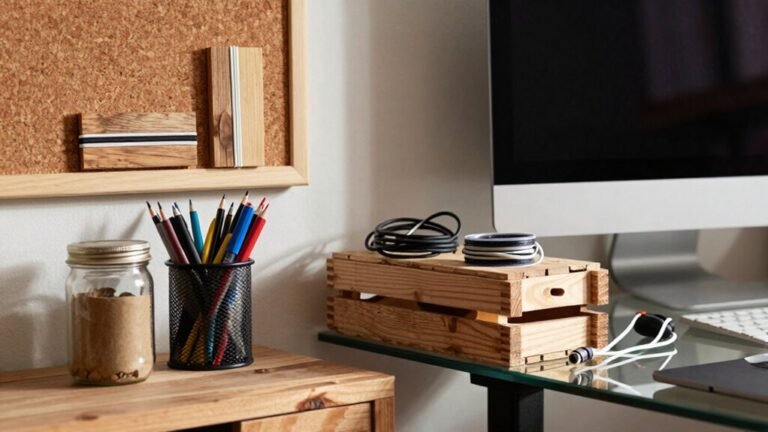
Colors That Make a Small Home Office Feel Bigger
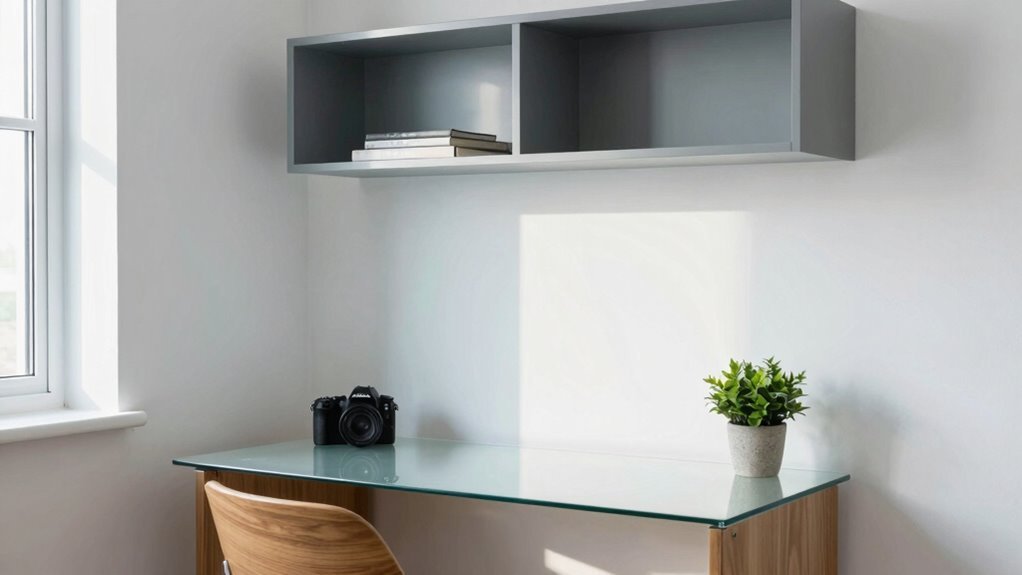
You’ve got this! Paint your walls crisp white or a soft beige to bounce light around and make your space feel open and airy. Try light blue for calm focus, or sage green to add cozy depth without closing things in. Go bold with one dark accent wall to create the illusion of more room—it’s like a magic trick for your eyes. And hey, pairing the right color with shiny decor and good lighting? That’s the secret sauce. Stick around, there’s a little more where that came from.
White: Maximize Brightness and Space
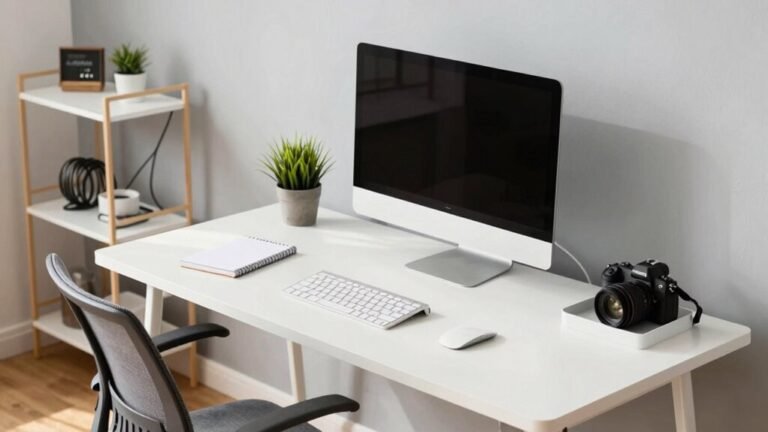
Light, space, and a dash of magic—that’s what white brings to your home office.
You’re not just painting walls—you’re pulling sunlight deeper into the room, bouncing it off every surface like a disco ball (but way more professional).
White reflects nearly all light, making your space feel brighter, bigger, and less like a closet you’ve declared a workspace.
Paint your ceiling white, maybe a touch lighter than your walls, and boom—vaulted vibes without remodeling.
Use the same white on trim and built-ins to keep the flow smooth, like visual jazz.
Matte or eggshell finishes keep things soft on the eyes, while gloss can jazz things up—just watch for wall flaws peeking through.
Pair it with mirrors or a shiny desk, and suddenly your room’s throwing a luminescent party.
White’s your blank canvas, helping you focus—just don’t go full “doctor’s waiting room.”
A little texture, a warm accent? You’ve got this.
White enhances focus by reducing visual clutter.
Off-White and Warm Beiges: Soften the Glow
Sure, white might dazzle with its brightness, but if you’re after a space that feels calm, cozy, and quietly put together, off-white and warm beiges are where you want to land.
These shades gently bounce light around, making your small office feel more open without the coldness of stark white. You’ll stay focused and relaxed, thanks to their soothing, stress-reducing vibes.
- They make your room feel bigger andcozier—yes, really.
- They highlight wood desks and linen curtains without stealing the spotlight.
- They’re neutral ninjas, blending with any accent color you throw their way.
- They banish harsh shadows, especially on gloomy afternoons.
With off-white or warm beige, you’re not just painting walls—you’re wrapping your workspace in quiet confidence, soft light, and a hint of warmth that says, “You’ve got this.” And honestly, who doesn’t want that kind of pep talk from their office? These tones subtly enhance natural light due to their warm yellow undertones, contributing to a more spacious and inviting atmosphere.
Pale Greige: Neutral With Subtle Warmth

You’ve already seen how off-white and warm beiges wrap your home office in gentle comfort, but if you’re looking for a shade that’s a little more… worldly—like neutral with a passport—pale greige is ready to step in.
It’s the smooth operator between gray and beige, giving you cool stability with just a whisper of warmth.
Think of it as natural light in paint form—calm, balanced, and always looking good, no matter the weather outside.
It reflects light like a pro, making your space feel open and airy without feeling cold or washed out.
Your walls seem to float away, especially with natural wood furniture and textured rugs.
Pair it with white trim for punch, or add earthy accents like olive green to keep things grounded.
It’s serene but not sleepy, focused but not stiff—basically, the ideal coworker.
You’ll feel calmer, work better, and swear your room grew overnight.
Who knew neutral could be this clever?
This adaptability makes greige a versatile neutral that harmonizes effortlessly with both warm and cool design elements.
Light Blues for Calm and Focus
Turn your home office into a burst of newness—literally—with light blues that calm your mind and sharpen your focus.
This isn’t just color; it’s your secret weapon for feeling spacious and staying sharp.
Light blue walls bounce light around, making your room feel bigger and brighter, while helping your brain stay cool under pressure—like a mini vacation every time you sit down to work.
- Paint your longest wall light blue to open up the space like a sky on a clear day
- Go for a sky-ceiling effect by using light blue above and neutral below—yes, ceilings can cheat space!
- Choose pale, soft blues (not neon!) to keep things peaceful, not overwhelming
- Mix in white trim and light wood furniture to keep the vibe warm and airy, not like a fridge
You’ll work better, breathe easier, and wonder why you waited.
Muted Mid-Blues: Depth Without Dimness

Light blue gives your home office a spark of renewal, but sometimes you crave a little more depth without closing the room in—like swapping a postcard sky for something richer, moodier, and a touch more mysterious.
Enter muted mid-blues: they pull the eye back, making your space feel deeper without dimming the mood.
These shade smartly recede, especially on a far wall, quietly whispering, “Hey, the room’s bigger than you think.”
They’re calm but not sleepy, sharp enough to help you focus, yet soft enough to keep stress at bay.
Worried about gloom? Pick a mid-blue with a decent light-reflectance value, pair it with light ceilings and warm wood accents, and add some mirror magic.
A semi-gloss trim or brass lamp warms things up, keeping the vibe cozy, not cave-like.
It’s depth with drama—and zero dimness.
Serene Greens for Mental Clarity
- Boosts focus without the jolt of caffeine
- Cuts mental clutter like a mini mental reset
- Makes walls feel farther thanks to their gentle depth
- Turns boring walls into quiet, leafy hideaways
Green isn’t just a color—it’s your brain’s favorite coworker.
Sage and Olive: Calming Mid-Tone Options

When you’re craving a home office that feels like a deep breath, sage and olive greens step in like the calm, collected friend who always has their life together—seriously, they’ve got your back.
Sage, with its soft gray-green whisper, brings spa-like serenity and makes your space feel light, airy, and open, especially in natural light.
Olive, richer and earthier, wraps you in warm, grounded vibes—like nature’s hug for your brain.
Both tones boost focus, lower stress, and melt anxiety, making them perfect partners for productivity without the panic.
They’re mid-tones that play well with others: pair sage with navy for elegance or olive with beige for quiet sophistication.
Throw in some plants or brass accents, and boom—your room feels balanced, fresh, and oh-so-spacious.
Test swatches first, because lighting changes their mood—cool by day, cozy by night.
Honestly, green doesn’t just grow on walls—it *works* there.
Muted Yellows: Gentle Mood Boosters
You’ve got a happy little secret weapon for your home office: muted yellows.
They cheer you up without the drama of bright ones that scream for attention.
Think of them as sunshine in a can—gentle, warm, and totally on your side.
These soft, buttery tones boost your mood, spark creativity, and help you think clearly without overloading your brain.
- Adds warmth to north-facing rooms that never see real sunlight
- Gives your brain a quiet nudge to stay focused and feel optimistic
- Makes tiny offices feel airier and subtly brighter
- Keeps things calm (unlike that neon yellow gym sock from laundry day)
Used right, like a 10–15% accent or soft wall color, they lift your spirits without the crash.
Pair them with neutrals, and you’ve got a space that feels good and works hard—kind of like coffee, but in wall form.
Accent Walls in Darker Hues for Visual Depth

Turning one wall a deep, luscious color is like giving your home office a magic trick up its sleeve—suddenly, the room feels bigger, richer, and way more intentional.
You’re not shrinking the space; you’re fooling the eye into seeing depth, thanks to how dark hues naturally recede.
Paint the farthest wall in moody navy or forest green, and boom—your brain thinks the room stretches farther than it does.
It’s like visual sleight of hand!
That dark wall pulls your gaze, making lighter walls behind it seem to fade into the distance.
Plus, it creates a sleek backdrop for your desk or shelves, making your setup pop like artwork in a gallery—minus the pretentious music.
Just avoid painting the whole room in charcoal unless you want to recreate a cozy cave (fun for Netflix, less so for spreadsheets).
With one bold wall, you’re not just adding color—you’re adding space, drama, and a dash of genius.
Balancing Color With Light and Materials
Ever wonder why that soothing blue you picked online looks icy cold in the morning light? Light changes everything—your paint, your mood, even how big your office feels. To keep your space looking fresh and open, you’ve gotta balance color with light and materials like a pro.
Here’s how to play nice with your space:
– Test swatches at different times—that “calm gray” might turn gloomy by3 PM.- Match bulb temps to tasks:5000K+ for focus,2700K for cozy vibes.- Use sheer curtains—they’re like cheat codes for soft, natural glow.- Pair matte walls with glossy decor—the combo bounces light without glare.Natural wood warms up cool walls, glass shelves float like magic, and a textured rug? That’s stealthy depth. Keep undertones in harmony, and your tiny office won’t just feel bigger—it’ll feel *smarter*. Light, color, and stuff? Yeah, they’re all on your team now.
Frequently Asked Questions
Can I Use Dark Furniture With Light Wall Colors in a Small Office?
Yes, you can definitely use dark furniture with light wall colors in your small office—it’s a total game-changer!
The contrast makes the room pop while keeping it feeling open and bright.
Light walls bounce around the light, and your sleek dark desk or chair adds rich, stylish depth.
Just add a fun lamp or cool art, and boom—your space looks bigger, sharper, and way more “you.”
How Do I Choose a Ceiling Color for a Small Home Office?
You’ll make your ceiling soar like a hot air balloon by painting it a shade lighter than your walls—trust me, it’s magic.
Choose soft white or a whisper of cool blue to keep things airy and bright.
Match the undertone to your light, skip the gloss unless you love drywall drama, and always, *always* test a sample.
It’s like a dress rehearsal for paint.
You’ve got this!
Should Trim and Doors Match the Wall Color in a Small Space?
Yeah, you should match your trim and doors to the walls—it totally opens up the space!
When everything blends, your eye flows freely instead of getting stuck on harsh lines.
It’s like magic: no more choppy, boxy vibes.
Use the same soft, light color and let a hint of sheen on the trim add subtle pop.
Boom—bigger, brighter, and way more “I-can-focus-here” energy!
Do Accent Colors Need to Coordinate With Wall Paint?
Nope, accent colors don’t have to match your wall paint—60% of designers actually use contrast to spark creativity!
You can totally play up drama or focus by going bold behind your desk.
But if you want a calm, open feel, stick to tones close in lightness and undertone.
Just test swatches, trust your gut, and remember: it’s your office, not a science lab.
Have fun with it!
How Often Should I Repaint a Small Home Office for Freshness?
You should repaint your small home office every 5 to 7 years for a fresh, vibrant feel, but if you’re in there nonstop, rolling around on your chair like a CEO on a mission, go every 3 to 5.
Spot touch-ups yearly keep things looking sharp, and high-quality paint can stretch time between coats.
Watch for fading, scuffs, or mood shifts—your walls might be crying for a change before you even realize it!
Conclusion
You’ve got this! Paint your small home office in light, airy hues like white, soft blue, or sage, and watch the walls seem to breathe open. Sunlight dances better, your mind stays calm, and even your coffee breaks feel fancier. A pop of deeper color on one wall? Clever illusion, like a magic doorway. With the right colors, your space doesn’t just feel bigger—it feels brilliantly *yours*.