Ways to Upgrade Your Office Chair on a Budget
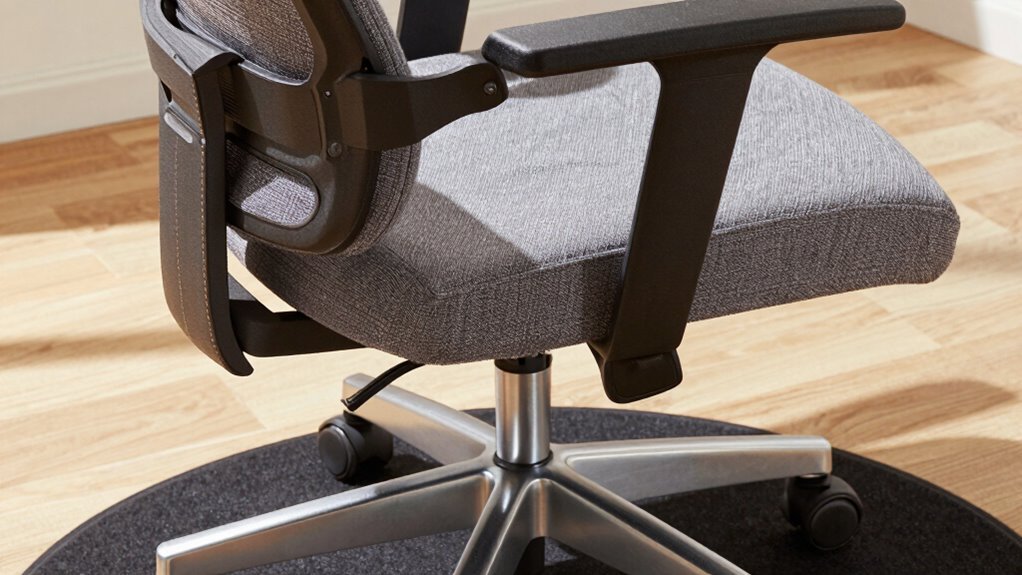
You can give your office chair a wallet-friendly makeover in no time. Adjust the height so your feet lie flat and elbows bend at 90 degrees, then add a memory-foam lumbar pillow for back bliss. Swap out squeaky casters for smooth-gliding 3-inch ones, toss on a gel seat pad, and throw down a chair mat to roll like a dream. Wipe it down, tighten a few screws, and boom—your chair feels almost brand new. Wait until you see what else a $20 tweak can do.
Adjust for Optimal Ergonomic Positioning

While your fancy new office chair might look sleek, it won’t do you much good if it’s not dialed in just right—think of it like a race car seat: even the fastest ride feels bumpy if your posture’s off.
Start by adjusting the height so your feet rest flat and your thighs stay parallel to the floor—knees should never hike above your hips, unless you’re auditioning for a yoga ad.
Match the seat height so your elbows land at desk level, bent at 90 degrees.
Tilt the seat slightly forward to ease hip pressure, and leave a couple fingers’ space between the edge and your knees.
Pull the lumbar support snug into your lower back—your spine will thank you.
Sit all the way back, keep shoulders relaxed, and lock that synchro tilt so you don’t suddenly recline mid-email.
It’s not magic—it’s ergonomics.
For proper alignment, ensure your backrest height matches the natural curve of your lower back.
Add Comfort With Low-Cost Cushions and Supports
You don’t need a brand-new throne to beat back the aches—just a few smart, wallet-friendly upgrades can turn your basic office chair into a comfort powerhouse.
Try a memory-foam lumbar pillow or even a rolled-up towel to support your lower back and ditch that slouch.
Inflatable or mesh-backed supports let you customize the fit without breaking the bank.
For your seat, go for a gel-infused cushion to cool things down and ease sit-bone pressure, or pick a coccyx-cut design if your tailbone’s throwing a tantrum.
Slip on padded armrest covers to soften those hard edges—your elbows will thank you.
Need neck or upper-back relief? Strap on a contoured pillow or clip on a headrest for mini-respite.
Most fixes cost under $30, weigh next to nothing, and install in seconds.
Boom—hello comfort, goodbye stiffness!
Proper lumbar support helps maintain the natural curve of your lower spine and prevents slouching.
Upgrade Mobility With Better Casters and Mats

Gliding across the room like a secret agent on a mission just got easier—upgrading your chair’s casters and mat can transform that bumpy, squeaky roll into a slick, silent ride.
Swap those tiny 2-inch wheels for larger 3-inch casters, and suddenly you’re rolling over carpet ridges and cords like they’re nothing.
Need more stability? Go for twin-wheel casters—they balance better and turn on a dime.
If you’re on hardwood or tile, soft polyurethane or rubber wheels keep floors safe and noise down.
Hard nylon? Perfect for carpet, but skip them on hard floors unless you want a squeak concert.
Check your stem size—it’s usually 7/16-inch—and pick casters rated beyond your weight for long-term peace of mind.
Toss in a rollerblade-style caster or a simple mat, and you’ve got office-grade stealth mode.
Casters distribute weight evenly for smoother movement and reduced wear on both floor and chair.
Who knew moving your chair could feel this satisfying?
Improve Floor Protection and Chair Stability
- Use a durable chair mat to shield floors and stabilize rolls on slick surfaces.
- Switch to soft casters or add felt pads to stop scratches and reduce noise.
- Install rubber glides or locking casters when you need to stay put without drifting.
- Secure mats on carpet with studded backs to prevent wobbling or sliding.
Reupholster for a Fresh, Professional Look

Give your tired office chair a bold second life with a sleek new fabric coat—like giving your favorite pair of jeans a glow-up, but for your workspace. You don’t need to splurge on pro reupholstery, which can hit $700; go DIY and save big.
For just $50 to $300, pick durable, stain-resistant fabric like polyester or faux leather ($10–$20 per yard). Most chairs need 3 to 7 yards, so grab a little extra for pattern matching. Faux suede or synthetic blends look sharp and cost less than premium materials.
Skip the high labor fees—roll up your sleeves and tackle it yourself with online guides.
Not only does reupholstering breathe new life into your chair, but it’s also greener and often cheaper than buying new.
Think of it as a wardrobe upgrade—for your chair.
Who knew office furniture could have swagger?
Enhance Support With DIY Structural Modifications
Ever feel like your office chair’s seen better days—sinking without warning, wobbling at the slightest shift, or leaving you hunched like a question mark by 3 p.m.?
You’re not stuck with it!
With a few clever tweaks, you can boost support and stability without spending a dime.
Reinforce wobbly legs, stop sinking seats, and even add extra height—all with simple DIY upgrades that work like magic.
- Slide a PVC pipe over the gas cylinder to halt sinking permanently
- Drill 1.5-inch screws through the cylinder at your ideal height for a no-sag fix
- Add a custom frame with a jigsaw and drywall screws to gain height and balance
- Center the swivel column behind the frame’s midpoint to stop backward tilt
Your chair isn’t broken—it’s just waiting for a upgrade.
A little effort goes a long way, and hey, now it’s *your* design.
Who knew engineering could feel this satisfying?
Refresh Worn Surfaces With Paint and Wraps

Giving your tired office chair a fresh new look doesn’t have to mean shelling out for a fancy replacement—sometimes all it needs is a little color therapy.
Start by cleaning surfaces, sanding smooth ones, and taping off parts you don’t want painted—trust me, that label on the base looks sad under spray paint.
Use fabric paint for cloth seats, vinyl spray for leather, and rust-resistant spray for metal frames.
Apply thin, even coats—no one likes drips (except maybe your toddler with syrup).
Wraps work great too: adhesive vinyl sticks like a pro on plastic, while stretchy slipcovers hide fabric sins.
Tuck edges neatly or use a heat gun gently—don’t melt your chair into a modern art piece.
Mix wraps and paint for a custom vibe without breaking the bank.
It’s cheap, fun, and hey—your chair might just get more compliments than you do.
Maintain and Extend Chair Component Life
While your chair won’t ask for a spa day, treating it right means it’ll support you for years—without acting up like a moody teenager.
A little love goes a long way in keeping it rolling smooth and sturdy.
You don’t need fancy tools or big bucks—just consistency and a few smart habits.
Catch small issues early, keep parts clean, and your chair will thank you by lasting way longer.
Here’s how:
- Inspect Weekly: Tighten loose screws, check casters, and test moving parts to stop small issues from becoming big problems.
- Clean Monthly: Vacuum cushions and wipe surfaces to keep fabric fresh and prevent grime buildup.
- Lubricate Every 6 Months: A quick oil on wheels and joints prevents squeaks and keeps motion smooth.
- Replace Worn Parts: Swap out casters or arm pads early—it’s cheaper than buying a whole new chair.
Prioritise Budget-Friendly Upgrades Under $50
You’ve already got the basics down when it comes to keeping your office chair in fighting shape—tightening bolts, cleaning grime, and giving sticky casters a little love every few months.
Now it’s time to level up, without draining your wallet.
Swap in a memory-foam lumbar pillow for $15–$35 and finally give your lower back the hug it’s been begging for.
Toss on a gel seat pad to banish hot spots, or slip on a breathable mesh cover to stay cool under pressure.
Got wobbly rollers? Upgrade to soft polyurethane casters for $10–$30 and glide like a secret agent across hardwood.
Clip on padded armrests or grab a desk slider for smoother typing posture—all under $50.
Even a USB-heated pad for chilly mornings won’t break the bank.
These smart swaps add comfort, style, and a dash of luxury, all while keeping your budget blissfully intact.
Your butt (and your boss) will thank you.
Frequently Asked Questions
Can I Use a Pillow Instead of a Lumbar Support?
Yeah, you can use a pillow instead of a lumbar support—just don’t expect it to work like magic.
It’ll help at first, sure, but most pillows flatten out fast, slide around, or push you forward.
You’ll end up wiggling like a puppy on a beanbag.
For real, lasting comfort?
Grab a contoured lumbar cushion.
It’s like giving your back a cozy, full-time bodyguard—for less than your weekly coffee habit.
How Do I Stop My Chair From Sinking Over Time?
You’re not a deflating balloon, so your chair shouldn’t sink like one!
If it’s slowly giving up on life, check the pneumatic cylinder—it’s probably worn out.
Swap it for a new one if you want a real fix, or slap on a hose clamp like a temporary superhero.
Slide a split PVC pipe around the stem to lock the height, or tighten the tension knob like you mean it.
And hey, at least it’s not you slumping!
Are Gel Cushions Better Than Memory Foam for Sitting?
No, gel cushions aren’t *better*—they’re just different!
You’ll find gel firmer and cooler, great if you hate sweating on foam.
But if you want cozy, body-hugging support for long hours, memory foam’s your buddy.
It cradles your back like a patient, slightly squishy friend.
Gel bounces back fast; foam takes its sweet time.
Want the best of both? Try gel-infused memory foam—it’s like a cool hug that lasts!
Will a Chair Mat Work on Thick Carpet?
You bet a chair mat will work on thick carpet—it’ll practically work miracles!
Without one, your chair sinks like it’s stuck in office quicksand.
Grab a thick polycarbonate or heavy-duty vinyl mat, and suddenly you’re gliding like a boss.
It flattens the chaos, stops carpet munching, and saves your wheels.
Just pick the right size and backing, and boom—smooth moves all day, no drama.
Can I Paint Leather Parts of My Office Chair?
Yeah, you can totally paint the leather parts of your office chair!
Just clean it well, lightly sand, and use a primer made for leather.
Then, grab some flexible leather paint and apply thin, even coats—don’t rush it.
Let each layer dry fully, and finish with a good sealant.
It’ll look fresh and last way longer.
Think of it as a glow-up for your chair, not a science project!
Conclusion
You’re not just fixing a chair—you’re building a throne fit for a productivity king or queen. With smart tweaks, that wobbly desk buddy transforms into a sleek, comfy command center. Small upgrades spark big changes, like giving your workspace wings. Who knew greatness could roll so smoothly? So go ahead, flex those DIY muscles, save a buck, and sit proud—your empire, one budget-savvy swap at a time, is rising!