How to Sit Correctly in an Office Chair to Avoid Pain
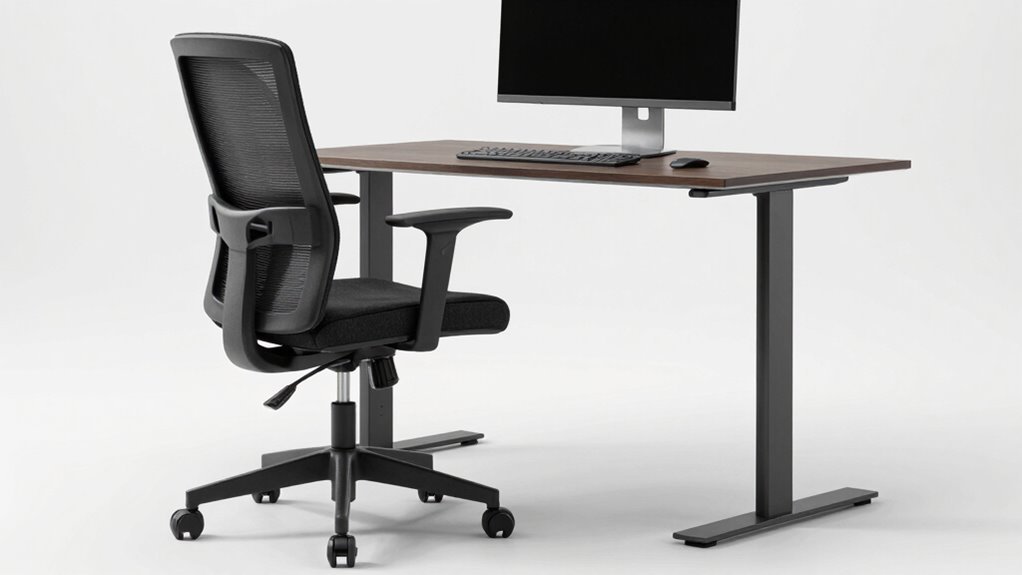
Sit with your feet flat and knees at 90 degrees, letting your thighs run level—no tucking or dangling. Tuck your lower back into the lumbar support like it’s giving you a cozy hug. Keep a fist’s width between seat edge and knees to keep blood flowing. Let arms hang loose, elbows just grazing the armrests. And hey, your spine will thank you if you stand, wiggle, or stretch every half hour—pain-free days start with small moves. There’s more where that came from.
Optimize Seat Height for Proper Leg and Knee Alignment
Wondering if your chair is secretly plotting against your legs?
It might be!
Grab control by setting your seat height right.
Stand in front, then adjust the chair so the seat’s top edge sits just below your kneecap.
Sit down and plant your feet flat—your knees should bend at a cozy90 degrees.
Make sure there’s2-3 inches of space behind your knees and the seat edge, so your legs aren’t getting a bear hug.
Thighs should run parallel to the floor, not sloping up or squished down.
If you’re under5’5″, aim for15-16 inches; taller than6’? You’ll likely need up to23 inches.
Feet not touching? Grab a footrest!
Proper height keeps blood flowing, avoids aching legs, and helps you stay comfy and focused—no mutiny in the leg department!
Weight capacity also matters—ensure your chair supports your body weight to maintain proper alignment and prevent long-term damage.
Support Your Lower Back to Maintain Spinal Health
When you sit without proper lower back support, your spine starts slumping like a tired accordion, and that natural curve in your lower back?
It vanishes—hello, achy days and stiffness! But don’t worry—lumbar support’s got your back, literally.
Think of it like a trusty helper propping up your spine, just like a support beam keeps a building standing strong.
To keep your spine happy and healthy, try these pro tips:
- Position the lumbar cushion right in the small of your back where the curve dips in.
- Use chairs with adjustable or self-adjusting lumbar—some even move with you like they’re reading your mind!
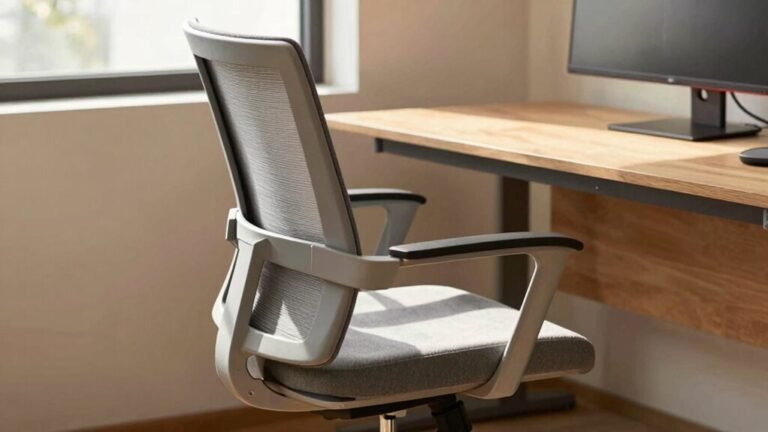
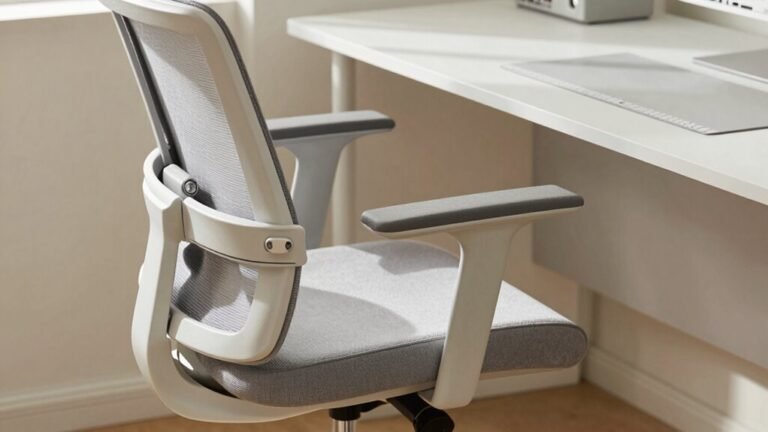
- Go for breathable mesh backs with built-in contouring that hugs your shape comfortably.
- Add a cushion or insert if your chair’s support feels a bit “meh.”
Your back will thank you—no spinal drama, just smooth sailing through your workday.
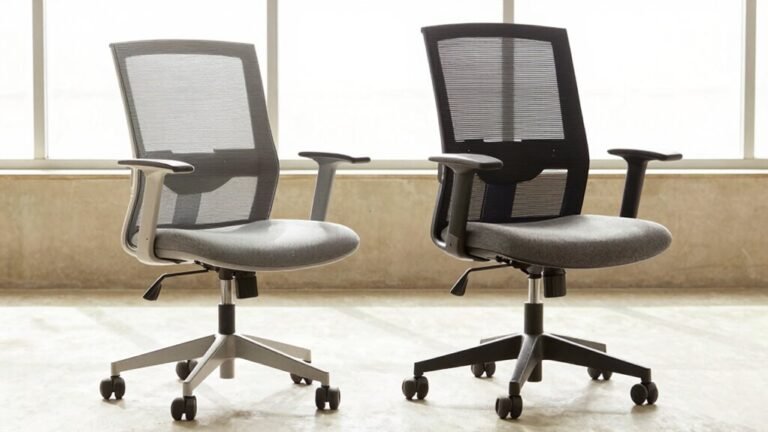
Chairs like the Branch Ergonomic Chair Pro offer deep, long-term comfort with extensive adjustability to maintain proper spinal alignment.
Adjust Seat Depth to Enhance Circulation and Comfort

Tuning your chair’s seat depth is like hitting the sweet spot in a cozy car seat—get it right, and everything just *feels* better.
You want 2–4 inches between the seat edge and the back of your knees—enough room to avoid squishing those delicate blood vessels, but not so much that your thighs are hanging off like a dangling snack.
This sweet gap boosts circulation, keeps numbness at bay, and supports your booty in the right spot so your lower back stays happy.
If the seat’s too deep, you’ll either slouch forward like a grumpy turtle or lose lumbar contact; too shallow and your sit bones will scream from pressure.
Adjustable depth? Yes, please—it’s a game-changer for different body types and lets you shift positions without sacrificing comfort.
Think of it as giving your legs a comfy couch—because nobody likes cramped calves or tired thighs.
Proper seat depth helps maintain spinal health and alignment.
Position Arms and Shoulders to Reduce Upper Body Strain
Now that your seat depth is dialed in just right—giving your legs room to breathe and your circulation a high-five—it’s time to give your arms and shoulders some love.
You’ll feel the difference when you nail this:
- Set your armrests so they barely kiss your forearms, about 0–2 cm below your relaxed elbows—no shrugging allowed!
- Space them 5–10 cm from your torso so your arms hang naturally, like you’re ready to hug a yoga ball.
- Let your shoulders melt down—tension hates a good support system, and so do you.
- Use armrests to carry your arm weight, but keep wrists free; they’re not built for typing marathons on hard edges.
Skip the common traps (like sky-high rests or one-size-fits-none), and your neck and back will thank you later—one pain-free hour at a time.
Take Regular Movement Breaks to Prevent Postural Fatigue

Moving keeps you grooving—literally. Sitting too long, even with perfect posture, can leave you stiff and aching. The fix? Sneak in quick movement breaks every 20–30 minutes. Stand, stretch, march in place, or shift your seated posture often—your body will thank you. Research shows these tiny resets cut fatigue, ease discomfort, and even prevent pain down the line. Try mixing it up for best results.
| Break Type | Why It Works |
|---|---|
| 2-min walk | Boosts energy, reduces stiffness |
| Seated shifts | Prevents back/neck pain |
| Standing stretch | Loosens tight hips and shoulders |
| Bodyweight squats | Fights mental fatigue, wakes up legs |
You don’t need a gym—just a minute and a little moxie. Your spine (and coworkers) will love your new groove!
Frequently Asked Questions
Can I Use a Stability Ball Instead of an Office Chair?
No, you shouldn’t swap your office chair for a stability ball full-time—your back might thank you now, but your body’ll rebel later.
Sure, it feels fun and wobbly-cool at first, but you’ll tire fast, risk a tumble, and get zero lumbar support.
Think of it like sitting on a bouncy friend: entertaining, but not reliable.
Stick to your ergonomic chair for work, and use the ball for quick movement breaks—your spine will stay happy, upright, and, well, intact.
How Do I Know if My Chair Is Too Wide?
You’ll know your chair’s too wide if you’re floating in it like a kid in a dad-sized coat—arms stretch hard to reach the armrests, and your thighs don’t touch the edges.
You wobble side to side, slump sideways, or constantly adjust just to feel stable.
If your chair feels like a love seat for one, it’s likely too wide—time to downsize or add support.
Should My Hips Be Higher Than My Knees When Sitting?
Nope, your hips should be higher than your knees when sitting—think of your body like a happy little see-saw.
Keep your bum elevated, knees at or slightly below hip level, and feet flat on the floor or a footrest.
This sweet spot helps your spine stay in its natural S-curve, cuts back on back pain, and keeps you comfy all day.
Slouching? Not on your watch! You’ve got this!
Is It Better to Sit on a Hard or Soft Chair?
You’re better off with a hard chair—it keeps your spine happy and pain away.
Sure, soft chairs feel like a hug at first, but they let you sink into slouch city.
Hard chairs? They nudge you upright, support your natural curves, and stop you from turning into a grumpy pretzel.
Think firm friend, not unforgiving foe.
Your back’ll thank you later—no dramatics, just good, quiet spine health.
What Pillow or Cushion Helps With Tailbone Pain?
You’ll love how a U-shaped or coccyx-cutout cushion instantly takes the pressure off your tailbone—it’s like giving your sore spot a little vacation.
Grab one with firm memory foam so it won’t squash down and betray you mid-sit.
Gel-infused? Even better—it stays cool when things heat up.
And hey, bonus points if it’s got a non-slip bottom, because chasing a sliding cushion is *not* the workout you signed up for.
Conclusion
Sit right, feel light, work bright. Align your legs, support your back, nestle close to the chair’s sweet spot. Keep arms relaxed, shoulders soft, elbows at ease. Move often—stretch, stand, shake it off like a dog after a bath. Pain’s no party, so tweak your throne, own your posture, and conquer the day. You’ve got this, ergo ninja!