Setting Up a Professional Home Office on a Budget
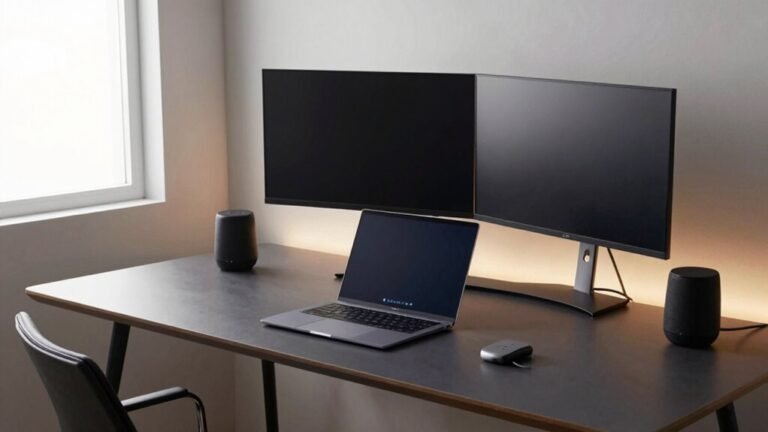
You can create a pro-looking home office without emptying your wallet. Grab an affordable electric desk like the Airge Gear or a sturdy Green Forest model, pair it with an ÖRFJÄLL chair for comfort, and add a slick ASUS monitor for crisp visuals. Tame cords with a USB-C dock, save big on gently used gear, and stash supplies on floating shelves. Turn that dusty corner into your productivity paradise—your future focused self will thank you.
Choosing the Right Desk and Ergonomic Furniture
You don’t need to blow your budget to build a workspace that’s comfy and productive—there are some seriously great desks out there that won’t make your wallet weep.
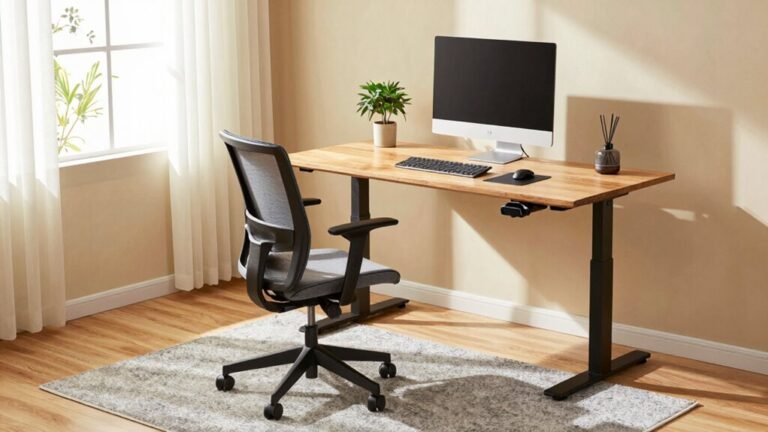
Snap up the ODK for just $40, or go wild with the Airge Gear electric standing desk under $85—yes, you can wobble your way to better posture without going broke.
Need more room? The Green Forest spans 67 inches and still stays under $100.
For sleek style and smart features, Bestier’s reversible desks pack drawers and USB ports, all under $160.
And hey, if you’re craving ergonomics, grab a model with a keyboard tray or adjustable height—your back will thank you.
Don’t sleep on leveling feet or 30-inch depths either; they keep things stable and comfy.
With snazzy options like these, your home office won’t look “cheap”—just clever.
Who knew adulting could feel this good?
30-inch depths help maximize workspace functionality while maintaining a clean, bold footprint.
Prioritizing Essential Technology on a Budget
What if you could build a tech-savvy home office without maxing out your card?
You absolutely can—start with the tech that boosts both comfort and productivity.
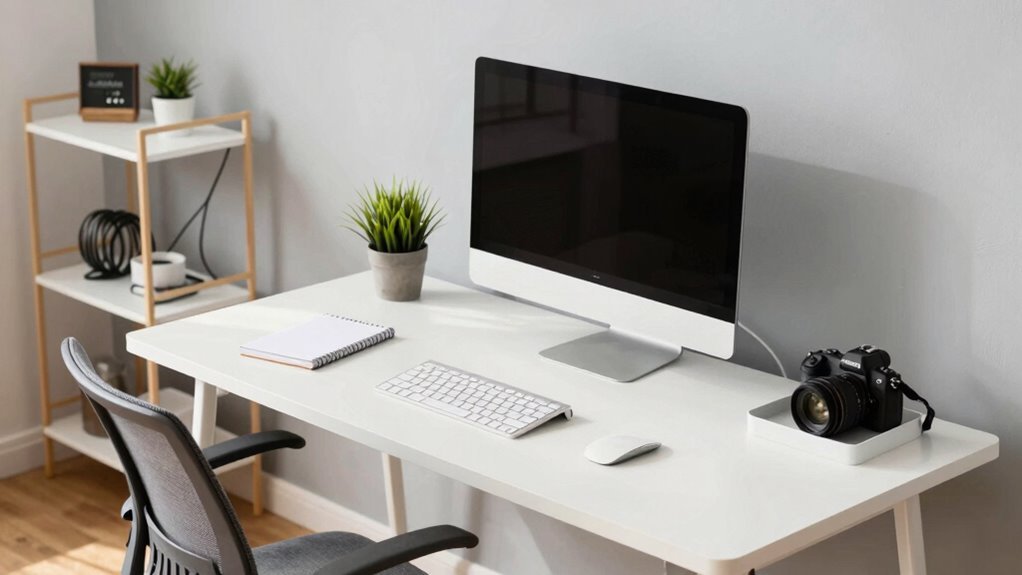
Grab an affordable Full HD monitor like the ASUS VA24EHE to protect your eyes and multitask like a pro.
Toss in noise-canceling headphones—they’re a game-changer when the dog barks during back-to-back Zoom calls.
And don’t sleep on a USB-C docking station; it slashes cable chaos and keeps everything running smoothly.
- A crisp monitor = less squinting, more thriving
- Noise-canceling headphones = fewer “Can you repeat that?” moments
- A solid Wi-Fi 6 router = goodbye frozen screens, hello smooth meetings
With these essentials, you’re not just working from home—you’re owning it.
Entry-level setups can start from as little as £300, making professional home offices accessible even on a tight budget £300 minimum setup cost.
Smart Ways to Save on Office Equipment and Supplies

While you’re slashing cable clutter and zooming through video calls with ease, don’t let your budget take a nosedive when stocking your workspace—smart savings are everywhere if you know where to look.
Snap up gently used desks or chairs and pocket 50–70% off, keeping hundreds in your pocket.
Need a conference table? Used ones go for $300 instead of $800—cha-ching!
Track supplies in one spot to stop overbuying (no more “Oops, I bought another ream!”).
Turn off lights and gadgets when done—save up to a third on electricity.
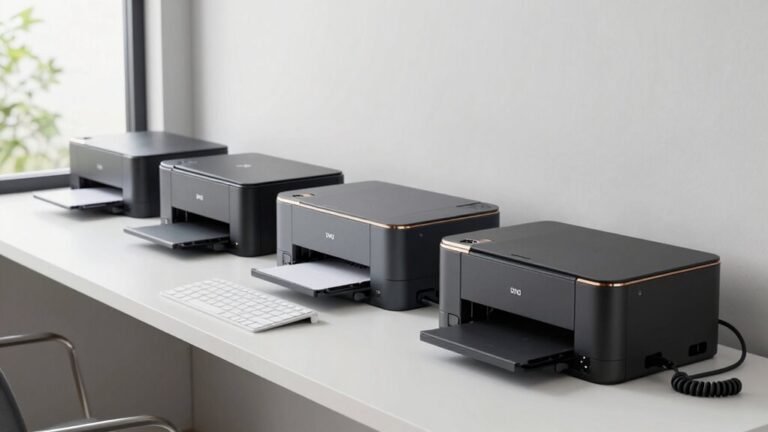
Swap in LED bulbs and energy-smart printers that cut costs without cutting corners.
Grab refurbished gems or last-gen gear—they work just as well and won’t drain your wallet.
With sharp planning and a little thrift-store magic, your dream setup won’t cost a fortune.
Who knew being frugal could feel this fancy?
Up to $40,000 in savings is possible by choosing used furniture and equipment instead of new.
Optimizing Small Spaces for Maximum Productivity
- Turn unused corners into cozy command centers—hello, hidden office!
- Swap bulky furniture for sleek, multi-use pieces that adapt as you do.
- Carve out quiet zones so your brain stays sharp, not scattered.
Small space? No problem.
With a little creativity (and zero magic), you’re already working smarter.
Building a Professional Environment Without Breaking the Bank

You don’t need a six-figure budget to create a workspace that looks pulled together and feels totally professional—your dream home office can start with a second-hand desk from your parents and a few clever swaps.
Grab an affordable ÖRFJÄLL chair at $80 or splurge slightly on the SMÖRKULL with armrests—your back will thank you.
Mount a Nathan James wall desk to free up floor space, or stick floating shelves and pegboards on blank walls to keep clutter at bay.
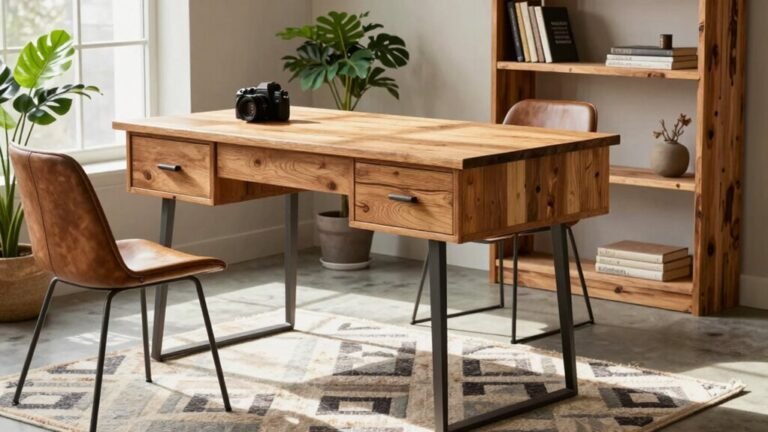
Tuck a jute rug under a hand-me-down wooden desk for warmth, and pin inspiration to DIY fabric-wrapped boards.
Slide wire baskets with cream liners onto shelves for that industrial-farmhouse flair.
Hide your wireless printer in an IKEA credenza, use an Ergotron arm for your ASUS monitor, and bam—you’ve got a sharp setup that screams “I mean business,” not “I bought it all on sale.”
Who knew professional could be this pocketbook-friendly—and kind of fun?
Frequently Asked Questions
Can I Deduct Home Office Costs on My Taxes?
Yes, you can deduct home office costs if you’re self-employed and use a space regularly and exclusively for business.
Just pick the simplified method—$5 per square foot up to 300 feet—or the actual expense method for bigger savings.
Either way, keep things clean, claim it on Schedule C, and boom, you’re trimming taxes while working in your pajamas—now that’s a win!
How Do I Hide Cables Neatly Without Buying Organizers?
Who knew your desk could keep secrets like a tidy ninja?
You tuck cords behind furniture, route them along legs with clipped paper strips, and twist excess into neat coils—voilà, no kits needed!
Flip a basket under your desk, loop cables through with old shoelaces, and secure power strips with zip ties from old packaging.
Sneaky cup hooks hold heavy plugs, and presto: clean lines, no clutter, just pure, stealthy slickness!
Is It Worth Investing in a Standing Desk Converter?
Yeah, it’s worth it—you’ll feel better and have more energy.
Standing breaks help your back, neck, and focus, especially if you’re slumped over all day.
You don’t need to stand all day—just switch it up.
Think of it like a mini workout for your spine.
Plus, wobbling while standing keeps you honest (and awake).
Just pick one that’s easy to adjust, so you actually use it.
Your body’ll thank you.
What’s the Best Way to Test Internet Speed for Calls?
You’ll want to use tools like Fast.com or Speedtest.net—they’re quick, free, and show your download and upload speeds in seconds.
Check jitter and ping too, keeping jitter under 30ms for smooth calls.
Test a few times, especially when streaming or working, so you catch real-world hiccups.
Think of it like a Wi-Fi workout: if it can’t handle the burn, your calls will gasp for air!
How Can I Reduce Glare on My Monitor From Windows?
You can slash window glare by sitting at a right angle to the light, about 3 feet back—trust me, the sun won’t photobomb your screen anymore.
Angle your monitor perpendicular to the window and tilt it slightly down.
Throw up blinds or curtains to block harsh rays, and close them when the sun gets dramatic.
Add an anti-glare filter or DIY a visor—boom, clarity with flair!
Conclusion
You’ve got this! Remember Sarah, who started her design biz on a folding table? She swapped it for a $99 desk, added a cushioned chair, and *voilà*—her back pain vanished, focus soared. Ninety-three percent of remote workers say comfort boosts productivity. Your space doesn’t need to cost a fortune—it just needs *you*. So grab that tape, paint a wall, and make it yours. Boom: you’re not just working—you’re thriving!