How to Maximize Space in a Tiny Home Office
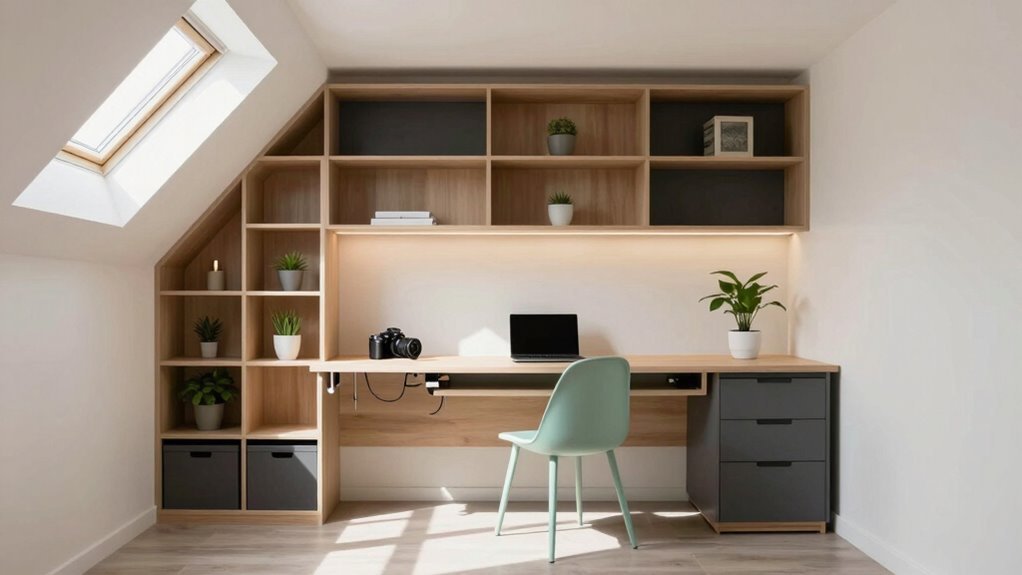
Tuck a compact L-shaped desk into a corner, keep it narrow, and add adjustable legs for sitting or standing—boom, instant workspace. Use wall shelves, pegboards, and over-the-door organizers to free up every inch. Go vertical, go wireless, and keep clutter in slim rolling drawers. Mount monitors, manage cables with clips and trays, and let in light to make the room feel bigger. You’ll laugh when you realize you don’t need more space—just smarter tricks waiting to be tried.
Design a Compact Workspace Layout
Thinking smart about your small office starts with shaping your space around how you actually work—not the other way around.
You don’t need a mansion to have a great workspace—just a clever layout.
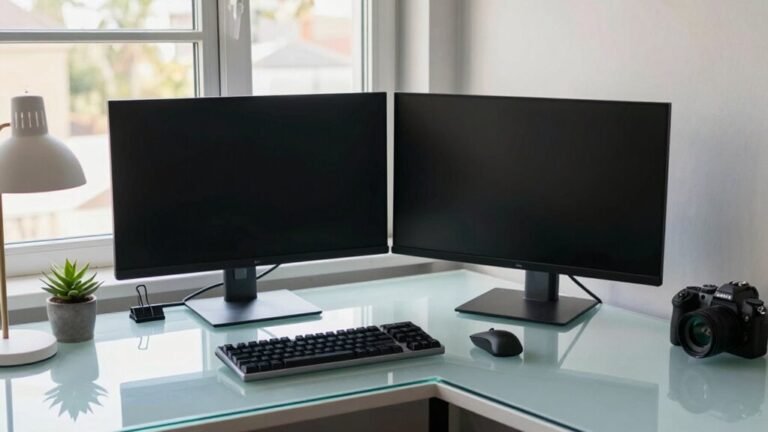
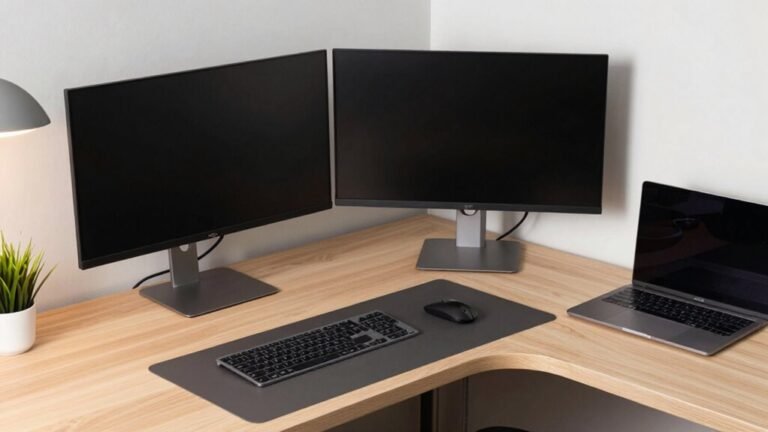
Tuck an L-shaped desk into a corner and suddenly you’ve got room for two monitors and your coffee.
Go even smaller with a wall-mounted fold-down desk; it’s like magic—vanishes when you’re done.
Keep the depth narrow—18 to 24 inches—so you’re not crammed like a sardine.
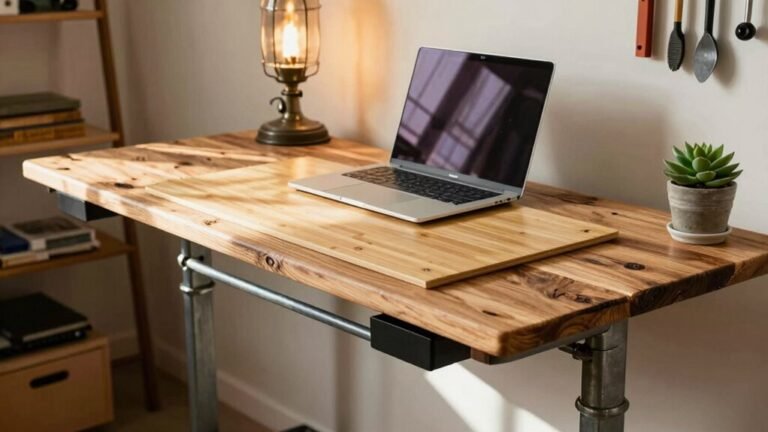
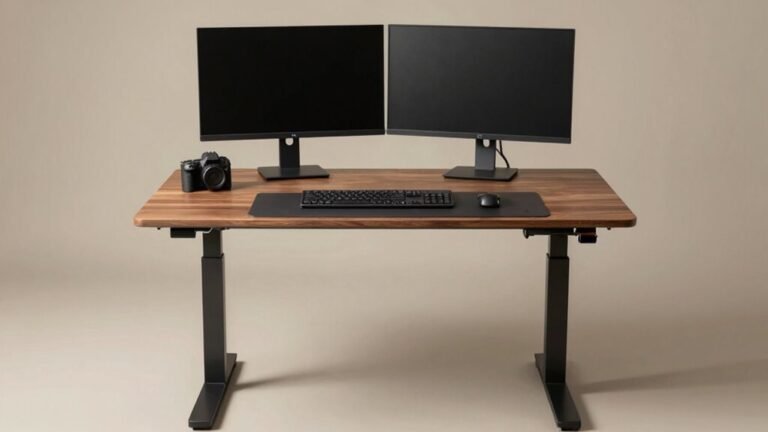
Need to stretch? Try an adjustable desk that goes from seated to standing without breaking a sweat.
Built-in cable management keeps cords from staging a rebellion, and a slim rolling drawer stores your must-haves without hogging space.
Position your desk near natural light, because squinting at screens isn’t part of the job description.
Alternate between sitting and standing throughout the day to support long-term health, as prolonged standing is a misconception.
Utilize Vertical Storage Solutions
When floor space runs out, look up—your walls are practically begging to help. Turn every inch of vertical real estate into smart storage with these go-to solutions:
| Solution | Best For |
|---|---|
| Adjustable shelves | Books, binders, gear—customize heights as needs change |
| Wall-mounted files | Keeping active papers upright and off your desk |
| Pegboards with hooks | Headphones, chargers, office gadgets—out of the way but in sight |
| Over-the-door organizers | Pens, cables, tiny items no one knows where to put |
Hang, stack, and clip your supplies like a pro. You’ll free up desk space, reduce clutter, and yes, finally find that missing sticky note. Who knew your walls could be this helpful—or this organized? Creative use of vertical space in compact areas maximizes storage without sacrificing functionality.
Choose Multi-Functional Furniture Pieces

You’re about to meet the superheroes of small-space living—furniture that pulls double (or even triple!) duty without breaking a sweat.
Need a desk by day and a dining table by night?
Fold-down tables have your back, tucking neatly against the wall when done.
Got guests?
Your storage sofa hides blankets and pillows under the cushions—or even turns into a bed, like the Hemnes daybed with sneaky drawers underneath.
Murphy beds?
They’re the ultimate ninjas, vanishing into cabinets to free up precious floor space.
And don’t overlook modular carts—you can roll them from kitchen to office, loaded with supplies.
Even ottomans join the fun, doubling as seats *and* stash spots.
With transformable workspaces and pop-up desks, your tiny office doesn’t just work hard—it works smart.
Adjustable table with a pedestal stand that becomes a bed can transform your workspace into a sleeping area seamlessly.
Who knew furniture could be this clever *and* fun?
Every piece earns its keep, leaving you more room to live, laugh, and maybe even dance.
Optimize Desk and Seating Arrangements
Where does your desk want to live—front and center or tucked quietly in the background?
Give your tiny office superpowers by optimizing desk and seating choices.
You don’t need a mansion to crush your workday—just smart moves.
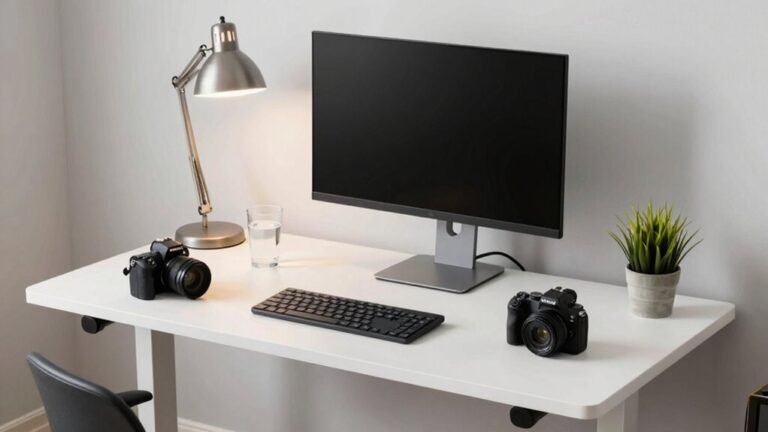
- Pick a compact desk—floating, fold-away, or corner-style—to save space and keep the room feeling open.
- Place it wisely: tuck it against a wall or in a corner, near natural light (but not *too* close—nobody likes screen glare).
- Choose seating that plays nice: slim, adjustable chairs or space-saving stools that tuck under when not in use.
Keep circulation paths clear.
eyes level with your screen, and your back happy.
With these tweaks, your tiny office feels bigger, works better, and doesn’t make you hug your desk just to sit down.
Who knew small could feel so spacious?
Implement Smart Cable and Tech Management

Now that you’ve nailed the perfect spot for your desk and chair—whether it’s cornered like a shy turtle or front-and-center like a spotlight hog—it’s time to tackle the sneaky space-stealer no one talks about: cable chaos. Trust me, those tangled cords aren’t just ugly; they eat up space and sanity. Slip power strips into under-desk trays or cute cable boxes to hide the mess and slash trip hazards. Use adhesive clips and velcro ties to bundle cords like a pro—no more spaghetti jungle. Shorten cables where you can, label both ends, and laugh at confusion’s face. Go wireless when possible (goodbye, keyboard cables!), and grab a docking station to turn ten cords into one. Monitor arms and desks with built-in channels? Yes, please—they hide wires like magic. A wireless charging pad keeps devices powered and clutter-free. Tidy cables mean more room, less stress, and a tiny office that feels actually livable. Win!
Enhance Lighting for Perceived Space
Even if your tiny home office feels more like a glorified closet than a workspace, you can totally trick the eye—and your brain—into feeling like there’s way more room than there actually is.
And it all starts with lighting.
- Soak up natural light—keep windows clear, use sheer shades, and park your desk nearby so sunlight can do the heavy lifting.
- Choose cool, bright bulbs (4000–5000 K) for task lighting—they’ll wake up your space and make it feel airy and alert.
- Layer your lights—mix ambient, task, and accent lighting to add depth, highlight corners, and make walls seem farther apart.
Add dimmers to tweak the mood, and don’t forget wall or uplights to lift the ceiling. With the right setup, your mini office won’t feel mini at all—it’ll feel like a sunlit treehouse HQ that sparks joy every time you turn on the lights.
Improve Acoustic Comfort in Small Areas

| Strategy | Action | Benefit |
|---|---|---|
| Seal gaps | Add sweeps & weatherstripping | Blocks sound sneaking through cracks |
| Boost mass | Use solid doors or MLV | Reduces airborne noise |
| Upgrade windows | Install double glazing | Lowers outdoor noise to comfy levels |
| Add absorbers | Hang panels or clouds | Tames echoes & boosts focus |
| Try masking | Play nature sounds | Keeps prying ears out of your emails |
Maintain Visual Openness and Flow
When you’re working in a cozy nook that doubles as your office, dining room, and maybe even your gym, keeping things feeling open and breezy can be a game-changer.
You’ll feel less like you’re in a closet and more like you’ve got a real workspace—even if your “real” desk is also where you eat tacos.
To keep the space feeling light and flowing, try these:
- Maximize natural light by facing your desk toward the window and leaving it uncovered—or use flat Roman shades that won’t block your view or your vibe.
- Place mirrors opposite windows to bounce sunlight around like it’s playing ping-pong, making the room feel twice as big.
- Go vertical with open shelving to draw the eye up, not across, so your space feels taller and tidier (and your desk stays clear for more important stuff—like coffee).
Establish Efficient Organizational Systems

You’ve opened up the room with light, mirrors, and smart vertical moves—now let’s make sure that spacious feel sticks by taming the chaos before it hits the floor.
Go vertical with shelves and file cabinets; they’re space-saving superheroes, boosting efficiency by up to 40%.
Wall-mounted units keep clutter off your desk—out of sight, out of mind (and off your to-do list).
Label folders, delete old junk, and archive wisely—your inbox doesn’t need a hoarder intervention.
Digital clutter stresses you out, but a few clicks can fix that.
Designate your spot—88% of folks work best at a real desk, not a kitchen table.
Use portable organizers, modular systems, or sleek filing solutions that look good and work harder.
Only 20% of what you own gets used, so keep it smart, simple, and stress-free.
Organize once, breathe easy every day.
Cha-ching!
Adapt the Space for Changing Needs
Since your tiny home office needs to wear multiple hats—workstation, meeting spot, maybe even guest nook—it’s smart to outfit it with furniture and layout tricks that can pivot as fast as your to-do list.
You’ll love how a few clever tweaks keep things fresh and functional.
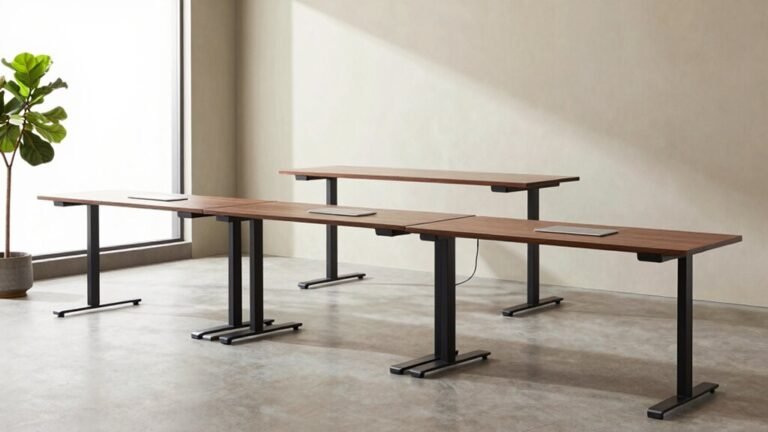
- Go modular: Snap together desks or shelves that reconfigure when your mood—or work—changes.
- Fold it away: Wall-mounted desks and foldable chairs disappear when not in use, freeing up space for yoga, guests, or just stretching out.
- Double up wisely: Use storage ottomans as seats, footrests, *and* secret stash spots—because who doesn’t love a trifecta?
With movable partitions and zoning rugs, you can shift from “focus mode” to “hello, team” in seconds.
Your office isn’t just small—it’s a shape-shifter.
Now that’s working smarter, not harder (and way more fun).
Frequently Asked Questions
Can I Use a Closet as a Home Office?
You bet you can use a closet as a home office!
Just yank the doors, clear the junk, and boom—instant workspace.
Toss in a fold-down desk, some bright lights, and your favorite chair, and you’re golden.
Slap up shelves or a pegboard, and suddenly it’s organized magic.
It’s cozy, clever, and totally works—no square footage wasted!
Who knew your closet could be your productivity hero?
How Do I Hide My Office From Guests?
You hide your office from guests by tucking it away behind clever, stylish covers.
Mount a fold-down desk that disappears into the wall, or slide a panel shut to conceal your workspace.
Use bi-fold doors, curtains, or bookshelves as sneaky barriers.
Stash supplies in hidden drawers, and boom—your office vanishes like magic.
Guests won’t even know you’ve been drafting masterpieces in stealth mode.
Presto: work’s gone, vibes stay chill.
Is It Okay to Work From a Bed Desk?
No, you shouldn’t work from a bed desk all the time—your back and brain will thank you later.
Lying there might feel cozy, but it wreaks havoc on your posture and sleep.
Plus, your focus dips faster than a toast in jam.
Use a proper desk when you can, or at least prop up your laptop and stretch often.
Save the bed for sleep (and binge-watching cat videos).
What Colors Make a Tiny Office Feel Larger?
Did you know 85% of people feel calmer in blue rooms?
You’ll love how light blue opens up your tiny office, making it feel airy and smart-ready.
Pair it with soft greys or warm coral accents, and bam—more depth, zero snooze.
Green brings in a happy, restful vibe, like nature whispered, “Hey, relax, you’ve got this.”
Keep tones light, add a pop, and watch your space soar—no magic, just paint!
How Do I Keep My Office Pet-Friendly?
You keep your office pet-friendly by giving your furry buddy their own cozy zone nearby—you don’t want them stealing your chair or sniffing your coffee!
Toss down a washable mat, add a window perch for cat TV, or sneak in a puzzle feeder to keep them busy.
Stash toys in cute bins, secure cords like hidden treasure, and boom—happy pet, happy workday.
Win-win!
Conclusion
You’ve just revealed the secrets to a smarter tiny home office—and guess what? 68% of remote workers say a well-organized space boosts their focus fast! So, by using vertical space, picking clever furniture, and taming tech chaos, you’re not just saving room, you’re supercharging your productivity. Tiny doesn’t mean limited—it means creative, fun, and full of potential. Now go rock your mini office like the workspace wizard you are!