Do Blue Light Glasses Work for Office Eye Strain?
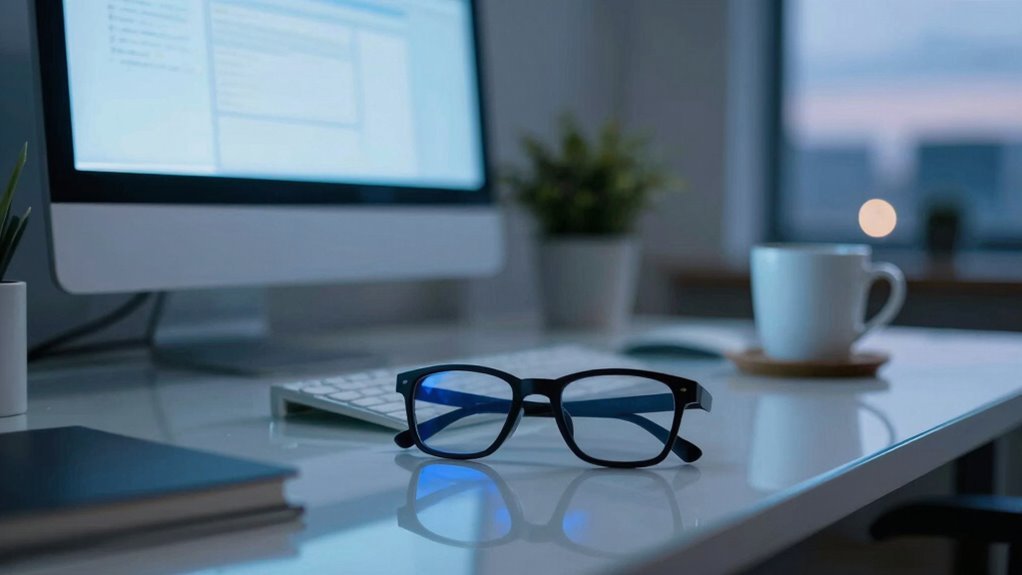
You’re probably hoping those blue light glasses will save your eyes at work, but science says they don’t really ease strain. Turns out, your eyes likely can’t tell the difference—and experts agree they’re not a fix. Dry eyes? That’s from staring too long, not blue light. Try blinking more, adjusting your screen, or taking short breaks instead. Spoiler: there’s a simple trick or two that actually work.
What the Research Says About Blue Light and Eye Strain
While you might’ve heard that blue light glasses are a game-changer for screen-related eye strain, the science says otherwise—and it’s worth taking a closer look.
You’re not alone if you’ve bought into the hype, but study after study shows they don’t really ease eye fatigue.
A 2021 trial found no difference in strain between blue light glasses and placebo—even after two solid hours of screen time.
The heavy-hitting Cochrane review? Same verdict: no meaningful relief.
These lenses block just 20–30% of blue light, and your eyes don’t seem to notice the difference.
Experts from the American Academy of Ophthalmology to McGill agree: there’s no solid proof blue light harms your eyes or causes strain.
Think of it like sunscreen for your screen time—it sounds smart, but your real issues are likely dry eyes, poor posture, or simply forgetting to blink.
Save your cash; your eyeballs will thank you later.
Improved sleep quality has been observed in people who wear blue light blocking glasses during evening screen use, even if eye strain benefits are minimal.
How Blue Light Affects the Body and Circadian Rhythms
You’ve probably noticed how staring at your phone late at night makes it harder to wind down—that’s no coincidence.
Your eyes have special sensors, called ipRGCs, that are super sensitive to blue light, especially around480 nm.
When you’re scrolling before bed, that blue glow zips straight to your brain’s body-clock center, telling it to stay alert and shut down melatonin—the sleep hormone.
Even modest screen time can delay sleep, especially if you’re doing it in the dark.
Bright, short bursts of blue light can jolt you awake, raising your heart rate and body temp fast.
But here’s the kicker: your body’s response depends on timing—exposure in the evening throws off your rhythm most.
It’s like your brain’s saying, “Wait, it’s still daytime?!”—and suddenly, it’s midnight and you’re wide awake.
Not ideal.
Comparing Blue Light Lenses to Placebo in Clinical Trials

If you’ve been hoping your blue light glasses are the secret weapon against screen fatigue, here’s the plot twist—they mightn’t be doing much more than looking stylish. Scientists have put them to the test, and guess what? The results say you’re probably not getting real relief. Check this out:
- Your eyes feel just as tired with blue light lenses as with regular glasses—no major difference in strain.
- They don’t boost visual performance, contrast, or color accuracy, so your screen won’t magically look better.
- Sleep quality and alertness stay the same, even after hours of screen time.
- Most studies are small and short, but still—no proven benefit over placebo.
These findings come from a Cochrane review of 17 randomized trials, adding weight to the conclusion that blue light glasses don’t provide meaningful relief.
Turns out, those trendy frames? More fashion statement than fix.
Why Users Report Benefits Despite Limited Scientific Support
So, why do so many people swear by their blue light glasses if the science says they’re barely more effective than plain lenses?
You likely notice less glare and better contrast, making screens feel easier on the eyes.
Even if the blue light filter isn’t the hero, anti-reflective coatings cut screen glare and boost comfort—your eyes aren’t working as hard, so they feel less dry and tired.
You’re probably blinking more naturally and staying focused longer without headaches creeping in.
There’s also the placebo effect—believing they help can actually make you feel better!
Plus, better sleep from wearing them at night? That kind of win keeps you coming back.
Sure, studies don’t back all the hype, but if you feel sharper, more comfortable, and get through your day with fewer eye-roll moments—hey, that counts.
Proven Strategies to Reduce Digital Eye Strain at Work

Turns out, your blue light glasses mightn’t be the only—or even the main—reason your eyes feel better after a long day at the computer.
You’ve got real power to cut eye strain with simple tweaks you can start today.
Try these four proven moves:
- Position your screen an arm’s length away and slightly below eye level—your neck and eyes will thank you.
- Follow the 20-20-20 rule: every 20 minutes, look 20 feet away for 20 seconds—yes, even during email marathons.
- Crank up text size, tweak brightness to match the room, and use dark mode—your eyeballs will chill out instantly.
- Blink like you mean it, take short breaks often, and blink some more—dry eyes hate this one weird trick!
Small changes, big relief—no lab coat required.
When Blue Light Glasses Might Be Worth Considering
Ever wonder why your eyes feel like they’re throwing a midnight rave when you’re just trying to finish one last email? If you’re staring at screens late, blue light glasses might help calm things down. They can protect your sleep by blocking the blue hues that mess with melatonin, especially if you can’t quit scrolling before bed. They’re also a smart move if bright lights give you headaches or your screen glare feels like a laser show. Here’s when they’re worth a shot:
| Situation | Why Try Them? |
|---|---|
| Late-night screen use | Helps protect sleep rhythms |
| Light-sensitive eyes | Reduces glare and discomfort |
| Migraine or photophobia | May lower headache triggers |
| Harsh office lighting | Boosts contrast and comfort |
They’re not magic, but for some, they’re a game-changer.
Frequently Asked Questions
Do Blue Light Glasses Prevent Macular Degeneration?
No, blue light glasses don’t prevent macular degeneration—you’re not giving your eyes a force field!
They only block 10–25% of blue light, which isn’t enough to protect your retina.
Harmful rays from screens? Minimal compared to daylight.
Your body’s got natural defenses like melanin and macular pigments.
Want real protection? Eat leafy greens, wear sunglasses outside, and skip the overhyped glasses.
Your eyes will thank you!
Can Children Benefit From Blue Light Glasses?
You might think blue light glasses are magic shields, but truth is, they’re not a game-changer for kids.
Sure, they filter some blue light and could help a little with sleep or comfort, but real relief comes from screen breaks, outdoor play, and good habits.
If your child likes ‘em and feels better? Go for it—just don’t expect miracles.
Think of them as cool sunglasses for screens, not superpower eyewear!
Are There Side Effects From Wearing Blue Light Glasses?
Yeah, blue light glasses can have some side effects, but they’re usually no big deal.
You might get mild headaches, feel a bit groggy, or notice colors looking a little off—like everything’s dipped in warm sunset tones.
Some folks even feel less alert during the day.
And let’s be real: if you’re wearing them instead of taking screen breaks or fixing your posture, you’re kinda missing the point.
They won’t hurt you, but don’t expect miracles either!
Do Blue Light Glasses Help With Migraine Headaches?
No, regular blue light glasses don’t really help with migraine headaches—you’re better off chasing rainbows than relief with those.
But, specialized lenses like FL-41 or Avulux?
They block the sneaky blue and amber light that triggers your brain’s pain alarms.
You’ll see fewer headaches, less light sensitivity, and actually feel like working at your computer again.
Trust us, your eyeballs will throw a party.
Is It Safe to Wear Blue Light Glasses All Day?
Yes, you can safely wear blue light glasses all day—no harm comes from it!
You’re not blocking out all blue light, just a gentle 20–30%, so your eyes won’t freak out.
Think of it like a soft screen filter, not a blackout curtain.
Just swap them for UV sunglasses outside, and if colors look wonky during design work, take ’em off.
Your eyes will thank you—no drama, promise!
Conclusion
Blue light glasses? Believe it or not, benefits might be more belief than biology. But blinking, breaks, and better screen setups bring real relief. Bright screens buzz your brain, but balanced habits beat blurry vision. Beat eye strain with smart steps—sit back, scale down glare, and shift your gaze. Blue blockers? Maybe sometimes. But wise workers win with wellness, not just wearable wizards. Wink at wellness, work wonderfully!