Corner Desk vs. Straight Desk: Pros, Cons, and Comparison
You’re turning a corner—or keeping it straight—either way, your desk shape changes everything. Corner desks give you extra space, cozy focus, and smart zones for multitasking, while straight desks offer sleek simplicity, easy setup, and clean lines that flow with natural light. One hides your coffee-stained notebook from guests, the other proudly displays your minimalist vibe. Pick based on your room, work style, and how much you enjoy pretending you’re in a futuristic office. There’s more where that came from.
Maximizing Space With Corner and Straight Desk Configurations
Turning a forgotten corner into a powerhouse workstation? Absolutely—you’re not just clearing space, you’re creating it.
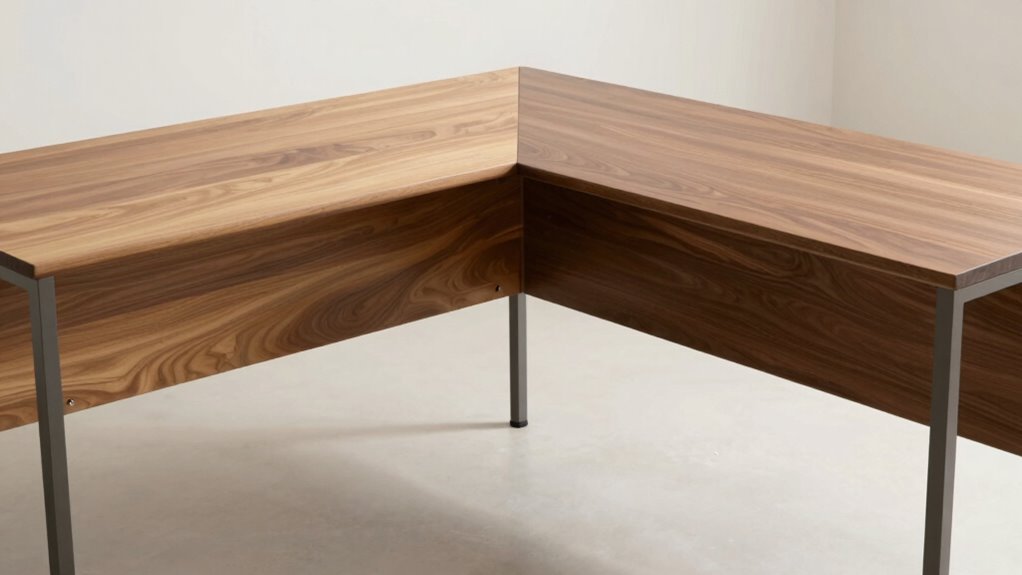
Corner desks turn dead zones into smart, L-shaped hubs, tucking neatly where walls meet and letting you move freely through the room.
You’ll free up floor space, slide furniture along open walls, and make small rooms feel sneakily spacious.
Plus, you’ve got options—left or right-facing—to match how you move and work.
Need flexibility? Straight desks are your go-to.
You can slap ’em against a wall, float ’em center-room, or line ’em up like teammates in shared spaces.
They’re easier to shift around, stack, and pair with shelves.
Whether you’re a corner conqueror or a straight-shooter, both styles help you do more with less—no magic required, just clever design.
L-shaped design maximizes corner space while providing a larger continuous work surface without occupying valuable room center area.
Comparing Work Surface Layout and Usability
You’ve nailed the art of squeezing every inch of potential from your room, whether you’re taming a tucked-away corner or sliding a sleek straight desk into action.
Corner desks give you segmented zones—perfect for separating your laptop, notes, and that coffee mug without chaos.
They use space smartly, spreading across two walls so you can pivot between tasks like a pro.
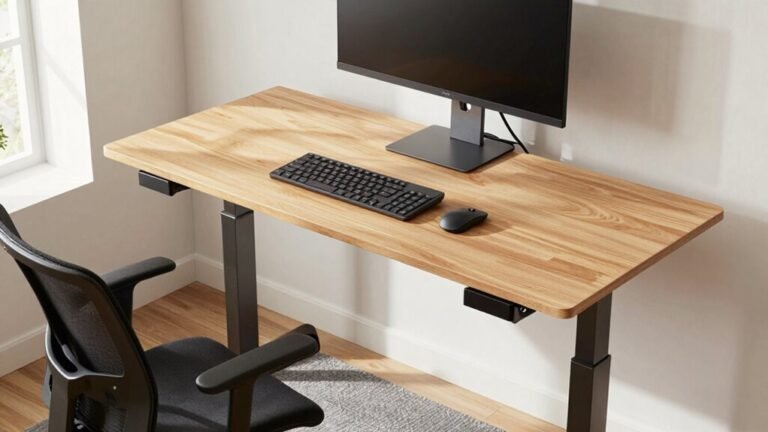
Straight desks offer one long, unbroken surface, ideal for sprawling documents or a massive monitor setup.
Need to draft blueprint-sized projects? Their consistent depth’s a win.
Corner desks handle dual monitors or a printer-plus-PC setup with ease, while straight ones keep everything in clear sight—great if you hate turning your head.
Cables might play hide-and-seek more on L-shaped desks, but hey, at least your workspace doubles as a productivity playground!
This layout efficiency makes corner desks particularly effective in small rooms, where Utilises Small Spaces can transform an otherwise unused area into a functional workstation.
Evaluating Ergonomic Benefits and Challenges

Ever wonder how your desk shape could be shaping your posture—without you even noticing? Corner desks let you tuck your main monitor right in the sweet spot, so you’re not craning your neck or overreaching. You’ll cut down on awkward twists, pivoting smoothly between tasks like a pro.
Straight desks keep things simple and centered, great for one screen and focused work—but reach too far to the side, and your spine might throw a silent (yet dramatic) protest.
Both can work if you use chair adjustments or monitor arms, because let’s be real, no desk is magic.
Corner setups help keep your go-to items close, sparing your back from marathon stretches.
Just don’t squish your legs in tight corners—comfort still wins.
Whether L-shaped or straight, smart positioning turns any desk into an ergonomic ally.
Your back will thank you—maybe even with a little dance. Corner desks fit snugly into corners, maximising floor space and supporting a more organised, efficient workflow.
Assessing Assembly Complexity and Setup Effort
While you’re dreaming about that perfect workspace, don’t forget the reality check: putting your desk together shouldn’t feel like solving a 3D puzzle blindfolded.
You’ll find straight desks are your best bet for quick, stress-free setup—most take under 30 minutes with fewer pieces and basic tools.
They slide into place easily, whether against a wall or in the middle of the room.
Corner desks, though? They’re the more stubborn siblings—bulkier, trickier, and often needing a second person to wrestle into corners.
More parts, more tools, more grunting.
Some modular models help, but you’re still signing up for extra effort.
If you’re low on patience or DIY confidence, skip the L-shaped headache.
Choose a straightforward design, and you’re up and working before you can say “I hate assembly instructions.”
Analyzing Cost Differences and Value Over Time

Putting that new desk together shouldn’t feel like a test of willpower, but once it’s up, your wallet might raise an eyebrow at what you actually paid. Corner desks often cost more upfront, especially if you want premium materials or electric features, but they can give you more workspace per dollar. Straight desks? They’re usually cheaper and easier to move, saving you hassle and cash in tight spaces. Over time, well-made desks hold their value, especially simple, sturdy designs that buyers love. Bulky corner units may linger on the market, even if they’re high-end. Check this out:
| Desk Type | Upfront Cost (Avg) | Long-Term Value |
|---|---|---|
| Entry Straight | $150–$250 | Moderate |
| Mid-Range Corner | $400–$800 | High (if fits) |
| Premium Standing | $1,000–$2,500 | Variable |
| Modular Desk | $300–$600 (expandable) | High |
| Basic Particleboard | $100–$200 | Low |
Smart buy now, save later!
Movement and Reconfiguration in Dynamic Spaces
Reimagining your workspace just got a whole lot easier—especially when your desk plays well with change.
You want furniture that keeps up, not holds you back.
Straight desks? They’re your go-to for quick moves and smooth reconfigurations.
Lightweight, simple, and easy to shuffle through doorways, they let you adapt fast when teams grow or shift.
Corner desks pack more surface into unused nooks but can be a hassle to reposition—especially with attached pieces.
Think of them as the “all-in-one” that’s less “let’s rearrange!” and more “this is fine, right?”
Need flexible zones or hot-desking?
Straight desks win with cleaner lines and modular add-ons.
Plus, tweaking ergonomics or rolling out sit-stand setups is quicker.
When change is the only constant, you’ll love how easily a straight desk lets you pivot—no heavy lifting, no headaches, just smooth shifts.
Cleaning and Maintenance: What’s Easier to Manage

Keeping your workspace sparkly clean just got a whole lot simpler with a straight desk in the mix.
You’ll love how its sleek, simple surface wipes down in seconds—no sneaky corners hiding dust bunnies.
With less surface area and fewer nooks, you’re not just saving time, you’re dodging a full-on spring cleaning every week.
Minimalist? Yes, please!
Its open design welcomes cleaning tools like a pro, making clutter a total nonstarter.
Compared to the L-shaped beast hogging your room, the straight desk laughs at messes.
Corner desks may offer more space, but that extra real estate collects chaos faster than your coffee cools.
You’ll spend less time tidying and more time thriving—no magic required, just smart, easy upkeep.
Why wrestle with dust in hard-to-reach crannies?
Go straight, stay sane, and keep things fresh with zero sweat.
Design Impact and Visual Integration in Modern Offices
Ever wonder how your desk choice shapes the soul of your workspace?
Your pick between corner and straight desks does more than hold your laptop—it sets the vibe.
You’re crafting flow, form, and function all at once.
Here’s how:
- Corner desks maximize cozy nooks, turning dead space into stylish command centers—perfect for making a statement without taking over the room.
- Straight desks keep things clean and simple, lining up like best friends on a bench, ideal for that sleek, no-fuss look.
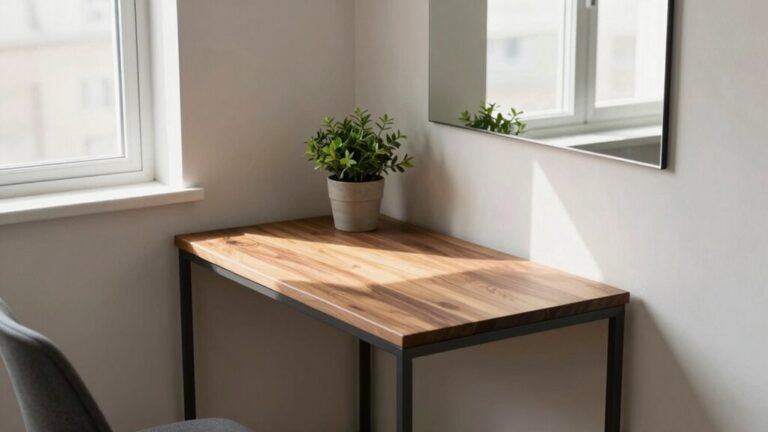
- With light and sightlines, straight desks play nice with windows, spreading daylight evenly, while corners need smart placement to dodge shadows.
- Visual rhythm? Straight lines bring order; corners bring drama—your office, your personality.
Either way, you’re not just setting up a desk—you’re setting the stage.
Privacy and Workspace Separation Considerations

How’s this for a game-changer: what if your desk could carve out your own little hideaway in the middle of a busy room?
A corner desk does exactly that—tucked into a nook, it gives you a semi-private zone that cuts down distractions and boosts focus.
You’ll feel more isolated (in a good way) during deep work, even in open offices.
Plus, the L-shape lets you split your space: one side for typing, another for notes, keeping things fresh and active.
Straight desks? Not so much.
They leave you exposed, with zero natural barriers, like working on a stage.
Limited surface area means you can’t spread out, and everyone can see your browser history—awkward.
If privacy and personal space matter, the corner desk’s your quiet hero.
Straight desks work for teamwork, sure, but they don’t offer that “do not disturb” energy you sometimes need.
Matching Desk Style to Work Habits and Room Shape
Where should you put your desk when your room feels like a puzzle and your work habits keep shifting?
You’ve got options—pick the one that matches your groove:
- Got a tiny or oddly shaped room? Tuck a corner desk in that forgotten nook—it’s like Tetris magic, freeing up floor space and giving you room to breathe.
- Love big, open, minimalist vibes? A straight desk lines up perfectly against a wall or floats boldly in the center of a spacious room—clean, simple, and smart.
- Juggling emails, video calls, and sketching? The L-shape of a corner desk lets you spread out like a boss, with zones for every multitasking move.
- Prefer deep focus on one task? A straight desk’s sleek lineup keeps things tidy and distraction-free—perfect for writing, reading, or conquering that to-do list one thing at a time.
Your room, your rules—just don’t fight the shape… or your coffee will judge you.
Frequently Asked Questions
Can Corner Desks Fit in Small Apartments?
Yes, corner desks fit perfectly in small apartments—you’d be surprised how much they maximize tight spaces!
They slip neatly into corners, leaving your floor area open for other fun stuff, like dance parties or avoiding clutter.
Models like the E3L are compact but still give you room for a laptop, coffee, and that lucky cactus.
They’re smart, space-saving champs, turning dead corners into productivity hubs without cramping your style.
Do Straight Desks Work for Gaming Setups?
Yeah, straight desks work great for gaming setups!
You get plenty of space for your monitor, keyboard, and mouse—all lined up just right so you’re not craning your neck.
They’re perfect for fast-paced games, keep your gear in reach, and make cable mess a lot easier to tame.
Toss on a sit-stand base, and boom—you’re winning marathons in comfort.
Plus, they look sleek, fit most rooms, and won’t break the bank.
Gaming approved!
Are Corner Desks Harder to Assemble Than Straight Ones?
Yeah, corner desks are usually trickier to put together than straight ones—funny how life’s little challenges pop up just when you’re excited to set up your new workspace.
You’ll juggle more parts, extra tools, and awkward angles, while straight desks? They’re the quick-and-easy snack of furniture assembly.
Less can truly be more, especially when you’re sweating over a puzzle that wobbles if you blink wrong.
Can Both Desk Types Support Standing Converters?
Yes, you can totally use standing converters with both desk types—no sweat!
Corner desks often handle them better thanks to their roomy, L-shaped layout, giving you rock-steady support for dual monitors and heavy gear.
Just make sure your desktop’s deep enough and the converter’s rated for the weight. Straight desks work too, but watch for wobble if it’s narrow or flimsy.
Pick the right fit, and you’ll be zipping up and down like a pro!
Do Corner Desks Block Natural Light in Rooms?
Yeah, corner desks can block natural light—you’ve probably seen how shadows pile up in room corners, like when sunlight hits only half your desk and leaves the rest in dim mystery.
Place it wrong, and you’re basically working in a cave with a flashlight.
But shift it slightly, add a lamp or sheer curtains, and boom—suddenly it’s cozy, not gloomy.
Light’s all about placement, pal!
Conclusion
So, you’ve weighed the options—corner desk or straight? It’s not a test, but if your room were a pizza, would you take the whole slice or just the edge? Corner desks hug the room like a cozy hug, saving space and adding flair, while straight desks keep things simple and speedy. Pick the one that fits *your* moves, not just the room—your back, your gear, and your coffee habit will thank you. Happy desk hunting!