How to Choose the Perfect Home Office Desk
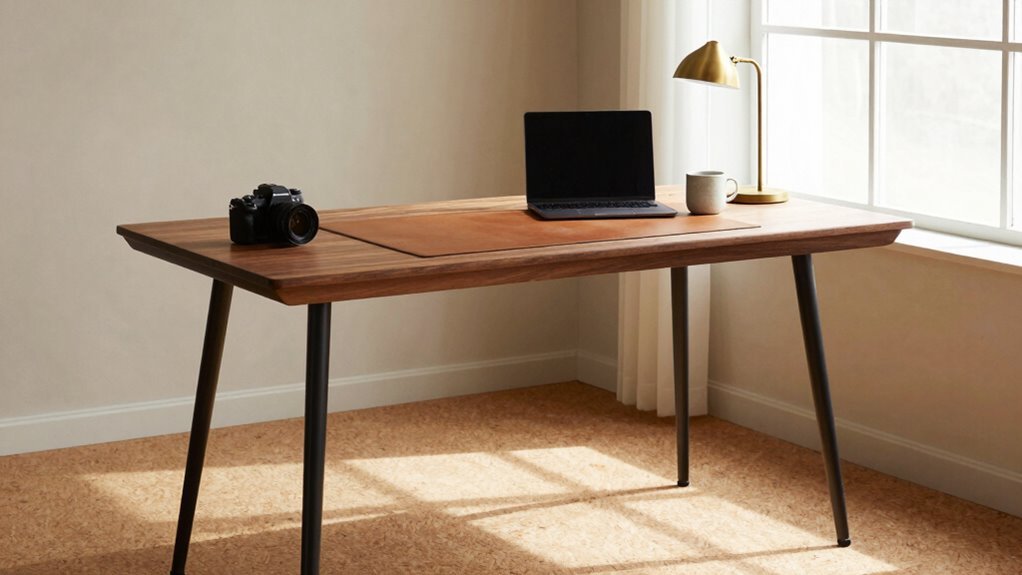
You want a desk that fits your moves, not one that cramps them. Think about what you do—gaming, calls, typing marathons—and match it to the right desk, like an adjustable stand-up or a compact writer’s nook. Measure your space, leave room to stretch, and keep cords tidy with clips and trays. Pick tough materials that laugh at spills and scratches. Make it comfy, make it *you*—and hey, there’s a little more magic where that came from.
Identify Your Work Needs and Desk Functions
If you’re picturing yourself powering through emails, nailing video calls, or maybe even sneaking in a few reps on a treadmill while answering Slack messages, then it’s time to pick a desk that matches how you actually work.
You’re not just buying furniture—you’re building your command center.
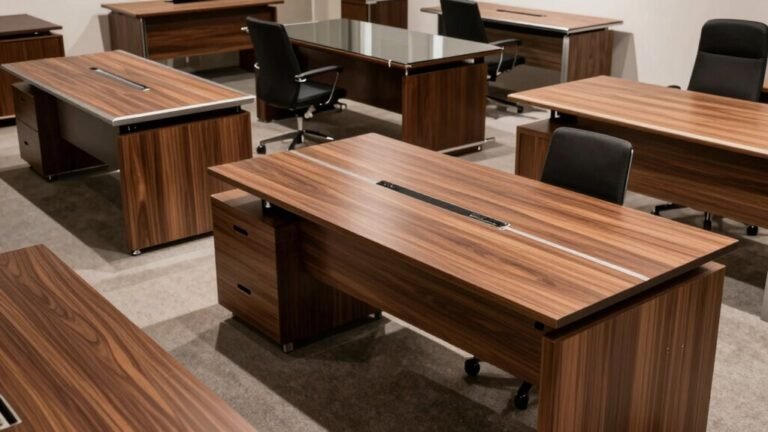
If you’re all about video conferences and heavy-duty tasks, go for an executive desk with space and storage to impress.
Gamers, raise your hand—your rig needs a desk that fits monitors, speakers, and maybe even a snack stash.
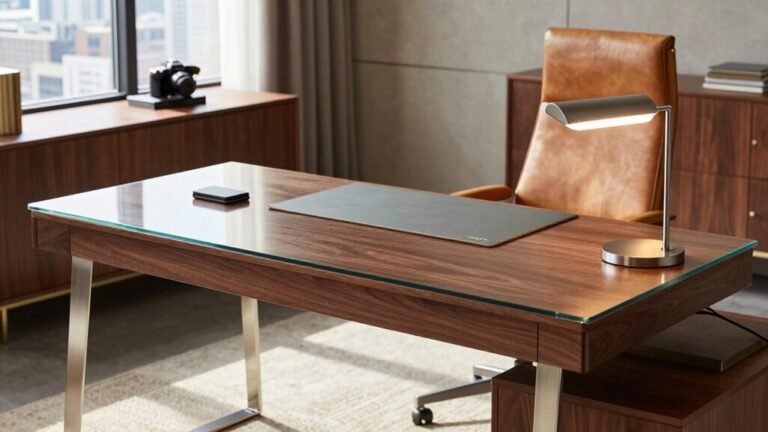
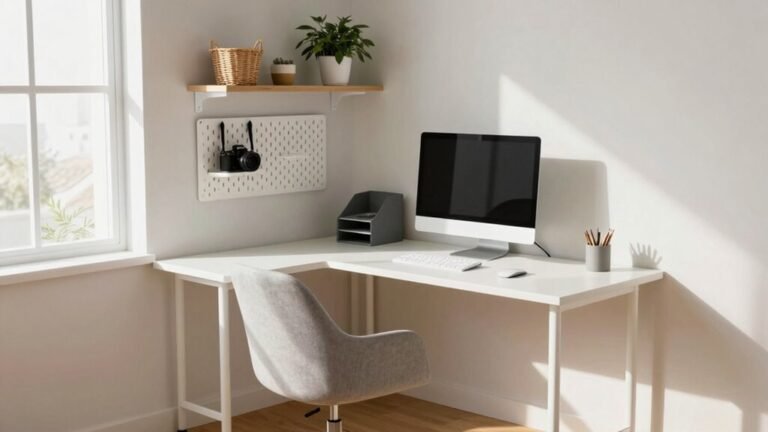
Working from a cozy corner? A compact or writing desk keeps things sleek and simple.
Love walking meetings? Yep, there’s a treadmill desk for that.
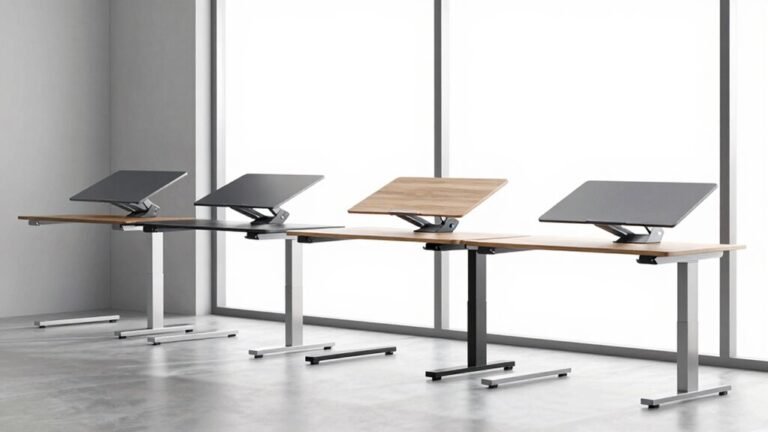
And if you’re switching between sitting and standing like a productivity ninja, grab an adjustable sit-stand model.
Match your desk to your day, and suddenly, work feels less like work.
Arenson’s Ascend Height Adjustable desks offer smooth transitions and promote ergonomic wellness for dynamic workstyles.
Measure Your Space and Plan Room Layout
You’ve got your work style pinned down, so now let’s play real-life Tetris and figure out where everything fits—starting with your space.
Grab a tape measure and check your room’s footprint—aim for at least 70 sq ft so you’ve got wiggle room for a desk, chair, and storage.
Leave 80–100 cm in front of the desk so you’re not knee-deep in the wall, and keep 60–90 cm behind for smooth chair rollbacks.
If your door swings open, don’t let furniture block it—keep that path clear.
For tight spots, pick a compact 120×60 cm desk; in larger rooms, go wide for dual monitors or L-shaped setups.
Tuck an L-desk into a corner if you’ve got one, or float it in the middle with 100 cm clearance.
Plan for outlets, storage, and a sneaky little shelf for privacy—it’s your office, not a closet!
Make sure your desk depth allows for proper monitor placement at arm’s length to reduce eye strain and support good posture.
Prioritize Ergonomic Design for Health and Comfort

When your desk setup feels more like a game of human pretzel than productive work, it’s time to rethink things—starting with ergonomics that actually work for your body, not against it.
Choose a chair with lumbar support and adjust the height so your feet rest flat and knees bend at 90°.
Leave a couple inches between the seat and your thighs for better circulation.
Set armrests so your elbows stay close to your sides and shoulders stay relaxed.
Your desk should let your elbows hover at 90°–110° while typing, with wrists straight and neutral.
If possible, switch between sitting and standing—the movement does your spine a favor.
Keep your monitor at eye level, an arm’s length away, and use external keyboards with laptops.
And hey, your eyes need breaks too—glance away every 20 minutes.
Trust us, your future self will thank you.
Consider a desk with adjustable height to maintain proper ergonomic alignment throughout the day.
Choose Durable Materials That Suit Your Environment
Pick a desk that can take what life throws at it—because spills, sunbeams, and overenthusiastic typing sessions are all part of the daily grind.
If your home stays cozy and dry, solid hardwood like oak or maple brings warmth and can be sanded smooth if dinged.
But if humidity swings like a moody pendulum, go for engineered wood or bamboo—they won’t warp on a whim.
Near the coast? Metal desks with powder coating or stainless steel laugh at salt and moisture.
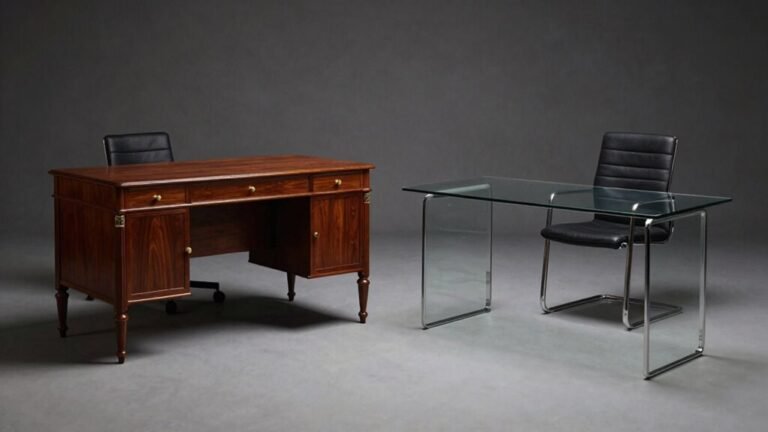
Glass and stone stay cool and steady in any climate, but watch for condensation drama near windows.
Love a tidy look? High-pressure laminate shrugs off scratches and wipes clean in seconds.
Just remember: heavy monitors need strong support—steel frames or thick wood won’t sag under pressure.
And hey, no one wants bubbling veneer or dusty air, so grab low-VOC finishes and certified sustainable materials.
Your desk’s not just tough—it’s smart, too.
Optimize Storage and Keep Cables Under Control

Taming the jungle of wires under your desk isn’t just satisfying—it’s a game-changer for your focus and sanity.
Snap cables into order with Velcro ties instead of zip ties; they’re reusable and way more forgiving when you add a new device.
Mount power strips underneath using adhesive brackets or UPLIFT’s $19 surge protector to ditch floor clutter.
Grab an under-desk tray like the Hexcal or Ultimate Setup model to hide power strips and swing open for quick access.
Use magnetic clips or cable channels to route cords neatly—UPLIFT’s $29 kit’s a slick starter.
Bundle USB and power cables together with sleeves, and don’t forget monitor arms with built-in routing to stop cords from dangling.
Try Oakywood’s wooden holders or a 4-in-1 wireless charger to cut clutter at the source.
A tidy desk isn’t magic—it’s smart planning with the right tools.
Consider Adjustable and Standing Desk Options
Ever wonder how a simple change at your desk could make you feel sharper, stronger, and way less stiff?
Switching to an adjustable or standing desk might be the upgrade you didn’t know you needed.
You’ll slash back and neck pain—studies show big drops in discomfort within weeks.
Plus, you’ll stand taller, literally and figuratively: 88% of users find these desks easy to tweak, making sitting and standing part of your daily groove.
You’ll burn about 50 more calories per hour, boost focus, and even cut your sitting time by 17%—without feeling like you’re exercising.
Call center workers using them? 46% more productive.
Just grab a standing mat, keep your knees relaxed, and let your body thank you.
With smoother movements, better energy, and fewer aches, you’re not just working smarter—you’re feeling way more alive at your desk.
Who knew standing could be this good?
Set a Budget and Evaluate Long-Term Value

Thinking long-term while keeping your wallet happy? Smart. You don’t want to keep replacing flimsy desks every few years—save time, cash, and your back by investing wisely from the start. Check this out:
| Budget Tier | What You Get |
|---|---|
| £50-£100 | Basic MDF, okay for now, not forever |
| £120-£250 | Solid wood, smarter setup, better look |
| £300-£800+ | Executive style, built to impress and last |
| $1,200-$1,800 | Premium perks: cable control, strong frames |
| $2,000-$5,000 | Full dream office, one step at a time |
Love your space now *and* later—avoid the “buy cheap, cry expensive” trap. Pick sturdy materials like hardwood or bamboo, especially if you’re all about health and habits. Programmable desks? Yes, please! They’re like magic for your posture. Build smart, upgrade later—your future self will high-five you.
Frequently Asked Questions
Can I Use a Kitchen Table as a Home Office Desk?
Yeah, you can totally use a kitchen table as a home office desk—many people do!
It’s roomy, great for projects, and saves money.
Just tweak it a bit: add an ergonomic chair, lift your screen with a stand, and manage cables.
Watch for neck strain or clutter, and make sure it doesn’t take over family dinner time.
With a few smart upgrades, your kitchen table becomes a comfy, stylish workspace you’ll love using.
Who knew homework could share space with dinner?
Are Glass Desks Sturdy Enough for Daily Work Tasks?
Yes, glass desks are sturdier than a superhero’s handshake when built right!
You’ll love how tempered glass handles your laptop, coffee, and random stack of notebooks.
Just pick one with a solid frame, and it’ll laugh off daily chaos.
Thicker glass means less wobble, so typing feels snappy, not shaky.
Sure, it won’t survive a dragon’s stampede, but for real life? Absolutely rock-solid—plus, it looks sleek while doing it.
How Do I Clean and Maintain a Wooden Desk Surface?
You clean and maintain your wooden desk by dusting weekly with a soft microfiber cloth—daily if you’re accident-prone with coffee.
Dampen (don’t soak!) a cloth with water or mild soap for smudges, then dry right away.
Avoid harsh cleaners—they’ll throw a tantrum on your finish.
Polish every few months, use coasters like a pro, and keep it out of direct sunlight unless you want a warped, grumpy desk.
What Desk Color Best Suits a Small, Dark Room?
Go light, and let your desk play peekaboo with the light—white, soft blue, or pale wood tones are your best pals.
They bounce light around like a disco ball without the drama, making your small, dark room feel airy and alive.
Skip the navy黑洞—no one wants a cave vibe.
Add pops of color with fun accessories, because your desk shouldn’t look like it’s hiding in the shadows.
Is It Safe to Assemble a Desk Alone, or Do I Need Help?
You *can* assemble a desk alone, but it’s way safer and easier with help—trust me, your back will thank you!
If it’s heavy or has tricky parts, like motorized legs or wide tops, grab a buddy.
Lifting solo risks strains, slips, or crooked screws (hello, leaning monitor syndrome!).
For complex desks, pros save time and stress.
Skip the circus act—teamwork makes the dream work!
Conclusion
Your desk is the captain of your home office ship, steering focus, comfort, and creativity. Pick one that sails smoothly with your needs, fits snugly in your space, and keeps cables from staging a mutiny. Think sturdy wood or sleek metal as your trusty deck. With the right perch—whether standing or sitting—you’ll rule your workday like a cheerful pirate, not a tired landlubber. Smooth seas ahead!