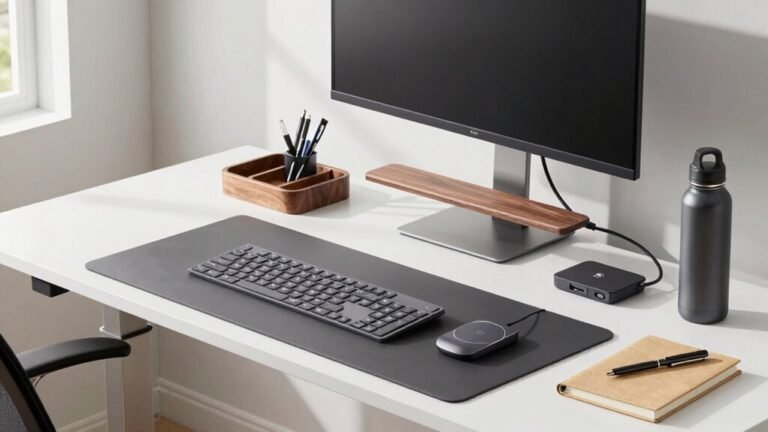
How to Choose the Perfect Executive Desk
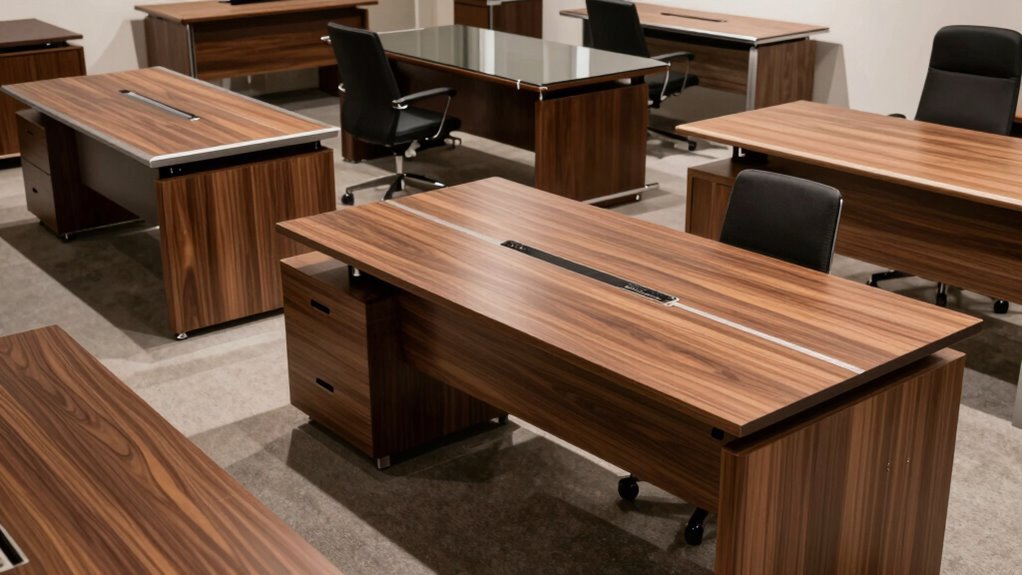
Pick a desk that fits your room and your role—go for 60–72 inches wide with at least 25 inches of legroom so you’re comfy, not cramped. Love rich wood or sleek glass? Choose materials that match your style and stand up to daily grind. Opt for smooth glides, strong frames, and finishes that block spills and scuffs. Keep cables tidy with built-in trays, and make sure it all clicks with your brand’s vibe—you’ll want to show it off. There’s more where that came from.
Determine the Right Size for Your Space
How much space do you actually have for that dream executive desk? Don’t just guess—measure twice, buy once!
Most executive desks need 60–72 inches wide and 30–36 inches deep, so check your room fit.
If you’re tucking it into a corner or living area, make sure you’ve got at least 50 square feet to spare.
For open plans, give yourself 48–72 inches of width to avoid bumping into furniture.
L-shaped or U-shaped models? They’re spacious—like 160×180 cm—so don’t cramp them.
Clear space behind for legroom—24 inches minimum—or your knees will throw a protest.
And hey, don’t forget height! At 28–30 inches, it should pair perfectly with your chair.
Test the length against the wall, leave breathing room on the sides, and suddenly, your workspace isn’t just big—it’s brilliant.
Size smart, and your room won’t feel like a closet. A well-proportioned executive desk supports elbow 90-degree posture, helping maintain shoulder comfort during long work sessions.
Choose Materials That Reflect Quality and Style
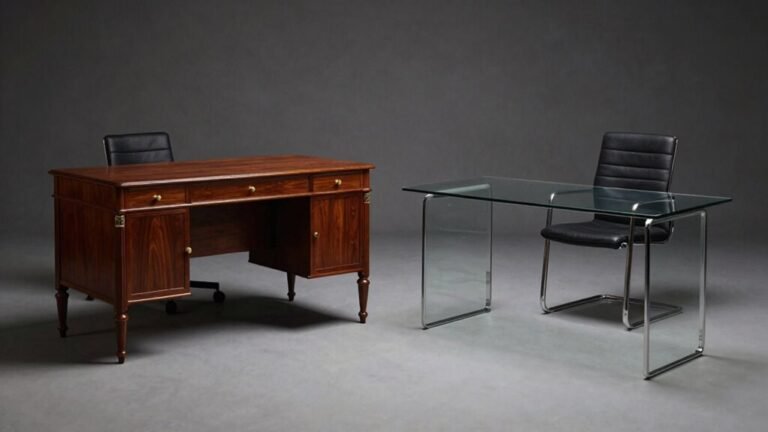
A desk isn’t just where you work—it’s where you rule your world, so why not make it as sharp and capable as you are? Pick materials that shout success but still feel *you*. Go classic with solid hardwoods like walnut or cherry for timeless power—and yes, they last longer than your Monday motivation. Prefer modern flair? Metal frames bring strength and sleek tech-ready designs, while glass tops make your space feel open (just wipe those fingerprints, okay!). If budget’s a buddy, veneers over sturdy plywood give you that luxe look without the wallet wince. And remember, 70% of executive desks sold in 2024 were engineered wood, laminate, or metal/composite, showing how popular these practical yet stylish options have become.
| Material | Style Vibe | Durability |
|---|---|---|
| Solid Wood | Warm, powerful | Lasts decades |
| Metal Frame | Sharp, modern | Tough & stable |
| Glass Top | Sleek, airy | Cool but needy |
Prioritize Ergonomic Design for Long-Term Comfort

Ever wonder why your back throws a fit after a long day at the desk?
It’s probably your setup!
For real comfort, pick a desk that lets your elbows rest at 90 degrees, with forearms parallel to the floor—ideally 28–30 inches high.
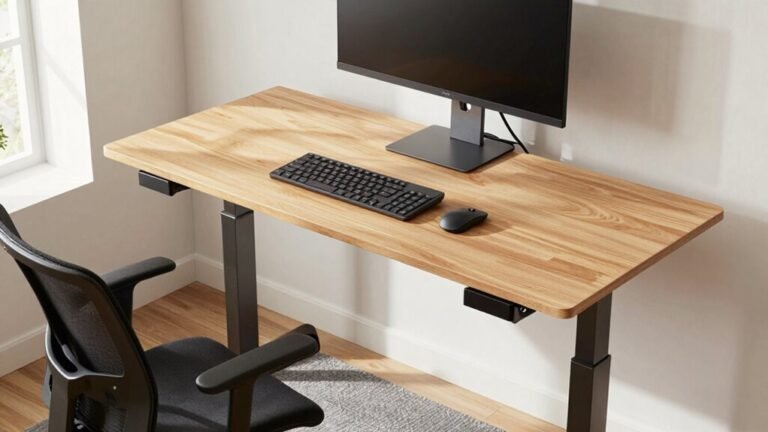
If it’s too low, toss in some blocks; better yet, go for a height-adjustable model that glides from sitting to standing like a dream.
Make sure you’ve got 25+ inches of legroom so you’re not crunched like a folded taco.
Keep the space under clean—no sneaky storage ruining your posture!
Plonk your monitor an arm’s length away, top at eye level, and sit back so your wrists stay flat while typing.
Wide, deep surfaces (think 60+ inches) give you room to spread out without chaos.
Your body will thank you—every single day.
An executive desk typically measures 76–91 cm in depth, providing ample space for dual monitors and paperwork while supporting organized workflows.
Evaluate Storage Needs and Configurations
Where do you stash your files, gadgets, and that ever-growing collection of sticky notes? Let’s get real about your storage needs.
If you’re drowning in paperwork, go for a credenza or a lateral file cabinet—you’ll need at least 30 inches in width and 18 inches depth.
Got legal files? Bump that up to 18 inches wide for a two-drawer unit.
Now, if your tech setup includes multiple monitors or heavy gear, your desk must handle 200 pounds or more—solid wood or steel frames are your best bet.
L-shaped desks and adjustable models can support up to 400 pounds, perfect for multitaskers.
Don’t forget space: leave 33–36 inches around the desk to move freely.
Add shelves or lockable cabinets nearby to keep clutter in check—because nobody’s impressed by a messy masterpiece.
Select a Finish That Complements Your Office Aesthetic

| Office Style | Great Finish Choices | Pro Tip |
|---|---|---|
| Traditional | Mahogany, cherry | Adds instant “I mean business” energy |
| Modern | High-gloss white, metal | Keeps things crisp, cool, and uncluttered |
| Industrial | Reclaimed wood, matte black | Pairs perfectly with Edison bulbs and leather chairs |
| Small Room | Light oak, glass top | Makes your space feel double the size |
Match it, love it, own it.
Consider Sit-Stand Functionality for Health Benefits
If you’ve ever nodded off during a 3 p.m. slump or felt your back stage a full-scale rebellion after hours in your chair, a sit-stand desk might just be your office’s superhero in disguise. You’ll slash lower back pain, boost circulation, and even tame post-lunch blood sugar spikes—no cape required.
Stand up every 30–60 minutes to keep your spine happy and energy high. Start with 10–15 minutes of standing per hour, then build up. Toss in a stretch or short walk for bonus points.
Use an anti-fatigue mat (your feet will thank you) and keep your elbows at 90°, whether sitting or standing. Pair it with supportive shoes, not stilettos or slippers. You’ll feel sharper, sit less, and maybe even outshine your coffee.
Plus, who doesn’t love a desk that moves like you do? It’s not magic—it’s mechanics, movement, and a little workplace joy.
Plan for Effective Cable and Technology Management

When your desk starts looking like a nest of tangled wires, it’s time to take back control—before your charger battles your laptop cord for dominance. You’ve got better things to do than untangle cables every morning. With smart tools and a clear plan, you can tame the tech jungle and keep your executive desk sleek and functional.
| Tool | Use Case | Pro Tip |
|---|---|---|
| Cable trays | Hold power strips under desk | Pick swing-open ones for easy access |
| Velcro ties | Bundle cords without damage | Reuse them when tech upgrades hit |
| Monitor arms | Route display cables | They free up space and reduce clutter |
Mount trays, clip cords, and use built-in desk features like pop-up outlets. Bundle, route, and go wireless where you can—your future self will thank you every time you sit down to work.
Balance Proportion and Presence in the Room
Ever wonder why some offices feel powerful without looking stuffy?
It’s all about balancing proportion and presence.
You don’t want your desk shouting “look at me!” while cramming the room.
Aim for a desk that takes up no more than 30% of your floor space—big enough to impress, small enough to fit.
A standard 60-72 inch width usually hits the sweet spot.
Leave 48-60 inches in front for chairs and movement, and mind the 90 cm clearance between desks.
Choose an L-shaped model to spread out with style, or go rectangular for clean simplicity.
Picking wood, glass, or metal adds flair without fluff.
The right desk feels like the room’s quiet leader—commanding attention, not the whole conversation.
Think big presence, not big footprint.
After all, you’re the star, not the furniture.
Invest in Durability for Long-Term Use

Buying a desk that lasts isn’t just smart—it’s a small victory every time you sit down to work.
You want something that won’t wobble after a year or chip under your coffee mug.
Go for solid hardwoods like oak or walnut—they laugh at 20+ years of use.
If you love sleek looks, tempered glass or high-pressure laminate tops fight off scratches and stains like champs.
Don’t skip checking the bones: dovetail joints and steel frames keep things steady, even when you pile on the gadgets.
Good finishes? Non-negotiable.
They block water, sun fade, and accidental pen marks.
And hey, pick hardware that won’t quit mid-slide—ball-bearing drawers are the unsung heroes here.
Match it all to how hard you’ll work it.
Heavy traffic? Go commercial-grade.
Your future self will thank you when your desk still looks sharp while others are already in the dumpster.
Align Your Choice With Brand and Corporate Identity
Your desk isn’t just a place to park your laptop and stack to-do lists—it’s a power move in plain sight.
If your brand’s all about innovation, go sleek and shiny—glass or high-gloss finishes scream “future.”
Love tradition? Rich hardwood with classic lines says “we’ve got roots.”
Eco-conscious? Reclaimed wood and low-impact materials show you walk the talk.
Match your desk’s color to your brand palette—just a leather pad or trim can do the trick.
Want to feel like a tech boss? Hide cables and add wireless charging.
Leadership that values openness? Ditch the fortress desk—try something inviting and adjustable.
Pick hardware and textures that feel true to your vibe, and don’t forget comfy sit-stand options to show you care about wellbeing.
Make it consistent, make it *you*—your desk should feel like the brand, not just hold it.
Frequently Asked Questions
Can I Customize My Executive Desk Layout After Purchase?
Yes, you can customize your executive desk layout after purchase—no worries!
Swap out legs for height adjustability, add monitor arms, or toss in cable management trays to keep things tidy.
You’ll even find cool upgrades like keyboard drawers or extended tops.
Just make sure your desk is sturdy enough, ’cause nobody wants a wobbly workspace.
With the right tweaks, your desk can evolve as your needs grow—talk about a smart investment!
Are Executive Desks Compatible With Standing Desk Converters?
Yes, you can absolutely use standing desk converters on executive desks—you’ve got options!
Just make sure your desk is sturdy enough to handle the weight, has enough flat space, and won’t block the converter’s movement.
Watch for thick edges or fancy trim that might mess with clamps, and leave room for your coffee stash behind the converter.
With the right fit, you’ll be rising to the occasion—literally—without missing a beat or spilling your latte.
How Do I Repair Minor Scratches on Wood Veneer?
You grab a color-matched furniture marker or wax stick and scribble over those tiny scratches—don’t worry, it’s not cheating, it’s wood whispering.
Buff it gently with a soft cloth, and boom, the scratch vanishes like your willpower near cookies.
For scuffs, a dab of polish works magic.
Always test first, unless you enjoy surprise disco finishes.
Pretty sneaky, huh?
What’s the Average Weight Capacity of Executive Desk Drawers?
You’re looking at around 25 to 50 pounds per drawer on average—think of it as the desk’s way of bench-pressing your files and office gear without breaking a sweat.
Most executive desks juggle 100 to 200 pounds total, spreading the load across 4 or 5 drawers.
Sturdier models, especially solid wood or BIFMA-certified ones, lift even more—no gym membership required!
Do Executive Desks Come With Assembly Instructions and Tools?
Yeah, most executive desks come with assembly instructions—either printed in the box or available online as a PDF.
You’ll usually get basic tools like Allen keys, plus all the screws and bolts you need.
Just don’t toss the hardware bag!
Some setups are simple, but bigger desks might need a buddy and a drill.
Pro tip: watch the video guides—way easier than squinting at diagrams.
You’ve got this!
Conclusion
You’ll spend over *1,700 hours* a year at your desk—think about that, that’s more time than you spend with your best friend! So pick one that feels like *your* space, not just a piece of furniture. Go for comfort, style, and smarts—like hidden cable clips (because who likes a spaghetti mess?). You’ve got this, and your dream desk? It’s out there, just waiting to help you crush your goals in total comfort and a little flair.