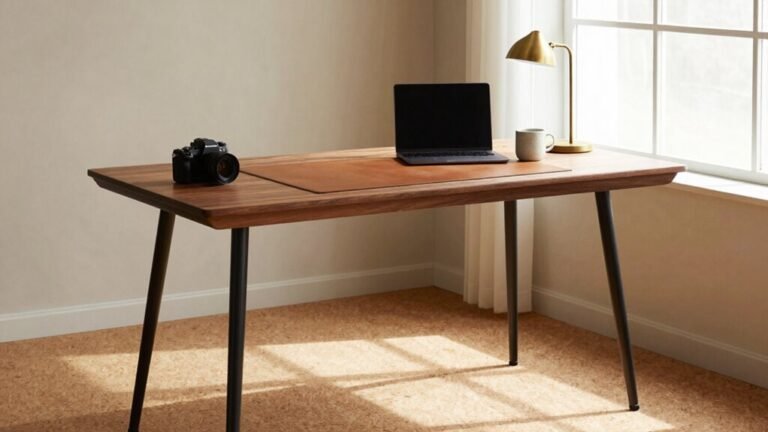
DIY Desk vs. Buying New: Pros and Cons
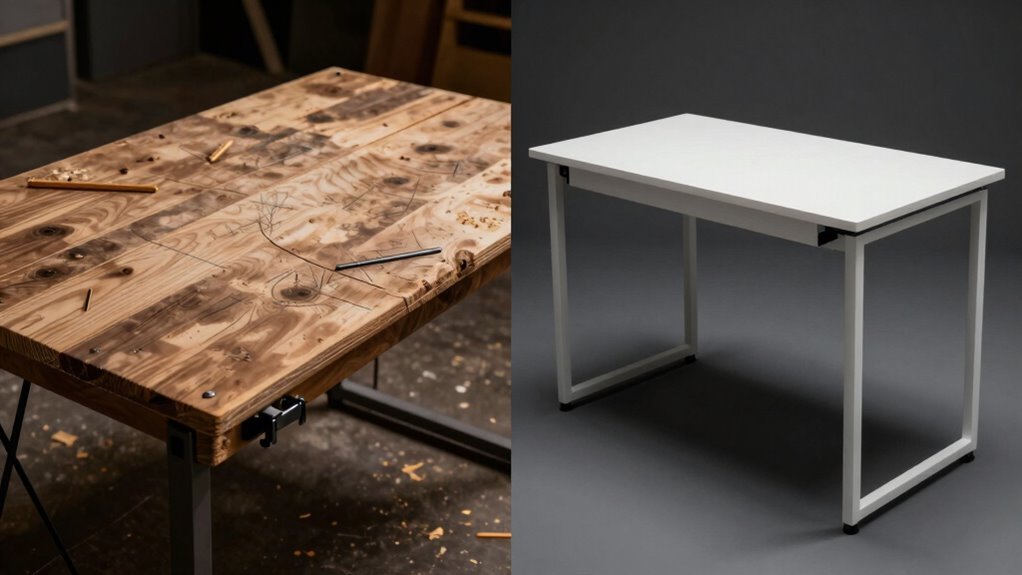
You save cash and release your inner craft champ with a DIY desk, but expect some sweat equity and surprise wobbles. Buying new? Boom—sturdy, sleek, and ready to roll, often with killer warranties and zero assembly rage. DIY offers wild customization, while store-bought brings peace of mind and better ergonomics out the gate. Time, tools, and your patience matter. Pick your adventure—and see what fits your space and vibe just right.
Cost Comparison: DIY vs. Purchased Desks
While you’re dreaming of the perfect workspace, let’s talk money—because whether you build it yourself or buy it ready-made, your wallet’s going to feel it.
Ready-made desks run from under $100 to over $1,000, with solid electric ones usually $300–$900.
Go DIY, and you could spend just $60–$250—or under $100 if you’re crafty with reclaimed wood.
Skip shipping fees and save more, though don’t forget tool costs if you’re starting from scratch.
Fancy a huge desk? DIY wins on price per square foot.
But bought desks come with warranties (think 5–10 years—nice safety net!), while DIY means no backup plan.
Repair costs? Electronics in store-bought models can cost a pretty penny later.
You save time buying, though—no weekends wrestling screws or sandpaper.
So, is your time worth more than $200?
If yes, maybe skip the sawdust spa.
Ready-made desks typically include stability features like anti-collision sensors and reinforced frames, which can reduce long-term replacement costs.
Customization Options for DIY Workspaces
What if your desk could be as unique as your playlist?
With a DIY workspace, you’re the designer, picking everything from solid wood that ages like fine wine to sleek laminate that laughs at coffee spills.
You can go wild with finishes—matte for no glare, glossy to show off that wood grain, or even a whiteboard top for doodling ideas.
Need storage? Tuck in hidden trays, pegboards, or modular shelves that adapt as your needs change.
You’ll love how cable grommets and power hubs keep chaos at bay, while adjustable desks let you stand or sit like a productivity ninja.
Add bamboo for eco-creds or a cork edge for pinning memes—your desk, your rules.
It’s not just furniture; it’s your workspace masterpiece, tailored down to the last screw.
An adjustable desk supports healthy posture and reduces sedentary risks, making your custom build both stylish and ergonomically sound with (adjustable height).
Fun, functional, and totally you.
Ease of Assembly and Setup Effort

Building your dream desk isn’t just about looks—it’s about rolling up your sleeves and diving into the fun part: putting it all together. If you’re tackling a flat-pack desk, you’re looking at 15 minutes with power tools—especially for simpler models like VariDesk or Vasagle. But without the right tools or experience, that time can stretch to 90 minutes. Custom builds? They’re a bigger commitment—4 to 6 hours for base and tabletop prep, plus sanding and filling. Pro tip: watch assembly videos first and prep your space well. Professional assembly is 30–60% faster than DIY, so consider help for tight deadlines or complex designs. Finding studs and using a level keeps things smooth. Pros work 30–60% faster, but hey, you’ve got patience and determination. With labeled parts and clear instructions, it’s like a puzzle—only way more useful when you’re done. Just don’t blame us if you get a bit too proud showing off your handiwork.
Durability and Build Quality Differences
You’ve picked your design, gathered your tools, and maybe even cleared the living room for your build—awesome work.
Now, let’s talk durability.
If you’re using solid wood, congrats—your desk can last decades and even get sanded down if life leaves a scratch or two.
Engineered wood like MDF won’t warp as much but can’t be refinished and might sag under heavy loads.
DIY frames often skimp on cross-bracing, so wobble city could be in your future.
Meanwhile, store-bought metal desks use tough, powder-coated frames and precision joints that resist wear way better.
Their motors and screws? Built to last, not quit halfway through a Zoom call.
Sure, you could match that quality with premium DIY parts—but it’ll cost you.
Bottom line: you can build tough, but factories usually build tougher, and without the surprise creak every time you lean forward.
Time Investment for Building Your Own Desk

Diving into a DIY desk build? You’re in for a fun weekend project — or maybe a longer journey, depending on your vision.
Simple builds, like a basic pine top on step ladders, take just a few hours and barely need tools.
But go bigger, and time adds up fast.
Here’s what to expect:
- Floating desks with L-braces? You’ll be done in under an hour — snack break included.
- Weekend warriors love simple table builds: glue, clamp, and go in 4–6 hours total.
- Dreaming of epoxy rivers or built-ins? Buckle up — we’re talking days or even weeks with drying delays.
Complex designs, heavy materials, or learning curves stretch timelines, especially for first-timers.
Still, there’s a huge payoff in pride and personal touch.
Just remember: every hour spent building is an hour closer to your dream workspace — no assembly instructions from the box required!
Ergonomic Features in Commercial Desks
After hammering the last nail into your DIY creation—or realizing how long glue really takes to dry—you might start wondering if there’s an easier path to the perfect desk.
Good news: commercial desks are packed with ergonomic perks you’d skip building yourself.
Want to stand or sit?
Electric height adjustment has you covered, with smooth, programmable lifts that make shifting positions a breeze.
Most models fit nearly everyone, adjusting from about 22 to 49 inches, and they’re built tough—stable even with two monitors or a gaming rig.
The edges are rounded to save your wrists, surfaces stay glare-free, and built-in cable management keeps things tidy.
You’ll find spots for monitor arms, keyboard trays, and even cup holders (okay, maybe not standard, but power outlets are!).
With anti-collision sensors and rock-solid frames, they’re safe, smooth, and ready to move when you do.
Why build when you can just press a button?
Space-Specific Design Flexibility

How does your workspace grow with you when your to-do list keeps changing?
With modular, height-adjustable, and customizable desks, you’re not stuck with a one-size-fits-all setup.
You can adapt your space as fast as your plans change—no hammer required.
Whether you’re collaborating, focusing, or folding it all up for movie night, today’s desks move with your mood and your schedule.
- Reconfigure easily: Snap together hexagon desks or shift mobile stations for team huddles or solo sprints.
- Adjust on the fly: With the touch of a button, go from sitting to standing—your back will thank you later.
- Personalize like a pro: Add movable shelves, adjust armrests, or switch components to fit *your* vibe and body.
You’re not just building a desk—you’re designing a workspace that *gets* you. And let’s be real: who wouldn’t want a desk that’s as flexible as their Wi-Fi password?
Hidden Drawbacks of DIY Desk Projects
Ever wondered why that sleek DIY desk you built starts wobbling after six months?
You assumed compressed particleboard drawers would hold up, but they crumble the second you tweak them.
A few mallet hits and—oops—whole drawer boxes need replacing.
You thought you’d save cash with that $342 desk, but then spent $476 fixing it.
Sounds crazy, right?
Without a pocket hole jig or solid joinery skills, even simple mods turn into full rebuilds.
That cute little add-on took just as long as scrapping everything and starting over.
And hey, why’s your knee smashing into that weird shelf?
Oh right, poor ergonomics.
Your giant computer? Nowhere to plug in.
You’re stuck playing desk Tetris.
What felt like a quick weekend win turns into a time-sucking, costly lesson.
Surprise! Your DIY dream had hidden traps—even if you didn’t see them coming.
Long-Term Value and Maintenance Considerations

Think long-term, and you’ll see your desk isn’t just a place to sip coffee and crush deadlines—it’s a daily companion that needs to keep up with you.
Will it last?
Can you fix it when life happens?
Here’s what really matters down the road:
- Durability starts with materials: Solid wood or metal lasts way longer than flimsy particleboard—your future self will thank you when it still looks great after five years of coffee spills and late-night work sprints.
- Maintenance adds up: That DIY beauty might need sanding, resealing, or screw-tightening every few months—fun for handypersons, less so when you’re just trying to meet a deadline.
- Resale value matters: A sleek, professional desk can boost your home’s appeal, while that ultra-personalized DIY build might charm only you.
Frequently Asked Questions
Can I Use a Door as a Desk Top Safely?
Yeah, you can use a door as a desk top safely—if you pick the right one and prep it right.
Skip hollow core doors; they’re flimsy and won’t hold up.
Grab a solid core door, check it’s flat, and reinforce the edges.
Add a sturdy base with adjustable feet so it doesn’t wobble.
With some smart upgrades, your door desk won’t just survive—it’ll impress!
Are DIY Standing Desks Wobbly?
Yeah, DIY standing desks can get wobbly, and you’ll feel every wiggle when typing or leaning.
Rushed assembly, loose bolts, or uneven floors make it worse—sometimes turning your desk into a DIY dance floor.
Thin materials or weak frames add shake, especially as you go taller.
But hey, with tight screws, proper bracing, and a good leveling, you can tame the tremors and keep your coffee slosh-free!
How Much Weight Can a DIY Desk Hold?
Think of your DIY desk like a sturdy backpack—it can haul a lot, but you’ve gotta know its limits.
Most hold 150 to 300 pounds, depending on the frame and motors.
You’re safe with laminate tops and a couple monitors, but stack on heavy wood or gear, and you might push it.
Don’t overload it—your desk isn’t a weightlifter!
Do I Need Tools to Build a Desk?
Yes, you need some tools to build a desk, but don’t panic—you don’t need a full workshop!
Grab a circular saw, a cordless drill, and a set of clamps, and you’re golden for most beginner builds.
A tape measure and square keep things straight, no surprises.
Want it easier? Borrow or rent a table saw, or let the hardware store cut your wood.
With the right basics, you’ll be assembling like a pro—and yes, your desk will hold your endless coffee mugs.
Is a DIY Desk Worth It for Small Spaces?
Yeah, a DIY desk is totally worth it for small spaces—you can squeeze it into weird corners, make it exactly your size, and even fold it up when not in use.
You’ll save floor space with smart, sleek designs, and hey, who doesn’t love a desk that fits perfectly? Plus, building it yourself means no bulky extras—just what you need, no more, no “oops, does this thing come in *small* small?”
Conclusion
So, you’ve sanded your soul off, spilled coffee on your blueprint, and built a desk that leans like it’s tired of your life choices. Congrats! Or, you could’ve just bought one, saved your weekends, and kept all your fingers. Either way, you’ve got a workspace—now sit down, pretend you’re productive, and enjoy the view. Mission (mostly) accomplished.