Pros and Cons of Using Gaming Chairs for Work
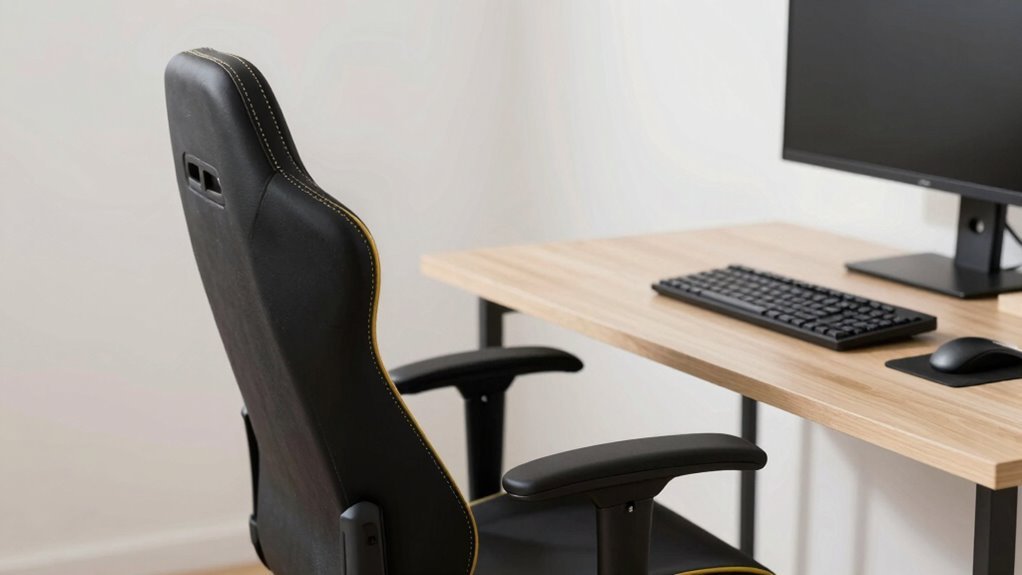
You get serious comfort during short work bursts, thanks to lumbar support and medium-firm padding that keeps you aligned and alert. Bold colors and RGB lights make your setup pop, while 4D armrests and recline options let you tweak your fit just right. But let’s be real—your boss might side-eye that racing-style seat in a formal office. They’re bulky, pricey, and not all bodies fit perfectly. Still, there’s more to uncover about finding your ideal work chair match.
Comfort During Short Work Sessions

While you’re zoning in on a 30-minute work sprint, the right gaming chair’s got your back—literally.
Built-in lumbar support keeps your spine happy, so you’re not slouching like a question mark by minute 20.
If it’s adjustable, even better—no more wrestling with a pillow that’s either too high, too low, or staging a rebellion.
Neck rests help, too, stopping that “I’ve been staring at my screen like a zombie” strain.
And with medium-firm padding, your seat stays supportive, not squishy-sinking, so you pop up ready for the next task.
Contoured seats? They spread pressure so your legs don’t go numb.
Adjust the height fast, tweak the armrests, and boom—perfect typing zone.
Rock back slightly between bursts, roll around smoothly, and hey, you’re basically a productivity ninja.
Just skip the wobbly recline—nobody wants to feel like they’re on a rogue rocking horse during a focus session.
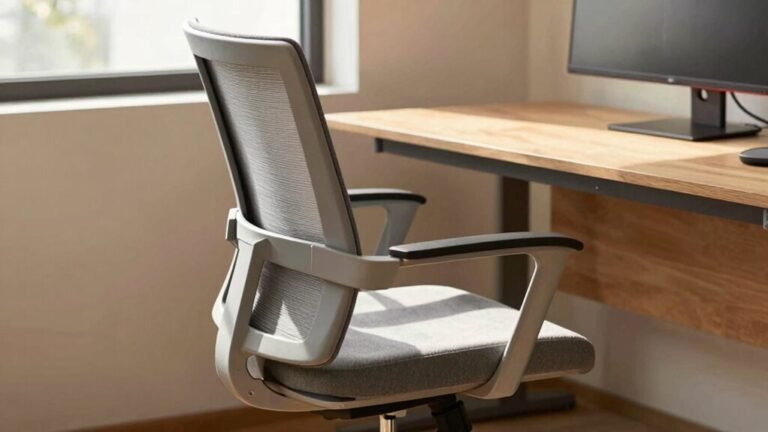
Gaming chairs often prioritize style over long-term support, which can affect posture during extended use (limited ergonomic adjustments).
Stylish and Bold Aesthetic Options
You’ve nailed the comfort game—now let’s talk about how your chair can look as sharp as you feel.
You’re not just sitting—you’re making a statement.
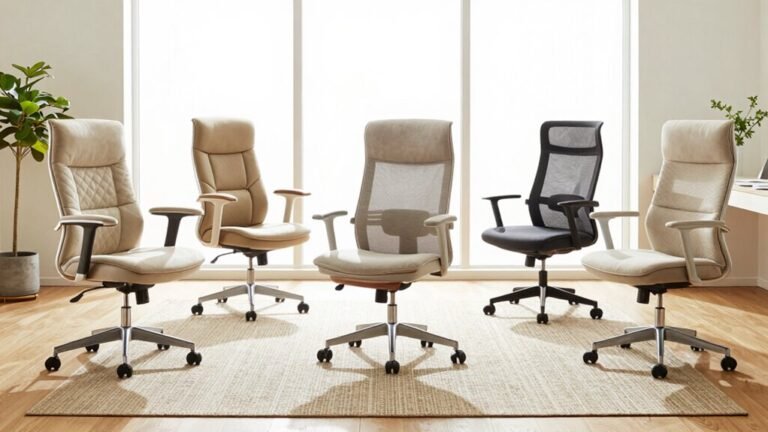
Whether you love sleek black for that pro vibe or want to spice things up with maroon or cloudy white, there’s a look that fits your style.
Love bold? Go wild with black-green combos or Nuka-Cola Quantum stitching that screams “I’ve arrived.”
Your chair can match your setup, from warm wood tones to bright, airy rooms with pastels.
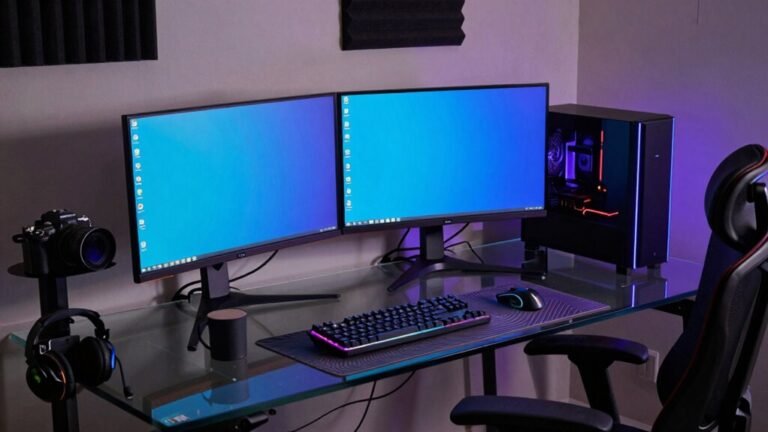
RGB lights add a pop, and premium finishes keep things classy.
Eye-catching cutouts and futuristic designs make your workspace feel high-tech without trying too hard.
Who says professional can’t be fun?
With sleek lines, cool textures, and colors that pop, your gaming chair doesn’t just blend in—it stands out, loud and proud.
Work just got a serious style upgrade.
Robust construction ensures your chair maintains its striking appearance and structural integrity over time.
Extensive Adjustability Features

When it comes to nailing your work-from-home setup, comfort isn’t one-size-fits-all—and lucky for you, today’s gaming chairs don’t play that game.
You can tweak the seat height to keep your feet flat and knees comfy, while a strong gas lift handles up and down like a pro.
Need more legroom? Adjust the seat depth so your thighs are supported, not dangling or getting pinched.
Lean back without slouching—thanks to smooth, lockable recline controls that let you shift positions all day.
Dial in your lumbar support to match your spine’s curve, and tweak the backrest height so it actually helps.
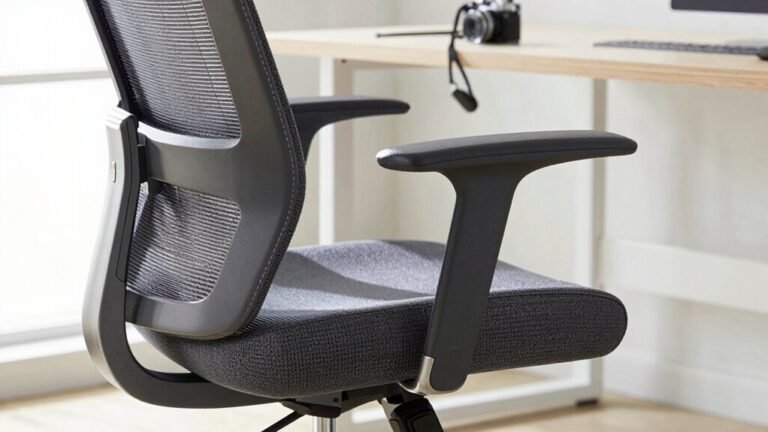
Your arms? Set ’em up just right with 4D armrests that move every which way.
Even your neck gets love with an adjustable headrest.
It’s like a cockpit for productivity—minus the jet fuel.
Many models also offer interchangeable pillows and accessories to further tailor support and comfort throughout long work sessions.
Design Mismatch in Professional Settings
Sure, your gaming chair looks like it belongs on a racetrack, but plopping it down in a boardroom-worthy office? Not quite the fit you’d hope for.
That flashy bucket seat, with its aggressive bolsters and racing stripes, screams “streamer life,” not “quarterly report.”
Those high side supports hug you tight—great for sharp turns in games, not so great when you’re reaching for files or typing all day.
The bold colors and carbon-fiber trim? Super cool for your gaming corner, but they stick out like a sore thumb next to sleek grays and muted tones in a pro office.
Plus, the whole vibe—bulky, angular, and over-the-top—clashes hard with clean, subtle office styles.
Let’s be real: it’s like bringing a sports car to a business meeting.
Looks awesome, but kind of misses the point when you’re just trying to get work done.
Ergonomic Challenges for Prolonged Use

Sitting in your gaming chair for hours might feel like riding in a high-performance vehicle, but your body soon realizes it’s not built for the daily commute.
Sure, it looks cool, but comfort fades fast when your spine and muscles start complaining. Here’s what you’re up against:
- Lumbar pillows shift or flatten, leaving your lower back hanging—literally.
- Stiff bucket seats trap you in one pose, like a molded action figure that can’t bend.
- Hard seat edges dig into your thighs, cutting off circulation like a slow-motion leg hug from a robot.
- Limited recline keeps you stuck in near-upright mode, so relaxing feels like cheating.
- Cheap materials overheat and sag, turning your throne into a sad sponge after a few months.
Your back will thank you for switching gears—before it revolts.
Limited Customization for Body Types
You might love how your gaming chair turns your home office into a cockpit, but if your body doesn’t quite match the “average” frame it’s designed for, that sleek look won’t hide the fact you’re sitting in a glorified puzzle piece that doesn’t fit.
If you’re short, the seat swallows your legs; if you’re tall, your back’s begging for more support.
Heavier? That 300-lb limit mightn’t cut it.
Lighter? You’ll rattle around like a bean in a jar.
Armrests, lumbar pads, even the seat depth—most don’t adjust enough, or at all.
Racing-style curves look cool, but your hips mightn’t agree.
And good luck finding one that fits *just right*—they’re built for the middle of the bell curve, not the edges.
Custom chairs exist, but oof, they’re pricey.
Space and Mobility Considerations

While your gaming chair might make you feel like the star pilot of a high-tech spaceship, it’s not always the co-pilot your small office needs.
It eats up space, crowds tighter rooms, and can be a pain to move around.
But hey, it’s not all doom and gloom—here’s what you’re working with:
- Big footprint? Yep. Those wide seats and tall backs take up serious floor real estate.
- Hard to tuck away? Totally. Bulky frames and non-foldable parts resist corner-hiding.
- Wheels need room to breathe. That five-star base needs clearance, especially near walls.
- Heavy lifting required. At 40–60 lbs, sliding it around mid-workday isn’t a breeze.
- But it moves *with* you. Swivel, recline, and adjust smoothly—no standing needed!
Great for open rooms, but tight spaces might need a rethink.
Cost and Feature Practicality
Ever wonder why some gaming chairs feel like a steal at first, but start creaking like haunted floorboards after a few months?
That’s the budget trap—$50 to $200 models might save cash upfront, but they often skimp on durability and real ergonomic perks.
If you’re sitting eight hours a day, splurging on a $200–$600 mid-range chair pays off with better lumbar support, sturdier frames, and armrests that actually stay put.
Sure, flashy RGB lights and racing-seat looks are fun, but they won’t help your back.
Meanwhile, premium picks over $500 can rival high-end office chairs, especially with mesh backs or adjustable seat depth that keep you comfy for years.
And thanks to longer warranties and better build, they cost less per year in the long run.
Bottom line? Invest in features you’ll actually use, not just the ones that wow your Discord crew.
Your spine—and wallet—will thank you.
Frequently Asked Questions
Can Gaming Chairs Be Used for Sleeping During Breaks?
Yeah, you can totally nap in a gaming chair during breaks—it’s like your body’s pit stop!
Just kick back, adjust the recline, and let the headrest hug your neck.
Keep it short though, ‘cause long snoozes can leave you stiffer than a zombie.
Pro tip: set an alarm, stay comfy, and save the marathon sleeps for your bed.
Sweet dreams, desk warrior!
Do Gaming Chairs Come With Warranty for Mechanical Parts?
Yes, gaming chairs usually come with a warranty for mechanical parts, like a safety net for your chair’s bones—think tilt mechanisms, gas lifts, and bases.
You’ll typically get 2 to 5 years of coverage, depending on the brand.
Corsair gives you 2, TGIF offers 5, and some smaller brands sweeten the deal with 3-year shields.
Just don’t toss the receipt—you’ll need it when trouble strikes!
Are Replacement Parts Available for Worn-Out Gaming Chair Components?
Yep, you can totally replace worn-out gaming chair parts—no need to toss the whole thing!
Companies like Corsair, Maxnomic, and DXRacer sell everything from gas lifts to casters, so you’re covered.
Just grab a new base, armrest, or tilt mechanism online, and boom: chair revival!
It’s like giving your chair a mini-makeover.
Who knew fixing a squeaky wheel could feel so satisfying?
Can Gaming Chairs Support Users Over 300 Pounds?
Yeah, gaming chairs can definitely hold users over 300 pounds—just grab one rated for 350 lbs or more.
Look for heavy-duty ones with steel frames, tough bases, and reinforced gas lifts.
They’re built like mini tanks!
Plus, wider seats and dense foam keep you comfy and supported.
Don’t settle for “up to 300”—go bigger, stay safer, and sit like a boss.
Your back (and buns) will thank you!
Are Gaming Chairs Compatible With Standing Desk Setups?
You’ll love how 348 gaming chairs at Home Depot are height-adjustable—perfect for standing desks!
You easily roll up to your desk, swivel in, and fine-tune your seat to match your standing level.
With lumbar support and breathable mesh, you stay comfy whether sitting or standing.
These chairs glide smoothly, tilt, and adjust just right, so you’re always in sync with your desk—no more hunching or wobbling like a wobbly stack of pancakes!
Conclusion
So, you’ve heard gaming chairs boost focus—true, if you’re sitting for an hour or two, they’re comfy and cool-looking, plus super adjustable. But long workdays? Oof, your back might beg to differ. They’re loud in quiet offices, bulky in small spaces, and pricey for features you might not even use. Honestly, they’re like sports cars: flashy, fun, but not ideal for daily commuting—unless you *really* love racing to lunch.