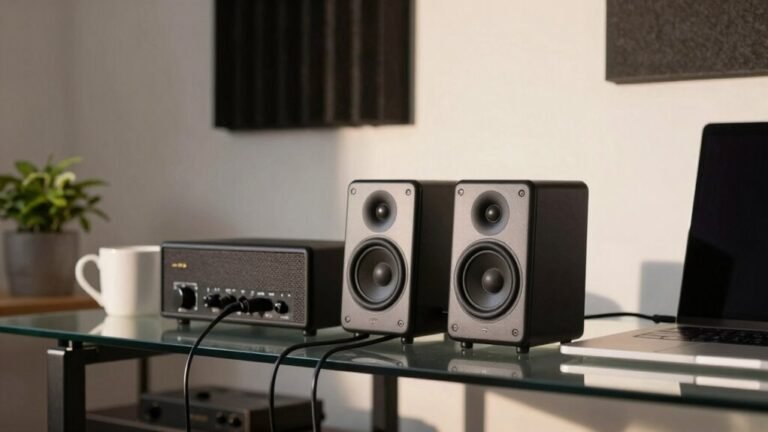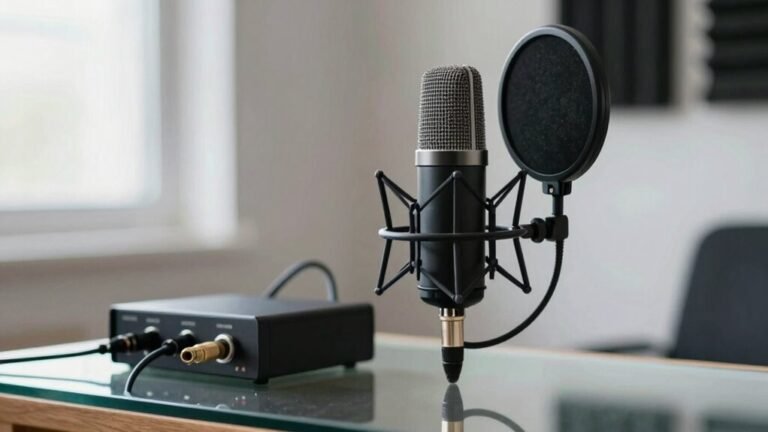
How to Reduce Echo and Reverb in Your Home Office
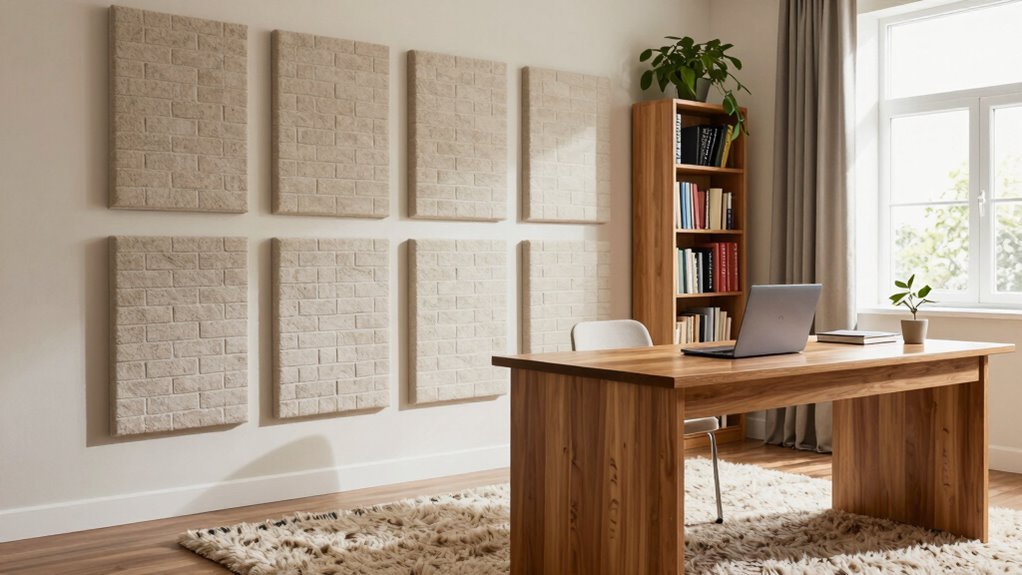
Tame that echo chamber by layering thick rugs with grippy underlays to hush footsteps and soften sound. Hang acoustic panels on walls and clouds from the ceiling to catch reflections before they bounce. Drape heavy curtains wide and tall around windows—you’ll block glare *and* noise. Fill empty corners with bookshelves, toss in plush cushions, and voilà: your voice finally sounds as sharp as your ideas. There’s even more where that came from.
Use Rugs and Floor Underlays to Minimize Hard Surface Echo
While you’re aiming to turn your home office into a quiet retreat, don’t overlook what’s beneath your feet—your floor is probably bouncing sound around like a ping-pong ball in a tile bathroom.
Toss down a thick wool or high-pile shag rug, and those noisy bounces practically vanish—curly fibers trap sound like tiny sponges.
Cotton, hemp, or hand-knotted rugs work great too, especially if they’re dense and plush.
Layer one over a jute base or add a padded underlay, and boom—double the sound control.
Cork or rubber underlays don’t just cushion your knees during zoom breaks—they dampen noise between floors.
Cover as much space as you can, especially under your desk and chair, and pair rugs with curtains for extra calm.
It’s not just decor; it’s acoustic magic hiding in plain sight.
Who knew quiet could feel so soft underfoot?
Hard surfaces enable long-distance sound travel.
Install Acoustic Wall Panels for Targeted Sound Absorption
You’ve already tamed the echo bouncing off your floor with plush rugs and sneaky underlays.
Now let’s take the quiet up a notch by tackling the walls.
- Plan it right – Measure your wall, mark spots behind your desk or near shared walls, and clean the surface like you’re prepping a canvas for acoustic art.
- Pick your mount – Use impaling clips with adhesive for heavy panels, Velcro for renters, or battens for pro-level sound absorption (they’re worth the effort). Impaling clips provide secure initial support while the adhesive cures.
- Cut and fit – Need to work around outlets? No sweat—drill starter holes, trim carefully, and sand edges smooth. A little DIY drama never hurt anyone.
- Secure and level – Stick that panel on, check it’s straight, and let the adhesive cure. Then admire your handiwork—silent, stylish, and seriously smart.
Incorporate Soft Furnishings to Dampen Ambient Noise

Transforming your home office into a sound-friendly sanctuary starts with softening the surfaces that bounce noise around like a ping-pong match. You’ve already tackled walls—now, bring in soft furnishings that hug sound instead of reflecting it. Rugs, sofas, cushions, and thick fabrics don’t just cozy up the space—they’re stealthy noise ninjas. Reduced reverberation frees your brain from constantly processing unnecessary noise, improving focus and productivity.
| Item | Why It Works | Pro Tip |
|---|---|---|
| Thick area rugs | Absorb footsteps and speech noise | Use a felt pad—boosts dampening by 50%! |
| Upholstered sofa | Traps sound in foam and soft fabric | Place against a noisy wall |
| Velvet curtains | Dense weave kills ambient ruckus | Layer for double the quiet |
| Bookshelves (pine) | Softer wood absorbs; blocks wall echoes | Load with books—more texture, more help |
| Extra cushions | Add layers; softness = silence | Mix fabrics like wool and velvet |
Plush meets practical—quiet has never looked this good!
Hang Curtains to Reduce Reflections From Windows and Walls
When sound bounces around your home office, it’s not just your thoughts that scatter—your focus takes a hit too, so hanging the right curtains isn’t just for privacy or blocking sunlight, it’s acoustical stealth mode.
Turn those echo chambers into calm zones with these smart moves:
- Pick thick, layered curtains with a dense backing—they’ll drink up 50%+ of sound and keep mid-frequencies from turning your room into a megaphone.
- Go bigger: hang them wider and taller than your window to seal the edges like a soundproof burrito.
- Leave a 10 cm gap behind the drape—yes, air *helps*—for extra 3 dB absorption and serious sonic stealth.
- Pair with blinds or wall coverage to stop sound dead in its tracks before it bounces back to annoy you.
You’ll cut noise by 5–8 dB, blur distracting chatter, and finally hear yourself think—no headset required!
Optimize Ceiling Treatments for Overhead Sound Control

Now that you’ve tamed the wild echoes bouncing off your windows and walls with smart curtain moves, let’s turn your eyes—and ears—upward.
Your ceiling’s probably letting sound sneak around like an uninvited guest.
Grab some acoustic panels with high NRC ratings (think 0.70 or more) and stick them above your desk—direct mount or suspend ‘em where they’ll catch sound mid-bounce.
Go for 20–40% coverage, more if your room’s all hard surfaces.
Mix 1” and 2” panels to snag a wider range of frequencies.
Hanging clouds or vertical baffles? Yes, please—they’re like sound ninjas, slashing reverb without hogging space.
Tuck slim absorbers along ceiling edges to block sneaky corner reflections.
And if your room rumbles like a distant drum, try a ceiling-corner bass trap.
Keep it safe with fire-rated stuff, blend it with your decor, and boom—you’ve just made your home office sound seriously pro.
Seal Doors and Gaps to Block Unwanted Sound Transmission
If sound’s sneaking through your door like a nosy neighbor eavesdropping on a phone call, it’s time to lock it down. You don’t need a soundproof vault—just smart, simple fixes that actually work. Here’s how to seal the deal:
- Install a door sweep—it’s cheap and cuts noise by 7dB by sealing that gap at the bottom.
- Stick adhesive acoustic strips around the frame to block chatty hallways and barking dogs.
- Upgrade to a solid-core door if yours is hollow; it boosts sound resistance like a quiet superpower.
- Use acoustic gaskets or automatic door bottoms to seal every nook—because even sound sneaks through cracks.
Together, these steps can slash sound leakage by up to 10dB. You’ll finally hear yourself think—without the neighbor’s podcast playing in your meeting.
Position Carpets Strategically Around Workstations

Roll out the welcome mat—for sound-busting style!
Place thick, fluffy rugs under your desk to catch noisy chair rolls and muffled keystrokes before they bounce back.
Go for wool or deep-pile rugs—they’re sound-absorbing superheroes, especially on hard floors.
Stick one in the center of the room to stop sound spreading like gossip in a hallway.
Lay runners along busy paths to silence stompy footfalls.
Aim to cover about a third of the floor, extending the rug 2–3 feet beyond your desk, so you won’t lose acoustics when you scoot back.
Overlap smaller rugs if you can’t fit a big one.
Block reflection paths between your desk and walls to cut echo before it forms.
Toss in rubber underlay for extra quiet—your microphone (and neighbors) will thank you.
Rugs aren’t just cozy, they’re secret agents of calm in your busy work zone!
Choose Foam Panels With Enhanced Absorption Properties
You’ve already tamed the floor with plush rugs that soak up chair squeaks and keyboard clatter.
So why not give your walls some acoustic love too?
Foam panels are your new best friends for cutting echo and making your voice sound crisp on calls.
Just pick wisely:
- Choose open-cell foam like polyurethane or melamine—it grabs sound like a sponge, while closed-cell types just bounce noise back.
- Go for 2-inch thickness or more to catch lower tones in speech; thinner panels miss those rumbly harmonics.
- Pick textured surfaces (wedges or pyramids) to trap more sound and add a *studio-ready* vibe—your Zoom background just got cooler.
- Check the NRC rating—aim for 0.7 or higher—so you know it’s legit tested and not just foam cosplay.
Your walls will thank you, and your coworkers might think you hired a sound engineer.
Fill Empty Spaces With Furniture to Limit Sound Bounce

Turn that echo chamber into an acoustic oasis by filling empty corners with furniture that doesn’t just look good—it works hard while you do.
Plush couches and fabric-upholstered chairs absorb sound like acoustic superheroes, unlike slick leather that just bounces noise around.
Toss in accent chairs, ottomans, and thick cushions—they trap sound waves mid-bounce.
Bookshelves? Gold. Packed with books, soft boxes, and a rogue felt basket or two, they break up sound and add cozy charm.
Stick ‘em against walls to stop echoes dead.
Lay down a thick, high-pile area rug with a grippy pad—hello, quiet underfoot!
Add tall plants near windows; their leaves and pots quietly sip up sound.
Even decorative throws and baskets do double duty.
You’re not just decorating—you’re building a sound-absorbing fortress of chill.
Empty space doesn’t stand a chance.
Combine Multiple Treatments for Comprehensive Echo Reduction
While one trick might tame a little echo, layering a few smart fixes together is like throwing a sound-dampening party—where the noise shows up, but never gets past the front door.
You’ve got options, and mixing them makes your space acoustically awesome.
Think of it as teamwork for tranquility:
- Hang acoustic panels at reflection points—SONEX-Valueline’s 0.95 NRC means serious sound-sucking power.
- Toss up ceiling baffles or glue SONEX-Basix panels overhead to catch sneaky vertical echoes.
- Drape heavy blackout curtains on windows—thick fabric blocks glass bounce like a boss.
- Lay a plush rug with ACOUSTIK underlay; it’s like a hug for your hardwood.
Combine these, and you’re not just reducing reverb—you’re hosting silence in style.
Boom!
Frequently Asked Questions
How Long Do Acoustic Panels Last Before Needing Replacement?
Acoustic panels last anywhere from 3 to 30 years, and honestly, it depends on what you’ve got hanging up.
Foam degrades in 3–10 years, especially if sunlight loves to roast it.
Fabric-wrapped ones last 7–15 years, while sturdy wood or metal panels can go 20–30+ years.
You’ll know it’s time to replace them when they look tired, sound flatter, or start resembling a sad sandwich more than sleek sound control.
Can I Paint Fabric-Wrapped Panels Without Affecting Performance?
No, you can’t paint fabric-wrapped panels without hurting their performance—sorry, DIY dreams!
Paint seals the fabric, blocking sound from entering the core, which kills absorption.
Think of it like putting a raincoat on a sponge—it just won’t soak up anything.
Manufacturers warn against it, and tests confirm: painted panels lose their magic, especially in high frequencies.
Stick to dyeing, re-covering, or swapping fabric to keep things looking fresh and working right.
Do Ceiling Clouds Work as Well as Full Ceiling Panels?
You’re in luck—ceiling clouds can work nearly as well as full panels, especially if you hang them right where you need them.
Placed above your desk or meeting spot, they tackle the worst echoes head-on.
Yeah, full coverage’s great, but clouds give you bang for your buck with way less fuss.
Think of them as acoustic ninjas: small, stealthy, and surprisingly powerful when they strike the right spot.
Are Soundproofing Materials Safe for Home With Pets?
Better safe than sorry, right?
You *can* have soundproofing and pets in the same home—no need to choose!
Just pick pet-safe picks like chew-resistant composites or vinyl-coated panels, skip the tasty-looking foam, and mount anything risky out of reach.
Think durable, non-toxic, and secure.
Your dog won’t mistake it for a chew toy, and you’ll keep both quiet *and* peace of mind—now that’s a win-win!
Can I Reuse Acoustic Treatments When Moving Offices?
Yeah, you can totally reuse acoustic treatments when moving—score!
Just inspect them like a pro, save the hardware, and pack panels snugly to avoid dings.
Label everything, snap pics of the setup, and you’ll nail the reinstallation.
Some tweaks might pop up, sure, but hey, it’s way cheaper and greener than buying all new gear.
Your future self (and wallet) will high-five you!
Conclusion
You’ve tackled the echo monster like a pro! With rugs, panels, and cozy furniture, your home office now feels as calm as a library in a cloud. Curtains wave goodbye to bouncing noise, while foam and carpets keep things muffled and smooth. Mix these tricks, and suddenly, every call sounds crisp. No more robotic echoes—or awkward “Can you hear me now?” moments. You’re not just working from home, you’re mastering it—acoustics and all!