Gaming Chair vs. Office Chair: Which Is Best for Work?
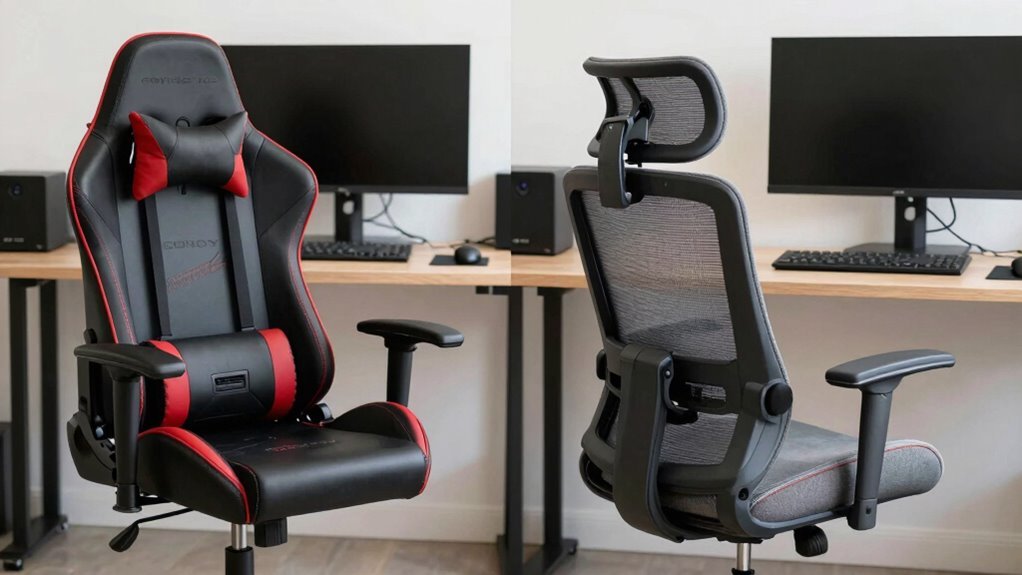
If you’re working long hours, skip the flashy gaming throne and go for an office chair—your back will thank you. Built-in lumbar support, breathable mesh, and adjustable everything keep you comfy and alert. Gaming chairs look cool but flatten fast and trap heat. Office chairs? They’re built to last, move with you, and won’t turn your spine into a pretzel. Plus, they come with warranties that actually protect you. Stick with the pros who sit all day—find out why the right seat makes all the difference.
Spinal Support: How Each Chair Promotes Posture
Ever wonder why your back feels great after a long day at work in one chair but aching in another?
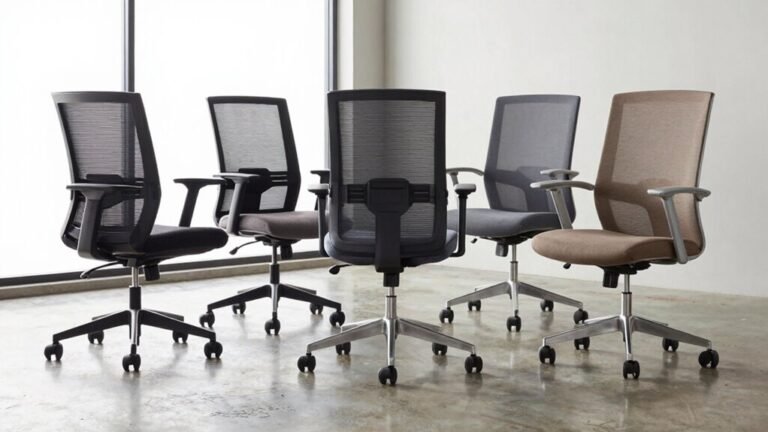
It’s because office chairs often hug your spine just right with built-in lumbar curves that match your natural S-shape, keeping your lower back supported without slipping pillows.
Gaming chairs?
They usually toss in a cushion that slides around or flattens over time—kind of like a deflating pool float.
High-end office models even let you tweak the lumbar support so it hits *your* sweet spot, while gaming seats lean on thick padding and bucket shapes that can trap you in one pose.
That might feel snug at first, but staying stuck in one position is a fast track to stiffness.
Real talk: your spine loves moving, not marathoning in a molded cave.
For all-day comfort, built-in, adjustable support wins over add-on fixes—every. Single. Time.
Your back will thank you!
This difference highlights why office chairs emphasize upright posture for long-term spinal health.
Adjustability: Finding the Right Fit for Your Body
You’ve got the support down, but what about the fit?
With office chairs, you’ll easily tweak the seat height so your legs sit just right—about two inches of space behind the knees—while gaming chairs often leave you guessing unless you’re average height.
Need armrests that move left, right, up, and down? Office chairs nail it with 4-way adjustments that actually go the distance.
Gaming models try, but their range feels tight.
Recline comfortably without lifting your feet? Office chairs tilt smoothly with synchro-motion; gaming chairs throw your legs way up—great for naps, not focus.
And surprise—your thighs matter!
Only office chairs let you adjust seat depth to stop that “pins-and-needles” vibe.
Add in forward tilt and precise headrests, and yeah, office chairs are like a customizable cockpit.
Gaming chairs? More like “one-size-sorts-of-fits-all.”
adjustable lumbar support systems ensure better spinal alignment during long work sessions.
Lumbar Systems: Built-In vs. Add-On Support

When it comes to keeping your back happy during long work sessions, lumbar support isn’t just a nice extra—it’s a must-have.
You’ll find built-in lumbar systems in most office chairs, offering sleek, adjustable support that moves with you—no slipping or bunching.
Fancy models even let you tweak the depth and height so it fits your spine like a hug.
Gaming chairs often come with these features too, though some rely on add-on pillows.
Those inflatable or foam pads can help, but let’s be real—they sometimes look like you’ve taped a small cushion to your chair.
They shift, compress, or force your back into one stiff position.
Built-in wins for stability and ease, but if you’re hopping between chairs, a portable pillow’s better than nothing.
Either way, your spine will thank you for picking support that works *with* you, not against you.
For those with chronic back issues, a two-piece backrest can provide targeted ergonomic support that adapts to movement.
Seat Comfort and Pressure Distribution
How does your chair treat your body after eight hours of back-to-back Zoom calls and deadline crunches?
If you’re in a gaming chair, you might start off cozy, sinking into that thick, plush cushion like it’s a hug.
But don’t be fooled—over time, that soft padding creates pressure points, especially in your hips and tailbone.
The side bolsters hug your shoulders too tightly, locking you in like a passenger seat that won’t let you stretch.
Gaming chairs may feel luxurious at first, but they often lack the firm, even support you need.
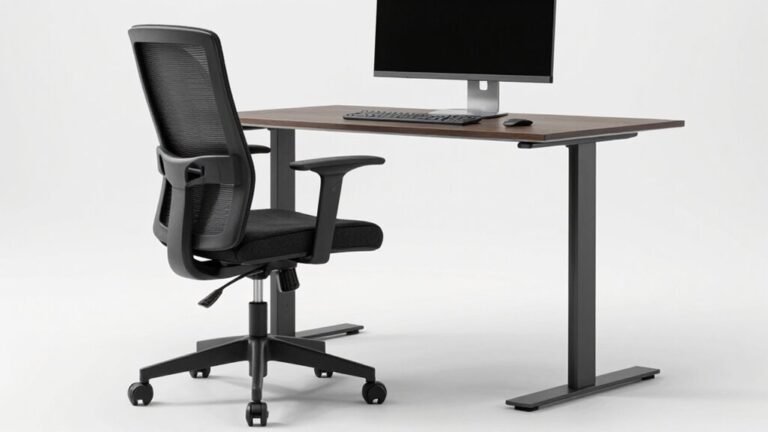
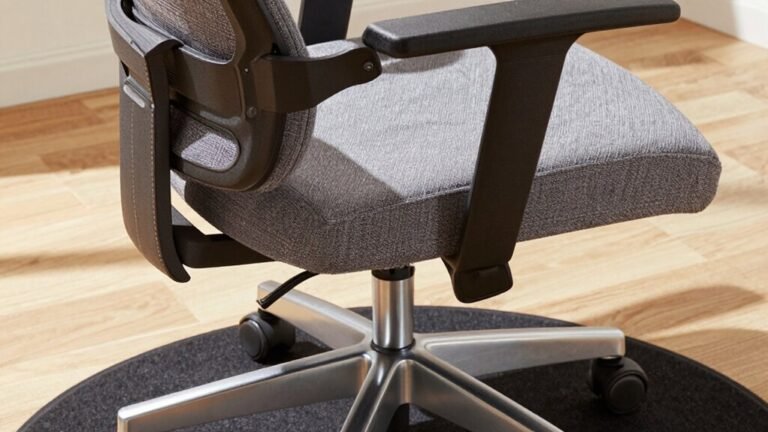
Office chairs, on the other hand, use firmer, high-density foam or mesh that spreads your weight evenly.
With adjustable seat depth and smart mechanics, they keep blood flowing and pressure low—so you stay comfy, alert, and ready to crush your to-do list.
Material Breathability and Temperature Regulation

That cushy embrace of a gaming chair might feel like a dream at first, but let’s talk about what really happens when your back starts slicking up like a car hood in summer.
If your chair’s wrapped in PU or leather, you’re basically sitting in a sauna—those materials trap heat and sweat, leaving you sticky and roasting.
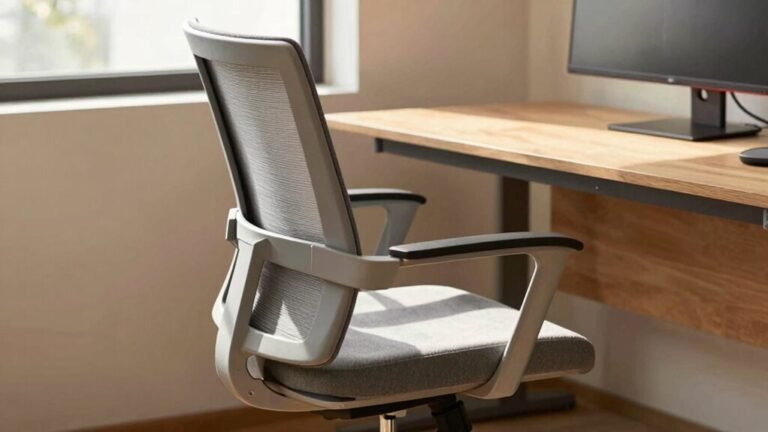
Mesh, on the other hand? It’s like an open window for your back, letting air flow freely and keeping things cool.
Knit and spacer fabrics aren’t bad either, offering a nice middle ground.
Look for perforated foam or vented designs—they help heat escape instead of baking you from below.
Some chairs even have built-in fans or cooling tech that make a real difference in long work sessions.
Light-colored fabrics also help, since they don’t soak up heat like dark ones.
Stay cool, stay dry, and skip the swamp seat.
Durability and Long-Term Wear Comparison
Sitting through long workdays puts your chair to the test, and while gaming chairs pack a punch with their steel frames and bold designs, they mightn’t be the marathon runners of the office world.
Sure, that sturdy metal frame handles wild gaming sessions, but over time, it can stiffen up and restrict your movement like a rusty robot.
Your gaming chair’s thick foam feels great at first, but those pillows flatten fast—hello, pancake lumbar support!
PU leather looks cool but often cracks after a couple of years, leaving you with a sad, shiny couch vibe.
Office chairs, though? They’re built for the daily grind—mesh backs breathe, real leather lasts, and their smooth tilt mechanisms keep working, day after day.
They adjust *with* you, not against you.
Warranty and Cost Over Time

Ever wonder why your buddy’s fancy gaming chair ended up at the curb after three years while your coworker’s office chair just keeps on trucking?
It’s not magic—it’s warranties.
Office chairs from big brands often come with 5 to 12-year coverage, sometimes even for life (okay, mostly the frame).
Gaming chairs? Usually 2 to 5 years, and those flashy motors or RGB lights?
Lucky to hit three.
Plus, wear items like foam or fabric aren’t covered long, if at all.
Office chair warranties also tend to be transferrable and cover more repairs, while gaming chair claims can be a hassle—shipping costs, proof needed, and good luck if you tweaked it yourself.
Sure, gaming chairs seem cheaper upfront, but when parts fail, you’ll pay more down the road.
A solid warranty saves cash *and* headaches—so yeah, that $500 office chair might actually be the bargain.
Task Performance: Work, Gaming, and Everything In Between
Why do some folks feel laser-focused in a sleek office chair, while others swear they’ve hit peak performance in a throne-like gaming seat?
You might lean forward at your desk, and the office chair’s synchro-tilt keeps your spine happy, boosting concentration.
Its breathable fabric and adjustable lumbar support mean you stay comfy during long work sprints.
But if you’re gaming after hours, that same chair adapts without breaking a sweat.
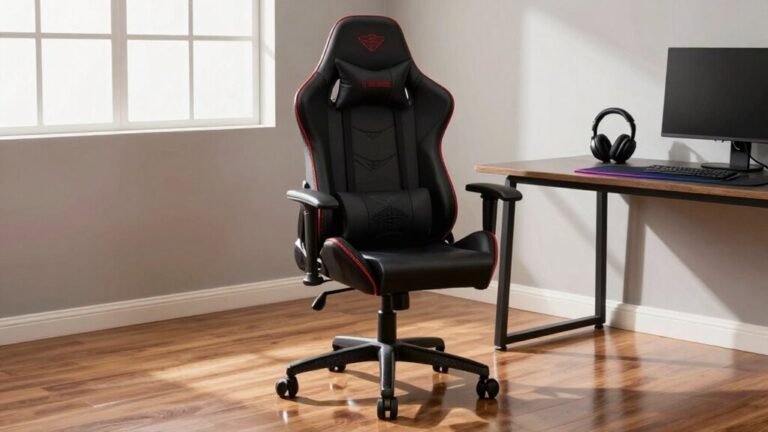
Gaming chairs? They’re built for epic raids—high backs, side bolsters, even vibrating motors make playtime immersive.
Yet those bolsters can trap you, limiting movement for typing or swiveling.
For mixed use, office chairs win on flexibility.
They flow from conference calls to casual gaming with ease, while gaming chairs shine when play’s the main mission.
Choose your champion based on where you spend most of your hours—work, play, or gloriously, both.
Frequently Asked Questions
Can Gaming Chairs Be Used in a Professional Office Setting?
Yeah, you can totally use a gaming chair in a professional office—it’s not just for livestreams and epic gaming marathons!
If it’s got solid ergonomics, you’ll sit comfy all day.
Just pick a sleek model (no flashy lights, please!) to avoid side-eye from coworkers.
And hey, your boss probably won’t mind as long as you’re not pretending the desk is a racecar cockpit.
Do Office Chairs Come in Stylish Designs for Home Offices?
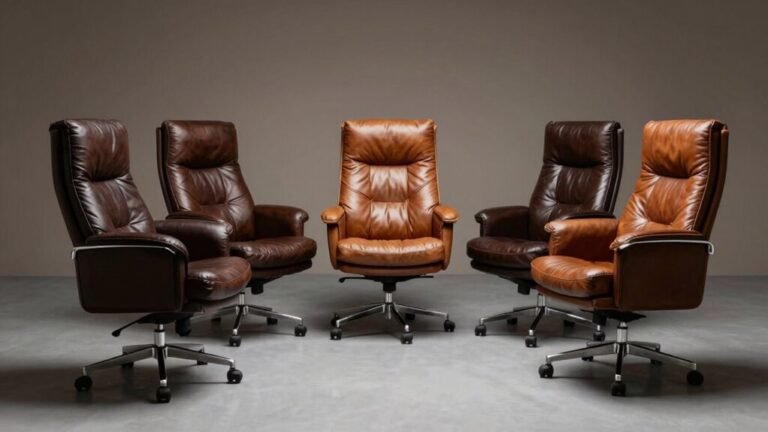
Yes, office chairs come in stylish designs that’ll make your home office feel like a design magazine spread.
Who says you can’t work in a chair so chic you’d blush to spill coffee on it?
You’ll find sleek leather, bold colors, and modern silhouettes—from bouclé to mid-century—perfect for comfort *and* Instagram.
Brands like Article and Herman Miller nail it, blending flair with function so you stay comfy while looking effortlessly put-together.
Are Gaming Chairs Suitable for People Over 6 Feet Tall?
Yeah, gaming chairs can work for folks over 6 feet tall, but you’ve gotta pick wisely.
Look for XL or big-and-tall models—they’ve got taller backs, deeper seats, and better adjustability.
Regular ones might leave your neck hanging or your thighs pinched.
Brands like Vertagear and AndaSeat size up nicely, so you’re comfy, not squished.
Think head support, seat depth, and armrests that actually reach.
Taller frame? No problem—just shop smart and skip the cartoonish ones that skimp on support.
Is It Hard to Assemble an Office Chair Compared to a Gaming Chair?
Nope, assembling an office chair’s usually easier than a gaming chair.
You pop in the gas lift, screw on the base, and attach the back—done in 15–30 minutes!
Gaming chairs? They’ve got extra parts, flashy bolts, and fussy trim that chew up time.
Sure, both need basic tools, but office chairs skip the drama.
Less “where does this tiny plastic bit go?” and more “hey, I’m sitting already!”
Much less headache, way more win.
Can I Use a Gaming Chair for Long Hours of Desk Work?
Yeah, you can use a gaming chair for long hours, but you’ll probably start feeling it in your back after a while.
Those flashy seats look cool and feel comfy at first, but the thick padding flattens out, and the lumbar pillow might slip down when you’re deep in work mode.
You’ll sweat a little more too—thanks, fake leather!
For back-to-back meetings or grinding through emails, an office chair’s got your spine’s best interests at heart.
Conclusion
You’ve got work to do, games to win, and a back that deserves care. Whether you pick a gaming or office chair, comfort’s the real boss battle. Think of your spine as a house plant—neglect it, and it droops fast. Both chairs have perks, so choose the one that fits *you*, not the hype. Your seat’s not just a chair—it’s your command center. Now go conquer the day, hero!