Standing vs. Sitting: Which Is Healthier for Remote Work?
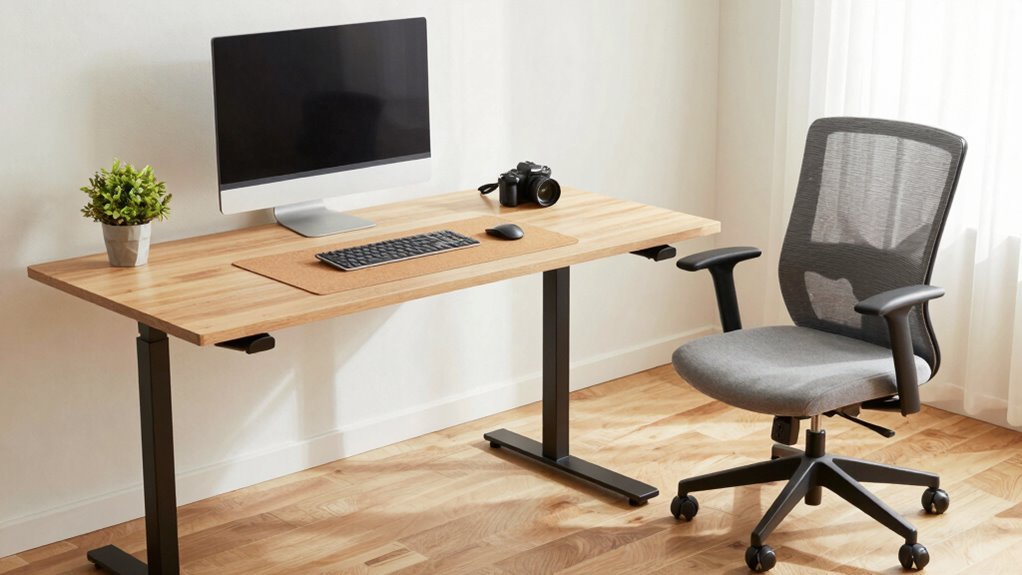
You’re not stuck between standing and sitting—mix it up and move! Standing burns a few more calories, but too much strains your legs and back. Sitting too long spikes blood sugar and slows your heart. The real win? Swap postures every 30 minutes, take light walks after meals, and fidget like you mean it. Your body loves motion, not rigidity. Stick with movement, and you’ll feel sharper, lighter, and ready for what’s next.
Calorie Burn: Does Standing Help With Weight Management?

Wondering if swapping your chair for a stand could nudge the scale in your favor?
It might—just a bit.
Standing burns about 8 to 50 more calories per hour than sitting, depending on your size and how much you fidget.
Yep, shifting your weight or using a balance board counts!
If you stand for three extra hours a day, you could torch around 87 extra calories—like ditching a small cookie without crying.
Over a year, that’s roughly 5–10 pounds, if you don’t compensate by eating more (looking at you, mid-afternoon snack raid).
But don’t quit the gym yet—standing alone won’t replace a good walk.
For real results, mix in short walking breaks or rock side-to-side like a happy penguin.
Small moves add up, and hey, every little wiggle helps!
Micro-movements significantly increase energy expenditure.
Heart Health: Can Standing Reduce Cardiovascular Risks?
Who knew your feet could have opinions about your heart?
Turns out, standing all day doesn’t give your cardiovascular system a break.
You might think trading your chair for upright time helps, but studies show it doesn’t lower blood pressure or reduce heart disease risk.
In fact, standing too long can stiffen your aorta—yep, your heart has to work harder.
Prolonged standing is just as tough on circulation as sitting, causing blood to pool in your legs and increasing strain.
Jobs with lots of standing even link to double the heart disease risk!
Yikes.
So don’t just stand there—move!
Short walks, stretching, or stepping around every hour do more for your heart than static poses.
Mix it up, stay playful, and let your legs dance a little.
Your heart will thank you.
Active standing outside of work was linked to lower blood pressure in recent research.
Back and Joint Comfort: How Posture Affects Musculoskeletal Health

How does your body really feel after hours on your feet—or stuck in your chair? Sore hips, stiff neck, achy back? You’re not alone. Both sitting and standing too long strain your muscles and joints. The key isn’t one or the other—it’s mixing it up! In fact, research shows that increasing standing time without adding movement may lead to more widespread pain, especially in the short term, while stepping more can help reduce it.
| Posture | What It Does |
|---|---|
| Prolonged sitting | Slouches your spine, strains neck and back |
| Static standing | Fatigues legs, hurts feet, aches lower back |
| Sitting + stepping | Reduces pain, boosts circulation |
| Sit-stand + movement | Keeps joints happy, muscles active |
Swap postures every 30 minutes, add light walks, and stretch often. Your body will thank you with less stiffness and more energy. Think of your spine like a spring—bouncy, not stiff! Stay playful, stay moving, and work comfortably.
Blood Sugar Control: The Impact of Standing After Meals
Ever wonder why you feel a little sluggish or spaced out after lunch?
That post-meal crash mightn’t just be in your head—it’s your blood sugar spiking.
Standing up right after eating helps, but here’s the kicker: just standing still doesn’t do much unless you’re moving your muscles.
The real magic happens when you add light activity, like spot marching or a quick 2- to 5-minute walk.
These little bursts, especially right after eating, can smooth out glucose spikes better than waiting or sitting all day.
Repeating this every 30 minutes? Even better.
Your body loves movement, not marathon sitting.
So go ahead—stand, wiggle, march like no one’s watching.
Your blood sugar (and energy levels) will thank you.
It’s not about intense workouts; it’s about smart, playful motion sprinkled throughout your day.
Focus and Energy: Cognitive and Emotional Effects of Standing

While you’re burning calories by standing, your brain might be working harder than you realize—balancing your body takes brainpower too.
Standing can sharpen your alertness at first, but tasks needing deep focus might actually suffer since your mind’s juggling posture and problem-solving.
Sitting often wins for precision work, like crunching numbers or editing that report.
But don’t plop into your chair all day—switching it up keeps your brain fresh and skips the mental slump.
- Standing briefly boosts mental energy, like a natural espresso shot
- Alternating sit-stand postures helps you stay sharp longer
- Complex thinking? Sitting may save brainpower for the heavy lifting
Moving isn’t just good for your body—it wakes up your brain, too. Just don’t overdo it. Find your sweet spot, and let your focus thrive.
Risks of Too Much Standing: When Upright Work Becomes Harmful
You might feel like a productivity superhero when you stand at your desk, but don’t start building a pedestal just yet—too much of that upright grind can backfire in more ways than one.
Standing all day isn’t just tiring—it can hurt your back, legs, and feet, with cramps, swelling, and pain creeping in faster than you think.
Your circulation slows down, your heart works harder, and over time, you’re at higher risk for varicose veins or even heart issues.
Yep, standing too long doubles your chance of heart disease.
It can even mess with your knees, hips, and spine, leading to long-term damage.
And if you’re pregnant, standing too much raises risks that go beyond just discomfort.
Muscle fatigue sneaks up, making you feel wiped before lunch.
So while standing may give you a boost at first, staying upright all day is like running a marathon without training—your body will tap out.
Your body will tap out.
Ideal Workday Balance: How Often Should You Switch Postures?

How does your body really want to work? It craves movement, variety, and frequent changes—no long stretches of sitting or standing.
To keep your energy up and your body happy, switch postures every 20–30 minutes, even if it’s just a quick stand or a tiny stretch.
Experts suggest standing about 15 minutes each hour, or roughly 30 minutes every two hours, to hit that sweet spot of 2–4 hours standing daily—enough to help your metabolism without overstressing your legs.
- Break up sitting with light activity, like pacing during calls or stepping in place
- Move often in short bursts, since frequent shifts boost circulation and focus
- Stand actively, not statically—rock on your heels, shift your weight, or stroll briefly
Your body loves motion, not marathons.
Setting Up for Success: Ergonomics and Habits for Healthy Workspaces
Where should you actually work from—your couch, the kitchen table, or that wobbly stool in the corner? Spoiler: none of those.
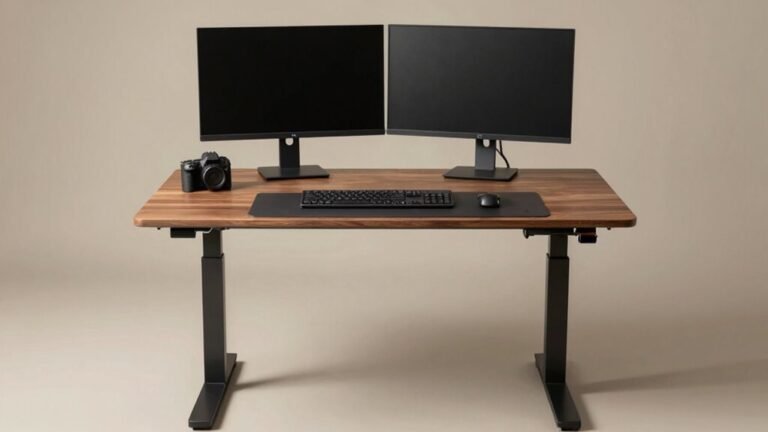
Set up a dedicated spot with a proper chair, external monitor, and adjustable desk if you can.
You’ll dodge neck, shoulder, and back pain—58% of remote workers don’t.
Keep your screen at eye level, sit in a neutral posture, and move every 30 minutes—seriously, set a phone alarm.
Try the 20-20-20 rule: every 20 minutes, glance 20 feet away for 20 seconds.
Your eyes will thank you.
Most teleworkers rate their home setups as good or better, especially when they tweak them.
And companies that offer ergonomic support? They see pain drop by 83%, stress by 91%.
So skip the couch, avoid the wobble, and build a workspace that works for *you*.
Your back—and your focus—will feel the upgrade.
Frequently Asked Questions
Can Standing at Work Replace the Need for Exercise?
No, standing at work can’t replace exercise—you still need to move!
While standing burns a few extra calories and helps break up long sits, it won’t get your heart pumping like a brisk walk or dance session.
Think of standing as a helpful sidekick, not the superhero.
Pair it with regular activity to stay strong, energized, and healthy.
Your body’ll thank you—with less stiffness, better mood, and maybe even fewer snack attacks!
Is It Safe to Stand All Day With a History of Varicose Veins?
Nope, standing all day isn’t safe if you’ve got varicose veins—it ramps up pressure in your legs and makes things worse. But don’t panic! You’ve got power: switch it up every 30 minutes, wiggle those ankles, wear comfy compression socks, and sneak in little walks. Your veins love movement, not marathons of stillness. Mix it up, have fun with it, and your legs will thank you big time!
Do Sit-Stand Desks Improve Long-Term Back Pain?
Yes, sit-stand desks can improve long-term back pain—you could see up to a 50% drop, one study found.
You’re not just swapping chairs for sore feet; you’re moving smarter.
Alternating every 30 minutes keeps your spine happy and cuts stiffness.
Think of it like giving your back mini-vacations all day.
Add walks or stretches, and you’re golden.
Just don’t stand all day—your body loves balance, not marathons.
How Soon Can I Expect Energy Boosts From Standing?
You can feel that energy boost almost right away—like, minutes after you stand up.
You’ll notice you’re more alert, maybe even a little perkier, especially if you’ve been sitting forever.
It’s like your body’s saying, “Hey, thanks for moving!”
Some of that’s blood flow, some’s mindset, and yeah, a dash of “I’m being healthy” pride.
Mix in little movements, and you’ve got a mini power-up session going.
Are There Benefits to Standing While on Video Calls?
Yes, there are plenty of benefits to standing during video calls!
You stay more alert, speak with better voice control, and boost your focus.
Standing helps you gesture naturally, look confident, and keeps your energy up.
It fights off that “I’ve been sitting too long” slump with a playful perkiness.
Just don’t turn it into a standing marathon—mix it up, stay comfy, and rock that call like you mean it!
Conclusion
You’re not just working—you’re dancing on the tightrope of balance, one foot in sitting calm, the other in standing spark. Lean too long, and your body groans like an old screen door. Mix it up, and you’ll feel like a well-oiled machine, humming with energy, focus, and happy joints. So stand tall, sit smart, and keep that rhythm rocking!