Bookshelf vs. Cabinet: Which Storage Is Best?
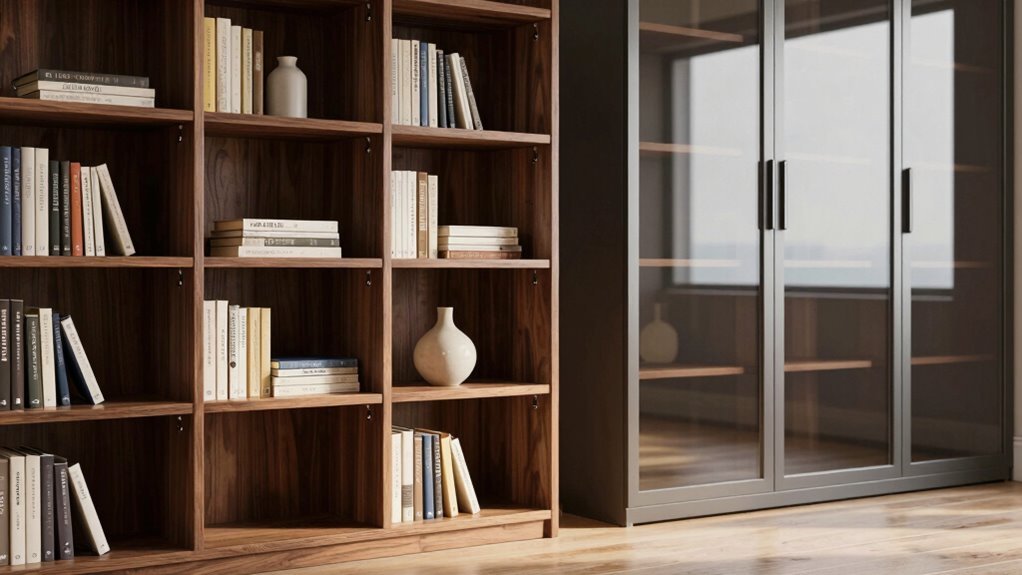
You want quick access and a light, airy vibe? Go open shelves—they’re perfect for books, photos, and your daily coffee mug. Need to hide clutter, protect dusty dishes, or stash heavy files? Cabinets’ve got your back, with serious strength and sneaky storage. They cost more up front, sure, but they’re workhorses in disguise. Think about what you’re storing and how often you grab it. Spoiler: the best pick isn’t one-size-fits-all… there’s a sweet spot you’ll love.
Function and Typical Use Cases

Ever wonder why some items live out in the open while others stay tucked away? It’s because you’re not just storing stuff—you’re matching function to your life. You grab books, photos, or mugs daily, so open shelves keep them quick to grab and fun to see.
But important files, spice jars covered in grease, or Grandma’s good silver? You hide those in cabinets where dust, light, or nosy guests won’t bother them.
You’ve seen it: cozy living rooms with open bookshelves full of memories, while your office safely locks away tax folders (phew).
Kitchens mix both—everyday dishes on display, junk drawers neatly closed.
You want easy access *and* order, right? Clever combo units give you style on top and secrets below.
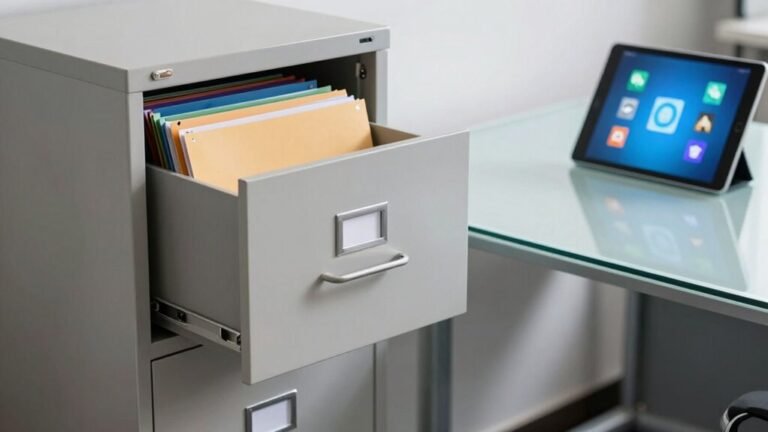
You’re not just organizing—you’re designing your daily flow, one shelf or cabinet at a time. Filing cabinets are ideal for securing sensitive office documents and maintaining organized workflows.
Capacity and Weight Limits Compared
How much can your storage really handle before it buckles—literally? Bookshelves usually hold 20–50 pounds per shelf, great for paperbacks but shaky with heavy loads.
If you’re stacking art books or records, you’ll love cabinets—many handle 100–800+ pounds per shelf, especially if they’re steel.
Shallow shelves (9–12 inches) on bookcases limit big items, while cabinets go deep (12–18+ inches), giving you room for bins, boxes, or your impressively large cookbook collection.
Taller cabinets also stack smart, packing more into the same floor space.
Just watch those long spans—unsupported shelves sag, even below their rated weight.
And yeah, a fully loaded bookcase can hit 300 pounds, but a serious cabinet? Over 1,000.
That’s less “book nook” and more “load-bearing fortress.” So, if you’re hoarding hardcovers or needed heavy-duty space, cabinets won’t let you down—literally.
The BILLY Bookcase, white, 31 1/2x11x79 1/2 – $79.00 is a popular choice but may require additional support for maximum load capacity.
Accessibility and Organizational Efficiency

Where do you want your stuff—front and center or tucked away like a secret recipe?
If you love grabbing books, binders, or kitchen staples in a flash, open bookshelves are your best buddy.
No doors, no fuss—everything’s visible and within reach, cutting down search time like a shortcut through traffic.
You’ll zip through tasks, rearrange on a whim, or use shelves as cool room dividers.
But cabinets? They’re like ninjas—great at hiding clutter and dust, though you’ll stretch, squat, or need fancy pull-out tricks to reach the back.
Frequent access means constant door-flipping, which gets old fast.
Bookshelves win for speed and simplicity, especially in smaller spaces.
Cabinets work harder for big, bulky, or “don’t-want-to-see-it” items.
Want efficiency with a side of flair? Go open.
Need stealthy storage? Seal it up.
Your move!
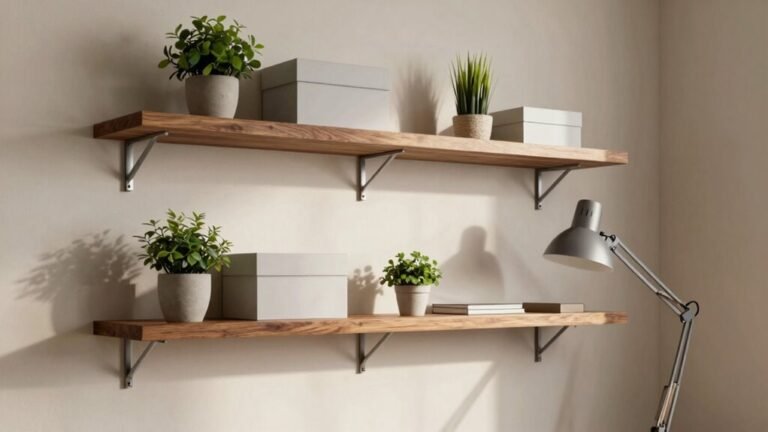
Open shelves offer easy access and display opportunities.
Durability, Safety, and Maintenance Needs
What if your furniture could take a hit and keep on smiling? Well, cabinets do—every single day.
They’re tough, built to handle heavy loads and years of use without buckling under pressure.
Solid wood or sturdy plywood? Both laugh off wear and tear, while MDF shrugs off moisture like a pro.
Bookshelves, though cute, can sag or wobble when you load them up.
And let’s talk safety: cabinets guard your fancy dishes like bodyguards, keeping them dust-free, unbroken, and out of harm’s way.
Open shelves? They’re like an open invitation for spills and messes.
Plus, you’ll spend way less time cleaning—closed doors hide the chaos and reduce dusting drama.
With cabinets, you get strength, peace of mind, and fewer chores.
Honestly, your future self will thank you when everything still looks great five years later.
Cost Considerations and Long-Term Value

You already know cabinets can take a beating and still look good—now let’s talk about how they also make sense for your wallet.
Sure, they might cost more up front, but think of them as a savings account for your home’s value.
Check this out:
- Built-in cabinets range from $200–$1,500 per foot, but they last way longer than that bargain bookshelf wobbling in your living room.
- Custom jobs mean higher labor costs, but DIY cuts the bill—just don’t blame us if your drill ends up doing the talking.
- Open shelves are cheaper to install, but dust bunnies throw ragers on them, costing you time and cleaning supplies.
- Durable materials like solid wood mean fewer repairs—so you’re not fixing things every five years like clockwork.
- Over time, cabinets often boost resale value, making buyers drool a little—okay, maybe a lot.
Aesthetic Impact and Room Design
While you’re chasing that dreamy room vibe, don’t underestimate how much your storage choices shape the whole look and feel.
Open bookshelves keep things light and airy, letting your eyes travel through the room—perfect for making small spaces feel bigger and your decor shine.
Closed cabinets add cozy heft, though they can hog a wall if you’re not careful.
Love showing off your favorite books or plants? Shelves turn storage into a spotlight.
Prefer a clean, calm look? Cabinets hide the chaos and let your artwork or rug steal the show.
Glass fronts give you the best of both—style with a sneaky peek inside.
Wood shelves bring warmth; glossy cabinets feel sleek and modern.
Mix it up with lower cabinets and upper shelves to balance function and flair.
Honestly, it’s like interior design karaoke—sing your style loud and proud, no wrong notes!
When to Choose One Over the Other

You’ve got the look down—now it’s time to match form with function.
Choosing between a bookshelf and a cabinet isn’t just about style—it’s about what works best for your stuff.
Consider these factors when making your pick:
- Protect valuables? Go cabinet—doors block dust, light, and curious pets.
- Store heavy books or stacks? Cabinets win again, with sturdier shelves and better weight support.
- Need quick access? Open bookshelves let you grab and go without fumbling for handles.
- Worried about clutter? Cabinets hide messes and keep things looking tidy behind closed doors.
- On a vintage paperback budget? Bookshelves are cheaper, easier to install, and perfect for light loads.
Pick smart, store better, and keep your space looking sharp.
Your books (and cat) will thank you.
Frequently Asked Questions
Can I Mix Bookshelves and Cabinets in One Room?
You can absolutely mix bookshelves and cabinets in one room—it’s a total game-changer!
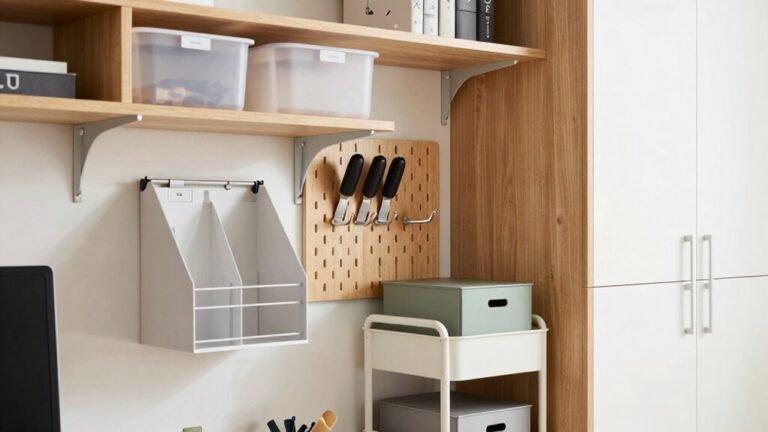
Combining open shelves with closed cabinets gives you style and sneak-away storage for clutter.
You get to show off cool decor while hiding the junk mail and random chargers nobody wants to see.
Pair them with baskets, art, or bold paint, and boom—organized *and* awesome.
Are Glass Doors on Cabinets Easy to Clean?
Glass doors aren’t the easiest to clean—you’ll be wiping them practically every week!
Fingerprints, grease, and dust show up like neon signs in a dark room.
You’ve gotta stay on top of it with a microfiber cloth and glass cleaner, never spraying directly.
Spot-clean splatters fast, or they’ll throw a permanent party on your glass.
Dry thoroughly, or water spots crash the scene.
It’s a bit high-maintenance, but totally doable with a little elbow grease and a smile.
Do Bookshelves Make a Room Look Bigger?
Yes, bookshelves can totally make your room look bigger—you just have to play it smart.
Go tall to draw the eye up, and paint them the same color as your walls to create a smooth, flowing look.
Keep things light, use open shelves, and add some mirrors or lights to bounce brightness around.
Less clutter, more wow—your space’ll feel way more open, like magic (but real).
Can I Mount a Cabinet Like a Shelf?
Yeah, you can totally mount a cabinet like a shelf—it’s like giving a cabinet a superhero upgrade!
Just imagine it floating neatly on the wall, holding your goodies.
Drill long screws straight into wall studs for rock-solid support, use a ledger board as a trusty helper, and add cleats or plywood backing to beef it up.
It’ll look sleek, work like a charm, and won’t faceplant during a snack avalanche—boom!
Are Floating Shelves as Strong as Cabinets?
No, floating shelves aren’t as strong as cabinets—you can’t just swap one for the other and expect the same support.
Cabinets are like storage ninjas, anchored to studs and built to handle heavy loads, while shelves are more like acrobats, sleek but limited.
Sure, you *could* stack books on a shelf, but unless it’s built like a tank, it’ll sag faster than your resolve after New Year’s.
Conclusion
You’re the designer of your space, so pick what fits your rhythm. A bookshelf’s like an open dance floor for your books and treasures—easy to reach, full of flair. But when you need hidden strength, like a vault for bulky or breakable stuff, a cabinet’s your quiet hero. Both keep things tidy, yet shine in different scenes. Go open, go closed—either way, you’re winning.