Safe Volume Levels for Working With Headphones
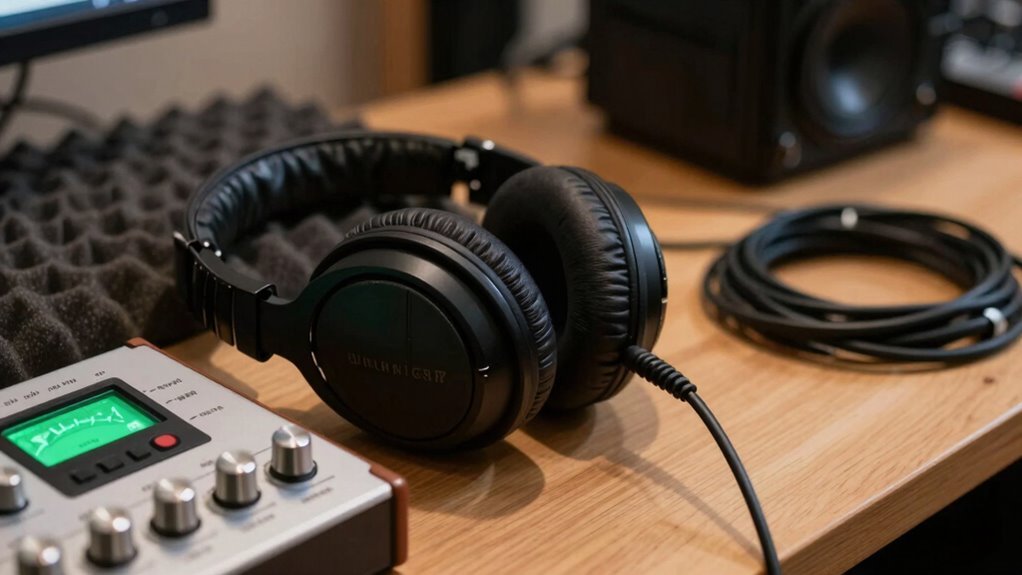
Keep your headphones at 50–60% volume to stay safe while you work—most folks land around 70–85 dBA there, which is the sweet spot. OSHA says 85 dBA is the max for 8 hours, and every 5 dB louder cuts safe time in half. Noise-canceling beats cranking the volume, especially on loud commutes or busy floors. Your ears will thank you later. Want to know how to protect your hearing without missing the beat? There’s more where that came from.
Understanding OSHA Noise Exposure Standards
Even if you’re not on a construction site, knowing OSHA’s noise rules can save your hearing—especially when you’re cranking up the tunes through headphones.
You see, OSHA says 90 dBA is the max for 8 hours, but if noise jumps 5 dB, your safe time halves—thanks to that tricky 5 dB exchange rate.
Yikes!
And guess what? At 85 dBA, your employer’s gotta start a hearing conservation program—monitoring, tests, and free ear protection.
They’ve got to check noise levels, offer hearing tests, and train you on the risks.
Employers must pursue feasible engineering controls before relying on hearing protection alone, according to OSHA standard 1910.95.
While these rules target workplaces, they’re golden info for anyone jamming on headphones.
That “OSHA-approved” label on earbuds? Total myth—OSHA doesn’t bless consumer gear.
So, if your music’s blasting near those levels, your ears might be on a construction site whether you realize it or not.
Who knew rock concerts and OSHA had so much in common?
How NIOSH Guidelines Impact Workplace Listening
Ever wonder how loud you can go before your playlist starts risking your hearing at work?
NIOSH says keep it at or below 85 dBA over eight hours—anything louder counts as hazardous.
That means your favorite tunes through headphones add up fast, even if the rest of the job’s quiet.
They use a strict 3 dB rule, so when the volume climbs, your safe listening time drops—quick!
At 100 dBA, you’re limited to just 15 minutes.
Fun fact: NIOSH’s standards aren’t law, but they’re science-backed gold.
They slash hearing loss risk from 1 in 4 to just 1 in 12 over decades.
If noise hits 85 dBA, your workplace needs a full hearing loss prevention plan—including training, check-ups, and smarter sound controls.
This requirement includes audiometric evaluation as a critical component to detect early signs of hearing damage.
EPA Recommendations for Safe Daily Noise Levels

How loud is too loud when the music’s pumping and the world fades away? The EPA says keep your *daily average* at or below 70 dB at your ear to protect your hearing for life. That’s like the hum of a quiet kitchen—surprisingly soft for all-day safety!
The trick? Loud moments are okay if they’re balanced with plenty of quiet time so your ears can recover.
Unlike workplace limits, this covers *every* hour—your commute, chill time, *and* weekend concerts.
Think of it like a noise budget: spend it wisely! The EPA’s 70 dB rule includes a safety margin, just in case.
It’s not about banning bangers, just smart listening. So, turn it up for the chorus, sure—but let the volume chill the rest of the day.
Your future self (and your ears) will thank you with high-fives, not hearing aids. Keep it fun, keep it safe! Exposure to higher levels requires shorter durations to stay within safe limits, following a 3-dB exchange rate.
WHO Guidelines for Weekly Safe Listening Durations
You’ve got your daily noise budget from the EPA—now let’s talk weekly game plans.
The WHO says you can safely listen to 80 dB (like a doorbell) for up to 40 hours a week—think of it as your weekly “sound snack.”
Bump it to 85 dB (heavy traffic)? You’re down to 12 and a half hours.
At 90 dB (shouting), only 4 hours are safe.
And 100 dB (a hair dryer)? Just 20 minutes!
It’s like your ears have a weekly battery.
These limits use energy math: louder sounds drain your allowance faster.
Kids or sensitive ears should stick to the “sensitive-user” plan (75 dB for 40 hours)—extra protection mode.
Devices can track this for you—Apple’s Health app already does!
Recommended Volume Ranges for Headphone Use

Where should you set your headphone volume to keep your ears happy and healthy?
You’ve got options that balance safety and sound quality—without needing a PhD in acoustics.
Think of your ears like a favorite pair of sneakers: protect them early, and they’ll carry you far.
Here’s how to rock your tunes safely:
- Aim for 50–60% max volume on your device—it’s the sweet spot for most headphones, keeping sound around 70–85 dB, which is safe for daily listening.
- Use noise-canceling or snug-fitting headphones so you don’t have to crank the volume to drown out the world (looking at you, noisy bus seat neighbor).
- Turn it down to 30–50% with earbuds or sensitive headphones—they can get loud fast, like a whisper turning into a shout in a tiny room.
Your future self will thank you—yes, even when you’re rocking those gray hairs.
Time Limits for Safe Exposure at Different Sound Levels
Now that you’ve got a handle on the right volume dial setting, let’s talk about the clock—because even perfectly pitched tunes can turn troublemakers if you overdo it.
At 85 dBA—like loud traffic—eight hours is your daily max.
Bump it to 88 dBA (hello, lawnmower zone), and you’ve only got four safe hours; every 3 dB increase halves your time.
Crank things to 94–95 dBA, like a roaring motorbike? You’re limited to about an hour.
Hit 100 dBA—rock concert levels—and just 15 minutes can risk harm.
Above that? Things get serious fast: 110 dB and up can damage your ears in minutes, or seconds at extreme levels.
Think of sound like sun exposure: the louder it is, the quicker you burn—so step away, take breaks, and keep those ears happy and hearing great tunes for life.
The Role of Volume-Limiting Headphones in Safety

Ever wondered how your headphones could secretly be your ears’ best friend?
Volume-limiting headphones protect your hearing by capping sound at safe levels—usually 85 dB or less—so you can listen longer without damage.
They’re like seatbelts for your ears, especially in noisy workplaces or when kids are bopping to tunes.
But not all limiters are equally reliable, so it pays to choose wisely.
Here’s how they help:
- Automatic volume caps prevent sound from ever hitting dangerous levels, even if you crank it up.
- Digital limiters in firmware are harder to bypass than old-school resistors—think smart locks vs flimsy latches.
- OSHA-compliant models (like 82 dB versions) keep workers safe during long shifts without sacrificing tunes.
Just remember: supervision and good fit still matter. After all, even the coolest headphones can’t replace a little ear-loving care!
Benefits of Noise-Cancelling Technology for Safe Listening
When the world turns up the noise, your ears don’t have to pay the price—thankfully, noise-cancelling headphones let you keep the volume down without missing a beat. You’ll actually enjoy music more because these clever cans block out distractions like rumbling subway noise or chatty coworkers.
Instead of cranking your tunes to drown out the chaos, ANC tech uses microphones to flip outside sounds into “anti-noise,” canceling them like magic.
In tests, people kept listening levels below 75 dBA with noise-cancelling earphones—even in loud cafes or buses. That’s way safer than the 85+ dBA others blast through regular earbuds.
They’re perfect for machine shops or commutes, slicing through low-frequency ruckus so you hear every lyric, not the engine roar.
Your ears stay happy, your music stays clear, and you? You stay cool, calm, and in the zone—without turning up the dial. Win-win!
Best Practices for Hearing Protection in Noisy Work Environments

How loud is too loud? If you’re shouting to talk, it’s probably over 85 dBA—time to protect your ears!
In noisy jobs, hearing damage creeps in quietly, but you can stay safe with smart habits.
OSHA steps in at 85 dBA, requiring free hearing protection and training, so use it wisely.
Here’s how to keep your hearing in top shape:
- Pick the right protector – Choose earmuffs or earplugs that fit snugly and cut noise to a safe 75–85 dBA. Double up if you’re near 100 dBA or louder!
- Test your fit – A quick fit test ensures your gear actually works. No point wearing protection that doesn’t protect!
- Take breaks & rotate – Step into quieter zones regularly. Your ears will thank you like a dog with a squeaky toy!
Stay sharp, listen safe, and keep the volume down—your future self’s favorite playlist depends on it!
Frequently Asked Questions
Can I Use Regular Headphones in a Noisy Office?
Yeah, you can use regular headphones in a noisy office, but you’ll probably crank the volume too high—hello, hearing trouble!
Without noise isolation, background chatter and clatter push you to unsafe levels.
Swap in noise-canceling or over-the-ear pairs, and you’ll keep the tunes clear without blasting them.
Your ears will thank you later—no tiny rock concert inside your head needed!
Do Volume-Limiting Headphones Work With All Devices?
Yep, volume-limiting headphones work with most devices, no worries!
Just plug in via 3.5mm jack and go—phones, tablets, laptops, TVs, you name it.
Wired ones like PuroBasic or Connect+ Pro Kids play nice everywhere.
Bluetooth? It’s trickier—some phones block high volumes, but pairing’s usually a breeze.
Think of them like friendly bouncers: they’ve got rules, but they still let the party happen!
How Often Should I Replace My Noise-Cancelling Headphones?
You should replace your noise-cancelling headphones every 3 to 5 years, depending on how much you love them—and how often you drop them on the floor.
Battery life fades like your phone’s, and ear pads turn crusty over time.
But hey, if they still sound great and cancel noise like ninjas, keep rocking them!
Just swap out pads, avoid deep discharges, and store them nicely.
You’ve got this!
Are Wireless Headphones Safer Than Wired Ones?
You’re safe either way, but wired headphones edge out as safer if you’re cautious about radiation.
Imagine Sarah, who switched to wired headphones after reading scary headlines—felt better instantly, even though science says Bluetooth’s fine.
Wired means zero RF, no battery risks, and no charging fuss.
They’re your worry-free, plug-and-play pals, perfect for peace of mind and pristine sound—simple, solid, and sweet as a high-five from your geeky best friend.
What Signs Indicate I’Ve Exceeded Safe Listening Levels?
You’ve gone too loud if your ears ring after listening, sound muffled, or feel sore—your body’s waving red flags!
If people hear your music leaking from your headphones, or you’re cranking the volume over 60% max, slow down.
Hearing distortion, needing breaks, or feeling ear pressure? Yep, you’re pushing it.
Turn it down, take a breather, and keep those ears happy—they’re the real MVPs!
Conclusion
You’ve got the power to protect your hearing while staying focused and groovin’ through your workday. With safe volume levels, noise-cancelling perks, and smarter listening habits, your ears will thank you later. Could you really put a price on never having to ask, “What’d you say?” for the tenth time? Keep it cool, keep it safe, and let your tunes—and your job—keep flowing smoothly. You’ve totally got this!