What Size Desk Do You Actually Need?
You actually need a desk that fits your body and space—think 48 to 72 inches wide, depending on whether you’re solo-tasking or running dual monitors like a pro. If you’re under 5’5″, go lower—maybe 26 inches high—so you’re not shrugging your shoulders like you’re dodging rain. Taller? Adjustable is your friend. Aim for 24–30 inches deep, so your keyboard and screen aren’t playing hide-and-seek. Clear floor space? Non-negotiable. There’s more where that came from.
Understanding Standard Desk Dimensions
Imagine this: you’re setting up your dream workspace, and the first thing you grab is a desk—only it turns out to be way too short, too narrow, or so deep your coffee mug lives in permanent exile.
Don’t worry, you’re not alone.
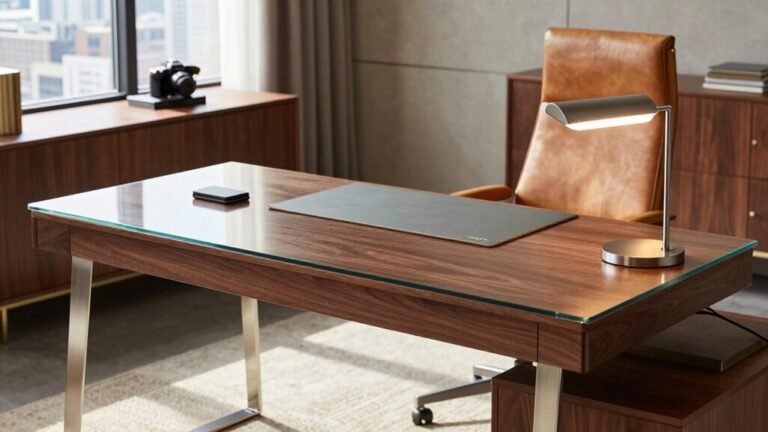
Most standard desks stand 28–30 inches tall, perfect for sitting comfortably while typing or writing.
Widths usually range from 48 to 72 inches—great for spreads with your laptop, notebooks, and that overflowing coffee.
Depths sit around 24–30 inches, giving you space without turning your desk into a black hole.
Need to stand? Adjustable standing desks go from 22 to 52 inches tall, so you can shuffle between sitting and stretching.
And remember, you’ll want at least 24 inches of knee clearance—nobody likes cramped legs.
Whether you’re gaming, studying, or working, these standard sizes have your back.
Pick one that fits your flow, and you’re golden.
For optimal comfort, ensure your desk allows your elbows to rest at a 90-degree angle while typing.
Matching Desk Size to Your Workspace
While you’re dreaming about the perfect workspace, don’t let your desk steal the spotlight by taking up too much real estate—or worse, leaving you squished like a sandwich.
If you’re working with a tiny apartment or dorm, a minimalist desk (36–48 inches wide) keeps things tidy and functional.
Need more power? For general office tasks, aim for 48–60 inches wide—plenty of room without overwhelming your space.
Multitaskers, listen up: if you’re juggling dual monitors or sketching up a storm, go big with 60–72 inches.
Just make sure your room can handle it—leave 30–36 inches behind the desk for chair rolling and guest strolls.
Small rooms? Stick to compact sizes.
Home office? Flex a little.
And always, *always* check clearance—nobody likes knee-shelf collisions.
Pick smart, live comfy.
Ensure your desk depth allows for arm’s length monitor distance to support eye comfort and proper posture.
How User Height Influences Desk Choice

Ever wonder why your back aches or your shoulders creep up toward your ears after a few hours at your desk? Chances are, your desk height doesn’t match your body. Your elbows should sit comfortably at 90–110 degrees when typing—so your desk should match your elbow height, not just your height.
If you’re under 5′5″, standard desks are probably too high—aim for 24–26.5 inches.
Average height? 28–30 inches likely works.
Taller than 6′? You might need 30+ inches or an adjustable desk.
Don’t forget—arm length and leg-to-torso ratios matter too; two people the same height can need different setups!
A properly matched desk boosts comfort, slashes strain, and keeps you feeling like a productivity superhero—all while saving your neck (literally).
Correct desk height helps minimize strain and improve workspace efficiency.
Choosing Depth for Comfort and Function
Now that you’ve nailed the right height to keep your arms happy and your posture in check, let’s talk about how deep your desk should be—because no one wants to play forehead-to-monitor chicken.
You need at least 20 inches, but honestly, 24 to 30 is the sweet spot for most.
If you’re typing up emails or reading, 24 inches works fine.
But if you’re juggling two monitors or going full command center, aim for 30 inches or more—it keeps screens at arm’s length and saves your eyes.
Too shallow, and you’ll hunch forward; too deep, and you’re stretching like you’re auditioning for a yoga ad.
Writers, you’re golden at 24 inches.
Coders and designers? Go big—30+ inches gives you room to breathe.
And hey, small space? Get creative with wall-mounted setups.
Just remember: depth shapes your comfort, so don’t shortchange yourself.
Desk Types and Their Ideal Sizes

What kind of work do you see yourself doing when you’re elbows-deep in projects and powered up for the day?
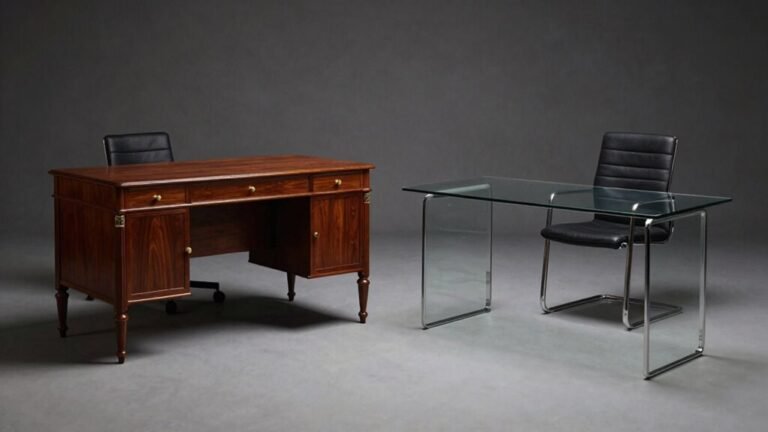
If it’s quick notes or light reading, a writing desk (30–60 in wide) fits snugly in small spaces—think cozy apartments or dorm rooms.
Digging into spreadsheets or leveling up in gaming? Go for a computer or gaming desk (up to 72 in wide) with room for screens and peripherals.
Leading the team? Executive desks (60–72+ in wide) offer space, storage, and serious style.
Love multitasking in corners? L-shaped desks give you dual zones and smart layouts.
Need room to spread out like a creative king? U-shaped desks are your command center—huge, mighty, and perfect for pros who do it all.
Pick your desk type, match the size, and boom—your workspace finally works for *you*.
Minimum Space Requirements for Productivity
When you’re knee-deep in deadlines and your coffee’s still warm, the last thing you need is to feel like you’re working in a closet.
You need room to breathe, stretch, and actually *think*.
Aim for at least 75 square feet per person—anything less cramps your style and your focus.
Most experts recommend 150 square feet or more, giving you space to move, stay comfy, and keep distractions low.
Cramped quarters kill productivity faster than a slow Wi-Fi connection.
Whether you’re in an open plan or a private nook, don’t skimp on personal space.
More room means better ergonomics, fewer aches, and way more “aha!” moments.
Think of it like your personal productivity bubble—pop it, and everything gets messy.
Give yourself the breathing room you deserve, and watch your focus soar.
Trust us, your brain (and butt) will thank you.
Optimizing for Multiple Monitors and Equipment

You’ve nailed the space to stretch your legs and clear your head—now let’s talk about giving your screen setup the room it deserves. If you’re juggling dual monitors or dreaming of a third, size matters more than you think. Too small, and you’ll feel like a chef in a broom closet. Too big? Well, at least you’ll have room for snacks. Here’s a quick cheat sheet:
| Monitor Setup | Desk Width Needed |
|---|---|
| Dual24-inch | 48–50 inches |
| Twin27-inch | 50–60 inches |
| Ultra-wide or curved | 60–72+ inches |
| With monitor arms | 55+ inches (flexible) |
Go wider if you love flexibility, and don’t forget depth—30 inches gives your arms breathing room. Mounts save space, L-desks rule for curves, and hey, your neck will thank you later.
Frequently Asked Questions
Can I Use a Standing Desk With a Seated Chair?
Yes, you can absolutely use a standing desk with a seated chair—just adjust the desk down to your ideal seated height.
Most standing desks go low enough so your elbows rest at 90° while typing, keeping your shoulders relaxed.
Pair it with an ergonomic chair, tweak the height, and boom—you’ve got the best of both worlds.
Switch postures freely and give your body the variety it craves.
Standing tall one minute, sitting comfy the next—your back will thank you!
Are Corner Desks Suitable for Small Rooms?
Absolutely, corner desks are secret agents of small rooms—slim, sneaky, and super smart!
You slide ’em in like a puzzle piece, and boom, wasted nooks become command central.
They’re compact but pack a punch, giving you space to work, write, or even doodle cats.
With clever storage and smart shapes, you won’t feel squished—just brilliantly organized.
Tiny room? No problem.
You’ve just upgraded to genius mode.
How Do I Protect My Desk From Wear?
You protect your desk by using a good-quality mat or protector—it’s like a superhero cape for your surface!
Grab a desk mat to block scratches from laptops and pens, and pick one with a felt or cork backing so it stays put.
Spills? Wipe ’em fast with a soft cloth.
Use coasters like you mean it (no more “oops” rings!).
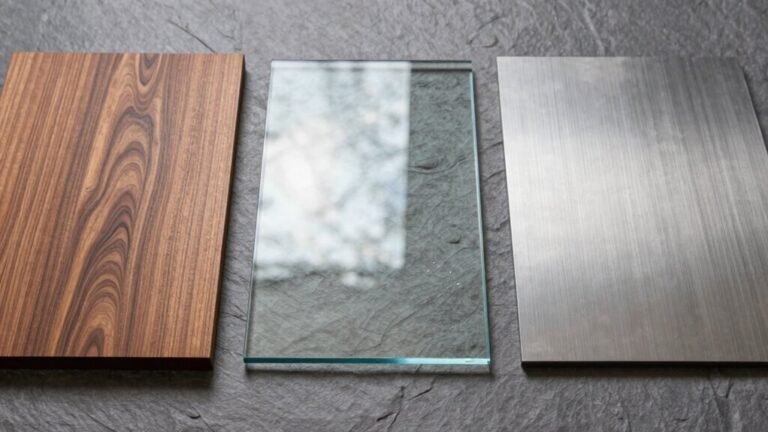
Go for tempered glass if you’re clumsy—or hot-tempered (with tea kettles).
Replace warped or gross-looking mats ASAP—your desk will thank you!
What Desk Material Is Most Durable Long-Term?
You’ll get the longest life out of solid hardwood—it’s tough, repairable, and ages like fine wine.
Scratch it? No problem, just sand and refinish.
Metal frames are super sturdy too, perfect if you hate wobbles.
But watch out: solid wood can warp if you ignore humidity.
Engineered stuff’s okay, but once it’s busted, you’re done.
Go hardwood, and your grandkids might inherit your desk—talk about lasting!
Should My Desk Match My Room’s Decor?
Yes, your desk should vibe with your room’s decor—think of it as the punctuation mark in a well-written sentence, not an afterthought.
You’re aiming for harmony, not a twin match.
Pair finishes, colors, or shapes with nearby pieces, and boom: it feels intentional.
A splash of contrast? Go ahead, have fun!
Just don’t let style steal comfort—your back will thank you.
Conclusion
So, you’ve measured, planned, and picked your perfect desk—awesome job! Remember, the right size keeps you comfy and focused, whether you’re crunching numbers or bingeing Zoom calls. Don’t let your dreams get cramped on a shoebox desk; give yourself room to spread your wings. When your setup fits just right, work feels less like a chore and more like crushing it. You’ve got this!