Pros and Cons of a Smart Home Office Setup
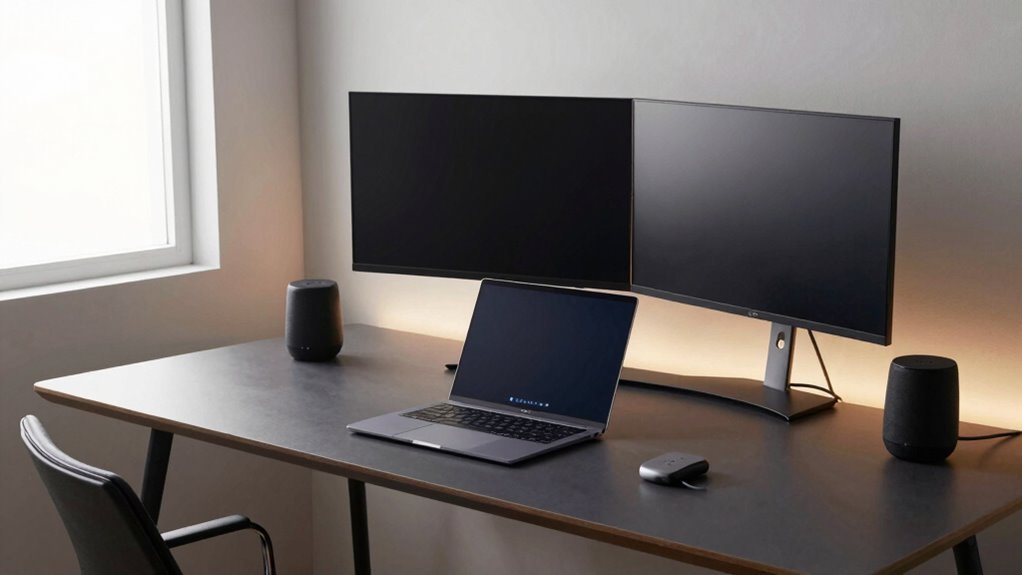
You save time skipping the commute, gain focus in your quiet space, and keep more cash in your pocket—hello, extra $6,000 a year! You control your schedule, work when you’re sharpest, and even cut your carbon footprint in half. Just watch out for overworking, spotty Wi-Fi, and missing watercooler chats. Pets on your lap? Yes. Coworkers oversharing? Nope. It’s a game-changer—with a few quirks you’ll want to know about.
Boosted Productivity Through Fewer Distractions and Flexibility
Ever wonder why you get more done on a quiet morning at home than a whole chaotic day at the office?
It’s because you’re not dodging watercooler chit-chat, impromptu meetings, or office noise that shatters your focus.
At home, you dodge those distractions like a pro—saving about 30 minutes a day from random coworker chats alone.
With fewer interruptions, you delve into deep work, and studies show that quiet boosts productivity by up to 13%.
You also call the shots: work when you’re sharpest, skip draining commutes, and split tasks into focus-friendly chunks.
Plus, remote teams spend nearly half less time in meetings—hello, free time!
Control your lighting, tweak your desk, block notifications, and bam: you’ve built a focus fortress.
You’re not just working—you’re outsmarting the grind, one distraction-free zone at a time.
And it’s not just perception—13% productivity increase has been measured in large-scale studies of remote workers.
Who knew peace and quiet could be this productive?
Significant Cost Savings for Employees and Employers
While you’re saving time and sanity by skipping the daily commute, guess what—your wallet’s getting a serious upgrade too.
You’re pocketing an extra $600 to $6,000 a year by ditching gas, parking, and pricey lunches.
That’s like getting a free vacation—or a killer coffee habit with no guilt.
And hey, your employer’s cheering too, saving about $11,000 per remote employee yearly on office space, utilities, and cleaning.
Some giants like Sun Microsystems even saved $68 million on real estate.
Fewer office headaches mean less spending on rent, insurance, and repairs.
Plus, lower turnover and absenteeism cut hiring chaos and costs.
Remote work also means smarter tech spending—think cloud tools instead of clunky servers.
Both sides win: you keep more cash, and companies reinvest in better tech and talent.
This widespread shift supports a growth of remote opportunities since 2020 that continues to reshape how and where we work.
Now that’s a smart setup worth loving.
Enhanced Work-Life Balance and Schedule Control

You’re no longer chained to a 9-to-5 grind in a cubicle farm, which means you can finally shape your day around life—not the other way around. Thanks to flexible hours and smart setups, you’re in control, working when you’re most alert—whether you’re a morning person or a midnight oil burner.
No more wasting two hours daily in traffic; that’s 11 extra workdays back each year—imagine using that time to nap, exercise, or finally start that sourdough starter.
Tools like Slack let you contribute on your terms, not just in meetings. You’ve got autonomy, and that boosts motivation and focus.
Sure, you might toss a load of laundry during a call (we won’t tell), but hey, you’re still ahead. With fewer office distractions, you power through tasks and reclaim time—for family, hobbies, or just breathing.
It’s your schedule, your rules. Work fits life. Life wins.
This shift is part of a broader trend where 25% of paid workdays are now remote.
Improved Employee Well-Being and Job Satisfaction
| Benefit | What It Does | Real Impact |
|---|---|---|
| Flexible schedule | Matches work to your energy peaks | 82% report better mental health |
| Quiet, comfy space | Cuts noise and physical strain | 74% feel happier and more focused |
| Full control | You run the office—yes, even the snacks | 31% of remote workers are highly engaged |
You’re not just working—you’re thriving. And honestly, your pet probably appreciates the company.
Positive Environmental Impact From Reduced Commuting

Saving the planet, one home office at a time—you’re not just avoiding traffic, you’re helping shrink carbon footprints with every remote workday.
Working from home even one day a week cuts your emissions by 2%, and going fully remote? That slashes them by 54%, mostly by skipping the daily drive.
You’re also trimming vehicle miles—every 1% fewer office workers means 1% less driving.
Half your week at home equals an 11-day yearly gain in free time, plus you’re part of a crew that could take New York’s entire workforce off the road if we all pitched in.
Remote work eases congestion, lowers emissions, and even reduces office energy use.
You’re not just saving gas—you’re saving the atmosphere, all while wearing sweatpants.
Talk about a win-win!
Challenges in Collaboration and Team Connectivity
Working from home might save the planet and your sanity on Monday mornings, but let’s be real—nobody said it’d be easy to sync up with your team from across town or time zones.
You’re juggling a dozen apps, fighting spotty Wi-Fi, and still can’t hear Jake from accounting.
Miscommunications pile up, ideas get lost, and suddenly you’re in yet another meeting just to recap the last one.
It’s exhausting—and you’re not alone.
- Your voice fades in and out while others talk over you—again.
- You miss the jokes and whispers that build real team chemistry.
- Important updates slip through the cracks because no one knows where to look.
- You feel invisible during decisions, wondering if your camera’s even on.
Tech hiccups, app overload, and silent misunderstandings aren’t just annoying.
—they chip away at connection, trust, and teamwork, leaving even the most upbeat remote worker feeling a little isolated.
Navigating the Drawbacks of Blurred Work-Life Boundaries

Trying to clock out but still answering emails in your pajamas? You’re not alone—85% of folks get work messages off-hours, and 60% deal with them weekly. When your home doubles as your office, the “always-on” vibe creeps in fast, blurring lines and ramping up stress.
You might toss in a load of laundry during a meeting or hop online shopping mid-task—46% confess to multitasking like this!
Even worse? Some fall asleep or shower on calls (we don’t judge).
Without clear work-life separation, you’re more likely to overwork—38% of remote workers do.
Role confusion sneaks in too, with 82% dabbling in personal tasks during work hours.
All this juggling zaps focus, spikes stress, and messes with your downtime.
The result? Loneliness, less well-being, and way too much screen time.
Setting boundaries isn’t boring—it’s essential.
Frequently Asked Questions
What Equipment Is Essential for a Smart Home Office?
You need a solid desk, comfy chair, and a good webcam like the Logitech MeetUp 2 to look sharp on calls.
Add a standing desk converter because sitting all day? No thanks.
Grab a smart speakerphone like Insta360 Wave—your voice will thank you.
Don’t forget cable clips and a charging station to keep things tidy.
Toss in a Stream Deck Neo to zap through tasks like a wizard.
Boom—your smart home office rocks!
How Do I Secure My Smart Home Office From Hackers?
You lock your front door, so lock down your smart home office too!
Change all default passwords, use strong ones with mixes of letters, numbers, and symbols, and turn on MFA—hackers hate that extra step.
Enable WPA3 on your router, update devices regularly, and install antivirus protection like digital bodyguards.
Set up a guest network, use a VPN for work, and keep personal gadgets off your work Wi-Fi—smart, simple, and seriously secure!
Can Smart Office Devices Work With Multiple Platforms?
Yes, you can absolutely get smart office devices to work across multiple platforms—think of them partying together, not fighting!
Just pick gadgets that support open protocols like Zigbee or Wi-Fi 6, and use a hub like Google Home or Cisco Spaces.
They’ll chat easily, share data, and follow your commands.
Add regular firmware updates, and boom—your devices stay friends, no drama.
How Much Internet Bandwidth Does a Smart Office Need?
You’ll need at least 100 Mbps for a smooth smart office, but hey, 250 Mbps is where the magic happens.
If you’re juggling video calls, cloud backups, and file sharing with multiple devices, go bigger—500 Mbps or even 1 Gbps keeps everything zipping along.
Think of it like Wi-Fi on espresso: the more you do, the faster it should be.
And trust me, nobody likes a buffering boss!
Are Smart Home Office Setups Worth the Initial Investment?
Yes, you’re getting a great deal when you invest in a smart home office.
You’ll save hundreds on energy bills, boost productivity, and cut commute time—hello, extra coffee breaks!
Initial costs might sting, but with returns jumping back 53% to 472%, your wallet will thank you.
You’re not just working smarter, you’re living better—like upgrading from dial-up to Wi-Fi, but for life.
Conclusion
You’re sipping coffee in your PJs, sunlight spilling across your smart desk as the coffee maker hums thanks to your voice command. Work flows smoothly, distractions fade—but hey, your dog still steals the spotlight mid-call. Smart home offices blend comfort and focus like a perfect playlist, cutting commutes and boosting joy. Sure, teamwork needs extra effort, and work might sneak into bedtime, but with smart boundaries, you’re building a workday *you* design—efficient, green, and delightfully your own.