Using Lighting and Color to Boost Mood and Productivity
You kickstart your day with a sunrise stroll—hello, natural light—and boom, your energy syncs up like magic. Use cool, bright lights for focus, warm ones to unwind, and paint your space with calming blues or energizing yellows. Layer your lighting like a pro DJ mixing tracks, and grab control of your bulbs like you’re tuning your favorite playlist. Your mood and focus? About to get a serious upgrade—stick around, and you’ll see how to make it even better.
Harness the Power of Natural Light and Circadian Rhythms
Ever wonder why you feel so much more awake after a morning walk outside than after flipping on the office lights?
That’s because sunlight packs a serious circadian punch—thousands of lux and a big dose of energizing blue light, way more than your indoor bulbs.
Get outside within one or two hours of waking, and you’re basically telling your body, “Hey, it’s time to be alert!”
This resets your internal clock, helps you sleep better, and keeps your energy steady.
Even sitting by a bright window helps.
Do it daily, and you’ll lock in a healthier rhythm, reducing those groggy “why am I so tired?” moments.
Skip the morning sun, though, and your body’s like, “Wait, is it still bedtime?”
Robust circadian rhythms are important for health.
Choose the Right Color Temperature for Every Task
You’ve already got sunlight on your side to kickstart your day, but now it’s time to fine-tune your indoor lighting like a pro—because not all light is created equal.
For routine desk work, go warm with 3000 K—it’s cozy, cuts drowsiness, and keeps your brain calm and comfy. Research shows this warmth can lead to lower mental workload during sustained tasks.
Need to juggle focus and teamwork? Grab a 4000–4300 K sweet spot—it’s the Goldilocks of lighting, balancing alertness without the harsh buzz.
Crushing data or coding like a mad scientist? Crank it up to 5000–6500 K for sharper focus and faster reactions, but don’t overdo it—save that blue-rich blaze for morning sprints, not late-night marathons.
Just like picking the right playlist, your light should match the task.
Get it right, and you’ll work smarter, stay sharper, and maybe even enjoy it—because nobody thrives under a grocery-store glow.
Design With Color Psychology in Mind

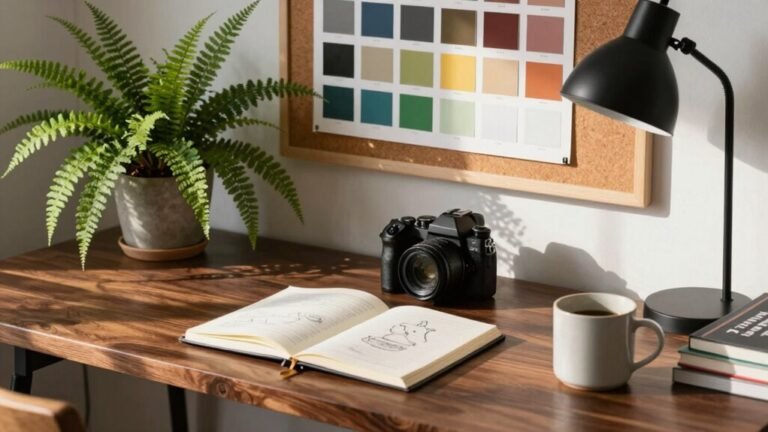
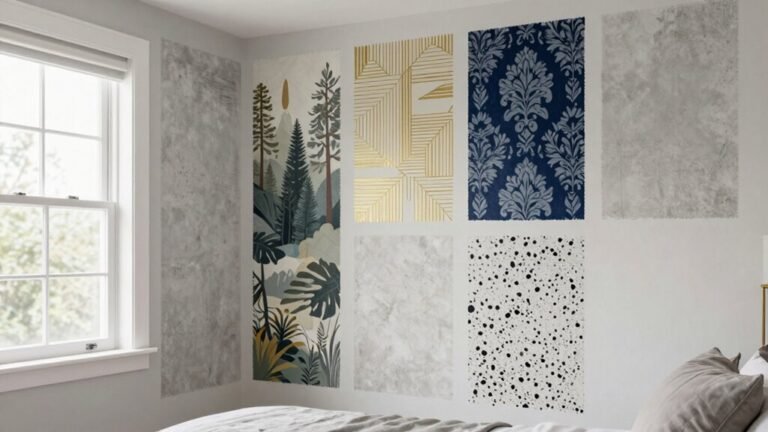
How does your workspace make you feel—calm and focused, or jittery and drained? Your color choices are likely the culprits—or heroes! By designing with color psychology in mind, you can shape mood, energy, and performance without even trying. Paint focus zones in soft blues or greens to stay cool and alert—studies show they cut anxiety by a third. Add red accents where precision’s key, like proofing desks, but don’t go overboard—your heart will thank you. Boost creativity with sunny yellow in brainstorm hubs, and use warm neutrals in hallways to help eyes and minds reset. Need direction? Color-code your zones like a pro. Check this out:
| Zone | Best Colors | Why It Works |
|---|---|---|
| Focus Areas | Blue, Green | Calms nerves, sharpens focus |
| Detail Tasks | Red (accents) | Sparks alertness, boosts accuracy |
| Creative Spaces | Yellow, Warm Tones | Fuels ideas, feels energizing |
| Flow Zones | Soft Gray, Beige | Reduces visual clutter |
| Nature-Inspired | Greens, Earth Tones | Restores attention, feels alive |
Now, doesn’t that feel better? Incorporating a 15% productivity boost through vibrant hues like orange and green can further enhance performance in collaborative environments.
Layer Lighting for Optimal Visual Comfort
You’ve tuned your colors to match your mood and tasks—now let’s turn up the brightness, literally.
Start with ambient lighting to evenly bathe your space in 100–2000 lux, like a soft morning glow that keeps your rhythm on track.
Add task lighting—300–500 lux on your desk or book means no more squinting or eye strain, just clear, focused light where you need it.
Then, sprinkle in accent lighting to show off your cool wall art or shelving—it’s the cherry on top that adds drama without stealing the spotlight.
Layering these lights isn’t just fancy design talk; it gives you depth, cuts glare, and keeps shadows from playing hide-and-seek with your vision.
With the right mix, your eyes stay comfy, your mood lifts, and productivity? It’s practically glowing.
Who knew good light could be *this* much fun?
Empower Individuals With Personal Lighting Control

Why settle for one-size-fits-all lighting when your ideal glow is just a tweak away?
You’ve got better things to do than squint at a screen under harsh, soul-sucking lights.
With personal lighting control, you call the shots—brighten, dim, warm it up, or cool it down.
Studies show 91% feel more comfortable with dimming options, and your satisfaction? Sky-high.
You’ll stay alert longer, fight off afternoon drowsiness, and keep the yawns at bay—especially under smart lighting that shifts with your rhythm.
Plus, you can crank up brightness without straining your eyes.
And hey, it’s not just about comfort: you’re likely to feel more productive, focused, and even a little happier.
The best part? You’re saving energy without lifting a finger.
Lights dial down automatically, cutting waste and costs.
Who knew feeling empowered could also mean glowing—literally?
Apply Evidence-Based Design to Real-World Spaces
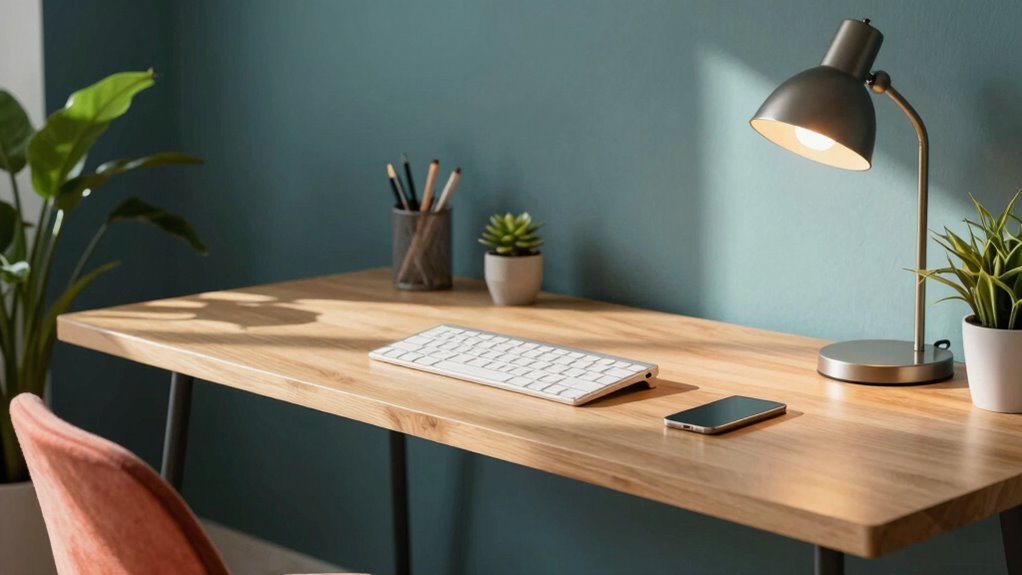
When the morning sun spills across your desk, you’re not just getting a nice view—you’re tapping into a powerful tool for feeling sharper and more alive.
You can boost that effect with tunable lights that start cool and bright (think 5000–6500 K) to kickstart focus, then shift warmer by afternoon to ease your rhythm—no coffee crash needed.
Save the blue-enriched light for analytical tasks; it sharpens your speed and cuts errors.
But when it’s time to brainstorm, warm light (2700–3500 K) sets a cozy mood that sparks creativity.
Don’t blast cool light all day, though—it’ll mess with your sleep, not your spreadsheet.
Pair smart lighting with windows and outdoor views to keep your mood sunny, even indoors.
Mix it all with biophilic touches—plants, wood, nature—and you’ve got a space that doesn’t just look good, it *works* for you.
Design isn’t just decor—it’s your daily tune-up.
Frequently Asked Questions
How Does Lighting Affect Circadian Rhythms in Night Shift Workers?
You throw off your body’s natural clock when night shifts expose you to light at the wrong time, especially blue light—it’s like tricking your brain into thinking it’s noon!
But here’s the cool part: smart lighting can help.
Bright, blue-rich light during shifts resets your rhythm faster, boosts alertness, and cuts fatigue.
You’ll sleep better, stay sharper, and feel way more in sync—even on the graveyard shift.
Win!
Can Color Temperature Influence Appetite or Eating Behaviors?
Yes, color temperature can totally influence your appetite—cool blue light (like 6500 K) might make food look less tasty, lowering your urge to eat.
Ever notice how warm lighting makes pizza look extra inviting?
That’s no accident.
Warm light amps up hunger signals in your brain, while blue can dull them, probably because we’re wired to see blue foods as “off.”
Do Lighting and Color Preferences Vary Significantly by Culture?
You bet they do—culture totally changes how you see color and light!
In the U.S., white means pure and pretty, but in Japan, it’s for funerals—definitely not a wedding vibe.
Red screams “look here!” in ads, but might stress you out if it’s *all* you see.
And don’t get started on how Northern winters make people crave warm glows—your brain’s just trying to stay happy!
Can Improper Lighting Cause Long-Term Eye Health Issues?
Yes, staring at harsh lights too long is like throwing a wild party in your eyes—eventually, someone’s gotta clean up the mess.
Blue light, especially from screens, can sneak in and stir up trouble over time, damaging your retina like a slow drip of lemon juice on a sunburn.
You’re not imagining those headaches or eye fatigue—give your peepers a break, blink more, and maybe swap that blinding desk lamp for something warmer.
Your eyes will thank you later—no RSVP needed.
How Does Ceiling Height Interact With Lighting and Color Perception?
You’re making ceilings feel taller just by painting them light—seriously, it works like magic!
Light-colored ceilings bounce light around, tricking your eyes into seeing more height.
Pair that with light walls and boom: instant airy vibe.
Dark ceilings? They drag the room down—literally, in your mind.
Bright floors don’t change height much, but they do add cheer.
Chromatic lights spice things up, yet lightness still rules the game.
Who knew paint could play architect?
Conclusion
You’ve got this! Tweak the light, splash on some color, and suddenly, your space isn’t just glowing—it’s grinning back. Think of your room as a mood ring powered by sunshine and smart shades. Warm for cozy focus, cool for bright ideas, and a pinch of control? Chef’s kiss. Who knew happier, sharper days literally shine from the walls? Turn the dial, play with vibes, and let your space work *with* you—not against you. Lights on, worries off!