Tips for Staying Active While Working From Home
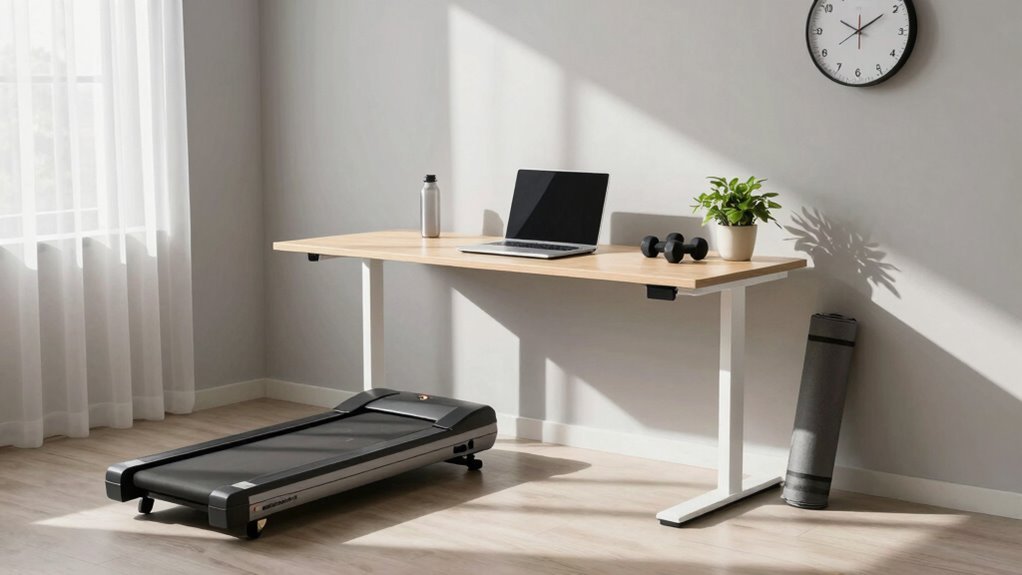
You’ve ditched the commute, but don’t let your chair steal your energy. Stand during calls, stretch every hour, and pace like you’re solving a case in a detective show. Swap sitting for walking chats, set movement alarms, and keep a yoga ball nearby. Design your space with light, plants, and open floors to invite motion. Try quick squats or wall push-ups between emails—your body will thank you. There’s plenty more where that came from.
Understand How Remote Work Affects Your Activity Levels
Ever wonder why working from home sometimes feels like a trap for your energy and movement? That’s because your usual daily hustle—walking to transit, climbing stairs, or popping by a coworker’s desk—just vanished.
You’re probably sitting two more hours a day than in the office, and yeah, that adds up to about 32 fewer minutes of moving around.
Ouch.
Without those little bursts of activity, your step count and energy-burning minutes take a nosedive—especially if you’re under 30.
And let’s be real: that saved commute time? You’re likely using it to power through emails, not jumping on a walk.
Even your workspace might be working against you—think cramped desk, no standing option, trash can right beside you (so lazy it’s almost convenient).
Remote work’s great, but it’s sneaky—quietly swapping movement for stillness.
Time to outsmart it!
Studies show remote workers get 32 minutes less activity each day.
Take Regular Movement Breaks Every 30 to 60 Minutes
Breaking up your day with quick bursts of movement isn’t just revitalizing—it’s a game-changer for staying sharp and energized.
You’re sitting two more hours a day working from home, so set a timer: every 30 to 60 minutes, get up and move.
Do a victory lap around your living room, stretch like a cat waking up, or dance to one guilty-pleasure song—nobody’s watching (we hope).
Remote work kills natural movement, slashing daily steps by 3,000.
But you’ve got this! Use audio calls to pace, and stand during long meetings.
These mini-breaks fight fatigue, boost mood, and keep your body from turning into a stiff couch potato.
Think of them as hit-and-run attacks on sedentary life.
Your brain will thank you, your body will loosen up, and hey—you might even crush 10,000 steps without leaving the house.
about 50% of remote workers experiencing burnout can make regular movement even more critical for mental and physical resilience.
Move now, thank yourself later.
Design Your Workspace to Encourage Movement

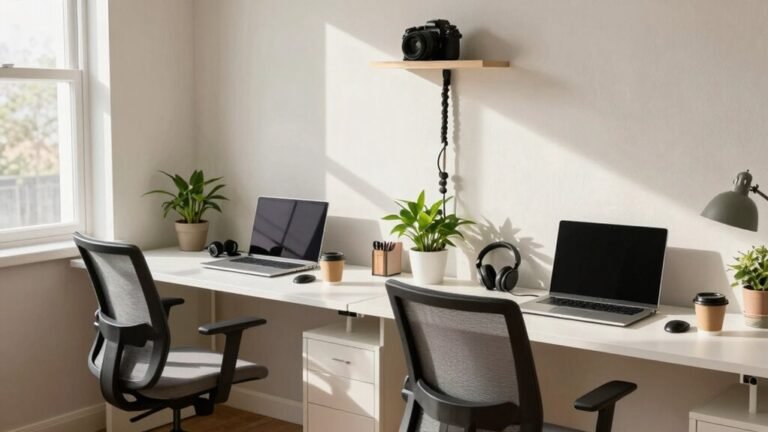
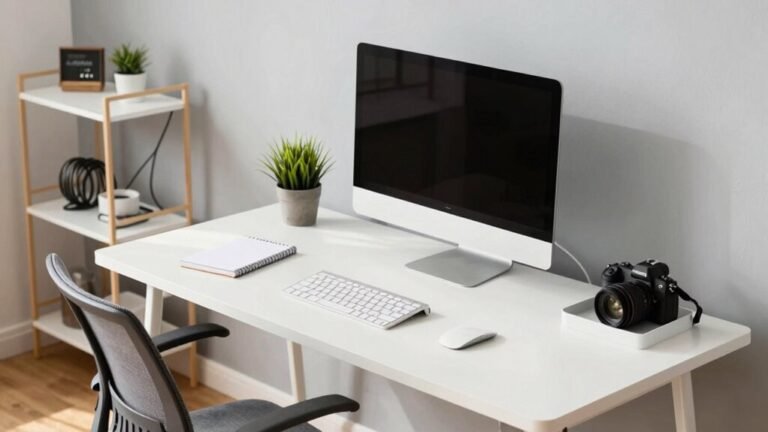
When your workspace feels alive, you’re way more likely to move around and shake off the stiffness of sitting all day—so don’t just design a desk setup, build a movement zone.
Place your desk near a window, where natural light floods in and plants add a happy pop of green—they’re not just decor, they’re your co-workers in staying alert and calm.
Use a standing desk or an adjustable one so you can shift positions like a pro.
Slide a yoga ball nearby or swap chairs often to keep your body guessing.
Open pathways, movable furniture, and clutter-free floors invite you to stretch, twist, or sneak in a quick dance break.
Think of your space as a stage for motion, not a parking spot.
Regular movement throughout the day can enhance brain function and boost productivity, making even small changes in your setup worthwhile thanks to increased brain blood flow.
The best part? You’re not just working—you’re moving smarter, breathing easier, and actually enjoying it.
Who said productivity can’t be fun?
Replace Sitting Time With Standing and Walking Calls
Turning your calls into chances to move keeps your body buzzing while you work, so instead of sinking into your chair for every meeting, why not stand tall or stroll around? Swap sitting time for standing or walking—start with short calls and build up to 15 minutes or more.
Label your calendar “Standing Call” or “Walking Chat” so it feels normal, not weird. Use earbuds or a headset and pace your living room, backyard, or treadmill.
Pick low-pressure chats (like check-ins) to move during—no need to sprint through a big presentation!
Walking after lunch? Perfect for smoothing blood sugar spikes.
You’ll burn more calories, boost focus, and ditch that stiff-neck slump.
Just mute when you shuffle off-mic, and maybe skip video if you’re power-walking in socks.
Start small, track your active minutes, and celebrate moving more—your body (and mood) will thank you.
Who knew a phone call could feel this good?
Schedule Daily Active Commute Replacements

Where’s your morning commute these days—still stuck between your bed and desk? You’re not alone, but that lost time is prime real estate for boosting your health.
Turn those vanished commuting minutes into active wins with these simple swaps:
- Take two 10–15 minute brisk walks—one morning, one evening—to mimic your old commute and hit daily movement goals.
- Pretend your front door is your office lobby: do a quick dynamic warm-up before you “leave,” then cool down with hip openers and twists when you “get home.”
- Use under-desk cycles, stair-climbing, or even a backpack walk to keep it fun and switch up the intensity.
Little rituals add up, keep you loose, and trick your brain into a healthier rhythm—no traffic jam required.
Use Time-Blocking to Alternate Work and Movement
How’s your energy holding up mid-morning — still sipping coffee like it’s life support? Try time-blocking to mix work and movement.
Break your day into 45–90 minute focus chunks, then jump into 5–15 minute movement breaks—walk, stretch, or climb stairs.
Label your calendar with “focus” and “move” blocks so it’s clear (and harder to ignore).
Set fixed anchors, like 10:00 and 15:00, for daily movement—treat them like unmissable meetings.
Use tiny gaps between tasks for quick wins: march in place, wall push-ups, or chair squats.
Your calendar reminders will nudge you when willpower fades.
Aim for 6–10 movement breaks a day and tweak based on how you feel.
Sync breaks with low-energy slumps, and boom—you’re moving more without derailing productivity.
Simple, doable, and kind of fun.
Incorporate Quick Strength and Resistance Exercises

You’ve got your movement breaks down, so now let’s turn those quick pauses into power moments—yes, you can actually build strength without ever leaving your living room. No gym? No problem. Your body and household junk are all you need to get stronger right at your desk.
- Pump out push-up progressions—start at the wall, move to your knees, then go full strength. Add a backpack full of books for extra burn!
- Squat your way to powerful legs—mix in narrow, paused, or single-leg versions to keep it spicy and effective.
- Row with water jugs or towels—seriously, that milk jug doubles as a dumbbell, and a doorframe + towel makes a great back workout.
Stack a few moves into a 5-minute circuit, and boom—you’ve just leveled up your workday. Who knew staying strong could be this sneaky *and* fun?
Leverage Wearables and Trackers to Stay Accountable
Ever wonder how your fitness tracker knows just when to buzz you right as you’re diving into a spreadsheet? It’s not psychic—it’s programmed!
Pick a wearable that tracks steps, heart rate, and active minutes, and set it up to sync automatically with your phone. Choose one with long battery life so you won’t miss data during busy days.
Turn on reminders to stand or move every hour—those little nudges save you from turning into a couch potato by noon. Aim for smart goals, like adding 10% more steps each week, and check your progress right from your watch face.
Streaks and badges make it fun, like a game you win by walking. Share progress with coworkers if you like—friendly competition keeps things lively.
Just remember: keep your data private, opt in willingly, and use it for your gain, not guilt. Accountability? It’s got your back.
Engage in Employer-Supported Active Work Initiatives

- Join a walking club or fitness challenge — teamwork makes those steps fly by.
- Cash in on incentives like gym access or rewards for biking to work (yes, really!).
- Speak up in engagement surveys — your voice can spark new wellness perks.
Programs like ASICS’ mental wellness series don’t just boost mood — they slash stress and keep people from quitting.
And with 81% of big companies already offering wellness plans, you’re not alone.
Frequently Asked Questions
How Can I Stay Active With Back Pain?
You can stay active with back pain by moving gently every hour—twist in your chair, stretch your hamstrings, or try seated marches.
You’ll keep blood flowing and stiffness away.
Add wall push-ups or mini squats to ease into movement without strain.
Listen to your body, skip the pain, and make it fun—pretend you’re a slow-mo superhero.
Small wins add up, and your back will thank you later.
Is Walking During Calls Unprofessional?
No, walking during calls isn’t unprofessional—it’s smart.
You’re moving, thinking, and boosting your mood all at once.
Just make sure your audio’s clear, you’re on a safe path, and your dog’s not barking every five seconds.
Many pros do it, from tech execs to remote workers.
It shows you’re active and engaged.
What if I Have No Home Office Space?
No home office? No problem!
You’re not stuck—turn any corner into your command center.
Use a tray as a desk, prop your laptop on stacked books, and grab a comfy chair.
Toss in a plant for good vibes.
Rotate spots like a pro—kitchen by morning, couch by afternoon.
Who says you need four walls?
Get creative, stay loose, and let your workspace grow with you—flexibility’s your superpower!
Can Chores Count as Exercise?
Yeah, chores can totally count as exercise—especially if you’re hustling through vacuuming, mopping, or digging in the garden.
You’re burning calories and getting your heart pumping, which is awesome.
Just don’t assume every tidy-up counts as a full workout.
For real fitness gains, you’ll still want to pick up the pace or add intentional moves.
Think of chores as a fun bonus, not your only gym pass!
How Do I Avoid Screen Fatigue While Moving?
You beat screen fatigue while moving by syncing mini-breaks with quick eye exercises every 20 minutes—look far, blink hard, and roll your eyes like you’re spotting drama across the room.
Pair it with a stretch or a victory lap around the house.
Your eyes’ll thank you, your body won’t stiffen up, and hey, you might even catch your cat judging you.
Win-win!
Conclusion
You’re not alone if you’ve logged 5,000 steps… all to the fridge! Turns out, remote workers sit 13% more than office folks—yikes! But hey, small swaps pack a punch: stand during calls, stretch between emails, or dance while loading spreadsheets. You’ve got this! Every bit of movement counts, and your body will thank you later—promise (no capes required, just comfy socks). Stay active, stay happy!