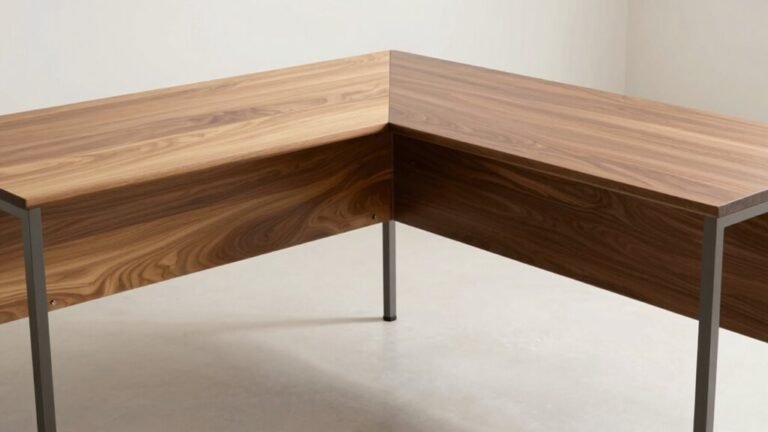
Desk Materials Compared: Wood vs. Glass vs. Metal
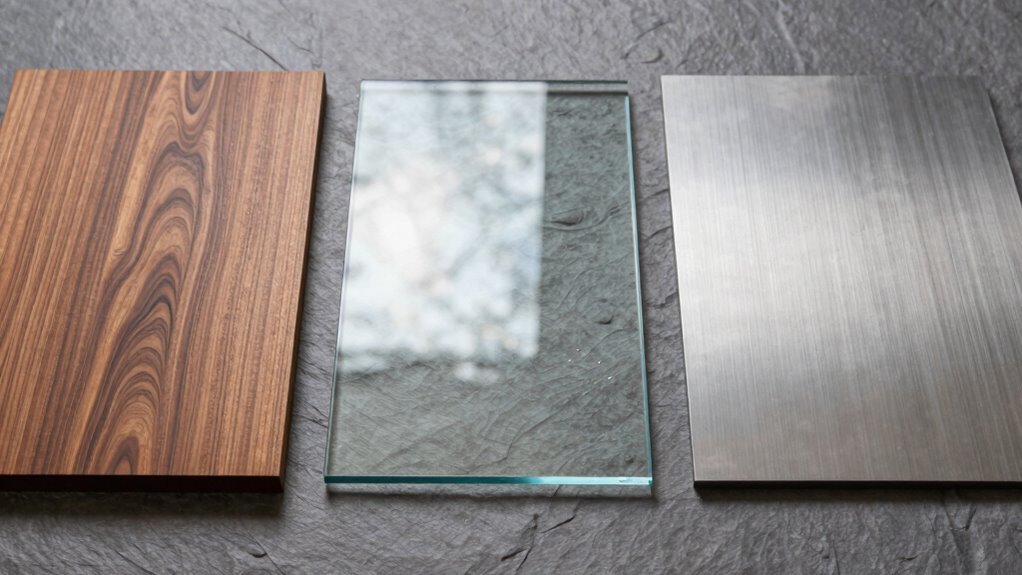
You want a desk that lasts, looks great, and handles your chaos—wood brings warm, tough charm that gets better with age, metal offers sleek, no-nonsense strength perfect for heavy gear, and glass adds airy style but needs a gentle touch. Love character? Wood’s your buddy. Crave modern edge? Glass and metal have your back. Each has perks, and there’s a perfect match waiting for your vibe and workload—keep exploring to find your ideal fit.
Longevity and Durability by Material
When it comes to picking a desk that won’t quit on you, durability isn’t just about toughness—it’s about *surviving* your coffee spills, late-night marathons, and that one drawer you always yank too hard.
Solid hardwoods like oak or maple laugh off decades of abuse and can be sanded and renewed like magic.
Metal tops and steel frames? They’re the tanks of the desk world—rigid, tough, and fearless under heavy gear.
Glass looks sleek and shrugs off stains, but watch out for chips and sudden impacts—nobody wants a surprise snow of safety glass.
Engineered wood works fine, but if it gets wet or overstressed, it’ll sag or swell like a sad sponge.
A well-built version with good reinforcements can still outshine a flimsy solid-wood knockoff.
Metal desks require low maintenance and resist corrosion, especially when powder-coated.
Pick smart, and your desk won’t just last—you’ll outlive it.
Seriously, it’s built to become a hand-me-down you’ll brag about.
Aesthetic Appeal Across Design Styles
You’ve picked a desk that’ll stand up to coffee spills, overenthusiastic typing marathons, and that one drawer you treat like a stuck vending machine—now let’s talk about how it looks while doing it.
Your desk isn’t just a workhorse—it’s a mood-setter.
Depending on your style, each material brings its own flair:
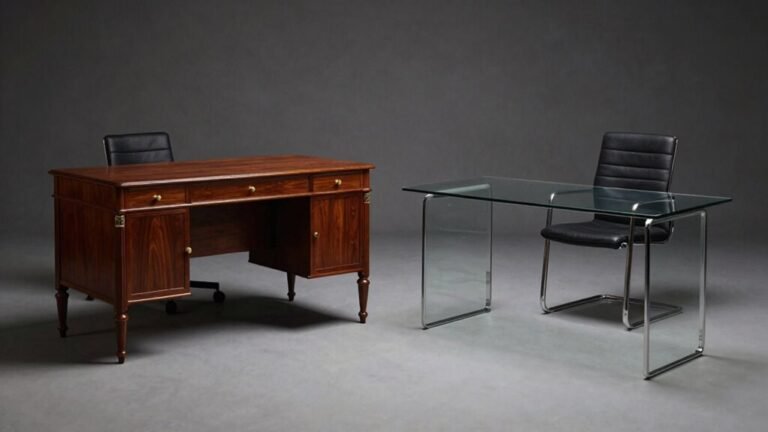
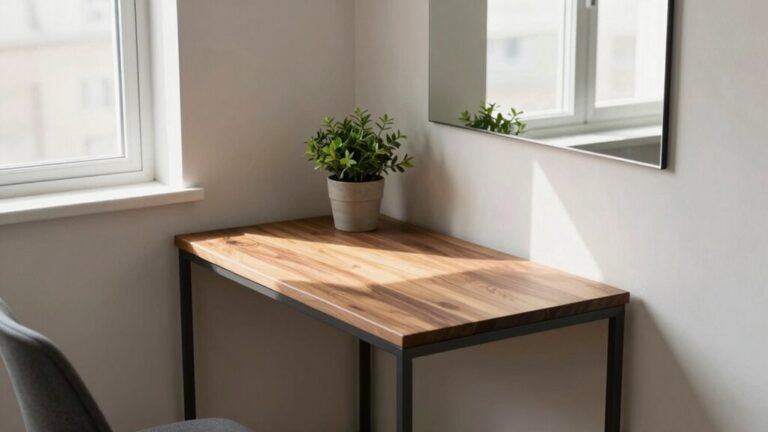
- Wood warms up any room with cozy elegance and timeless vibes, perfect for classic or rustic charm
- Glass opens up spaces with airy sophistication, making small rooms feel bigger and brighter
- Metal punches up modern spaces with slick, industrial energy and no-nonsense cool
- Love tradition? Wood blends seamlessly with paneling and antiques like it’s been there for decades
- Going contemporary? Glass and metal team up for that sleek, designer-ready look you see in magazines
Pick your aesthetic, then let your desk steal the show—no ugly clutter required.
Glass is also easy to clean, making it ideal for maintaining a spotless, professional appearance with minimal effort.
Upfront and Long-Term Cost Comparison

Wondering where your money really goes when you pick one desk over another? Let’s break it down.
You’ll pay $100–$600 for budget-friendly laminate or bamboo, while solid wood starts at $300 and can soar past $1,500—ouch, but it lasts decades.
Glass desks range from $300–$1,200, but watch out: they chip or crack easier, and replacing a shattered top isn’t cheap. This risk is heightened because tempered glass, while stronger than regular glass, still breaks into small, mostly harmless pieces if damaged.
Over five years, glass might tap out early, while hardwood and metal keep on ticking.
Sure, wood may need a polish or refinish, and you’ll toss a few bucks yearly on coasters or felt pads, but it’s like giving your car an oil change—keeps it happy.
Metal desks? You’re looking at $200–$900, often sturdier and less fussy over time.
Daily Maintenance Requirements
That long-term value of a sturdy desk means nothing if it’s covered in coffee rings, dust bunnies, and mysterious smudges.
Keep your workspace looking sharp with a few easy daily habits—trust us, your future self will thank you.
Here’s how to stay on top of upkeep without breaking a sweat:
- Wipe glass daily to banish fingerprints and keep it looking invisible (almost).
- Dust wood weekly with a soft cloth—grit is the enemy of that gorgeous finish.
- Clean metal frames every few days to dodge water spots and sneaky corrosion.
- Blot spills fast—don’t let liquids lounge on wood, glass, or metal.
- Skip the harsh stuff like bleach or steel wool; they’re a one-way ticket to damage.
A little love goes a long way—your desk’s daily routine should be simple, effective, and totally doable between sips of coffee.
Load Capacity and Structural Strength

A single desk can hold your laptop, monitor, coffee mug, and that towering stack of to-do lists—you just need one built to handle the chaos.
If you’re stacking dual monitors and gear, go for solid or engineered wood like HDF—it’s dense, strong, and won’t flinch under 80kg.
Bamboo? It’s no underdog; it rivals steel in tensile strength and handles weight like a champ across wide spans.
Glass tops, while sleek, max out at 30–50kg, so keep it light—laptop, monitor, and maybe a plant, but skip the encyclopedia collection.
Metal frames, especially steel, are the powerlifters here, with some holding over 300 pounds effortlessly.
They’re stable, built tough, and perfect for standing desks that take constant tweaking.
Frame quality and thickness make or break strength—don’t overlook them.
Wood and metal win for sheer backbone, so pick your champion based on how much chaos you carry.
Resistance to Scratches, Dents, and Wear
Durability isn’t just about how much your desk can hold—it’s about how well it handles the daily grind without crying uncle.
You’re going to scratch, bump, and slide things around—so your desk better keep up.
Here’s how your top choices stack up:
- Tempered glass laughs at scratches but might shatter if you drop a hammer (or really commit to slamming your laptop).
- Metal desks shrug off dents like a champ, though sharp hits can chip the coating and play peekaboo with the metal underneath.
- Hardwood? Solid maple or oak is tough, but softer woods dent easily—like a disappointed parent at a spilled coffee.
- Laminate surfaces resist everyday wear like a pro, though gouges expose the sad particleboard core.
- Acrylic tops show every little scratch, turning glossy into “glossy with trauma” over time.
Choose smart—you’re in this for the long haul.
Environmental Impact and Sustainability

Ever wonder what your desk is whispering to the planet while you’re busy crushing deadlines?
If it’s made of sustainably sourced wood, it might be saying, “I’m helping!” because trees store carbon and reduce emissions.
But if it’s steel or aluminum, it’s probably groaning—those metals take a lot of energy to mine and process.
Glass isn’t terrible, but baking sand at high heat and hauling heavy slabs adds up.
Lucky for you, choosing recycled metal or FSC-certified wood cuts emissions big time.
And bamboo? It grows fast, but watch out for sketchy chemicals and long flights overseas.
At the end of the day, going for a desk you can fix, reuse, or recycle keeps junk out of landfills.
Modular designs? Total heroes.
They let you swap legs or tops instead of tossing the whole thing.
Pick smart, and your desk won’t just look good—it’ll do good, too.
Performance in Humid or Extreme Climates
When humidity turns your hair into a jungle, imagine what it’s doing to your desk. You need a surface that won’t warp, crack, or throw a fit when the weather gets wild.
Here’s how your top materials stack up:
- Wood swells and shrinks with humidity—solid types especially, risking warps or gaps unless well-sealed.
- Engineered wood (like MDF or plywood) handles moisture better, but skimp on sealing? Instant swamp core.
- Glass stays cool and stable—no warping—but might crack if heat shifts too fast or supports corrode.
- Metal won’t sweat humidity, but steel can rust if uncoated, and aluminum loves to expand in heat.
- Laminate surfaces resist stains, yet peel or bubble if water sneaks in through unsealed edges.
Pick smart, seal well, and your desk won’t quit on a muggy Monday.
Timeless Elegance of Natural Wood Grains

You can’t fake the charm of real wood—it’s like nature’s own artwork, with every swirl, wave, and grain telling a story no factory could ever copy.
You’ll love how oak’s bold lines and cherry’s silky finish give your desk serious personality—no two are alike, and that’s the point.
Walnut deepens over time like a fine wine, while maple stays tough as nails, shrugging off scratches like a champ.
Sunlight doesn’t ruin cherry; it turns it into warm, rich red-brown magic.
Even the grain plays games—straight, wavy, curly, or spiral—each with its own flair.
And forget boring beige: these woods age with grace, gaining character, not wrinkles.
Whether you’re team rustic pine or sleek walnut, natural wood adapts, impresses, and lasts—kind of like the superhero of desk materials, minus the cape.
Modern and Industrial Design With Glass and Metal
A sleek glass top glides over a steel spine, turning your workspace into a modern masterpiece.
You get sharp lines, zero clutter, and a dash of attitude—perfect for when you want your desk to whisper, “I mean business,” without the suit.
Whether you’re crushing deadlines or sketching wild ideas, glass and metal combo desks have your back (and your laptop, files, and coffee mug).
- Tempered glass tops shine cleanly and hold up to 100 lbs—yes, even your stacked textbooks.
- Steel frames in black, silver, or bronze add industrial grit with zero rust.
- L-shaped designs hug corners, saving space like a gym buddy who won’t judge.
- Adjustable glides keep it steady, even on wonky floors.
- Wipe-clean surfaces mean spills vanish faster than your motivation on Fridays.
Style meets strength, and honestly, it’s kind of a vibe.
Frequently Asked Questions
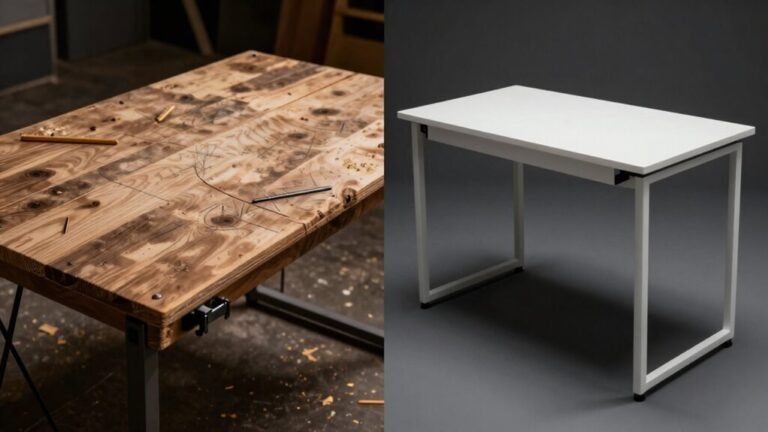
Can I Paint or Refinish My Desk Later?
Yes, you can paint or refinish your desk later—it’s totally doable!
Just pick the right prep steps for your desk type, grab some paint, and go.
With a little sanding, cleaning, and love, it’ll look brand new.
Think of it as a glow-up, not a chore.
And hey, even if you mess up, paint covers mistakes—unlike glitter.
Trust me, it’s fun, fast, and kinda addictive.
Are Metal Desks Noisy When Typing?
Yeah, metal desks can get a bit noisy when you’re typing, especially with mechanical keyboards—they love to echo.
You’ll notice more clack and ping since metal doesn’t absorb sound like wood or softer materials.
But hey, if you love that crisp, satisfying keyboard sound, it’s a feature, not a bug!
Toss on a desk mat, and you’ll quiet things down fast.
Simple fix for a clacky situation!
Does Glass Make a Desk Feel Colder?
Yeah, glass *does* make a desk feel colder—touch it and you’ll notice it sucks heat from your arms fast, thanks to its conductive nature.
Even at room temp, it feels cooler than wood.
Sunlight can warm it up, but shady spots stay chilly.
It’s like high-fiving a friendly iceberg: smooth, sleek, but definitely nippy on the elbows!
Can I Add Accessories to a Glass Desk?
You bet you can deck out your glass desk—it’s a blank canvas just waiting to shine!
Where there’s a desk, there’s a way, right?
Add stylish organizers, a sleek lamp, or cute rubber bumpers so things don’t slide off like a game of office curling.
Toss on a trendy mouse pad or glass blotter for protection and flair.
Even a glasses holder or comfy seat cushion jazzes things up—functional *and* fun!
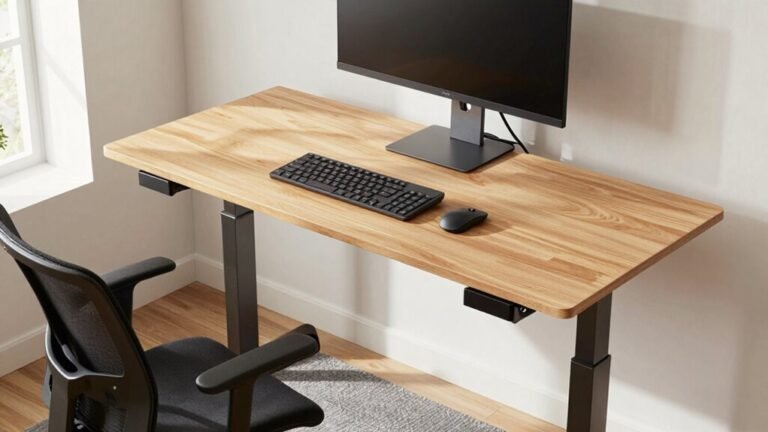
Is Wood Suitable for Standing Desks?
Yes, wood’s perfect for standing desks—you’ll love how sturdy and reliable it feels.
It handles daily up-down adjustments like a champ, especially hardwoods like maple or walnut.
It’s tough, resists wear, and looks warm and inviting.
Sure, you’ll need to wipe spills fast and maybe avoid full-on juice fights, but a little care keeps it gorgeous for years.
Conclusion
So, you’ve got your homework done—wood’s cozy charm, glass’s sleek vibe, metal’s tough love. Each brings its own flair to the table, literally. No wrong picks here, just right seats for your style, budget, and coffee-spill tolerance. Whether you’re team rustic warmth or modern edge, your desk’s got your back. Go ahead, make your workspace a little more *you*. After all, even your laptop deserves good scenery.