Upcycling Furniture for a Unique Home Office Look
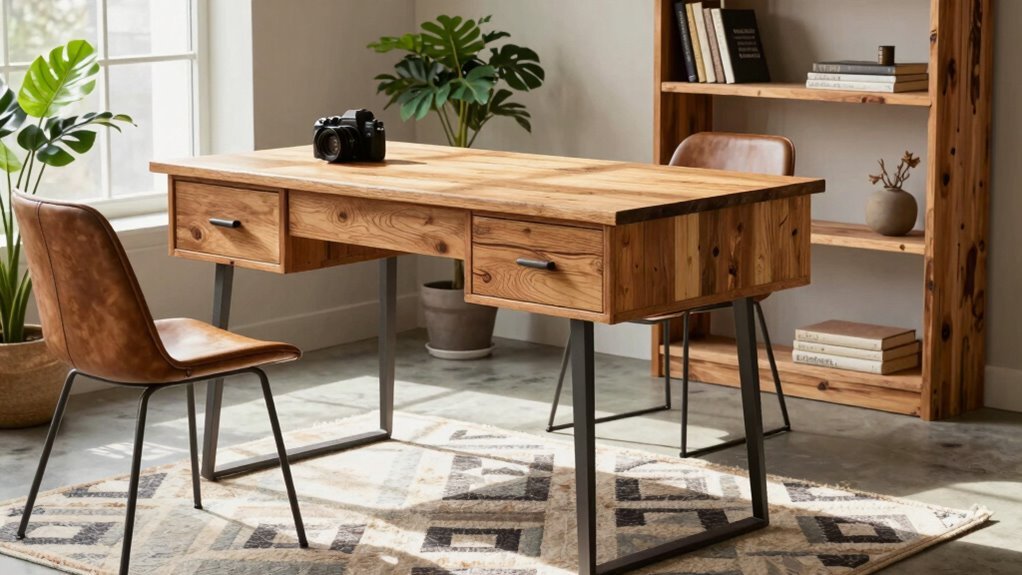
You’re sitting on a goldmine—literally! That old filing cabinet? Turn it into a funky herb garden for your desk. An outdated chair? Pop the cushions, paint the frame, and boom—stylish ottoman. Upcycling saves you cash, slashes waste, and gives your home office killer character. Plus, it’s easier than assembling flat-pack furniture (and way more fun). Every update you make helps the planet *and* your wallet—imagine what else you could create with a little paint and passion.
The Environmental Impact of Office Furniture Waste
While you’re upgrading your office for a fresh new vibe, take a moment to imagine this: millions of tons of old desks, chairs, and cubicles are piling up in landfills every year—like silent, sad monuments to outdated decor.
You toss a chair, and boom—it’s 72 kg of CO₂ in the making.
Multiply that by millions, and suddenly you’re feeding methane, microplastics, and toxic gunk into the planet.
Over 80% of discarded furniture ends up buried or burned, sucking up energy and spewing emissions.
A single cubicle? That’s 300 to 700 pounds of waste lugging the Earth down.
But hey, it’s not all doom—you’ve got power.
Choosing to upcycle turns junk into joy, slashes carbon, and keeps your cool chair out of landfill limbo.
Every reused desk is a tiny high-five to Mother Nature.
Globally, 30-50 million tons of office furniture waste is generated annually, most of which ends up in landfills.
So why trash it when you can transform it?
Your home office can be stylish *and* kind to the planet—talk about a win-win!
Economic Advantages of Upcycling for Home Offices
You can save hundreds—maybe even thousands—by giving old furniture a second chance instead of buying new.
Classic pieces cost at least half the price of fresh ones, and with a little creativity, they look just as sharp—no coffee-stained nostalgia required.
By choosing secondhand, you slash acquisition costs without skimping on quality.
Plus, you dodge those sneaky disposal fees; businesses dump millions into landfills each year, but not you, the savvy saver.
Upcycling means longer-lasting furniture, fewer replacements, and more cash for things that matter—like that fancy ergonomic chair or weekend pizza runs.
It also supports local artisans, boosting your community while cutting manufacturing and transportation costs.
Recycling saves up to 95% of the energy used in new production—your wallet *and* the planet win.
Repurposing furniture can earn LEED points across 15 design areas.
Creative Design Ideas for Repurposed Office Furniture

What if your next office upgrade came from a dusty old filing cabinet no one wanted? You can totally turn that eyesore into something amazing—like a plant stand full of herbs or succulents! Just remove the drawers, tip it on its side, add landscape fabric, and fill with soil. A pop of pastel or matte black paint makes it stylish, not sad. And don’t toss that old rolling chair—snip off the seat, slap on a padded top, and boom: mobile ottoman. It rolls where you need it, like magic. Many projects are weekend-friendly and require basic tools, so you can easily tackle one without a full renovation.
| Furniture | Creative Twist |
|---|---|
| Filing cabinet | Herb planter on its side |
| Rolling chair | Stylish rolling ottoman |
| Old desk | Painted power-ready workstation |
| Bookshelf | Two-tone painted storage with flair |
Essential Steps for Safely Restoring Used Furniture
Before diving into the magic of turning that grimy dresser into a dreamy workspace centerpiece, you’ve got to protect your most important tool—yourself.
Slip on a respirator with the right filter—organic vapor for strippers, P100 for dust—and don’t forget goggles or a face shield.
Your eyes will thank you.
Suit up in nitrile gloves, long sleeves, and tie back loose hair—safety meets style!
Check the piece for wobbles, rot, or creepy crawlies, and test for lead paint if it’s older than 1978.
Work outside or in a well-ventilated spot, ideally with a fan blasting to clear fumes.
Keep kids and pets out of the zone—this isn’t a DIY kiddie craft.
Inspect your tools, use dust control like a HEPA vacuum, and never let cords dangle like jungle vines.
Safety first, superhero second—now you’re ready to rock.
Cost-Effective Materials and Tools for Upcycling Projects

A little paint goes a long way when you’re cooking up a stunning home office on a budget, and the good news is that you don’t need to splurge to get stellar results.
Grab a can of chalk paint for $15–$30—it’s no-fuss, no priming, and ready to roll.
Test shades with sample pots under $5, because who wants commitment issues with beige?
Spray paint ($4–$10) spruces up knobs or legs in a flash.
Your tool game matters too: a $30 hand-tool set covers most jobs, and a $40 drill speeds things up like magic.
Sandpaper ($5–$12), rollers, and a $20 staple gun?
Total MVPs.
Scoop remnant fabric for $3–$10 a yard, or grab scrap wood and hardware from salvage spots—free is always the best price.
And don’t forget gloves and goggles; safety never goes out of style, even when you’re on a budget.
Upcycling wins when your wallet’s still smiling.
How to Source Quality Furniture for Repurposing
Where can you find diamond-in-the-rough furniture without emptying your wallet? Thrift stores like City Thrift drop fresh picks daily—score solid wood dressers or chairs for as little as $2!
Hit garage sales for hidden gems: warped table tops refinish beautifully, and flip house desks often ditched with minor water damage are golden for revamps.
Scour online marketplaces—you’ll snag projects under $50 with full tutorials and tools lists ready to roll.
Don’t sleep on curbside magic: old ladders become shelves, and roadside windows? Hello, chic room dividers!
Prioritize real wood or metal—they bounce back better than wobbly particle board. Skip severe warps or rot, but love a piece with stable legs and soul beneath scuffs.
That recalled crib? Perfect for a bench.
Pallets? Free bed frames.
You’re not just shopping—you’re treasure hunting, one sandable, paintable, upcyclable win at a time. Game on!
Supporting Community and Circular Economy Through Reuse

While you’re sanding that thrift-store find into a one-of-a-kind desk or turning an old ladder into a shelf, you’re also giving more than just furniture a second life—you’re fueling real change in your community.
Every upcycled piece supports jobs in refurbishment, resale, and training—some folks even see incomes jump by 40%!
You’re backing small social enterprises that hire and teach people facing tough breaks, from refugees to those with disabilities.
Plus, with millions of items saved from landfills last year alone, you’re slashing waste *and* carbon.
Your DIY project? It’s part of a $4.3 billion market growing fast, creating local jobs and serious momentum.
And let’s be real—your fly-from-the-past shelf is way cooler than something mass-produced.
So go ahead, brag a little.
You’re not just crafting a stylish home office—you’re building a better, tighter-knit world, one funky chair at a time.
Frequently Asked Questions
Can Upcycled Furniture Be Insured for Home Office Use?
Yes, you can insure upcycled furniture for home office use—great news for your one-of-a-kind setup!
Homeowners or renters policies often cover damage from fire, water, or theft, and some even handle accidental spills or pet mishaps.
If you’re selling pieces, product liability insurance has your back.
Just check your policy details or call your provider to be sure.
Peace of mind never looked so stylish—or so handmade!
Does Upcycling Furniture Affect Resale Value of My Home?
Yes, upcycling furniture can boost your home’s resale appeal—if done right.
You grab eco-minded buyers who love charm and sustainability.
A fresh, cohesive look adds personality without scaring off offers.
Just avoid wild, mismatched styles that scream “craft explosion.”
Clean, quality updates? Those wow buyers.
Think chic, not quirky.
And hey, your desk mightn’t appraise higher, but it could help seal the deal faster—feng shui and fun,双赢 (double win)!
Are Upcycled Desks Compatible With Standing Desk Converters?
Oh, you bet they’re compatible—unless your desk’s practicing yoga and isn’t lying flat!
You can slap a converter on upcycled wood, reclaimed planks, or even repurposed grandma’s dresser, just keep it steady.
As long as it’s within thickness specs and solid enough, you’re golden.
Pair it right, and voilà, you’ve got a standing desk that’s eco-chic, quirky, and won’t wobble like a newborn giraffe.
How Do I Label My Upcycled Furniture for Eco-Certification?
You can’t slap official eco-certification labels on DIY upcycled furniture—those need third-party audits you can’t DIY.
But hey, that doesn’t mean you can’t brag responsibly!
Make your own fun tagline like “Born again from awesome vintage vibes!”
List materials, paint sources, and love poured in.
It’s honest, charming, and way more fun than paperwork.
Greenwashing? Nah.
Authenticity? Yes.
Can Rental Property Tenants Upcycle Provided Office Furniture?
Yes, you can upcycle provided office furniture, but don’t leap before you look—your landlord mightn’t love surprise makeovers.
You’re allowed small tweaks, like repainting or adding casters, but major changes need written approval.
Mess up? They can make you undo it or dock your deposit.
Play it smart: ask first, jazz it up later, and keep the receipts.
That desk transformation could be fab—or a one-way ticket to rent trouble!
Conclusion
You’ve saved cash, spared the planet, and made your home office uniquely yours—talk about a win-win-win! Remember, one person’s trash really can be another’s treasure. With sandpaper, paint, and a little flair, you’ve turned old chairs into chic statements and desks into dream hubs. Who knew duct tape and creativity could go this far? Keep tinkering, keep trashing less, and let your workspace tell your story—funky, bold, and full of flavor.