Open-Back vs. Closed-Back Headphones for Remote Work
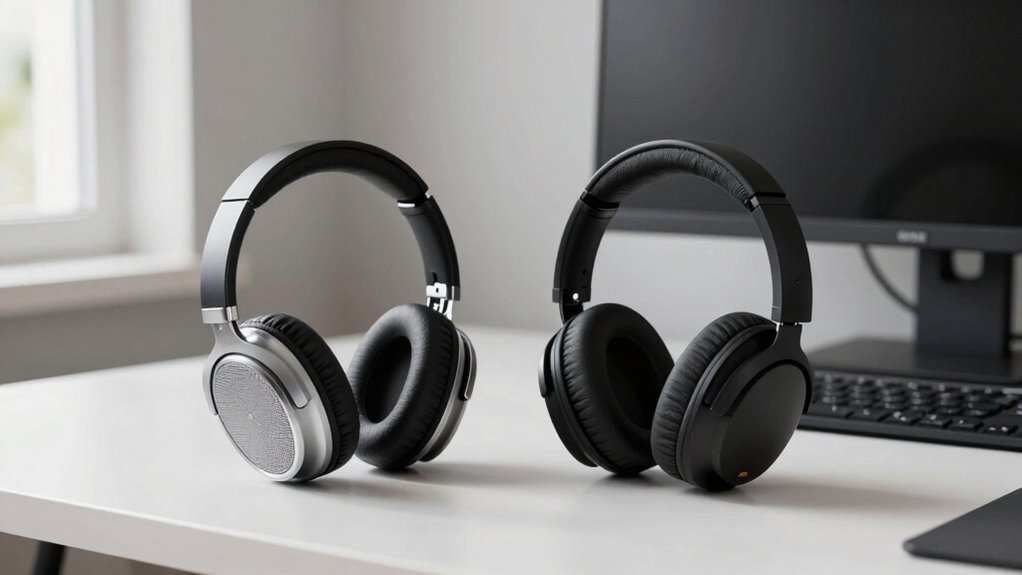
You want focus without frying your ears, so closed-backs are your go-to for blocking office chatter and keeping Zoom rants private. Open-backs? Super comfy and airy, but your coworkers might hear your playlist like it’s background radio. If you hate sweaty ears during long sprints, they’re dreamy—but not great for stealth. Prefer crisp calls, quiet vibes, and not sharing your bops? Stick with closed. And hey, there’s a little more to the story…
Acoustic Isolation and Privacy for Remote Environments
Ever wonder why your coworker’s voice suddenly sounds like it’s coming from a distant cave when you put on your headphones?
That’s your closed-backs doing their job—sealing out noise with tight earcups and blocking distractions like a pro.
Open-backs? They’re the friendly neighbor who leaves the door wide open, letting sound slip in and out, which sounds nice but isn’t great when you’re on a call.
If you’re in a shared space, closed-backs keep your audio private and prevent others from hearing your meeting—or your playlist.
They even play nice with ANC for extra quiet.
Plus, a good seal and comfy pads mean less sound sneaks out.
Open-backs might feel airy and comfy, but they’re a no-go for confidential chats.
When privacy matters, go closed—and keep your secrets (and your music) to yourself.
This is largely due to their vented earcup design, which allows sound to escape and enter freely.
Soundstage and Imaging in Professional Listening Tasks
While your closed-backs might keep the outside world quiet, they can’t match the airy, room-filling experience open-back headphones bring to your ears—especially when you’re zeroing in on where each sound lives in a mix.
You’ll notice instruments aren’t just left or right—they breathe, with clear space between them, like musicians spread across a stage.
Closed-backs? They tend to crowd sounds near your head, making precise panning trickier.
Open-backs preserve natural timing and volume cues, so your brain doesn’t have to work overtime to “place” sounds.
They shine with classical or live tracks where space matters.
And while closed-backs can color depth with boosted bass, open-backs deliver truer separation and air, helping you tweak reverb or pan with confidence.
For critical calls on stereo imaging, pros often cross-check both—because no headphone’s perfect, but together, they’ve got your mix covered.
This immersive quality is especially effective in quiet, controlled environments where open-back designs thrive.
Comfort and Breathability During Extended Work Sessions

Letting your ears breathe while you work isn’t just a luxury—it’s a game-changer, especially when you’re clock在玩家中 in for hours on end. Open-back headphones keep your ears cool and comfy, while closed-backs can turn your ears into saunas. Seriously, no one wants sweaty ears at 3 p.m. The key difference lies in their structural design, specifically how sound escapes and air circulates—open-backs feature perforated earcups that allow airflow and reduce pressure, making them naturally more comfortable for long periods. (open-back ventilation)
| Feature | Open-Back | Closed-Back |
|---|---|---|
| Airflow | Lets air flow freely | Traps heat like a Thermoh |
| Earpad Material | Breathable fabric or velour | Sweat-prone leatherette |
| Long-Wear Comfort | Light, soft, and pressure-free | Tight, warm, and tiring |
You’ll stay fresher longer with open-backs—your ears will thank you. They’re like a cool breeze in headphone form, while closed-backs feel like a hug that won’t let go. Choose comfort, choose breathability.
Microphone Compatibility and Audio Bleed in Virtual Meetings
You kept your ears cool and comfy through back-to-back Zoom marathons—congrats!
But cool ears don’t mean clean audio.
If you’re using open-back headphones, that sweet, airy sound? It leaks out—big time.
Everyone nearby hears your playlist, your podcast, even that *oh no* moment when your mic picks it up too.
Yep, audio bleed causes echoes, feedback, and awkward “Wait, is that my voice?” chaos.
Your mic hears everything, and your coworkers hear *way* too much.
Closed-backs? Total game-changer.
Their sealed design traps sound inside—none escapes, zero embarrassment.
They block bleed, keep your audio crisp, and make your voice pop clearly on calls.
No more mic picking up your tunes, no more noisy mishaps.
For virtual meetings, closed-backs are the clear win.
They’re like mute buttons you don’t have to press.
Stay sharp, stay heard—and keep the jam session to yourself.
Suitability Across Home, Office, and Mobile Workspaces

Where do you work best—cozy corner at home, buzzing office, or your favorite coffee shop downtown? Your headphones should match your workspace like the perfect playlist.
- At home, open-back headphones shine—spacious sound and airy comfort keep your ears happy during long writing or editing sessions.
- In the office, go closed-back—they block chatter, keep your music private, and tell coworkers, “Don’t distract me!”
- On the move, closed-back is a must—noise isolation fights train rumble and coffee shop jazz bands alike.
- For marathon remote days, open-back wins with breathable pads that won’t make your ears sweat like a gym sock.
Pick the right pair for your scene, because let’s face it—no one wants their podcast leaking into the team Zoom call.
Driver Exposure and Long-Term Durability Concerns
While you’re chasing that crisp, concert-hall sound, don’t forget your headphones’ insides are quietly doing backflips to keep up—and with open-back designs, those delicate drivers are out in the open, breathing the same air you are, which sounds cozy until dust bunnies from under your desk decide to migrate into your ear cups.
Thanks to their airy grilles, open-backs let in sound *and* sneaky particles, leaving drivers exposed to dust, moisture, and clumsy bumps.
You’re basically giving dirt a VIP pass to the sound engine.
But closed-backs? They’ve got your back—literally.
Sealed cups block debris, lock out humidity, and shield drivers like a sturdy bunker.
No surprise they hold up better in messy, real-world workspaces.
If you value longevity and don’t live in a dust-free bubble, closed-backs quietly win the durability race—keeping your tunes clear and your hardware happy for the long haul.
Balancing Audio Fidelity With Environmental Realities

Ever wonder why your podcast sounds like a live concert one day and a muffled phone call the next?
Your headphones’ design might be the culprit.
Balancing audio fidelity with your chaotic home office is key.
Open-backs deliver crisp, natural sound and a huge 3D stage—perfect for deep listening.
But they let in street noise and chatter, turning focus time into distraction city.
Closed-backs lock in sound with strong bass and block out neighbors, roommates, or barking dogs.
Sure, they trap heat and feel a bit stuffy after hours, but they keep your audio tight and private.
Here’s how to stay sharp without losing your sanity:
- Choose open-back for clarity—when your environment cooperates.
- Grab closed-back for noisy days—they won’t flinch at distractions.
- Match your gear to your space, not just your music taste.
- Remember: great sound means nothing if the kids’ chaos drowns it out.
Frequently Asked Questions
Can Open-Back Headphones Be Used With Noise-Cancelling Microphones?
Yeah, you can use open-back headphones with noise-cancelling mics, but don’t expect magic.
The mic cuts background noise well, but your game audio will still leak out and get picked up—like whispering secrets through a screen door.
Pair it with a boom mic angled away, and you’ll tame the bleed.
It’s not perfect, but with smart setup, you’ll sound crisp, your audio stays spacious, and hey, you’ll feel like a pro-gamer space cowboy.
Win-win!
Do Closed-Back Models Cause More Ear Fatigue Over Time?
Yeah, closed-back headphones can tire your ears faster — they trap pressure and heat, making your ears feel stuffy, like wearing a winter hat indoors.
The seal keeps sound in but also builds up fatigue, especially during long calls or music sessions.
Your brain works harder, your ears sweat more, and before you know it, you’re itching to take them off.
Open-backs? They’re like a welcome change in comparison — lighter, breezier, and way kinder on your ears over time.
Are Open-Back Headphones Louder Than Closed-Back Ones?
No, open-backs aren’t louder than closed-backs—you just hear *less* of the sound yourself since it escapes easily.
Closed-backs trap sound, making it feel punchier and more intense in your ears.
Open-backs seem airy and open, but you’ll often crank them up to feel the same impact.
Can I Upgrade Open-Back Earpads for Better Comfort?
You bet you can upgrade open-back earpads for better comfort—many folks fix it like a charm with new ones.
Swap in velour or memory foam pads to stay cool and cozy during long calls.
Just make sure they fit your model, ’cause one size doesn’t fit all.
It’s a simple tweak that can make your headphones feel like a dream—no more ear pancakes from squished foam!
Do Closed-Back Headphones Affect Voice Clarity During Calls?
Nah, closed-back headphones don’t mess up your voice clarity—they actually help!
You’re blocking background noise, so your mic picks up your voice, not your dog barking or the vacuum roaring.
Plus, they keep sound from leaking out, so your call sounds crisp and clean.
Just pick a model with good vocal tuning, and you’ll sound like a podcast pro—no studio required!
Conclusion
You’ve got this, and now you know which headphones fit your remote grind. Did you know 68% of remote workers say background noise ruins a meeting? Yikes! Closed-backs block that chaos, while open-backs give you concert-hall sound—if your dog’s barking doesn’t mind. Pick based on your space, style, and sanity. Either way, your ears (and coworkers) will thank you. Stay sharp, sound great, and keep crushing it!