Executive Desk vs. Regular Desk: What’s the Difference?
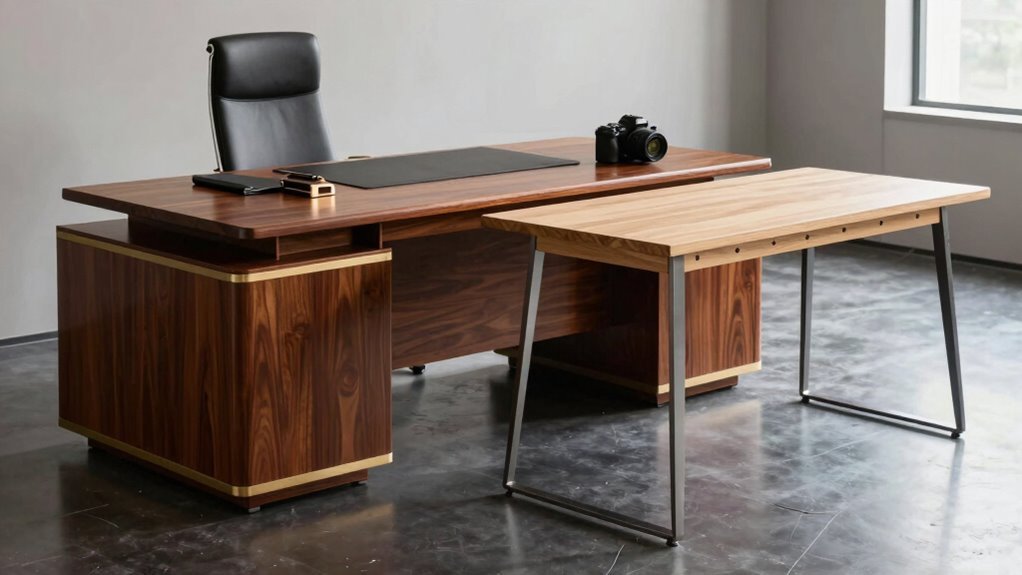
You’re not just picking a desk—you’re choosing your command center. Executive desks are wider, deeper, and built like furniture royalty with solid wood and fancy finishes, while regular desks keep it simple and space-smart. They’ve got more drawers, better build, and scream “I mean business” without saying a word. Plus, they make your Zoom calls look instantly more impressive—bonus points if your cat hasn’t claimed it yet. Stick around, and you’ll see how to pick the perfect one for your vibe.
Size and Spatial Requirements
Ever wonder why some desks look like they own the room? Well, they probably do—space-wise.
Executive desks typically stretch 60 to 72 inches wide, sometimes up to 320 cm, dwarfing standard desks that max out around 63 inches.
Need space for three monitors, a notepad, and room to dramatically sign papers? You’ll want that extra width.
Depth-wise, executive models go 30–36 inches (up to 180 cm with extensions), giving you plenty of real estate for documents and gadgets.
Standard desks stay shallower, around 24–31 inches, perfect for tight spots.
Both sit around 28–30 inches high, so ergonomics stay solid.
But here’s the kicker—executive desks need room to breathe, often requiring dedicated offices.
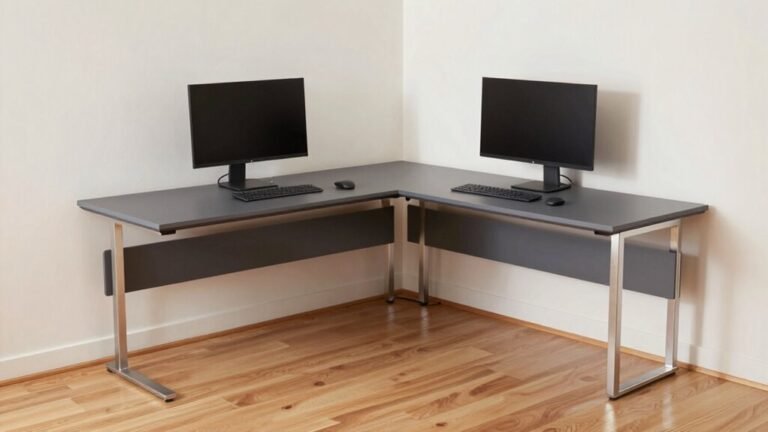
Standard ones slip easily into corners or shared spaces.
If your floor space were a stage, the executive desk wouldn’t just take center stage—it’d demand a spotlight.
Per-person width allowance is typically 24 inches, so larger executive desks comfortably accommodate multiple users or extensive workloads.
Materials and Build Quality
You’ve got the space sorted—now let’s talk about what your desk is actually made of, because not all desks are built to last like they’re meant to survive a minor earthquake.
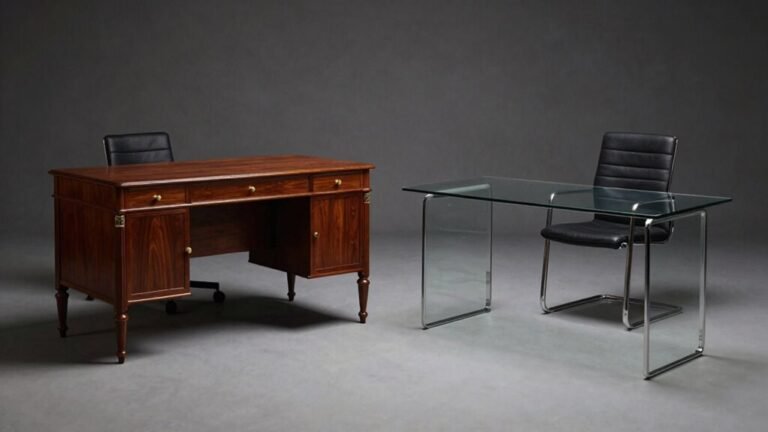
You’ll likely find executive desks crafted from solid hardwoods like walnut or cherry, joined with old-school techniques that laugh at wobbling.
They’re finished by hand, age gracefully, and can be refinished like a fine wine.
Regular desks? They often use veneer over engineered wood—snazzy at first, but edges can peel like sunburnt skin.
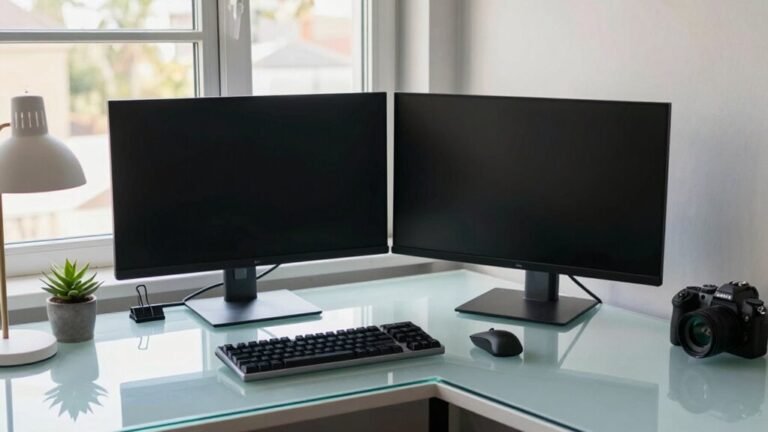
Metal legs add sturdiness to both types, while glass tops look sleek but attract fingerprints like a magnet.
Premium models boast soft-close drawers and heavy-duty frames; budget ones rely on cam locks and plastic pulls.
And hey, bamboo or recycled metal options are rising—great for the planet and your conscience.
Executive desks often feature superior design that enhances both aesthetics and durability.
Pick smart, and your desk won’t ghost you in five years.
Storage and Organizational Features

A well-organized desk can be a game-changer, and when it comes to storage, executive desks pack a serious punch.
You’ll love how they offer 5–9 drawers—way more than the 2–4 on regular desks—so you can ditch the clutter.
Need to file legal papers? No problem: they’ve got full-height file drawers, unlike most standard desks.
With mixed drawer depths, lockable compartments, and even secret cubbies, your stamps and secrets are safe.
Fancy built-in pencil trays, file dividers, and guest-side storage make life easier—and yes, your visitors might actually find something useful.
Tech’s tidy too, thanks to cable grommets, power modules, and sneaky drawers for docking stations.
Regular desks just can’t compete with that kind of brainy organization.
It’s like comparing a walk-in closet to a shoebox—sure, both hold stuff, but one *really* knows its stuff.
These advanced features reflect the intelligent storage found in executive desk designs.
Functional Design and Workspace Efficiency
Now that your files have homes and your cables behave themselves, let’s talk about how the whole setup actually works for you every day.
You’re not just sitting—you’re conquering tasks, and your desk should keep up.
Executive desks, wide and deep, give you room to spread out like a boss, literally.
With L- or U-shaped options, you’ve got zones for your laptop, notes, and even impromptu coffee chats.
Need to multitask? No problem—side returns and bridges turn your space into a productivity playground.
Regular desks? They’re great for tight spots and simple duties, but they’re like studio apartments: cozy, but not built for hosting.
Meanwhile, executive models adapt with modular parts, so you can reconfigure for standing sprints or team huddles.
You’ve got work to do—make sure your desk isn’t holding you back.
Ergonomic Considerations and User Comfort

Comfort isn’t just a luxury—it’s your secret weapon for crushing the workday, and your desk plays a bigger role than you think. You’re not just sitting—you’re living part of your life at that desk, so why not make it feel great? Check out how executive desks stack up:
| Feature | Why You’ll Love It |
|---|---|
| Adjustable height | Stand up, sit down—your body gets a break without missing a beat |
| Ample legroom | Stretch out like you’re at the movies (but actually working) |
| Built-in cable management | No more tangled mess—just clean, clear space |
| Ergonomic alignment | Elbows at 90? Yes, please. Your shoulders will thank you |
| Quiet motors | Switch positions smoothly—no one’ll know you’re standing tall |
You stay comfy, focused, and energized—because let’s face it, slouching isn’t a career move.
Aesthetic Impact and Professional Image
When you step into an office, the desk isn’t just where the work happens—it’s the stage for your professional story, and let’s be real, first impressions matter.
You’re not just sitting at a desk—you’re sending signals.
An executive desk shouts, “I mean business,” with its bold size, rich wood, and sleek finishes that catch the light (and eyes).
It builds authority fast, thanks to carved legs, leather insets, and a layout that owns the room.
You’re not hiding in a cubicle; you’re anchored like a leader, framed by art or bookshelves like a pro.
Even the color—deep brown or charcoal—whispers power.
For clients, it spells trust and taste.
A regular desk? It blends in.
But yours? It stands out, makes meetings feel important, and yes, looks amazing in that LinkedIn photo.
You’re not showing off—you’re leveling up.
Price Range and Ideal Use Cases

What’s your workspace saying about your priorities—investing in lasting power or keeping things simple?
If you’re craving a command center, executive desks run $1,000 to $3,000 at Arnold’s, with premium brands like Steelcase hitting $14,500—ouch!
But hey, you get serious size, storage, and sleek clout for client meetings.
Need daily heavy-duty use? These 63–85-inch beasts handle chaos like bosses.
On the flip side, regular desks are your budget-friendly buddies, from $50 basics to $1,200 ergonomic gems.
Students or remote workers, rejoice! They’re perfect for small spaces, simple tasks, or open offices that don’t scream “I’m trying too hard.”
While regular desks nail function under $500, executive models justify cost with craftsmanship and curb appeal.
Frequently Asked Questions
Can Executive Desks Be Disassembled for Easier Moving?
Yes, you can totally take apart executive desks for easier moving—good news for tight hallways! Just grab your tools, snap a few photos, and start unscrewing the top from the frame. Pull out drawers, detach any extra panels, and keep hardware labeled. It might feel like puzzle time, but with a little elbow grease and a smile, you’ll have it stacked and ready to roll—no desk left behind!
Are Regular Desks Suitable for Standing Desk Converters?
Yes, you can totally use standing desk converters on regular desks—think of it like giving your desk a superhero transformation!
Just plop the converter on top, and boom, you’re standing in style.
They’re easy to set up, work with most setups, and let you switch positions faster than you can say “sit-stand-sit.”
Lightweight, flexible, and hassle-free, they turn even the most basic desk into a dynamic workspace.
Who knew upgrading was this simple?
Do Executive Desks Come With Built-In Power Outlets?
Yeah, many executive desks come with built-in power outlets—you’ll often find combo setups with USB-A, USB-C, and even wireless charging spots right on the desktop.
It’s super handy for keeping devices charged without messy cords.
Plus, they usually include surge protection, so your gadgets stay safe.
Just check the specs—some pack more ports than others, and not all include surge features.
Think of it like a pit stop for your tech—efficient, sleek, and kinda awesome.
Can I Customize the Finish of a Regular Desk?
Yes, you can totally customize the finish of a regular desk—it’s like giving your desk a stylish haircut!
Just pick your favorite stain, lacquer, or hardwax oil, and make it yours.
Whether you want sleek satin or shiny high-gloss, it’ll turn heads.
Some finishes even resist coffee spills—because let’s be real, you’re gonna need that.
Easy, fun, and 100% *you*.
Are Executive Desks Compatible With Cable Management Systems?
Yes, executive desks play great with cable management systems—you’ll love how they keep your cords tidy and out of sight.
They’ve got thick tops, built-in channels, and pre-drilled grommet holes, so routing power is a breeze.
Plus, hidden troughs and modesty panels let you tuck away messy cords like a pro.
It’s like giving your cables a secret hideout—neat, clean, and drama-free!
Conclusion
So you want power, prestige, and a desk that intimidates interns just by existing? Congrats, the executive model’s got you covered—with room to spare, usually for paperwork you’ll never touch. But hey, if you actually *work*, that sleek, “regular” desk might just save your back, budget, and sanity. Turns out, bigger doesn’t mean better, just heavier to move during office reorgs. Who knew?