5 Best Wi-Fi Extenders for a Seamless Home Office Boost
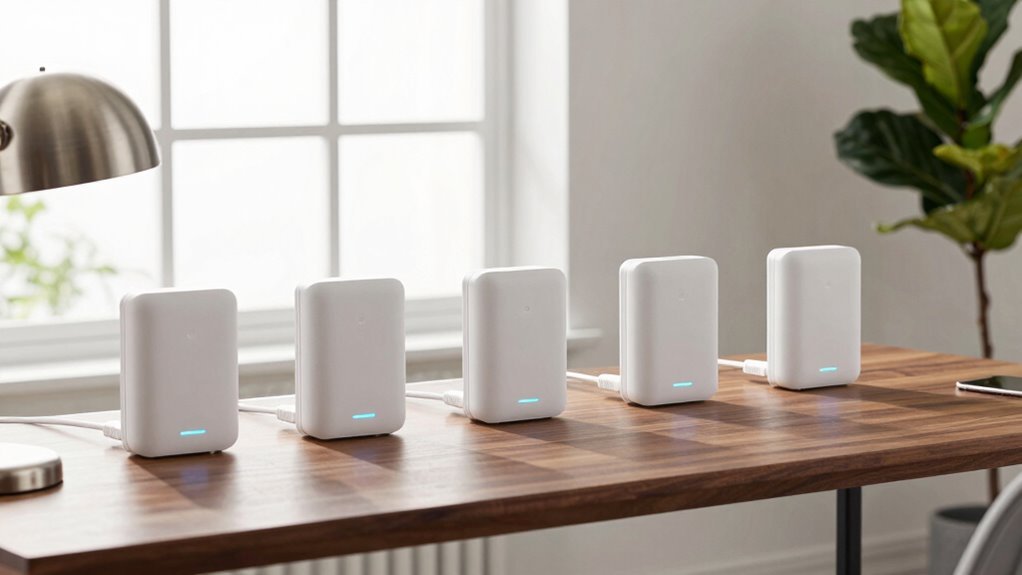
You’re working from home, but is your Wi-Fi actually keeping up? With video calls dropping and files stalling, you need more than spotty coverage—especially when 85% of remote workers report daily connectivity hiccups.
These five Wi-Fi extenders deliver a seamless home office boost by eliminating dead zones and optimizing network performance. From expansive 18,899 sq ft layouts to smart EasyMesh integration, they offer strong range and reliability.
Each model balances speed and stability, ensuring uninterrupted video conferences and faster downloads. But among all options, which one truly maximizes your home office connectivity without overpromising?
| 2026 WiFi 6 Extender 18899 sq.ft |  | Best for Large Homes | Coverage Area: 18,899 sq ft | Max Speed: 2400 Mbps | Antennas: 4 high-gain external | VIEW LATEST PRICE | Read Our Analysis |
| 2026 WiFi Extender Signal Booster for Home |  | Easiest Setup | Coverage Area: 15,555+ sq ft | Max Speed: Not specified | Antennas: 4 high-gain external | VIEW LATEST PRICE | Read Our Analysis |
| TP-Link AC1200 WiFi Extender (RE315) |  | Budget Pick | Coverage Area: 12,000 sq ft | Max Speed: 1.2 Gbps (AC1200) | Antennas: 3 external adjustable | VIEW LATEST PRICE | Read Our Analysis |
| WiFi Extender Signal Booster for Home (White XL) |  | Best for Value | Coverage Area: 8,470–8K+ sq ft | Max Speed: 300 Mbps | Antennas: Not specified | VIEW LATEST PRICE | Read Our Analysis |
| TP-Link AC1900 WiFi Range Extender (RE550) |  | Most Reliable | Coverage Area: 2,100 sq ft | Max Speed: 1.9 Gbps (AC1900) | Antennas: 3 adjustable external | VIEW LATEST PRICE | Read Our Analysis |
More Details on Our Top Picks
2026 WiFi 6 Extender 18899 sq.ft
Who wouldn’t want rock-solid Wi-Fi across nearly 19,000 square feet—yes, 18,899 sq ft—without constantly rebooting or rewiring? You’re getting 2400 Mbps speeds with dual-band WiFi 6 support, so 4K/8K streaming, gaming, and VR run smoothly—even on a crowded network of 200+ devices.
Four high-gain antennas punch signals through walls and floors, minimizing interference while maximizing coverage. It works as a repeater, AP, or router, plays nice with your existing setup, and includes a Gigabit port for wired reliability.
WPA3 encryption and real-time threat detection keep things secure. No, it won’t magically fix your ISP’s bad day—but it’ll keep your home office stable, fast, and connected.
- Coverage Area:18,899 sq ft
- Max Speed:2400 Mbps
- Antennas:4 high-gain external
- Ethernet Port:Gigabit Ethernet port
- Security Protocol:WPA3
- Setup Method:Not specified
- Additional Feature:WiFi 6 dual-band support
- Additional Feature:200+ device connectivity
- Additional Feature:Enterprise-grade WPA3 security
2026 WiFi Extender Signal Booster for Home
You’re covered—really covered—if your home stretches up to 15555+ sq ft and you’re tired of playing WiFi hide-and-seek between floors, walls, or that oddly stubborn attic corner. With 4 high-gain antennas and a BiOnic chip, this 2026 booster delivers 360° coverage, slicing through concrete and multi-floor layouts like butter—no more “why is my Zoom call freezing?” moments.
You’ll get stable speeds for 4K streaming and gaming, plus anti-interference tech that actually works. WPS setup takes 30 seconds—no app, no headache—and it supports 68+ devices.
It works with 99% of routers, offers five modes (including AP for wired-to-wireless conversion), and keeps your smart home humming without lag or signal clashes. WPA2 encryption and real-time threat monitoring guard your data, while FCC compliance ensures safety across all connected gadgets.
It’s not magic, but at this scale, who’s really complaining?
- Coverage Area:15,555+ sq ft
- Max Speed:Not specified
- Antennas:4 high-gain external
- Ethernet Port:Not specified
- Security Protocol:WPA2
- Setup Method:WPS one-click setup
- Additional Feature:BiOnic chip technology
- Additional Feature:5 operational modes
- Additional Feature:1-tap WPS setup
TP-Link AC1200 WiFi Extender (RE315)
If you’re wrestling with spotty Wi-Fi in a larger home—say, up to 1,500 sq. ft.—the TP-Link AC1200 WiFi Extender (RE315) steps in as a solid, budget-friendly fix. It earned Engadget’s 2023 Best Budget Pick title for good reason.
You get dual-band speeds up to 1,900Mbps (600 on 2.4GHz, 1,300 on 5GHz), so streaming and video calls stay smooth—even with 30 devices connected. Its three adjustable antennas and signal light help guide optimal placement.
The single Ethernet port lets you hardwire a device when needed. Sure, it’s not the fastest model out there, but for most homes, isn’t reliable, affordable coverage what you really want?
- Coverage Area:12,000 sq ft
- Max Speed:1.2 Gbps (AC1200)
- Antennas:3 external adjustable
- Ethernet Port:One Ethernet port
- Security Protocol:WPA/WPA2
- Setup Method:Intelligent signal light
- Additional Feature:OneMesh compatibility
- Additional Feature:Signal light guidance
- Additional Feature:3 adjustable antennas
WiFi Extender Signal Booster for Home (White XL)
When your home stretches beyond 8,000 sq ft—spanning multiple floors or tucked corners where Wi-Fi barely whispers—the WiFi Extender Signal Booster for Home (White, XL) steps in like a signal-savvy roommate who actually pays their dues. You’ll cover up to 8,470 sq ft indoors and outdoors, supporting 45+ devices at speeds up to 300 Mbps—enough for 4K streaming, video calls, and casual gaming.
Though hardcore gamers may still eye fiber, the extender delivers reliable performance in repeater or AP mode, with an Ethernet port for wired flexibility. Setup’s a breeze via smartphone or laptop, ensuring you’re online without hassle.
Compact, white, and lightweight (just 4.6 oz), it blends seamlessly into any room. WPA/WPA2 security keeps your network protected from unauthorized access.
Ranked #3 in Repeaters, it holds a solid 4.5/5 rating from 117 reviewers—proof of its reliability. Still, one might wonder: does “easy setup” really beat crawling through attic insulation?
Model FSXNGC1 will be available August 11, 2026, and includes full manufacturer warranty details.
- Coverage Area:8,470–8K+ sq ft
- Max Speed:300 Mbps
- Antennas:Not specified
- Ethernet Port:Ethernet port
- Security Protocol:WPA/WPA2
- Setup Method:PC/smartphone/laptop setup
- Additional Feature:45+ device support
- Additional Feature:Repeater & AP modes
- Additional Feature:Compact space-saving design
TP-Link AC1900 WiFi Range Extender (RE550)
The TP-Link AC1900 WiFi Range Extender (RE550) is a solid pick for anyone wrestling with dead zones across a 2,100 sq ft space—especially if you value adjustable antennas, support for up to 32 devices, and EasyMesh compatibility for seamless expansion. You’re getting dual-band speeds of 1300 Mbps on 5 GHz and 600 Mbps on 2.4 GHz—totaling 1.9 Gbps—though don’t expect faster internet, just steadier coverage.
The three external antennas are adjustable, so you can tweak them like tiny tech antennas for max signal. With Smart Adaptive Roaming, your devices stick to the strongest band without dropping.
You’ll appreciate the Gigabit Ethernet port (hello, gaming consoles) and AP mode for wired-to-wireless flexibility. Setup’s a breeze via the Tether app—seriously, even if you hate tech—and the signal indicator helps you nail the perfect spot.
TP-Link also signed CISA’s Secure-by-Design pledge, so security’s baked in, not bolted on. Just remember: this extender fixes reach, not raw speed.
Is it magic? No. But is it reliable? Absolutely.
- Coverage Area:2,100 sq ft
- Max Speed:1.9 Gbps (AC1900)
- Antennas:3 adjustable external
- Ethernet Port:Gigabit Ethernet
- Security Protocol:Not specified
- Setup Method:TP-Link Tether app
- Additional Feature:EasyMesh network expansion
- Additional Feature:Smart adaptive roaming
- Additional Feature:CISA Secure-by-Design pledge
Factors to Consider When Choosing Wi-Fi Extenders for Home Office

You’ve got meetings to run, files to upload, and maybe a cat video or two—so when you’re picking a Wi-Fi extender for your home office, coverage area size (think 1,500–2,000 sq ft) and dual-band support (2.4 GHz for range, 5 GHz for speed) really matter. Can your extender handle multiple devices—say, a laptop, phone, and smart speaker—without choking on bandwidth, especially if you need speeds above 300 Mbps for video calls or cloud backups? Look for WPA3 encryption and guest network options, because no one wants their Zoom call hijacked by a neighbor’s smart fridge.
Coverage Area Size
How big of a space are you actually trying to cover? That 18,899 sq ft coverage claim on the box probably isn’t accounting for the brick wall between your home office and the router in the basement.
You’ll want an extender with strong penetration, especially if you’re working across floors or through concrete walls. Real-world performance often falls 30–50% below advertised range due to interference and layout.
Models touting 15,555+ sq ft typically use multiple high-gain antennas and advanced signal processing to stretch coverage. Open-concept spaces see near-best results, while dense setups need extra help.
If your office spans multiple rooms or spills outdoors, prioritize units designed for cross-floor reach and solid wall penetration. This ensures you eliminate dead zones and maintain reliable connectivity.
Don’t just chase big numbers—match the extender’s effective range to your layout. You’re aiming for reliable speed, not just signal bars in the hallway.
Dual-Band Support
Just because your extender blankets the house in signal doesn’t mean every corner’s ready for video calls—bandwidth bottlenecks hit hard when all your devices crowd onto a single frequency, especially if you’re streaming 4K content while the kids game online. You’ll want a dual-band extender, one that broadcasts both 2.4 GHz and 5 GHz signals at once—this lets you split traffic instead of letting your smart fridge hog bandwidth meant for Zoom.
The 2.4 GHz band travels farther and punches through walls better (perfect for basement sensors), while 5 GHz delivers speed—think 800 Mbps or more—for data-hungry tasks like cloud backups. Together, they can push combined speeds up to 1.9 Gbps, though real-world performance depends on layout and interference.
Look for models with smart roaming; they nudge your phone or laptop to the best band automatically, so you’re not stuck asking, “Why’s the Wi-Fi slow… again?” Prioritizing traffic? That’s a must.
Speed Requirements
What good is a rock-solid Wi-Fi signal if your video conference keeps freezing during the essential part of your pitch? You need speed that matches your workload—aim for extenders with at least 2400 Mbps aggregate throughput, especially if you’re streaming 4K content or hopping between cloud apps.
Look for dual-band models offering 600 Mbps on 2.4 GHz and 1300 Mbps on 5 GHz—those numbers guarantee solid performance, even if real-world speeds drop 20–30% due to interference. Pick units with beamforming or MU-MIMO to keep your signal efficient.
For larger spaces, a model with Ethernet backhaul or a dedicated high-speed backhaul band will maintain performance across rooms. Because what’s the point of coverage if it doesn’t deliver usable bandwidth when you’re in the middle of a critical download?
Device Capacity
A reliable Wi-Fi extender doesn’t just stretch your signal—it manages the chaos of your connected home office, where your laptop, printer, smart speaker, and backup drive all vie for bandwidth at the same time.
You’ll want an extender that supports at least 30–45 devices, especially if you’re juggling multiple gadgets daily. Some models claim to handle 68 or even 200+ devices, but don’t just trust the number.
Higher device capacity helps prevent slowdowns, sure, but it’s not the same as speed. You could have 100 devices connected and still crawl if throughput is weak.
Look at dual-band support and QoS features—they’re key to how well that capacity works in practice.
Is 32 devices enough? Maybe, if you’re minimal. But when your smart plugs, cameras, and tablets jump on too, you’ll want headroom.
Match the specs to your real-world load, not just the bragging rights.
Security Features
You’ve already considered how many devices your Wi-Fi extender can handle—now it’s time to ask how well it protects them. Are you really securing your home office, or just extending your risks?
Look for WPA2 or WPA3 encryption; it’s non-negotiable for safeguarding data between your devices and the extender. Opt for models with real-time threat detection and risk monitoring—they actively block suspicious traffic, not just wait for attacks.
Automatic security shields and enterprise-grade encryption mean your laptop, camera, or work tablet won’t be low-hanging fruit. Secure-by-design practices and regular firmware updates close gaps hackers love.
Strong access controls let you isolate sensitive devices, so your smart cam doesn’t become a backdoor into your Zoom calls. These features aren’t overkill—they’re baseline.
After all, what good is speed if your network’s wide open?
Setup Simplicity
Getting your Wi-Fi extender up and running shouldn’t feel like decoding a firewall manual — especially when you’re already juggling work emails and back-to-back meetings. You want one-tap or WPS setup so you’re online in under 30 seconds, not troubleshooting pairing errors.
Look for models that advertise “30-second setup” and avoid those demanding app downloads. App-free is faster and sidesteps Android-iOS hiccups.
Good signal lights guide placement smartly, so you’re not guessing where the extender works best. Why waste time dragging it room to room?
Pick units offering simple mode switches (Repeater, AP, Router) with auto-path selection—no networking degree needed. Sure, “smart” setups sound great, but if they crash or lag, you’re stuck anyway.
You need reliability, not buzzwords. Clear indicators, minimal steps, and automatic optimization keep you working—not setting up.
Wired Connectivity
That Gigabit Ethernet port on your Wi-Fi extender isn’t just a backup plan—it’s your secret weapon for stable, high-speed connections when wireless just won’t cut it. It’s perfect for critical video calls or large file uploads where reliability matters.
You’re not stuck with spotty signals when your desktop, printer, or gaming console can plug in directly. Enjoy 1 Gbps speeds and lower latency for a truly consistent connection.
Need better coverage? Use the extender in access point mode to convert wired connections into strong Wi-Fi for dead zones. Ethernet backhaul reduces wireless congestion, giving your home office a reliability boost.
No more competing for bandwidth mid-meeting—your wired devices operate without interference. And when your 4K video upload finishes 30 seconds faster, you’ll appreciate the difference.
Just make sure that port actually supports Gigabit speeds—don’t waste time with Fast Ethernet bottlenecks. It’s not magic—it’s smart engineering you already paid for.
Compatibility Check
A solid Ethernet connection on your extender keeps your home office humming—just don’t assume that plug-and-play magic works across every router, device, or network setup. You’ve got to check if your extender supports universal compatibility, ideally claiming 99% of mainstream routers and handling 200+ connected devices without breaking a sweat.
Does it match your current Wi-Fi standard—like Wi-Fi 6 or AC—or will you cap your speeds? Dual-band support (2.4 GHz and 5 GHz) isn’t optional if your gadgets rely on both.
What about modes? Repeater, AP, Bridge, or Client—do you have the flexibility to adapt? And of course, security: WPA2/WPA3 support keeps things locked down.
If you’re running a mesh system, does it play nice with EasyMesh or OneMesh, or are you stuck in tech limbo?
Frequently Asked Questions
How Do I Reset My Wi-Fi Extender to Factory Settings?
You press and hold the reset button on your extender for about 10 seconds until the lights blink. That wipes your settings and returns it to factory default—you’ll need to set it up again like it’s brand new.
Can Wi-Fi Extenders Work With Different Router Brands?
Yes, they can. You’ll find most Wi-Fi extenders work with any router brand, so you’re not stuck using the same one. Just make sure you check compatibility and setup steps to get things running smoothly without surprises.
Do Wi-Fi Extenders Emit Harmful Radiation Over Long Periods?
You’re safe—Wi-Fi extenders emit non-ionizing radiation, like routers, and operate at low power levels. They don’t harm you over time, even with constant use. No solid evidence links them to health risks when used as directed.
Is It Safe to Leave a Wi-Fi Extender on 24/7?
Yes, it’s safe to leave your Wi-Fi extender on 24/7. You’re not exposing yourself to harmful radiation, and modern units are designed to run constantly. Just assure it’s in a well-ventilated area so it doesn’t overheat.
Can I Use Multiple Extenders With the Same Network Name?
You can use multiple extenders with the same network name—just don’t overcrowd your space. Too many cooks spoil the broth, and too many extenders cause signal chaos. Stick to one or two, and you’ll keep your Wi-Fi strong and stable without interference messing things up.
Conclusion
You’ve got meetings to run, files to stream, and zero patience for buffering—so why settle for spotty coverage? These five extenders, from the 18,899 sq ft giant to the sleek AC1900 with EasyMesh, slice through dead zones like Wi-Fi samurai. Sure, WPA2 feels a bit old school when WPA3’s around—but honestly, when your Zoom stays crisp and downloads hit 1.9 Gbps, who’s really complaining?