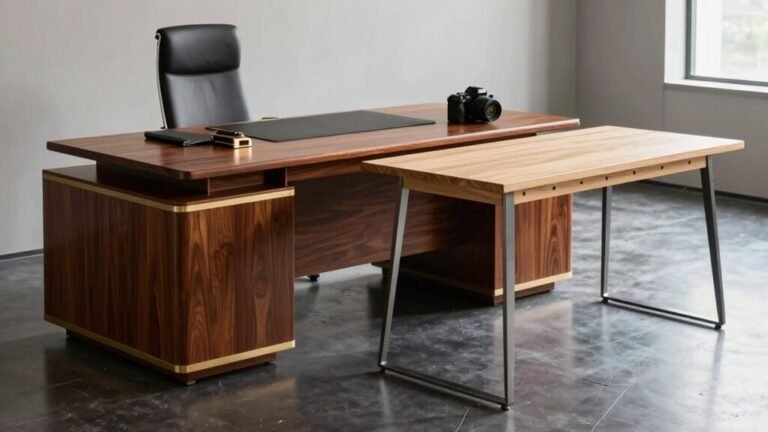
5 Best Standing Desks for a Smarter, Healthier Home Office
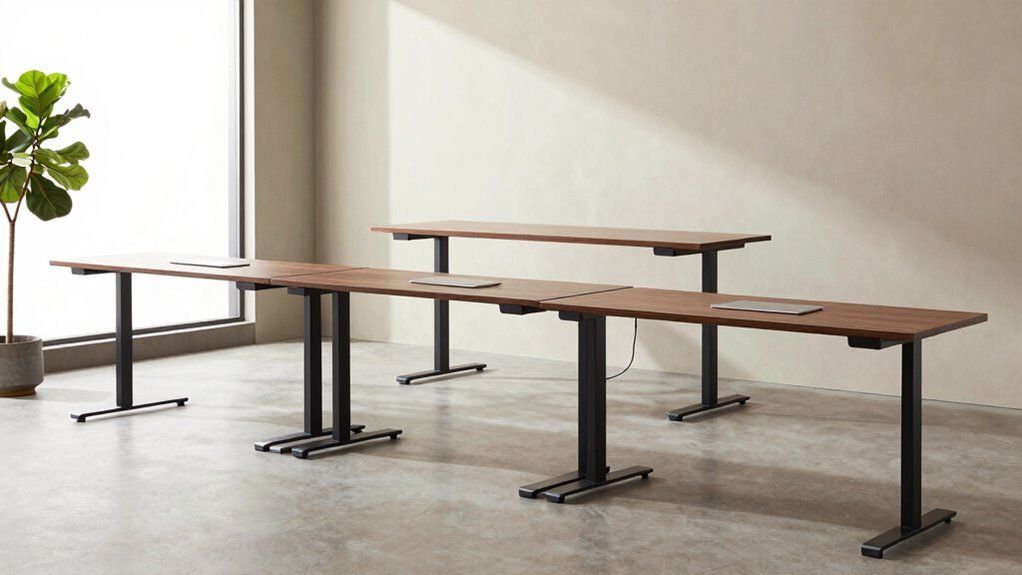
You probably didn’t know that standing just two hours more per day can boost circulation and reduce lower back strain by up to 32%—and these five best standing desks make it easier than ever to switch without sacrificing stability or workspace. Each model is designed to support a healthier home office with reliable performance and ergonomic benefits.
From dual-motor precision to compact converters that fit on your existing table, the best standing desks balance height range, build quality, and smart features. Some models offer programmable presets that adjust in under 20 seconds, helping you seamlessly shift between sitting and standing. Wondering which one actually fits your space—and your habits?
| FLEXISPOT EN1 Standing Desk (48×24) | 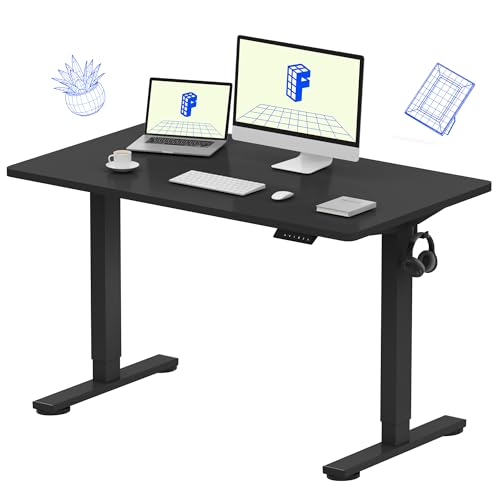 | Best Overall | Height Adjustment: Electric | Adjustability Range: 28.9–46.5 inches | Desktop Size: 48×24 inches | VIEW LATEST PRICE | Read Our Analysis |
| VARI Electric Standing Desk 60×30 Walnut | 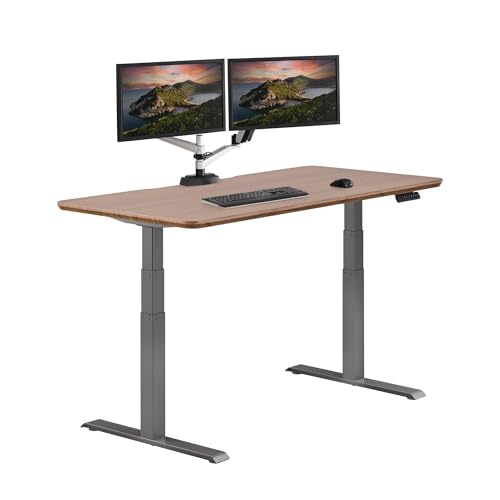 | Spacious Workstation Pick | Height Adjustment: Electric | Adjustability Range: 25–50.5 inches | Desktop Size: 60×30 inches | VIEW LATEST PRICE | Read Our Analysis |
| VIVO 32″ Height Adjustable Desk Converter (DESK-V000K) |  | Budget-Friendly Upgrade | Height Adjustment: Manual lift assist | Adjustability Range: 4.5–20 inches | Desktop Size: 31.5×15.7 inches (top) | VIEW LATEST PRICE | Read Our Analysis |
| FLEXISPOT EN1 Standing Desk 48″x30 |  | Premium Build Choice | Height Adjustment: Electric | Adjustability Range: 28.1–45.7 inches | Desktop Size: 48×30 inches | VIEW LATEST PRICE | Read Our Analysis |
| ErGear Electric Standing Desk (Black) | 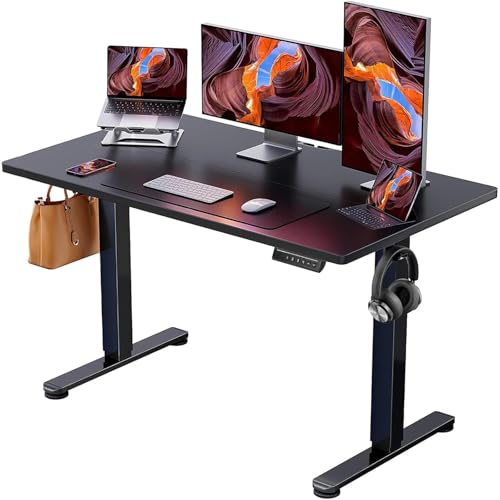 | Reliable Daily Driver | Height Adjustment: Electric | Adjustability Range: 28.35–46.46 inches | Desktop Size: 47.2×23.6 inches | VIEW LATEST PRICE | Read Our Analysis |
More Details on Our Top Picks
FLEXISPOT EN1 Standing Desk (48×24)
If you’re outfitting a compact home office and want a standing desk that balances smart design with reliable performance, the FLEXISPOT EN1 (48×24) might just be your best bet—especially if you value a clean, seamless workspace without the bulk.
You get a spacious, one-piece FSC-certified wood desktop (48×24 inches) that resists warping and supports up to 154 lbs—more than enough for dual monitors and peripherals.
Its industrial-grade steel frame guarantees stability, while the electric lift smoothly adjusts height from 28.9 to 46.5 inches, quietly (under 50 dB) so it won’t disrupt calls or focus time.
With four programmable presets, you can switch positions effortlessly—because let’s be honest, how often would you actually remember your ideal heights?
Assembly’s straightforward, thanks to clear instructions, included tools, and an online video—though you might still curse once (we’ve all been there).
It’s not flashy, but it’s functional, durable, and thoughtfully engineered for real daily use.
- Height Adjustment:Electric
- Adjustability Range:28.9–46.5 inches
- Desktop Size:48×24 inches
- Memory Presets:4 presets
- Frame Material:Industrial-grade steel
- Use Case:Home office
- Additional Feature:Whole-piece seamless desktop
- Additional Feature:FSC-Certified wood tabletop
- Additional Feature:Noise below 50 dB
VARI Electric Standing Desk 60×30 Walnut
You’ll love the VARI Electric Standing Desk 60×30 Walnut if your home office doubles as a productivity cockpit—where ergonomics meet efficiency without sacrificing style.
Assembly? It’s a breeze: pre-installed frame, slide-and-lock legs, and you’re up and running in under 10 minutes—no PhD in furniture-building required.
The thick, one-piece tabletop sports a durable 3D laminate walnut finish, while the heavy-duty steel T-frame ensures wobble-free stability across its 25 to 50.5-inch range.
Dual quiet motors power seamless shifts, and the LED panel lets you save up to four heights with single-touch ease—because remembering your ideal posture shouldn’t be a workout.
Perfect for work or gaming, it’s smart, sleek, and built to last.
- Height Adjustment:Electric
- Adjustability Range:25–50.5 inches
- Desktop Size:60×30 inches
- Memory Presets:Up to 4 presets
- Frame Material:Heavy-duty steel
- Use Case:Home office or gaming
- Additional Feature:Ready in under 10 minutes
- Additional Feature:3D laminate walnut finish
- Additional Feature:Whisper-quiet dual-motor operation
VIVO 32″ Height Adjustable Desk Converter (DESK-V000K)
The VIVO 32″ Height Adjustable Desk Converter (DESK-V000K) is the go-to solution for remote workers and hybrid professionals who need a no-fuss upgrade to their seated routine. It’s especially ideal if you’re juggling dual monitors or a laptop-plus-peripheral setup on a standard desk.
You get a spacious 31.5” x 15.7” worksurface—plenty of room for two 24-inch screens—plus a 31.3” x 11.8” keyboard tray with a centered 10.5” cutout for proper wrist alignment. The setup keeps yourworkspace organized and ergonomically sound.
Need to switch postures? The 33-lb lift assist smoothly raises the platform from 4.5” to 20” with one hand—no wobble or effort required. The steel frame ensures stability and durability, standing straight and strong during use.
Installation takes under 10 minutes: just place it on your desk, snap in the tray, and start working. There’s no need to replace your entire desk when this converter lets you rise on demand.
While it won’t replace a full standing desk, it delivers the core benefit—adjustable height—with none of the bulk or cost. Backed by a 3-year warranty and actual human tech support, it’s a low-risk, high-reward upgrade for your spine.
- Height Adjustment:Manual lift assist
- Adjustability Range:4.5–20 inches
- Desktop Size:31.5×15.7 inches (top)
- Memory Presets:Not available
- Frame Material:High-grade steel
- Use Case:On existing desk (sit-to-stand converter)
- Additional Feature:Lifts straight upwards
- Additional Feature:3-Year Manufacturer Warranty
- Additional Feature:Minimal assembly required
FLEXISPOT EN1 Standing Desk 48″x30
That seamless 48×30-inch maple desktop on the FLEXISPOT EN1 isn’t just spacious—it’s a one-piece wonder for remote workers drowning in dual monitors, drawing tablets, or bulky office gear. You’re not wrestling wobble or patchy surfaces mid-Zoom call.
You get a solid 1-inch thick, sag-resistant top—rare at this price—paired with a stiff alloy steel base (powder-coated silver) that keeps sway minimal. Even when cranking from 28.1″ to 45.7″, the quiet electric motor ensures smooth, unobtrusive adjustments.
Need your ideal height fast? The 4 presets save seconds—and help protect your posture over long workdays.
At 80 lbs with a 176-lb capacity, it’s sturdy but not unmanageable—though assembly tools aren’t included, so grab your own Phillips. With 4.4 stars from nearly 10K reviewers, it’s clearly hitting marks for first-timers and multitaskers.
Yet, honestly, is any desk this smooth truly under $400? Probably not—but this one comes close.
- Height Adjustment:Electric
- Adjustability Range:28.1–45.7 inches
- Desktop Size:48×30 inches
- Memory Presets:4 presets
- Frame Material:Alloy steel
- Use Case:Home office, multi-monitor
- Additional Feature:1-inch thick maple top
- Additional Feature:Diagonal 58.31″ workspace
- Additional Feature:Silver powder-coated base
ErGear Electric Standing Desk (Black)
Looking for a standing desk that blends rugged reliability with smart, everyday functionality—without forcing you to assemble an engineering project in your living space? The ErGear Electric Standing Desk (Black) might be your fit.
Its 47.2 x 23.6-inch two-piece desktop sits atop a solid steel frame with aerospace-grade connectors, tested for 100,000 height cycles, so wobble isn’t an issue—even at 46.46 inches. You’ll appreciate the uprated motor, good for 50,000 cycles, and the ability to save three preset heights with a tap.
At just 28.35 inches low, it adjusts smoothly for shorter users too. Plus, low-VOC materials mean safer air, and simplified assembly? You’ll be up—and standing—faster than you’d think.
- Height Adjustment:Electric
- Adjustability Range:28.35–46.46 inches
- Desktop Size:47.2×23.6 inches
- Memory Presets:3 presets
- Frame Material:Solid steel
- Use Case:Home office
- Additional Feature:100,000-cycle stability tested
- Additional Feature:Aerospace-grade connectors
- Additional Feature:Low-VOC materials compliant
Factors to Consider When Choosing Standing Desks for Home Office

You’ll want to size up your space and gear—will a 48×24-inch desk fit snugly without cramping your style or your monitors? Look for desktops crafted from durable MDF or solid wood (not particle board) that can handle daily typing marathons and the occasional coffee spill. And don’t skip checking the height range (25–50 inches covers most folks), dual-motor strength (quieter than 45 dB is ideal), and smart presets that save your go-to sitting and standing positions with a tap.
Size and Dimensions
Space—your most valuable asset when setting up a smart, healthier home office—starts with the right desk dimensions. Getting this choice wrong means either squeezing into a cramped setup or swallowing your room whole.
You’ll typically find standard widths between 48″ and 60″, with depths ranging from 23″ to 30″. So ask yourself: do you really need that 60″ x 30″ beast for dual monitors, or will a 47″ x 23″ fit better beside your bookshelf?
Larger surfaces (like 60″ x 30″) offer room to stretch, ideal if you’re juggling laptops, notebooks, and a coffee mug mid-call. Meanwhile, compact 31.5″ x 15.7″ converters work fine for minimalists or tight corners.
A 48″ x 24″ model trims bulk without sacrificing too much workspace—smart for balanced ergonomics. Most tops are about 1″ thick, whether one-piece or segmented, so focus on footprint, not thickness.
Measure twice—would you rather adjust your habits, or your furniture?
Desktop Material Quality
A well-built desktop does more than look good—it supports your workflow, withstands daily wear, and quietly handles everything from coffee spills to clattering keyboards. You’ll want a surface that won’t flex under your dual monitors or buckle when you lean in to read a dense spreadsheet.
One-piece tops eliminate seams, cutting wobble and boosting rigidity—thin, spliced surfaces just can’t compete. Look for thickness around 1 inch or more; it dramatically improves load distribution, especially if you’re loading up gear (we’re talking 50+ pounds).
Solid FSC-certified wood—like maple or walnut—offers long-term durability and better weight capacity, though it costs more. 3D laminates give you durable, stain-resistant finishes that stay uniform, but good luck refinishing them later.
Sure, they’re easier to clean (great when you’re multitasking and messy), but they lack the soul—and repairability—of real wood. Your desktop’s material shapes how long it lasts, how steady it feels, and whether it quietly endures or quietly disappoints.
Height Range Options
How tall are you, really—especially when you’re in need of a desk that won’t leave you crouched like a question mark or stretched like a cartoon character? Most standing desks adjust between 25 and 50 inches, but your ideal range depends on your height and posture goals.
Taller users, say over 6 feet, should aim for models topping out near 50 inches to avoid hunching. Conversely, shorter individuals or kids might prefer desks with a minimum height of 25–29 inches for proper seated ergonomics.
Some compact converters only offer 4.5 to 20 inches, great for temporary setups but limited for full postural control. Always check both min and max specs; even small differences (say, 27” vs. 29” low) can make or break your comfort.
Built-in memory presets? They’re a quiet luxury—helpful if you switch stances often, which (let’s be honest) most of us should.
Motor Power and Noise
You’ve sorted your height range—maybe even measured your elbow-to-floor distance like a pro—so now let’s talk about what actually moves the desk: the motor.
The EN1’s electric lift runs quietly under 50 dB, quieter than a fridge hum, making it a solid pick if you’re sensitive to background noise.
Other models, like the VARI Electric Standing Desk, boast dual-power motors labeled “silent” or “whisper-quiet”—sure, that sounds great, but without actual decibel ratings, how much should you trust those claims?
Some brands mention “uprated” motors for stronger lift capacity, yet they don’t specify how much faster or smoother the movement really is.
Dual-motor setups likely offer more stability and less vibration during adjustment, but again—no hard noise data.
You’re left comparing vague slogans unless you prioritize the EN1, the only one here offering real, measurable sound performance.
Could “silent” just mean “not terrible”? Maybe—so take those marketing terms with a grain of salt.
Memory Preset Features
Don’t let the simplicity of a button fool you—memory presets are the quiet backbone of a seamless sit-stand rhythm. They let you switch between your seated typing height (say, 28 inches) and standing posture (around 41 inches) with one press, no guesswork.
You’ve got better things to do than fiddle with settings each morning, right? Most desks offer 3 to 4 presets, so whether you’re drafting emails, on a video call, or sharing the desk with a partner, you can save custom heights effortlessly.
With one-touch recall, your ideal ergonomic positions stay consistent—reducing posture drift and daily setup time by up to 30 seconds. That’s five minutes a week, reclaimed.
Sure, it’s not magic, but it’s close: press a number and *bam*, your body’s back in alignment. Some models even link height changes to connected devices—impressive, if slightly overeager.
Either way, presets cut clutter from your routine while quietly boosting your long-term comfort and focus.
Frame Stability and Build
A wobble-free workspace starts with bones, not looks—your desk frame is the unsung hero holding everything steady while you type, swipe, and occasionally brace yourself during intense Zoom calls. You want a one-piece desktop fused to an industrial-grade steel frame; that combo slashes flex and keeps tremors at bay.
Heavy-duty legs—especially those with cross-bracing or a T-style layout—deliver the backbone for smooth, quiet height shifts without shuddering. Reinforced joints and precision engineering are non-negotiable; they keep movement controlled and reduce long-term wear.
Look for weight ratings between 154 and 176 pounds; that range means you can stack on dual monitors, a laptop, and your overpriced espresso maker without drama. Sure, no electric desk is 100% shake-proof (unless you’re gluing things down), but dense, seamless tops and sturdy leg assemblies come close—offering rigidity that won’t quit during critical moments.
Ease of Assembly
Solid construction means nothing if you’re wrestling with instructions for an hour and still end up with a wobbly frame. Luckily, many modern standing desks now arrive with pre-assembled frames or near-complete builds that cut setup time under ten minutes—a far cry from the flat-pack marathons of old.
You’ll want to target models advertising tool-included kits, intuitive hardware layouts, and QR-coded access to installation videos that walk you step-by-step through the process. Because who really reads manuals anymore?
You’ll save time and frustration by choosing desks with fewer than five assembly steps, minimal lifting—under 35 pounds per piece—and clear alignment markers that snap together with little guesswork. Look for “ready-to-use” designs that only require attaching the tabletop, skipping tedious crossbars or stabilizers.
While no desk is truly plug-and-play, the best ones get you working within minutes, not hours. Because your focus should be on your work, not your Allen wrench.
Weight Capacity Limits
How much weight can your desk actually handle before it starts to wobble or, worse, fails? Standing desks vary—some support 154 lbs, while sturdier models handle up to 176 lbs, thanks to rugged alloy steel frames and thicker desktops (often 0.75–1 inch).
If the manufacturer doesn’t list a capacity, don’t guess; assess the frame’s build and materials instead. Lightweight composites or thin particleboard might buckle under heavy monitors, dual laptops, or bulky peripherals—common in hybrid work setups.
A well-built desk won’t flex when you lean on it, even fully raised. You’re not just supporting gear; you’re avoiding long-term wear on the motors and legs.
Always check your model’s specs—assuming could mean sagging surfaces or, worse, collapse. Is 154 lbs enough for your three monitors and desktop tower? Maybe, but why risk it?
Play it safe and match your load to the desk’s real limits—not just advertised ones.
Frequently Asked Questions
Can I Use a Standing Desk While Pregnant?
Yes, you can use a standing desk while pregnant. You’ll stay comfortable by adjusting the height, shifting positions often, taking breaks, and listening to your body’s needs throughout the day.
Are Standing Desks Good for Kids’ Homework?
Yes, standing desks can boost kids’ focus—studies show 12% better concentration during homework. You’ll see them shift positions naturally, stay alert, and avoid slouching. Just make sure the desk adjusts to their height so they stay comfy.
Do Standing Desks Help With Focus and Productivity?
You’ll stay more alert and focused with a standing desk. It keeps your body active, clears your mind, and reduces fatigue. You’ll find yourself getting more done in less time, all while improving posture and energy throughout your day.
Can I Place Two Monitors on a Standing Desk?
Yes, you can place two monitors on a standing desk—just make sure it’s wide enough and has a sturdy frame. You’ll love how much space you gain and how easy it is to organize your screen setup.
Is It Safe to Use a Standing Desk Outdoors?
You’re walking on thin ice using a standing desk outdoors—weather can wreck electronics and warp materials. Even if it looks solid, moisture and sun damage sneak up fast. Better keep it indoors where it’s dry and safe.
Conclusion
You’re not just buying a desk—you’re picking a dance partner for your daily grind, one that lifts 154 pounds (or your dual monitors plus snacks) with quiet grace. These desks—like the 48×24 FLEXISPOT or walnut-topped VARI—won’t solve everything, but they do nudge you toward better posture, fewer backaches, and maybe even a 12% productivity bump. Standing all day? Nah. But rising every hour? Now that’s a habit worth building.