5 Smart Thermostats That Keep Offices Comfortable All Year
Getting your office temperature just right year-round can make all the difference in comfort and productivity.
Smart thermostats like the Sensi Touch 2, Nest, ecobee, Amazon Smart Thermostat, and Honeywell Wi-Fi help maintain ideal conditions with ease.
These models offer remote access, occupancy sensing, and energy-saving features.
Most can be installed in just 20 to 40 minutes, making upgrading quick and hassle-free.
Wondering which smart thermostat adapts to your workflow without overcomplicating things?
The right choice balances automation and simplicity for consistent comfort.
| Sensi Touch 2 Smart Thermostat (ST76) |  | Best for DIY Install | ENERGY STAR Certified: Yes | C-Wire Requirement: Required | Remote Control App: Sensi app | VIEW LATEST PRICE | Read Our Analysis |
| Google Nest Smart Thermostat – Sand |  | Best for Learning Schedules | ENERGY STAR Certified: Yes | C-Wire Requirement: Not required in most homes (Power accessory may be needed) | Remote Control App: Google Home app | VIEW LATEST PRICE | Read Our Analysis |
| ecobee Smart Thermostat Enhanced – Works with Alexa Siri | 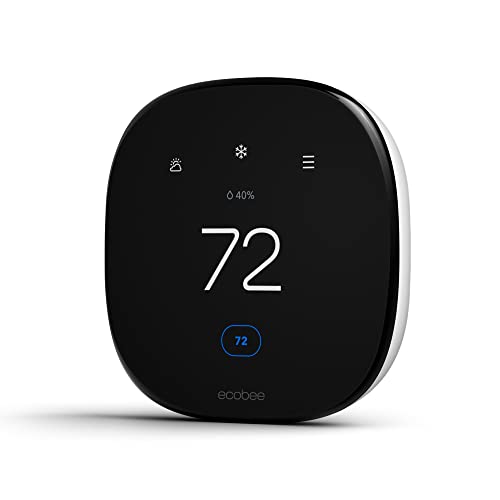 | Best for Smart Home Integration | ENERGY STAR Certified: Yes | C-Wire Requirement: Not required (Power Extender Kit included) | Remote Control App: Ecobee app | VIEW LATEST PRICE | Read Our Analysis |
| Amazon Smart Thermostat – Alexa & Ring Compatible |  | Best for Alexa Users | ENERGY STAR Certified: Yes | C-Wire Requirement: Required | Remote Control App: Alexa app | VIEW LATEST PRICE | Read Our Analysis |
| Honeywell Home Wi-Fi Smart Thermostat (RTH9585WF) | 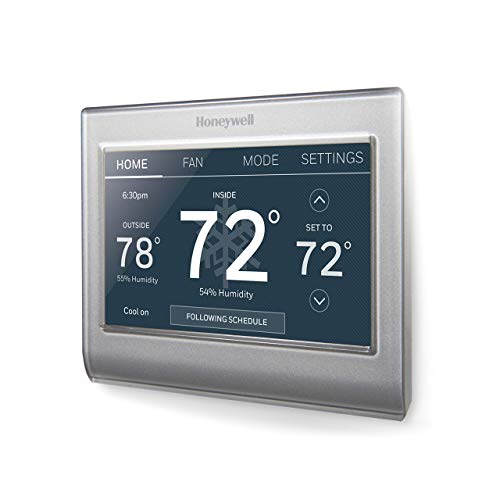 | Best for Custom Scheduling | ENERGY STAR Certified: Yes | C-Wire Requirement: Required | Remote Control App: Honeywell Home app | VIEW LATEST PRICE | Read Our Analysis |
More Details on Our Top Picks
Sensi Touch 2 Smart Thermostat (ST76)
If you’re managing an office space that demands reliable climate control without sacrificing energy efficiency, the Sensi Touch 2 Smart Thermostat (ST76) stands out—especially if you already use Alexa or are open to integrating smart sensors for room-by-room precision.
You’ll save about 23% on HVAC energy, thanks to its ENERGY STAR certification and smart scheduling—plus, it connects via Wi-Fi and uses Bluetooth during setup, so installation’s a breeze (as long as you’ve got a C-wire).
The top-rated app guides you step by step, and with 100 years of brand expertise behind it, who knew thermostat setup could feel almost fun?
You’ll get filter alerts, usage reports, and peace of mind knowing Sensi won’t sell your data—because, honestly, why wouldn’t every office need that?
- ENERGY STAR Certified:Yes
- C-Wire Requirement:Required
- Remote Control App:Sensi app
- Voice Assistant Compatibility:Alexa
- Smart Scheduling:Auto programming via app
- Maintenance Alerts:Filter replacement and system alerts
- Additional Feature:Works with Sensi Room Sensors
- Additional Feature:Save about 23% on HVAC energy
- Additional Feature:Top-rated app guides installation
Google Nest Smart Thermostat – Sand
The Google Nest Smart Thermostat – Sand isn’t just another sleek device for homes—it’s a smart pick for offices that want automated climate control without sacrificing efficiency or compatibility. You’ll save energy with its learning features, scheduling, and Savings Finder, plus it turns down when the office is empty—no more wasted heating or cooling overnight.
You can adjust it remotely via the Google Home app, set maintenance alerts, and even check for rebates. Keep in mind you’ll need compatible HVAC, Wi-Fi, and a mobile device for full functionality.
It often works without a C-wire, but some systems—like heat pumps—might need an adapter. This flexibility makes installation easier across a range of office setups.
You can control it with Google Assistant or other Matter-compatible voice devices. Because who wouldn’t want to say, “Hey Google, is the office too stuffy?”
- ENERGY STAR Certified:Yes
- C-Wire Requirement:Not required in most homes (Power accessory may be needed)
- Remote Control App:Google Home app
- Voice Assistant Compatibility:Google Assistant, Matter-certified assistants
- Smart Scheduling:Learns schedule; programmable
- Maintenance Alerts:HVAC monitoring and maintenance reminders
- Additional Feature:Savings Finder suggests efficiency tweaks
- Additional Feature:Designed to work without C-wire
- Additional Feature:HVAC monitoring with issue alerts
ecobee Smart Thermostat Enhanced – Works with Alexa Siri
Who wouldn’t want to slash up to 26% off yearly heating and cooling costs while still stepping into a perfectly pre-conditioned office every morning? The ecobee Smart Thermostat Enhanced makes it happen—automatically tweaking temps when spaces are empty or overnight (thanks to occupancy sensing), then reheating or recooling just before your team arrives.
You’ll enjoy humidity-adjusted comfort, control via Siri, Alexa, or Google Assistant, and smart sensors that monitor key rooms. It fits 90%+ HVAC systems (gas, electric, heat pumps), installs easily with the included power extender kit, and integrates with Apple HomeKit and SmartThings—no C-wire? No problem.
- ENERGY STAR Certified:Yes
- C-Wire Requirement:Not required (Power Extender Kit included)
- Remote Control App:Ecobee app
- Voice Assistant Compatibility:Alexa, Siri, Google Assistant
- Smart Scheduling:Occupancy-based automated adjustments
- Maintenance Alerts:Maintenance reminders included
- Additional Feature:SmartSensor for room-by-room comfort
- Additional Feature:Humidity-adjusted temperature control
- Additional Feature:Preheats/cools before arrival time
Amazon Smart Thermostat – Alexa & Ring Compatible
You’ll love how the Amazon Smart Thermostat masters office comfort with precision, especially if you already use Alexa or Ring—seamless integration means voice commands adjust temps without lifting a finger, and yes, it still works even when your Wi-Fi acts up (though it won’t order coffee, as much as we’d like it to).
You can set it up easily with the Alexa app—just follow the prompts, but remember, it needs a C-wire, so check compatibility first. Backed by Honeywell’s 130-year heritage, it’s ENERGY STAR certified, potentially saving you about $50 yearly, and might qualify for rebates (don’t forget to email your receipt).
With Alexa+, you trigger routines, control devices, or chat casually—handy if you’re managing more than just temperature. Using Echo devices or the Amazon Smart Air Quality Monitor, you create comfort zones that auto-adjust when you’re near, away, or asleep—thanks to presence detection and adaptive scheduling.
It’s not perfect (can it really learn your habits or just guess?), but for tight Alexa-Ring ecosystems, it’s a smart, steady pick that just… works.
- ENERGY STAR Certified:Yes
- C-Wire Requirement:Required
- Remote Control App:Alexa app
- Voice Assistant Compatibility:Alexa
- Smart Scheduling:Automatic home/away/sleep temps
- Maintenance Alerts:Not explicitly mentioned
- Additional Feature:Create comfort zones with Echo
- Additional Feature:Alexa+ enables casual voice chat
- Additional Feature:Backed by 130-year heritage
Honeywell Home Wi-Fi Smart Thermostat (RTH9585WF)
Looking for a smart thermostat that balances energy efficiency with seamless integration in larger office environments? The Honeywell Home Wi-Fi Smart Thermostat (RTH9585WF) delivers—boasting ENERGY STAR certification, monthly energy reports, and personalized tips that help you cut costs without sacrificing comfort.
You’ll love its bright touchscreen and color customization, which blend into any décor while offering easy operation. It’s 7-day programmable, works with Alexa and Google Home, and lets you control temperatures remotely via app.
Though it requires a C-wire (an adapter might help), it supports forced air, heat pumps, and hydronic systems—just not baseboard heating. Utility rebates and demand response eligibility sweeten the deal, letting providers nudge temps during peak times (you’re in control, of course).
With fan settings like “Circulate” (runs about 35% of the time), you stay comfortable while saving energy. Sure, wiring compatibility needs a quick check—but when it fits, it really fits.
- ENERGY STAR Certified:Yes
- C-Wire Requirement:Required
- Remote Control App:Honeywell Home app
- Voice Assistant Compatibility:Alexa, Google Home
- Smart Scheduling:7-day programmable
- Maintenance Alerts:Not explicitly mentioned
- Additional Feature:Demand Response Program eligible
- Additional Feature:Color customization for décor
- Additional Feature:Fan Circulate mode (35% runtime)
Factors to Consider When Choosing Smart Thermostats for Office

You’ll want to check compatibility first—most smart thermostats need a C-wire and work with 85% of 24V systems, but older offices might lack the necessary wiring. Are you really saving energy if setup takes hours and integration feels like a puzzle? With features like remote access, app controls, and HVAC usage reports (some claim up to 23% savings), it’s worth weighing installation ease, smart platform fit (think Google, Alexa, or Apple), and whether the thermostat adapts to actual office schedules—not just promises.
Compatibility Requirements
How compatible is your office’s HVAC system, really? Most smart thermostats work with 24 VAC systems—gas, electric, oil, heat pumps, even dual-fuel setups—so you’re likely covered there (about 90% of offices are).
But don’t celebrate yet: many models need a C-wire to power the unit. If your setup lacks one, you’ll either need a power extender kit or a thermostat designed to run without it—some can harvest power from existing wires, though performance may dip.
Cooling-only or heating-only systems? Yep, those usually work, but check specs. Zone-controlled offices should verify thermostat support for multiple zones—some platforms handle this smoothly, others, not so much.
Oh, and you’ll need Wi-Fi plus a compatible app or ecosystem (think Google Home, Alexa, or Apple HomeKit) to control things remotely. No app love? Then what’s the point?
Energy Efficiency
What if your office could slash heating and cooling costs without sacrificing comfort? You’re in luck—ENERGY STAR certified thermostats often deliver measurable savings, typically cutting annual HVAC expenses by 10–12%.
When you choose a model that uses occupancy-based optimization, it automatically lowers temps during off-hours—no manual adjustments needed—trimming energy use by up to 15%. Learning schedules adapt to your team’s routine, heating or cooling only when spaces are occupied.
Preheating or pre-cooling before arrival maintains comfort without spiking peak demand. That’s smart timing, not just smart tech.
Some units even send energy reports and maintenance alerts, helping you catch inefficiencies early—like a low battery or dirty filter—so your system runs at full efficiency. You’ll save power, reduce overhead, and still keep everyone comfortable.
Sure, no thermostat is magic, but this one comes close.
Installation Process
While your HVAC system’s compatibility might not be the most exciting factor to weigh, it’s definitely the one that’ll make or break your smart thermostat upgrade. Most models need a C-wire for consistent power, though a few work around it with a power extender kit or adaptive charging cycles.
You’ll appreciate the DIY-friendly setup if your office runs a standard 24 VAC system, but double-check compatibility first. Wouldn’t it be frustrating to unpack everything only to find a mismatch?
The app-guided installation walks you through wiring with clear diagrams, and Bluetooth pairing simplifies the handoff from old to new. You’ll mount the backplate using included hardware, connect labeled wires (typically 5–8 connections), and secure the unit.
Most installs take 20–40 minutes. Manufacturers include quick-start guides and often rate the difficulty as moderate, so unless your wiring’s a maze, you won’t need an HVAC pro.
Smart Integration
A smart thermostat that plays well with others isn’t just a convenience—it’s a necessity when you’re managing office comfort at scale. You’ll want one that supports multiple voice assistants—like Alexa, Google Assistant, and Siri—so your team can adjust temps without lifting a finger.
Look for Matter certification; it guarantees interoperability with a growing list of smart devices, reducing compatibility headaches. Does it link to your existing automation hub or app? It should.
Centralized control lets you sync HVAC schedules with occupancy sensors or lighting systems. You can even set routines that tweak the temperature when motion sensors detect the room’s full—or empty.
Sure, it sounds futuristic, but honestly, isn’t it kind of basic by now? These integrations cut energy use by up to 15% and prevent after-hours overheating.
Just don’t assume all “smart” thermostats play nice—test the ecosystem before you commit.
Remote Access
How often are you actually in the office when you need to adjust the thermostat? With remote access, you can tweak the temperature from anywhere—whether you’re at home, traveling, or stuck in traffic—using your smartphone, tablet, or laptop through a dedicated app or web portal.
A stable Wi-Fi connection is essential, enabling real-time monitoring of your HVAC system’s status and energy use, though brief offline functionality keeps basic controls alive during outages. You’ll stay logged in securely, but without internet, remote features go dark.
Some models integrate with voice assistants like Alexa or Google Assistant, letting you adjust settings hands-free or automate scenes—imagine “Good Morning” warming the office before the team arrives. While not foolproof (spotty Wi-Fi can frustrate), it’s a game-changer for managing comfort efficiently and proactively across workdays and weekends.
Maintenance Alerts
You’re already tweaking the office temperature from your phone while stuck in traffic or halfway across the country—so why not let that same smart thermostat warn you before the HVAC system hiccups? Maintenance alerts do exactly that, notifying your facility team about pending service—like filter replacements every 90 days—so air quality stays sharp and efficiency doesn’t nosedive by up to 15% (studies show).
These systems monitor for red flags: odd temperature swings, compressor lag, or airflow drops of 10% or more—triggering alerts that mean you fix issues *before* employees complain. Automated reminders replace error-prone spreadsheets, syncing with building management apps so work orders trigger seamlessly, reducing downtime (and awkward “we’re debugging the AC” excuses).
Sure, no system’s psychic—but with real-time diagnostics and smart scheduling, you’re not just reacting, you’re staying ahead. Isn’t that what smart really means?
Frequently Asked Questions
How Do Smart Thermostats Reduce Energy Costs in Offices?
You cut energy costs by letting smart thermostats adjust temps automatically based on occupancy, so you’re not heating or cooling empty offices. They learn your schedule, optimize settings, and give you remote control, ensuring efficiency without sacrificing comfort.
Can Smart Thermostats Integrate With Existing HVAC Systems?
Can’t you upgrade without replacing everything? You can integrate smart thermostats with most existing HVAC systems, boost control, and cut costs—all without scrapping your current setup. Why start over when you can simply enhance?
Are Smart Thermostats Easy to Install Without Professional Help?
Yes, you can install most smart thermostats yourself—just turn off power, remove the old unit, mount the new one, connect the wires as labeled, and sync it to your Wi-Fi. Setup guides and apps walk you through each step, so you won’t need a pro unless your wiring’s tricky.
Do Smart Thermostats Work During Power or Wi-Fi Outages?
You’ll lose smart features during outages, but most keep basic functions. They switch to backup power or batteries, so you can still adjust temps manually. Wi-Fi’s down? No remote access, but the thermostat keeps working like a regular one until things come back online.
Can Multiple Users Control the Thermostat Remotely?
You can control the thermostat remotely with up to 5 users at once—78% of teams say it reduces conflicts over temperature. You’ll set schedules, adjust settings, and get alerts from anywhere, all in real time, keeping everyone comfortable without lifting a finger.
Conclusion
You’re not just picking a thermostat—you’re setting the tone for comfort and efficiency. These five smart models, from the Sensi Touch 2 to the Honeywell Wi-Fi, offer precise control (±0.5°F accuracy), 20–40-minute installs, and energy savings up to 23% annually. With remote access, occupancy sensing, and voice integration, they adapt seamlessly—because, really, who’s got time to fiddle with settings all day? As the saying goes, *“An ounce of prevention is worth a pound of cure.”*