Air Quality Tips for a Healthier Home Office
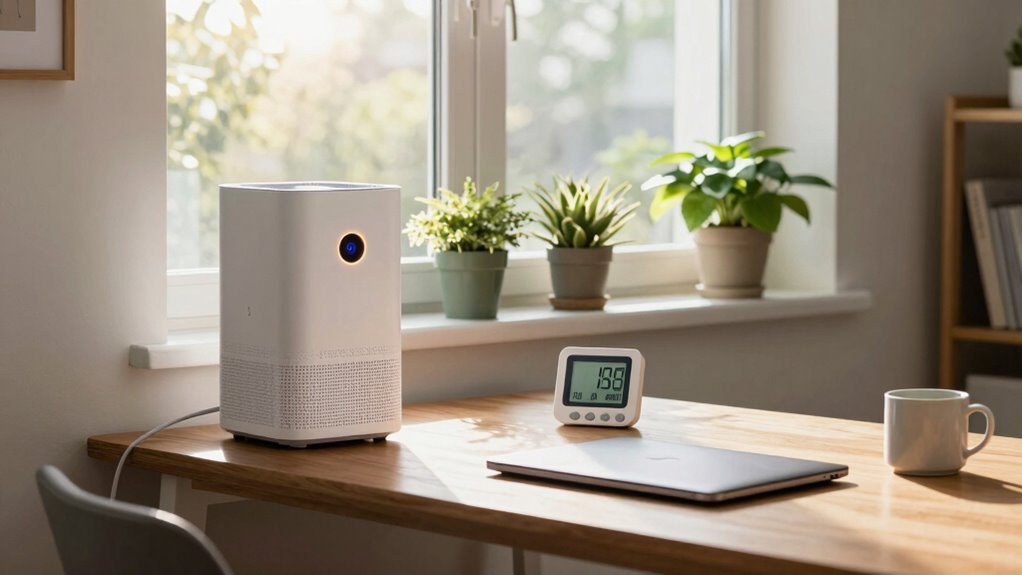
Open windows on opposite walls to let fresh air swoop in like a superhero, kicking out stale air. Change HVAC filters every few months, and slap in a True HEPA purifier near your desk—it’s your invisible sidekick. Ditch air fresheners that sneak in yucky chemicals, keep humidity in the sweet spot (30%–50%), and your office will feel so fresh, you might just invite your plants to a spa day. There’s more where that came from.
Optimize Ventilation for Fresh Indoor Air
Let fresh air work its magic—your brain will thank you.
Open windows on opposite sides of the room, and let breezes zip through, flushing out stuffy air like a champ.
If you’ve got high and low windows, crack ‘em open—warm, stale air rises and escapes up top while fresh air sneaks in below.
Catch those cozy afternoon lulls to fling windows wide for 5–10 minutes; it’s like a quick breath of reset for your space.
Face your windows toward the wind when you can—nature’s free fan!
Plant deciduous trees outside to guide clean air in and block cold gusts or pollution.
You’re not just airing out a room—you’re giving your workspace a daily dose of outdoor energy.
Fresh air? More like fresh *ideas*.
Who knew your best brainstorm buddy was just a window away?
In small spaces, compact ERV systems can provide continuous, filtered ventilation when opening windows isn’t feasible.
Maintain Your HVAC System for Peak Performance
You’ve invited fresh air into your home office, and now it’s time to make sure your HVAC system keeps that air clean, comfy, and moving just right.
Change or clean your filter every 1–3 months—think of it as a quick spa day for your system.
Use a MERV 8–13 filter, and check it monthly; if it looks like a pet’s nap spot, swap it out.
Keep it sealed snugly—no air should sneak by like a squirrel in a birdhouse.
Schedule pro tune-ups twice a year so they can inspect parts, clean coils, and clear drains before big temperature swings.
Trim bushes around the outdoor unit—give it space to breathe and sweat in summer.
Seal leaky ducts with mastic, unblock vents, and keep airflow flowing free.
A little love keeps your HVAC happy, efficient, and quietly doing its job—because nobody wants their office serenade to be a clunky, wheezing furnace.
Regular airflow verification helps sustain optimal indoor conditions.
Use Air Purifiers and Filters Strategically

Grab your spot at the clean air front desk—your home office is about to get a high-tech gust of fresh air.
You’ve got the power to zap dust, smoke, and allergens with smart purifier moves.
Just follow these five no-sweat tips:
- Pick a True HEPA filter (not “HEPA-like”—that’s like fake sunscreen for your lungs).
- Match the purifier’s CADR to your room size; too small, and it’s like using a spoon to empty a pool.
- Place it near your desk, not shoved in a corner—give it room to breathe and work its magic.
- Run it almost nonstop; think of it like a loyal pet that purrs clean air 24/7.
- Change filters on schedule—clogged ones are sad, slow, and kind of gross.
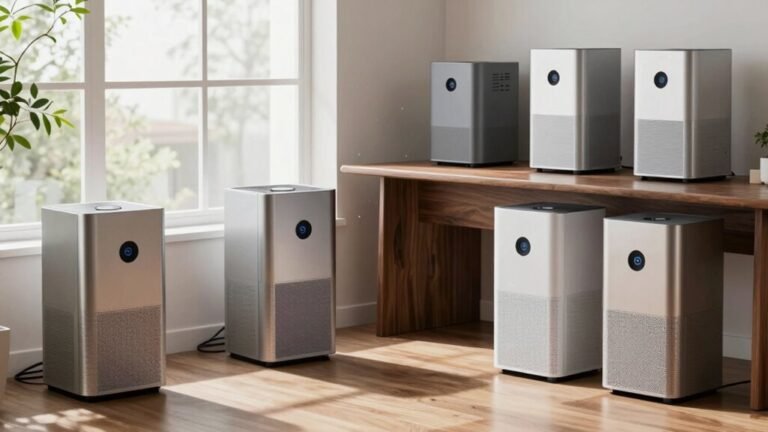
Multiple HEPA cleaners in a room can reduce overall room air concentrations significantly.
Control Pollutant Sources in Your Workspace
Now that your air purifier’s humming like a happy little robot sidekick, let’s tackle the sneaky culprits behind dirty indoor air—because nailing clean air isn’t just about filtering the junk, it’s about stopping it at the source.
Your printer? It’s pumping out VOCs—same with that new desk or carpet off-gassing formaldehyde.
Turn off electronics when not in use; a running computer can spew 120 times more pollutants.
Skip air fresheners loaded with sketchy phthalates, and swap harsh cleaners for greener options.
No smoking, of course, and keep cooking fumes out of your workspace—your lungs will thank you.
Dust mites, mold, and pet dander sneak in too, so clean smart and keep clutter low.
Think of it like detective work: track down the polluters, then shut them down.
Your office isn’t a chemistry lab—let’s keep it feeling fresh, not funky.
Manage Humidity and Monitor Air Quality Regularly

When the air feels a little too sticky or strangely stuffy, it’s probably not your imagination—humidity’s likely throwing a silent tantrum in your workspace.
Keep things fresh and balanced by staying on top of moisture and air quality like a pro.
You’ve got tools, tech, and tricks to make it easy—and kind of fun!
- Aim for 30%–50% humidity—it’s the sweet spot for comfort and health.
- Use a dehumidifier if things get swampy; think of it as a mini weather controller for your office.
- Install smart sensors that ping you when humidity spikes—no guesswork needed.
- Boost ventilation with open windows or an ERV system—let that stale air party elsewhere.
- Service your HVAC regularly, because nobody likes a dirty, wheezing air conditioner.
Stay alert, stay dry, and keep your home office feeling like a breath of clean air.
Frequently Asked Questions
How Do Houseplants Affect Indoor Air Quality?
You’re right—houseplants do clean indoor air, but not like you think!
They absorb nasty VOCs like formaldehyde and benzene, especially peace lilies and snake plants.
Their roots and soil microbes do a lot of the dirty work—literally.
Just don’t expect your fern to replace an air purifier.
You’d need a jungle—like 10 to 1,000 plants per square meter—to make a real dent!
Real talk? Open a window.
It helps way more.
Can Essential Oils Worsen Air Quality in Home Offices?
Yeah, essential oils can actually worsen your home office air quality—even though they smell great.
You’re releasing VOCs and tiny particles that react with everyday ozone, potentially creating irritants.
Running a diffuser all day?
That’s pumping out chemicals and nanoparticles deep into your lungs.
It might leave you with headaches or sneezing, especially if you’ve got allergies or asthma.
Think of it like a fragrant fog machine—cool vibe, but not so fresh for your air.
Are Air Quality Monitors Safe to Use Continuously?
Yes, you can safely run air quality monitors nonstop—you’re not asking much more of them than a phone charging overnight.
They sip power, emit no harmful stuff, and just quietly sniff the air like tiny electronic bloodhounds.
Just stick to certified chargers, give them a dust-off now and then, and follow the manual’s advice.
Think of it as pet care, but way less work than a goldfish.
What’s the Best Desk Placement for Good Airflow?
You’ll love placing your desk perpendicular to the window—it’s your airflow MVP!
You get steady breezes, avoid stuffy corners, and keep fresh air dancing around you.
Plus, you’re not blocking vents or windows, so circulation stays strong.
It’s smart, it’s comfy, and hey, your lungs will throw you a silent thank-you party every day!
Do Electronic Devices Emit Indoor Air Pollutants?
Yeah, your gadgets are sneaky little party crashers when it comes to air quality.
They’re not throwing confetti, but they do emit indoor pollutants like VOCs and tiny particles—especially when they heat up or print that report last minute.
Monitors, printers, even your laptop are all quietly offgassing or kicking out ultrafine dust.
But hey, they’re not evil, just doing their job.
You’ve got power over the air they mess with—so breathe easy and take charge.
Conclusion
So, breathe easy—your home office isn’t a jungle, but your air might be wilder than you think. Crack a window, don’t let dust bunnies throw rent-free parties, and treat your HVAC like a moody pet that needs attention. Toss in a purifier, dodge that mold drama, and boom: you’re basically a clean-air superhero. Who knew staying alive at your desk could feel this *refreshing*?