Creating a Relaxation Corner in Your Home Office
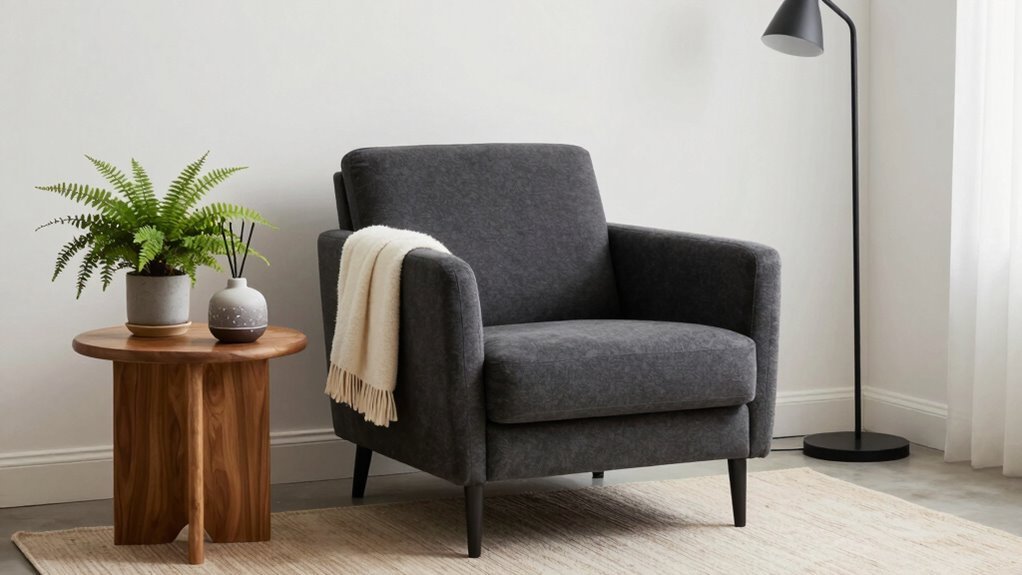
Turn that quiet nook by the window into your go-to chill zone with a comfy chair, soft rug, and a splash of sage green to calm your mind. Add plants like pothos or snake plant—they’re low-maintenance and boost your mood. Layer in warm lighting, use textures like wool and linen, and keep things cozy but flexible. Take short breaks there daily to reset. You’ll find out just how much better your workday feels.
Designing for Comfort and Flow
While you’re dreaming of a workspace that feels more like a sanctuary than a cubicle, why not start by turning a quiet corner into your very own relaxation hub?
You’ll love sinking into a plush lounge chair or kicking back in a hammock—because let’s face it, even your brain deserves a vacation now and then.
Pick a spot away from the kitchen chaos or living room traffic, preferably near a window where sunlight streams in like nature’s own spotlight.
Bring in soft lighting, cozy textures, and maybe a bean bag (yes, they’re not just for college dorms).
Use rugs to define the space and mirrors to bounce light around like a disco for plants.
Keep furniture movable so you can switch things up effortlessly—because flexibility beats frustration every time.
Make it comfy, make it *you*, and suddenly, “I need a break” turns into “I never want to leave.”
Incorporate a dedicated meditation corner to anchor mindfulness and relaxation in your daily routine.
Choosing Calming Colors and Textures
Since your workspace should calm your mind instead of stealing your focus, let’s talk color—because painting the walls avocado or fire-engine red might make your brain pack its bags and leave.
Go for blues and greens instead; they’re proven to reduce stress and sharpen concentration. Studies show people feel 33% less anxious in cool-colored spaces, and your eyes actually relax faster after looking at soft blues and greens. These shades aren’t just pretty—they boost productivity and cut down mistakes. Stick to muted tones, not neon, and pair them with cozy textures like wool throws or linen cushions to add warmth without chaos. Balance is key: try neutral walls with a pop of sage or navy in your chair or art. Test paint samples first—natural light changes how colors feel. And don’t forget, too much gray or white can feel flat, so layer in subtle texture and gentle hues. Research indicates that blue and green: calming tones suitable for concentration and reducing stress can significantly enhance mental clarity and emotional well-being in work environments. You’ve got this—your chill, focused zone is just a paintbrush away!
Bringing Nature Indoors

Bringing a touch of the outdoors in isn’t just about greenery—it’s like hitting a reset button for your brain every time you glance up from your laptop. You don’t need a jungle to feel calmer, more creative, and less stressed—just a few natural touches. Check out what a little nature can do:
| Benefit | Impact | Example |
|---|---|---|
| Cleaner air | More oxygen, fewer toxins | Snake plant runs the night shift |
| Less stress | Happier mind, steady heart rate | Pothos on your desk = instant chill |
| Boosted mood | Better focus in minutes | Chinese evergreen smiles back |
| More creativity | 15% brainpower spike | Nature views beat blank walls |
| Higher well-being | You *actually* want to work | Wood tones + green = office win |
Even fake plants help—nature’s cheat code for busy brains. Workers in environments with natural elements report 15% higher creativity, according to the Human Spaces Report.
Layering Light for Relaxation
Shaping your space with light is like painting the mood you want to feel—start by ditching that one harsh overhead bulb and think in layers, like a lighting lasagna (yes, it’s a thing, and yes, it’s deliciously effective).
Mix ambient light (300–500 lux) for soft room glow, task lighting (700–1,000 lux) for focus, and warm accent lights to cozy up corners.
Use dimmable LEDs and tunable whites—cool 4,000–6,500K tones for morning energy, then dial down to 2,700K for evening calm.
Smart controls let you switch scenes with a tap: “work,” “breathe,” “wind-down.”
Place floor lamps behind your chair, aim wall washers to soften shadows, and add bias lighting behind your screen to ease eye strain.
It’s not just lighting—it’s mood magic.
You’re not just seeing better, you’re feeling better, one warm glow at a time.
Turn that corner into a light-lived well.
Building a Routine Around Restorative Breaks

When your brain feels like it’s stuck in a loop, spinning from email to spreadsheet and back again, that’s your cue to step away—yes, really.
Grab a 10-minute breather by your relaxation corner, maybe even join a live-streaming chill session—workers report feeling calmer and sharper afterward.
You’re not slacking; you’re boosting performance.
Science says short, regular breaks sharpen focus and buffer stress, especially with job demands piling up.
Spread those 22 minutes of daily breaks like confetti—morning stretch, midday breathing, afternoon walk.
Remote workers who move a little get 30 more weekly minutes of exercise, helping them reset.
And hey, if 37% swear by breaks for productivity, why not give it a go?
Just don’t skip lunch—even a 10-minute Zoom-free bite helps.
Build the habit, set boundaries, and let your brain actually recover.
Your focus (and mood) will thank you—no coffee required.
Frequently Asked Questions
How Much Space Do I Really Need for a Relaxation Corner?
You only need about 4×4 feet—seriously, that’s barely bigger than a yoga mat!
You can squeeze it into a closet, corner, or even behind a bookshelf.
Just add a cushion, a cozy rug, and maybe a plant, and boom: instant chill zone.
It’s small enough to not steal space but big enough to melt stress.
Who knew peace came in such a tiny package?
Can I Use My Relaxation Corner for Work Sometimes?
You can use your relaxation corner for work sometimes, but you shouldn’t make it a habit—your brain needs clear lines between chill mode and grind mode.
Swap the fluffy pillow for a lumbar cushion?
Now you’re blurring boundaries.
Keep work in work zones, relaxation in relaxation spots.
Think of it like wearing pajamas to a Zoom call—cozy, sure, but your brain deserves better cues to clock in and clock out smoothly.
What’s the Best Way to Store Items in a Small Relaxation Corner?
You’ll love how easy it’s to keep your small relaxation corner tidy and functional.
Use floating shelves for books and plants, and tuck away clutter in stylish baskets or bins—label them so you won’t forget what’s inside (no digging like a detective!).
Slide a slim storage ottoman in the corner for blankets or pillows, and hide cords with cute clips.
Stick to the “one in, one out” rule, so your peaceful nook stays zen, not cramped!
How Do I Keep Plants Alive With Low Natural Light?
You keep plants alive with low natural light by picking tough, shade-loving species like snake plants or pothos—they’re practically unkillable.
Use a bright LED grow light for 10–14 hours a day, let soil dry between waterings, and don’t baby them with extra drinks or food.
Rotate them weekly so they don’t lean like tired office workers.
With a little attention, they’ll thrive, not just survive—talk about low-pressure roommates!
Is It Worth Investing in Smart Lighting for Relaxation?
Yeah, it’s totally worth it.
You’ll get cozy, mood-boosting light that helps you unwind fast—like a reset button for stress.
Smart bulbs mimic sunrise and sunset, so your body clocks out on time, no zombie scrolling.
They save cash too, lasting ages and cutting energy bills.
Plus, you can turn your room into a chill spa with just a tap—boom, instant zen!
Conclusion
You’ve carved out your cozy retreat—soft light spills like honey, plants stretch toward the sun, and calm colors wrap around you like a favorite sweater. Now, every break feels like a mini-vacation, not just a pause. Kick back, breathe deep, and let your worries drift off like dandelion fluff. Boom—your mind’s already thanking you! Who knew peace could feel this cozy—and this fun?