
How to Soundproof Your Home Office for Quiet Work
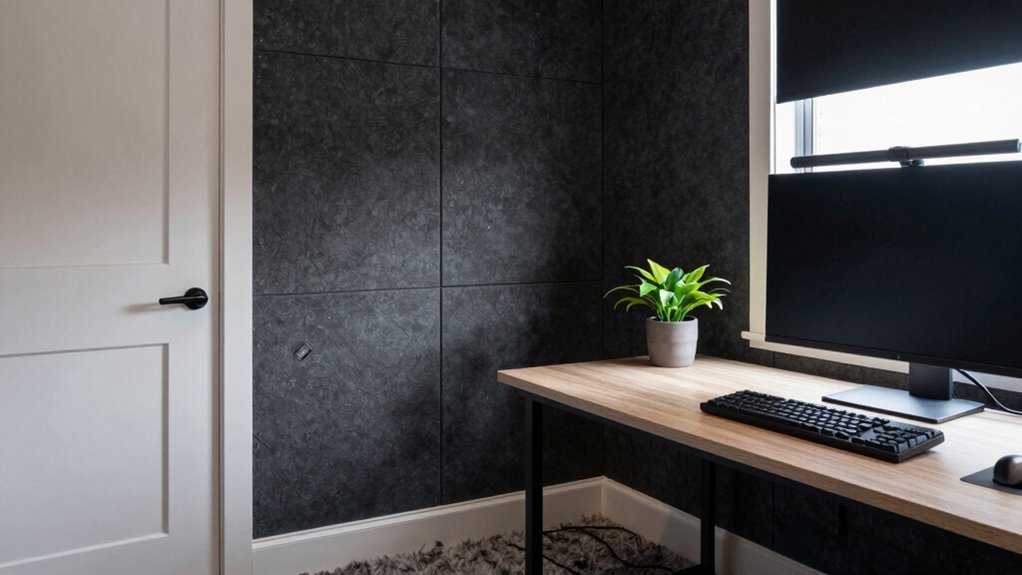
You’ve got this! Start by clapping to check for echoes—lingering sound means it’s time to tame those rebounding walls. Swap your hollow door for a solid-core one, seal gaps like a ninja, and layer in rugs, heavy curtains, and cozy throws. Add drywall for mass, toss in mineral wool, and throw up fabric-wrapped panels that look so good, your walls will sound (and look) studio-ready. Think quiet, feel focus—it only gets better from here.
Assess Your Current Room Acoustics
Before you plunge into slapping foam panels on every wall, take a moment to listen—your room’s current acoustics might be yelling for help without you even realizing it.
Clap your hands once and listen: if the sound lingers like an overenthusiastic echo, you’ve got too much reverb.
Walk around, pop a balloon, or speak normally—notice where your voice gets boomy or muddy.
Hard surfaces like glass, tile, or bare walls are likely the culprits, bouncing sound around like a ping-pong match.
Check your ceiling, too—a smooth drywall ceiling reflects more than cozy acoustic tiles.
Use your smartphone to record a few clips; it’s not lab-grade, but it’ll help you hear the difference later.
Aim to cover about 25% of your walls with rugs, curtains, or panels.
And hey, corners love to trap bass, so give them extra attention.
Reverberation control is essential for maintaining clarity in a home office environment.
A little listening now saves a ton of guesswork later—your ears will thank you.
Upgrade Doors With Solid-Core and Seals
While your old hollow-core door might look the part, it’s basically a glorified echo chamber letting every sneeze, sigh, and off-key shower concert leak through.
Swap it for a solid-core door—dense, heavy, and built to block sound like a pro.
At about 1¾ inches thick and weighing 4.5 pounds per square foot, it boosts your wall’s STC rating by up to 10 points.
That’s 30–50% less noise getting through, turning chaos into calm.
These doors aren’t just smarter—they’re sturdier, resist warping, and paint up nicely.
But don’t stop there: seal the deal—literally—with a door seal kit.
Air gaps are sneaky sound thieves, so foam or rubber seals around the frame can add another 10+ STC points.
Pair a solid door with tight seals, and voilà—your home office finally stays quiet, private, and ready for greatness (no more “Can you keep it down?!” moments).
Solid core doors typically achieve an STC rating of 27-30, making them far more effective at blocking airborne noise than hollow core alternatives.
Add Mass to Walls With Extra Drywall Layers

You’ve shut the door on noise—great job swapping out that flimsy hollow slab for a solid-core champion sealed tight against sound sneak attacks.
Now, turn up the ante by beefing up your walls with extra layers of drywall.
Each added sheet packs on mass, bouncing sound waves back like a pro.
Two layers of 5/8-inch drywall outperform fancy single-layer soundproof versions and can boost your wall’s STC rating to 55–65—think library-quiet.
It’s like giving your walls a soundproof jacket.
You’ll block more chit-chat, TV noise, and even low-end thumps from bass.
Just glue and screw each layer tight, seal gaps with acoustic caulk, and pair with insulation for best results.
Bonus? It costs way less than premium damping goop or thick masonry builds.
For your home office, extra drywall means privacy without the price tag.
Quiet’s not just golden—it’s layered.
This approach leverages the principle that higher mass and density significantly improves sound blocking compared to standard drywall.
Install Acoustic Plasterboard for Better Insulation
Step up your soundproofing game with acoustic plasterboard—this isn’t your average drywall, it’s the heavyweight champ of quiet.
You’ll block more noise without cranking up the bulk.
It’s denser, smarter, and built to silence chatter, traffic, and that annoying appliance hum.
Here’s how to make it work like a pro:
- Fill the cavity with mineral wool—it catches sound in the walls like a ninja with a net.
- Seal every gap with acoustic sealant; even the tiniest hole lets sound sneak through like a gossip at a party.
- Stagger the joints and tape seams tight so sound can’t find a weak spot to push through.
Use 12.5 mm boards for most jobs—they’re light enough to handle but serious about noise. Pair them right, and your home office stays your quiet zone. No more hearing the dog bark the news.
Build Decoupled or Double Stud Walls

Ever wonder how to turn a noisy wall into a true sound barrier? You’re in luck—building decoupled or double stud walls stops sound vibrations in their tracks. By separating wall layers, you break the path noise uses to sneak through. Add insulation and extra mass, and you’ve got a quiet zone perfect for focused work. Just don’t forget to seal gaps—sound’s sneaky that way!
Here’s a quick comparison:
| Method | STC Rating (Approximate) |
|---|---|
| Resilient Channel | 45–52 |
| Double Stud Wall | 56 |
| Metal Stud + Clips | Reduces vocal noise |
| Single Stud (basic) | 30–35 |
You’ll block chatty neighbors and street ruckus alike—your future self will thank you during Zoom calls. Double stud walls take more space, but wow, are they worth it. Think of it as a sound fortress with drywall armor!
Use Floating Floors to Reduce Impact Noise
Here’s how to nail it:
1. Pick a smart underlayment** – acoustic rubber** or high-density foam pads absorb thuds like a sponge soaks coffee
(spilled during a stressful Zoom call, no judgment).
2. Go for thick, dense flooring**** – laminate, LVP, or engineered wood add mass and reduce shake.
3. Seal the edges – no gaps! Otherwise, sound sneaks through like a nosy coworker eavesdropping on your calls.
Incorporate Mineral Wool Batts in Ceilings and Walls

You’ve taken care of the floor, keeping those footsteps and dropped coffee mugs from traveling like gossip through the walls—now it’s time to silence what’s creeping in from above and around.
Grab some mineral wool batts—they’re your secret weapon.
These dense, fibrous mats, made from rock and slag, trap sound like bouncers at a quiet club.
With an STC rating of 45–52, they block noise better than most materials, and their NRC up to 1.10 means they absorb echo like sponges.
They won’t sag, shrink, or melt in humidity, so install them in ceilings and walls without worry.
They’re fireproof, mold-resistant, and even cut heating bills—some users save 18%.
Plus, they’ve got more R-value per inch than fiberglass.
Slide them into studs, fit snugly around pipes, and voilà: peace from noisy neighbors or that overenthusiastic dog next door.
Your walls will thank you.
Place Acoustic Panels to Control Reverberation
While your walls and floor may be well insulated, all that soundproofing can still leave your home office sounding like an echo chamber—especially if you’re recording calls or trying to focus through the midday chaos.
Acoustic panels are your secret weapon to tame those bouncing sound waves and make your space feel calm and clear.
Here’s how to place them like a pro:
- Hit the sweet spots: Mount panels at ear height on side walls and opposite your desk to catch early reflections.
- Spread them out: Use several smaller panels instead of one big one—they’ll cover more ground and handle a wider range of sounds.
- Stay symmetrical: Match left and right placements to keep your audio balanced, so you don’t sound like a robot on zoom calls.
Aim for at least 15–30% wall coverage, and don’t forget an air gap behind each panel to boost performance. Quick tweak? Try command strips if you’re renting—simple, effective, and renter-approved!
Utilize Soft Furnishings to Minimize Echo

Think of your home office as a blank canvas—except instead of just paint, you’re working with plush throws, chunky knits, and that outrageously soft velvet throw pillow you can’t stop touching.
Hang heavy curtains—they’re not just for drama, they actually block outside noise and soak up echo.
Toss a thick rug with a grippy pad underneath; it’ll hug your floors and silence those annoying footstep echoes.
Pile on cushions and drape cozy throws over chairs—soft stuff loves to eat up sound.
Fill bookshelves with books (or just pretend you read that much), and lean tapestries or quilts on walls to tame bounce.
Even a fabric-wrapped panel can double as art and a sound sponge.
These cozy touches don’t just look good—they turn harsh, bouncy noise into calm, quiet focus.
Who knew being stylish could also mean being super quiet?
Seal Gaps to Prevent Sound Leakage
Soft furnishings cozy up your space and calm the noise, but if sound escapes through sneaky gaps, all that comfort might as well be whispering secrets to the next room.
Don’t let your hard work leak out through cracks and crevices—tighten up those weak spots!
Here’s how to slam the door on sound:
- Seal door gaps with a solid-core door, sweep, and perimeter seals—say goodbye to noisy neighbors and hello to privacy.
- Fix window leaks using acoustic caulk and weatherstripping; even tiny gaps are like open doors for sound.
- Stuff hidden holes around outlets, vents, and walls with fire-rated sealant or putty pads—because sound loves to sneak through the darndest places.
A little sealing goes a long way.
You’ll laugh when you realize how much noise was escaping through that “harmless” crack by the baseboard.
Plug it, quiet it, and enjoy your peaceful zone!
Frequently Asked Questions
Can Soundproofing Reduce Outside Traffic Noise Effectively?
Yeah, soundproofing can seriously cut down outside traffic noise—you’ll barely hear honking or rumbling.
Just seal gaps, upgrade windows to double-paned, and use dense curtains or acoustic panels.
Add mass with bookshelves, grab a solid door, and toss in some rugs.
Do it right, and it’s like flipping a quiet switch.
Shhh… you won’t believe how peaceful it gets!
Does Adding Soundproofing Increase Home Resale Value?
Yeah, adding soundproofing can actually boost your home’s resale value—especially if you’re in a noisy area or targeting remote workers who crave quiet.
Upgraded windows, insulated walls, and solid-core doors don’t just hush the chaos, they scream “modern comfortable!”
Smart tweaks like these make your place stand out, impress buyers, and yes, justify a higher price tag.
Cha-ching!
Are There Fire Risks With Mineral Wool Insulation?
You’re safe—mineral wool won’t light up like a campfire, so fire risks are super low.
It’s noncombustible, stays cool under pressure, and won’t feed flames.
Unlike fluffy cellulose or sneaky-smoky foams, it just sits there, shrugging at the heat.
Just watch out for flammable facings—those outer layers can be drama queens.
Install them right, and you’re golden.
Fire’s throwing a tantrum?
Mineral wool’s the chill, unbothered bouncer that says, “Not today.”
Can I Soundproof Without Major Construction or Renovations?
You bet you can soundproof without tearing down walls or breaking the bank!
Just stick up acoustic panels with velcro, slap weather stripping on doors, and hang thick curtains over windows.
Toss down a rug with a pad, seal gaps with caulk, and slide a draft stopper underneath the door.
Boom—noise stays out, focus stays in, and you didn’t even need a toolbox bigger than a cereal box!
Is Soundproofing Necessary for Ground-Floor Home Offices?
Yes, you might need soundproofing for your ground-floor office—it’s not just a pipe dream if neighbors, traffic, or clanging pipes are crashing your focus like uninvited coworkers.
If noise sneaks in easily, especially in wood-frame buildings, tackling it early saves sanity later.
But don’t panic—simple tricks like rugs, door seals, and quiet zones help big time, no sledgehammer required.
Stay calm, get clever, and quiet the chaos, one soft step at a time.
Conclusion
You’ve got this! Sure, redoing walls sounds intense—like turning your office into a fortress—but you don’t need to go full lab mode. Just start small: toss up a few acoustic panels, seal those sneaky gaps, and add a cozy rug. Quiet doesn’t mean silent, just calm, focused, *you*-focused. Before you know it, your space won’t just feel quieter—it’ll work quieter. Boom, productivity’s back in style!