Is Expensive Office Gear Worth the Investment?
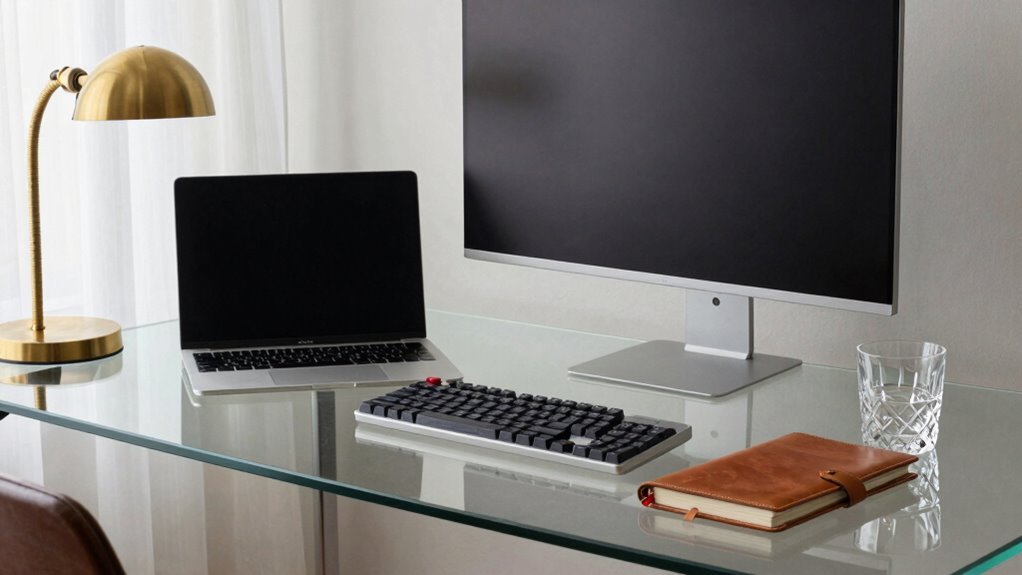
That pricey office chair or laptop? Totally worth it. You’ll save hundreds in repairs, replacements, and wasted time—plus, premium gear cuts downtime and boosts productivity. Think fewer crashes, less frustration, and longer-lasting tools that keep humming for years. Your wallet *and* your team will thank you. And hey, there’s even a clever way to make back some cash when it’s time to upgrade—wouldn’t you like to know how?
Understanding the True Cost of Office Equipment
Ever wonder why that shiny new laptop or copier costs way more than the price tag suggests?
Well, that sticker price is just the beginning—like buying a puppy and forgetting it needs food, vet visits, and chew toys.
For IT gear, the real tab includes setup, software, energy, and even the coffee you spill during downtime.
That €1,200 laptop? It’s really €1,600 once you add accessories and licenses.
And post-purchase costs eat up 80% of the total bill!
You’re also covering repairs, support, supplies—and don’t forget the 30 minutes every week your team loses fixing glitches.
Oh, and storing all that gear? That’s rent money too.
In fact, 80% of total IT costs come from ongoing support and maintenance after purchase.
So yeah, your gear’s true cost is hiding in plain sight.
But don’t panic—knowing the full story helps you spend smarter, not just cheaper.
How Quality Impacts Longevity and Performance
What if the secret to getting more out of your workday isn’t working harder—but choosing smarter gear?
You’d be amazed how much better you work when your keyboard doesn’t stick, your chair supports you, and your screen stays right where you want it.
High-quality office gear doesn’t just feel nicer—it lasts longer and performs better, like a well-tuned engine.
You’ll skip the annoying micro-jams, midday crashes, or constant adjustments.
Think of it like this: top gear rarely quits on you, meaning fewer headaches and smoother workflows.
Good equipment cuts down errors, reduces fatigue, and keeps you in the zone.
It’s not magic—it’s smart design and better materials teaming up to help you shine.
So why grind with junk when you can glide with gear that’s built to last and built to win?
Your back—and your boss—will thank you.
OEE measures the percentage of productive planned manufacturing time.
The Hidden Expenses of Cheap Office Gear

While you might think saving money upfront on office gear is a win, that bargain bin chair or discount printer could end up costing you way more than you bargained for—like buying a sports car that sputters on the highway. You’ll shell out more in repairs, replacements, and wasted time. That cheap chair? You’ll replace it every couple of years—$750 down the drain. Your budget printer jams constantly, wasting toner, paper, and patience. Sluggish laptops steal 8 hours of work—hello, €280 in lost time. And if one gets lost? Add €50 in admin stress and potential data breaches that could cost millions. Small supplies add up fast—up to $92 a month per employee. Cheap gear breaks, slows you down, and sneaks costs you never saw coming. Outdated hardware increases downtime and repair costs, making low-quality equipment a false economy over time.
Calculating ROI: What Numbers Reveal About Value
When you’re trying to decide whether that shiny new printer or ergo-cool chair is worth the splurge, crunching the numbers doesn’t have to feel like math class all over again.
You’ve got tools like ROI—just take your net profit from the gear, divide by what you spent, and multiply by 100.
Boom, percentage!
If you dropped $50,000 on a device and made $15,000, that’s a solid 30% return.
Use Payback Period to see how fast you’ll earn it back, or ARR for yearly averages.
Even negative ROI tells a story—like when you lose 60%, oops!
Compare scenarios, track cost savings, and visualize gains with charts.
A 42.9% return on a $2,100 gadget? Yes, please!
When your numbers sing, you’ll know that upgrade wasn’t just shiny—it was smart.
Maintenance Savings With Premium Equipment

That shiny new gear isn’t just about turning heads in the office—it’s quietly saving you serious cash behind the scenes.
You’re cutting maintenance costs by 40–60% yearly with premium tools that last way longer.
A quality printer? It’ll cost you $1,475 over five years—beating the budget pick by $355.
Your fancy chair? It’ll outlive three cheap ones, easily hitting 10+ years.
Even your office furniture could survive a decade and a half!
With predictive maintenance, you’re slashing repair bills by 35% and avoiding those panic-mode emergency fixes—downtime drops from 48 hours to just 6 annually.
You’re not just buying gear—you’re buying peace of mind, fewer headaches, and more money in your pocket.
Who knew durable desk stuff could be such a financial win-win?
Productivity Gains From Ergonomic Investments
You’re not just sitting—you’re shaping how well your team performs every single day, and upgrading to ergonomic gear is like giving your employees a secret productivity boost.
Slap an ergonomic chair in their workspace, and boom—up to 40% more output.
Studies show these setups boost productivity by 15% to 32%, with some companies seeing a quarter-mile sprint ahead in performance.
Workers stay focused, comfortable, and less distracted by aches—because nobody types fast when their back’s staging a revolt.
Stand-biased desks get blood flowing and muscles working 2.5x harder, even if they’re just fidgeting.
And yes, they might make more typos, but they’re typing more.
It’s not magic—it’s science, comfort, and smart design teaming up.
Your team’s not just working better; they’re working smarter, and honestly, who wouldn’t want a throne that pays for itself in gains?
Reducing Downtime With Reliable Tools

Your team’s back is feeling great, thanks to those ergonomic upgrades, but let’s shift gears—because what’s even better than comfort?
Cutting downtime with reliable tools.
Imagine slashing machine outages by half—some plants dropped from 39 to just 27 lost hours monthly.
With smart gear like AI and predictive maintenance, you’re not just fixing problems—you’re stopping them.
One system chopped downtime from 34 to 17 hours a day.
Think of it: 50% fewer breakdowns, 40% lower maintenance costs, and your team not staring at broken equipment, twiddling their thumbs.
BMW saved over 8 hours a year using AI—like giving your workflow an invisibility cloak against chaos.
And 42% of manufacturers do it for this reason alone: no more surprise meltdowns.
Reliable tools don’t just work—they *save* work.
So why wait for things to fail?
Smart gear keeps the lights on, the machines humming, and your team actually doing their jobs.
Win-win.
Employee Satisfaction and Retention Benefits
When your stapler jams every third sheet and the printer sounds like it’s gasping its last breath, it’s hard not to feel like the office is out to get you. But great gear flips the script—fast, reliable tools make you feel unstoppable. You stay calm, stay focused, and actually enjoy your workday. Companies that invest in comfort and performance aren’t just flashy—they’re smart.
| Benefit | Impact | Example |
|---|---|---|
| Fewer breakdowns | Less stress | Smooth printing, every time |
| Ergonomic design | Higher energy | No more back pain at 3 PM |
| Modern tech | More confidence | Touchscreens that actually respond |
| Quality furniture | Stronger loyalty | You actually want to come to work |
| Smart features | Peace of mind | PIN-protected, secure printing |
Good tools don’t just work better—they make you *feel* better, too.
Long-Term Financial Forecasting Advantages

Forget crystal balls—your office gear might be the most reliable fortune teller in the building.
When you invest in high-quality equipment, you’re not just buying desks and chairs—you’re locking in predictable costs for years.
Premium tools slash maintenance by 40–60% annually, so you’re not caught off guard by surprise repairs.
They last 5–7 years longer, giving you steady, reliable numbers for budgeting.
Energy-efficient devices? They keep utility bills from creeping up like office goblins.
You’ll forecast cash flow like a pro, spotting shortfalls before they ruin your week.
Plus, you can model worst-case scenarios without breaking a sweat.
With stable expenses, you’ll plan expansions, hire teams, or even afford that fancy coffee machine—all with confidence.
Honestly, your stapler might know your financial future better than your accountant.
Resale Value and Sustainable Use of High-Quality Gear
Ever wondered what happens to your office furniture after it’s time to upgrade?
You’re in luck—high-quality gear holds its value better, especially if you’ve kept up with maintenance or spruced it up with reupholstery.
Thanks to a booming second-hand market—projected to hit $56.66 billion by 2030—you can sell your desks or ergonomic chairs (yes, even that $600 task chair) and put that cash toward new upgrades.
Smart depreciation methods like declining balance help you track value, while original receipts make buyers trust the deal.
Plus, every resale saves about 173 kg of CO₂—so your old couch isn’t just comfy, it’s a climate hero!
With durable, sustainably sourced furniture, you’re not just saving money—you’re joining a trend that’s good for your wallet and the planet.
Who knew being eco-friendly could feel this profitable?
Frequently Asked Questions
How Do I Justify the Cost to Stakeholders?
You justify the cost by showing how smart upgrades save real money and boost productivity fast.
You cut downtime, slash maintenance, and keep your team happier and sharper.
In just months, the savings pay for themselves—like magic, but with spreadsheets.
Plus, your people stop complaining and start crushing goals.
Stakeholders love that kind of win—good ROI and fewer headaches.
Win-win!
Are There Tax Benefits for Ergonomic Investments?
Yes, there are great tax benefits for your ergonomic investments!
You can deduct the full cost of qualifying chairs, desks, and gear the same year you buy them—thanks to Section 179.
Think of it as the IRS cheering, “Sit comfy, we’ve got your back!”
Just keep proof of business use, and you could save big while boosting comfort and productivity—all in one smart move.
Win-win!
Can Cheap Gear Ever Be Sufficient?
Yeah, cheap gear can be enough—especially if you’re on a tight budget.
Imagine replacing a $150 chair every 2.5 years, like clockwork; over ten years, you’ve spent $600 and survived three wobbly armrests and one catastrophic wheel loss.
While it gets the job done short-term, it’s like buying leaky buckets instead of a sturdy jug.
Functional? Sure.
Fun? Not if you like sitting upright.
What Industries See the Fastest ROI?
You’re seeing the fastest ROI in finance and manufacturing—robotics and RPA pay for themselves in months, not years.
You’re saving millions while boosting productivity by 15% or more.
Your cloud and AI tools? They’re like having a supercharged assistant who never sleeps.
Honestly, it’s like your gear’s working overtime so you don’t have to.
Cha-ching!
Do Employees Actually Notice the Difference?
You absolutely notice the difference—like trading a bumpy dirt road for a smooth highway.
Your back stops nagging you, your eyes quit squinting at glare, and your focus zooms in like a camera finding its mark.
Comfortable chairs, quiet spaces, and fresh air aren’t fancy extras—they’re game-changers.
You’re less grumpy, more productive, and honestly? You’ll wonder how you ever worked without them.
Conclusion
You’ve seen the numbers, felt the frustration of jammed printers and wobbly chairs—why keep patching together chaos? Premium gear isn’t magic, but it *does* work like a well-oiled machine, saving time, cash, and your sanity. Imagine fewer breakdowns, happier teams, and more “ahh” moments. Sure, the price tag stings at first, but long-term wins? Priceless. You’re not just buying tools—you’re investing in smooth sailing. And who doesn’t love that?