Where to Put a Filing Cabinet in a Small Home Office
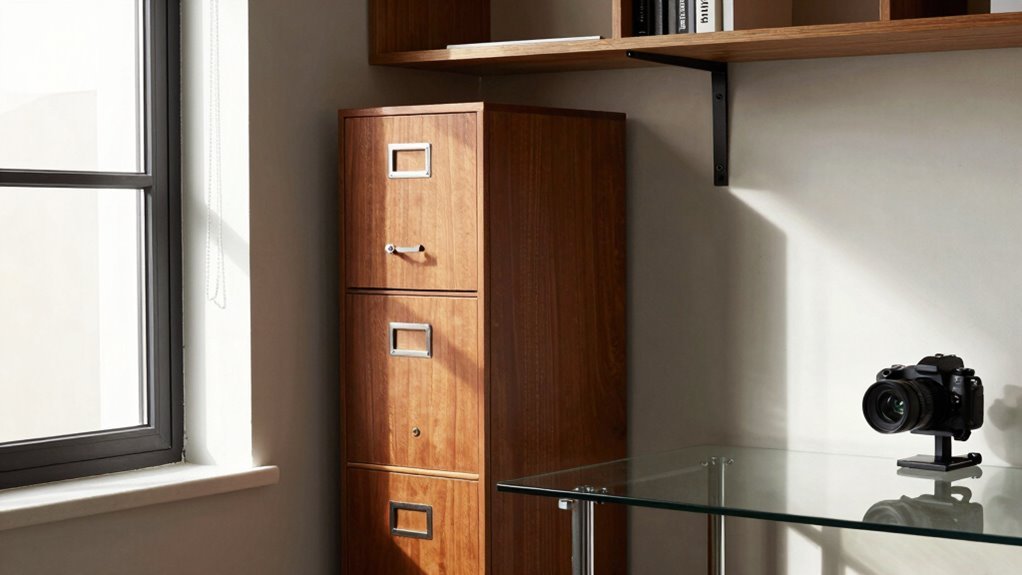
Stick your filing cabinet in a corner, tall and narrow, to save serious floor space—like a storage ninja. Go vertical, not wide, and anchor it to the wall so it won’t tip. Tuck a slim, rolling pedestal under your desk for quick file grabs, or stack low cabinets under a countertop for a desk combo. Keep often-used files within arm’s reach, and hey, why not add casters for drama? There’s more clever hacks where that came from.
Position Tall Cabinets in Corners to Maximize Floor Space
When you stash a tall filing cabinet in a corner, you’re basically giving your small home office a magic space upgrade—suddenly, that cluttered floor feels like it’s breathing again.
You’re not just hiding files; you’re reclaiming real estate.
Tuck a 12-1/2-inch-deep cabinet snugly into an unused corner and bam—space for your chair, your coffee dance, even that pesky footrest.
These corner champs go up to 108 inches tall, so they store big but stay out of your way.
With 18 inches of front clearance, you’ll still pull files without a circus act.
Arc-shaped styles fit like puzzle pieces, and rustic barn doors? They turn storage into a style moment.
Place them behind the desk with 3 feet of wiggle room, or use mobile versions for a rolling upgrade.
You’re not just organizing—you’re outsmarting space like a tiny-office ninja.
Wall cabinets with 12.5″ depth option fit perfectly in tight spaces without sacrificing accessibility.
Stack Filing Cabinets Vertically for Efficient Use of Height
Though your home office might be pint-sized, you’ve still got room to reach for the stars—literally. Stacking filing cabinets vertically turns unused height into smart storage space, so you’re not just crawling through paperwork like a detective in a B-movie. Instead, you’re living like a space-savvy superhero, using every inch wisely.
- Tall, narrow cabinets stand just 15–20 inches wide, fitting neatly beside desks or in corners.
- Drawers pull front to back, stacking files upright and making everything easy to grab.
- One vertical unit can replace a whole squad of bulkier lateral cabinets, saving serious floor space.
- They hold binders, folders, and even random office gadgets—no judgment here.
With up to 160% more capacity overhead, you’ll file faster, find things quicker, and maybe even have room left for that mini fridge you’ve been eyeing.
space-efficient design makes vertical cabinets ideal for small offices where floor space is limited.
Who knew going up could feel so down-to-earth?
Anchor Tall Units to Walls for Safety and Stability

What’s stopping your filing cabinet from taking a nosedive during an enthusiastic drawer yank or a curious toddler’s climbing spree? Nothing—unless you anchor it. Seriously, tip-overs kill and injure thousands yearly, even adults over 60. Don’t chance it. Research shows that 60-pound testing represents the upper weight range of children most at risk, yet many dressers fail stability tests even under these conditions.
| Risk Factor | Why It Matters |
|---|---|
| Open drawers | Shift center of gravity, making tall units wobble |
| Kids climbing | 77% of tip-over deaths involve children under six |
| Unanchored furniture | Even bulky cabinets topple—no piece is “heavy enough” |
Use two straps, attach to wall studs, and place anchors lower than the unit’s connection point. Toggle bolts handle up to 50 lbs., but always aim for stud-level strength. Anchoring isn’t perfect, but it slashes risks dramatically. Your filing cabinet should file papers—not file an accident report. Keep it stable, keep it safe.
Combine Low Cabinets With a Desktop to Create a Built-In Desk
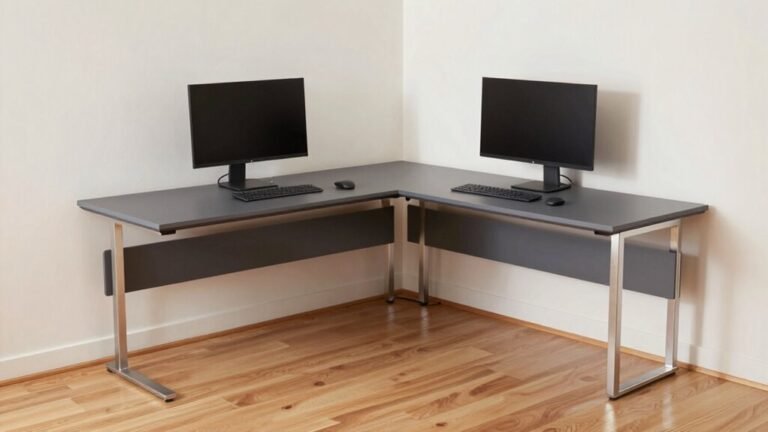
You can turn your cluttered home office into a sleek, space-smart workspace by pairing low cabinets with a custom desktop—think of it as building your own dream desk without the big-box price tag.
These low units stay under 30 inches tall, so you’ll still have plenty of headroom, and their flat tops make perfect bases for a desktop.
Just pick cabinets that match your ideal desk width, slap on a stylish slab, and boom—you’ve got a built-in look for way less cash.
- Slide a 30-inch-wide lateral file next to a 36-inch base cabinet for a roomy 66-inch desk setup.
- Top them with a smooth wood panel that overhangs slightly for a modern edge.
- Choose models like IKEA GALANT or ALEX to mix drawers and file storage like puzzle pieces.
- Slide letter or legal files into bottom drawers—you’ll file smarter without bending over.
Use Under-Desk Pedestals for Easy Access Without Clutter

Now that you’ve built a sleek, custom desk setup with low cabinets, let’s tackle what sits right under it—because your legs shouldn’t have to battle file drawers every time you reach for your mouse.
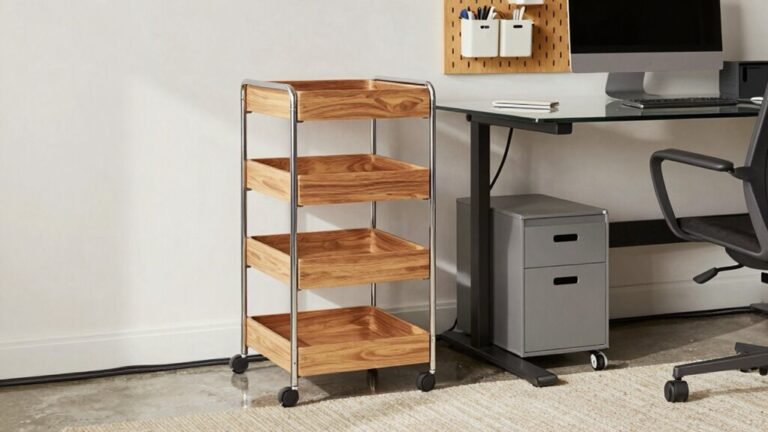
Slide in a mobile under-desk pedestal, and boom—files are within arm’s reach without tripping over clutter.
Look for one with smooth-rolling casters and a lock so secrets stay safe and floors stay clean.
Soft-close drawers mean no more midnight slams, and full extension lets you grab files without a treasure hunt.
If you’re building from scratch, go bold: use a fixed pedestal as a desk leg!
It saves space, adds stability, and keeps everything tucked away.
Pick a compact two- or three-drawer model, match the finish, and voilà—organized, sleek, and still room for your dancing feet.
Slide Narrow Cabinets Under Window Seats or Benches
Ever peeked under a window seat and seen nothing but dust bunnies doing yoga?
Stop wasting that cozy nook—slide a narrow filing cabinet underneath and turn dead space into something awesome.
These slim units fit perfectly beneath benches or window seats, giving you hidden storage and bonus seating all in one.
You’ll love how tidy your small office feels without sacrificing comfort or style.
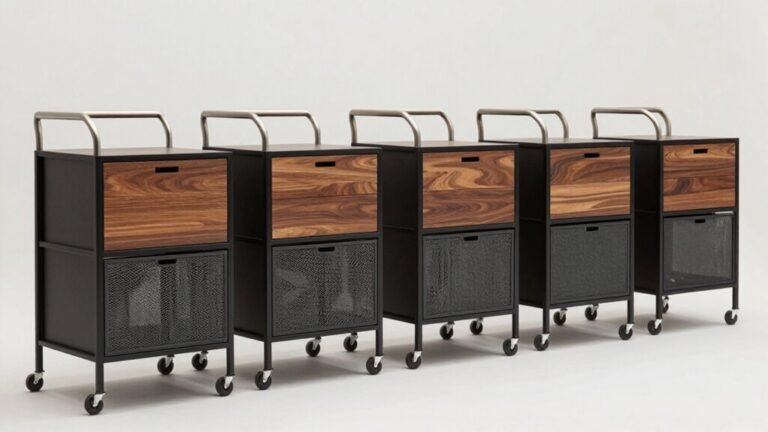
- A narrow cabinet (like the 15.75” W ALEX on casters) glides right under most benches.
- Locking wheels keep it steady, even when you’re leaning on it or using it as a footrest.
- Two spacious drawers store files, supplies, or even your weekend tote.
- Top it with a cushion, and boom—comfy seat by day, filing hub by night.
It’s smart, simple, and seriously space-savvy. Who knew your seat could work this hard?
Place Cabinets Along Wall Perimeters to Preserve Central Space

Tucking your filing cabinets along the walls isn’t just smart—it’s a small office superhero move.
You keep the center wide open, so you can pivot in your chair, stretch out, or even squeeze in a guest without tripping over drawers.
Placing them along long walls creates a clean line, almost like built-in furniture, and helps you stash everything in one smooth run.
You’ll love how it clears visual clutter and keeps the floor free for life’s little dance breaks.
Slide them into corners to link two walls and score extra storage without sacrificing space.
Stick them near your desk, and you can grab files fast—no hallway hurdles.
Tall ones by the wall? Perfect—lots of space on top, and your room still feels airy.
Honestly, it’s like magic: more room, less chaos, and your documents stay close.
Win-win!
Utilize Low-Profile Units as Seating With a Cushioned Top
- Pick a cabinet 18–24 inches high—it’s the sweet spot for comfy, bench-like seating.
- Add a removable, medium-firm cushion (1–3 inches thick) in stain-resistant fabric for easy cleaning.
- Lock casters or stabilize mobile units so you don’t roll away mid-convo.
- Tuck it under a window or beside shelves to create a clever little seat zone that looks intentional, not cluttered.
Position High-Use Files Within Arm’s Reach of Your Workstation

When you’re knee-deep in emails and need to grab a file fast, the last thing you want is a scavenger hunt across the room—so keep your go-to documents right within arm’s reach, where they belong.
Tuck your main filing cabinet on your dominant side, so quick grabs feel natural, not like a workout.
Keep it within 30 inches so you’re not playing file-fetch across the office.
Put your top drawers between waist and shoulder height—no yoga moves required.
Need folders in a flash? Store the heavy-hitters in the top or middle drawers, not down low where they play hide-and-seek.
Go vertical if space is tight, lateral if you love spreading things out.
Slide a rolling model under your desk for seated access, then roll it out when standing.
Shorter drawers mean faster access, and let’s be real—who doesn’t love a little office efficiency magic?
Measure Carefully for Shallow or Slim Models in Tight Areas
You’ve got your go-to files right where you can grab them without breaking stride—awesome.
Now, don’t blow it by cramming in a hulking cabinet that eats your space.
In tight spots, slim and shallow models are your secret weapon.
Measure smart so your file fits like it was made for the corner it’s in—because, hey, it practically was.
- Check your floor space: aim for at least 15″W x 18″D for mobile units or 14–16″W for vertical slim styles.
- Peek under desks—many slim cabinets stand 24–29″H, sneaking right under workspaces.
- Mind the depth—18–24″ keeps lateral models from poking into walkways.
- Don’t forget handles and casters—they can add over 2″ to the size!
Slide in a sleek, lockable, lightweight champ and voilà—order without the overflow.
Frequently Asked Questions
Can I Paint My Metal Filing Cabinet to Match My Decor?
Yes, you can totally paint your metal filing cabinet to match your decor—it’s like giving it a stylish wardrobe change!
Just clean, sand, and prime it first.
Then grab some spray paint made for metal, like Rust-Oleum, and go wild with your favorite color.
Two light coats work best.
Add funky handles if you’re feeling sassy.
Voilà—your cabinet’s now a chic part of the room, not just storage!
Are There Filing Cabinets With Built-In Power Outlets or USB Ports?
Yeah, you’re in luck—some filing cabinets are like mini tech hubs!
They’ve got built-in power outlets and USB ports, so you can charge your phone or plug in a lamp without crawling behind furniture.
Imagine tucking your printer beside it and never hunting for an outlet again.
Rolling models even let you zip from wall to desk, and hey, no more spaghetti cords—it’s clutter’s worst nightmare!
How Do I Remove a Drawer if It Gets Stuck When Fully Extended?
You’ve got this! First, yank open the drawer all the way, then check both sides for little tabs—press ’em at the same time.
If it’s stuck, don’t panic; give it a gentle wiggle while lifting the front slightly.
Still not budging? Make sure the lock’s off and there’s no hidden screw.
It’ll pop out—like magic, but with slightly more elbow grease.
Can I Use a Filing Cabinet on Carpet Without Damaging It?
You bet you can use a filing cabinet on carpet—no horse-drawn carriage needed to haul it away!
Just slap on some wide coaster cups or a low-profile mat to spread the weight.
Add felt pads to stop carpet tantrums, and nudge the cabinet every few months so the carpet can breathe.
It’s like giving your floor a mini-vacation—your carpet will thank you with fewer dents and zero drama.
What’s the Quietest Way to Open and Close Metal Drawers?
You’ll love how smoothly soft-close drawers open and shut—no more bangs or slams!
Just glide them out, and they ease back quietly on their own.
Add drawer liners to keep things from rattling, and use organizers so everything stays in place.
If your cabinet’s a bit noisy, 3M adhesive or cushioned tops help dampen the clatter.
It’s like your files are whispering, “All good here!”—super quiet, totally stress-free.
Conclusion
You’ve got this! Did you know 73% of people find their workspace more calming when storage’s tucked neatly away? So tuck that cabinet into a corner or snug it by your desk—either way, you’re saving space and sanity. Keep files handy, floors clear, and maybe even turn a low unit into a cute seat (add a cushion, boom—multi-tasking!). Small office, big wins—just a little smart planning, and you’ll work smoother, cleaner, and way more happily.