What Makes a Chair Ergonomic? A Buyer’s Guide
You want a chair that hugs your back just right, supports your spine’s natural curve, and keeps you comfy all day. Look for adjustable lumbar support, seat height, and depth so your feet stay flat and knees bent. Pick breathable mesh, strong build quality, and armrests that take the strain off your shoulders. Get one that fits *you*—not just today, but for countless Netflix binges and work sprints to come. There’s even more to finding your perfect match inside.
Lumbar Support: Aligning Your Spine for Optimal Posture
Ever wonder why your back feels like it’s throwing a tantrum after a long day at your desk?
That’s because sitting too long flattens your spine’s natural curve, making your muscles work overtime.
But here’s the good news—lumbar support’s got your back, literally.
It fills the gap between your lower back and the chair, keeping your spine in its happy “S” shape.
Chairs like the Steelcase Think even let you adjust the support up or down so it hugs your spine just right.
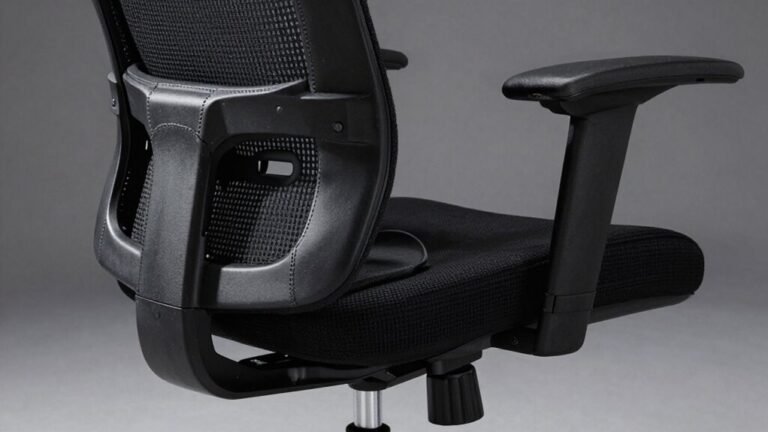
Thanks to smart designs like LiveBack® and adaptive mesh, the chair moves with you—no stiff, awkward pressing.
You’ll sit taller, hurt less, and keep slouching at bay.
Plus, it cuts disc pressure by up to 40%, which your future self will thank you for.
With built-in support, you’re not just sitting—you’re sitting smart, comfortably, and pain-free, hour after hour.
For anyone seated at a desk for several hours daily, lumbar support is a necessity, not a luxury lumbar support necessity.
Seat Height Adjustment: Finding the Perfect Sitting Level
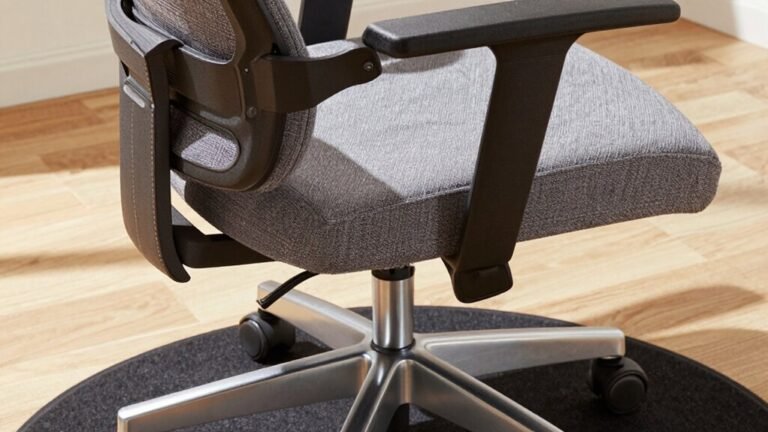
When you sink into your chair, the first thing that should feel just right is how your feet meet the floor—no tiptoeing or tucking legs under like you’re hiding them.
Aim for a seat height between 16 and 21 inches—this sweet spot works for most people.
Your thighs should be level, knees bent at 90 degrees, and feet flat like you’re standing your ground.
Adjust the seat so the top sits just below your kneecap; a quick floor-to-kneecap measure helps nail it.
Pull the lever on the right side while sitting to lower, or stand to raise it smoothly.
If your feet dangle? No drama—grab a footrest.
You’ll know it’s perfect when your elbows line up with your desk and your forearms form a comfy 90-degree angle.
No more tiptoe tango or leg-lifting acts—just solid support, zero circus required.
Proper seat height adjustment is crucial for maintaining optimal posture and minimizing strain, especially when combined with adjustable ergonomic chair features designed for long-term comfort.
Seat Depth and Width: Accommodating Different Body Types

How’s your fit in that chair—snug as a bug, or are you swimming in it like a kid in Dad’s office gear?
Getting seat depth and width right makes all the difference.
You’ll want about a half-inch gap between the front edge and the backs of your knees—enough room to slide a clenched fist (roughly two inches) between your calves and the seat.
For most, a depth of 14 to 18.5 inches works, especially if it’s adjustable.
Width-wise, aim for 17 to 20 inches if you’re average, 21 to 24 if you’re larger.
Petite? Try 17 to 19 inches wide and 15 to 17 inches deep.
A good fit supports most of your thighs without pressure.
And hey, nobody wants their chair cutting off circulation—keep that waterfall front smooth and clear!
Seat depth: 16–18 inches is ideal for proper thigh support and comfort.
Backrest Features: Customizing Support and Recline
- Feel your spine finally *relax*—like a hug for your back.
- Recline without wobbling—effortless, smooth, and *all yours*.
- Sit taller, breathe deeper, and forget the ache ever existed.
Armrests: Enhancing Comfort and Reducing Strain

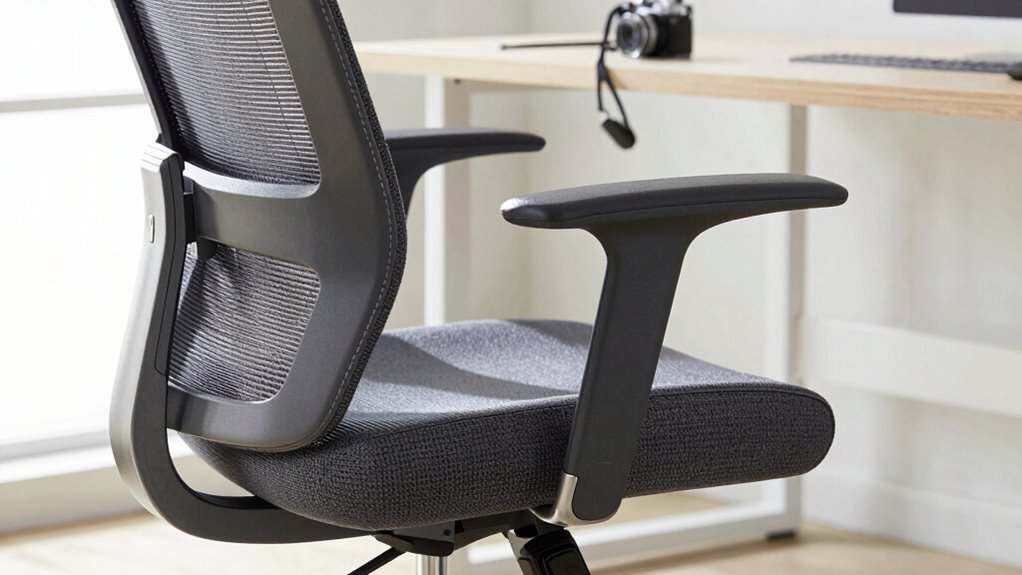
You’ve got your back covered—literally—with a recline that cradles you like a cloud and a backrest that hugs your spine just right. Now, let’s talk arms—your unsung heroes during marathon work sessions. Good armrests aren’t just comfy; they’re game-changers. They take the weight off your shoulders—literally—so you stay fresh and focused.
| Benefit | Why It Matters |
|---|---|
| Less shoulder strain | Lets your muscles clock out early |
| Better posture | Stops slouching like a sad emoji |
| Reduced wrist pressure | Keeps carpal tunnel at bay |
| Fewer headaches | Bye-bye, tension from shoulder monsters |
| Improved focus | Comfort means fewer “I need a break” moments |
Adjustable armrests fit *you*, not the other way around—because your desk life shouldn’t feel like a bad handshake.
Materials: Balancing Breathability and Durability
Ever wonder why your back feels like a swamp after hours in the same seat? Your chair’s material makes all the difference.
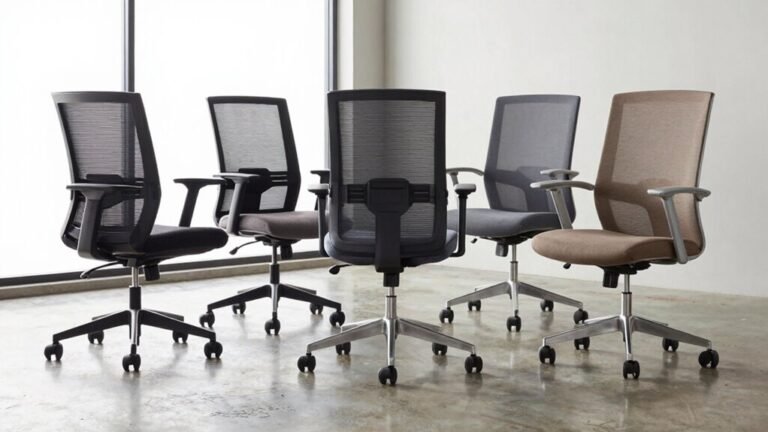
Choose mesh, and you’ll stay cool—its open weave breathes like AC for your back, wicking away heat and moisture fast.
Fabric’s soft touch still lets air flow, giving cozy comfort without baking you alive.
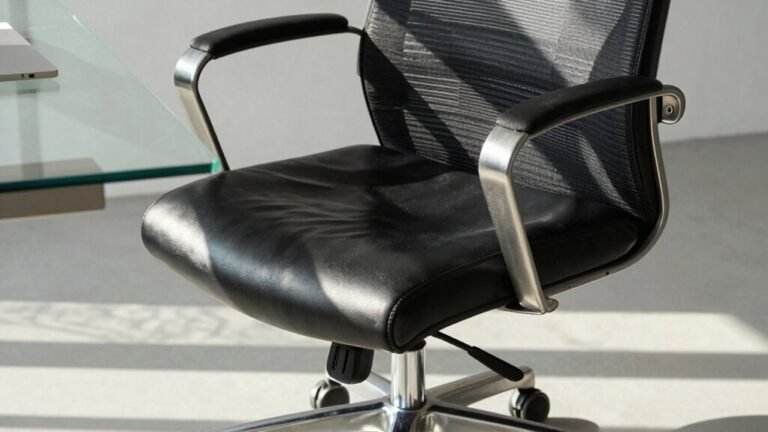
Leather? It’s sleek and tough, but traps heat like a sauna—great for chilly offices, not so much for tropical afternoons.
High-quality mesh resists sagging, fabric fights stains, and steel-backed builds last.
You want support that lasts, without sweating the small stuff—literally.
- Feel cool, calm, and collected—even after 8 hours.
- Say goodbye to sticky backs and sad-looking seats.
- Sit in confidence, knowing your chair won’t quit on you.
Adjustable Seat Pan: Promoting Healthy Blood Circulation

Your chair’s material might keep you cool, but what’s underneath matters just much—especially when your legs start tingling like they’ve been texting too much.
An adjustable seat pan keeps your blood flowing and your nerves happy.
You want at least three-quarters of your thigh supported, with a little gap—about two fingers—behind your knees.
That sweet spot, plus a waterfall front that curves down, stops pressure and lets blood circulate freely.
No more numb legs or restless feet tapping like they’re late for a party.
The right depth means no edge-sitting if you’re petite, and no squished thighs if you’re tall.
It evenly spreads your weight, cuts pressure points, and helps you stay comfy through long hours.
You stay aligned, your spine stays happy, and your legs stay wide awake—without needing coffee.
Adjustable isn’t just fancy—it’s essential for keeping your whole body in the loop, one healthy heartbeat at a time.
Weight Capacity and Build Quality: Ensuring Long-Term Reliability
A well-built chair doesn’t just hold you up—it’s got your back, literally and structurally, especially when the hours stack up and your to-do list won’t quit.
If you’re over 250 lbs, don’t settle for flimsy frames—go for chairs rated 300–800 lbs with reinforced bases, thick cushions, and sturdy wheels.
Manufacturers test these bad boys with static and dynamic loads, simulating years of rocking, swiveling, and mid-day spins.
Look for BIFMA-certified chairs with six-year warranties and gas lifts built to last.
Heavy-duty models often include wider seats (25–30 inches) and high-density foam that won’t sag by lunchtime.
- You deserve a chair that won’t quit before your coffee does.
- Imagine sitting worry-free, knowing your chair’s got more endurance than your longest Zoom marathon.
- A solid build means no more creaks, fears, or unexpected collapses during big presentations.
Frequently Asked Questions
How Often Should I Replace My Ergonomic Chair?
You should replace your ergonomic chair every 7 to 10 years, but if it’s a high-end model, it might happily last 12 to 15 with love and care.
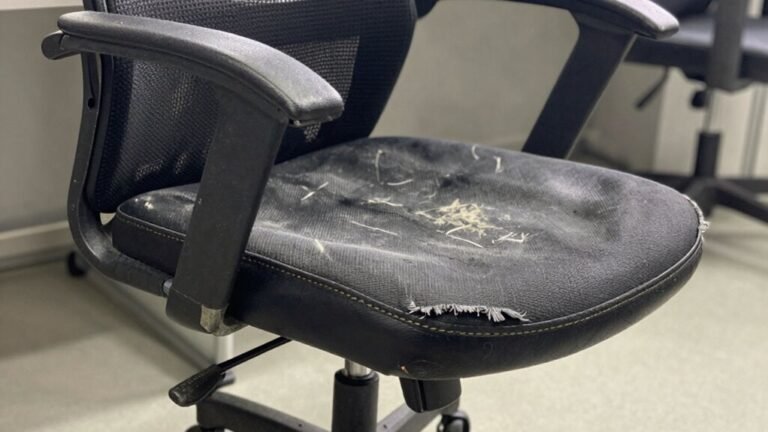
You’ll know it’s time when the seat’s flat as a pancake, the arms crack like old toast, or it squeaks more than a cartoon mouse.
Don’t wait for pain—your back will thank you sooner!
Can Ergonomic Chairs Help With Sciatica Pain?
Yes, ergonomic chairs can definitely help ease your sciatica pain.
You’ll love how adjustable lumbar support keeps your spine happy and reduces pressure on nerves.
Tilt features let you shift positions, while contoured seats stop your thighs from screaming.
Pair it with stretch breaks, and you’re golden.
It’s not magic—but close.
Your back will thank you, maybe even with a little dance.
Are Ergonomic Chairs Worth the Higher Price?
Yes, they’re worth every penny—you’re not just buying a chair, you’re investing in your body’s daily comfort and long-term health.
Think of it like upgrading from sneakers to orthopedic shoes; sure, both work, but one keeps you pain-free, focused, and energized. You’ll dodge costly doctor visits, boost productivity, and actually look forward to sitting down—talk about a win-win!
Do I Need Armrests for Ergonomic Support?
Yeah, you do need armrests for real ergonomic support—they’re not just for resting your arms!
They keep your shoulders relaxed, stop you from slouching, and actually cut muscle strain.
Plus, they make standing up way easier (hello, less grunt work!).
Adjustable ones? Even better.
They keep you comfy, boost focus, and help dodge aches.
Skip ‘em, and you’re basically asking your body to work overtime.
Smart move: lean in and let your arms win!
What’s the Best Way to Clean Mesh Fabric?
You’ve got this—cleaning mesh fabric is a breeze when you treat it like a spa day for your chair.
Start by vacuuming gently, then wipe with a damp, soapy microfiber cloth, sneaking into tiny crevices.
Spot clean stains with a dab of dish soap or vinegar mix, never a soak.
Use a soft brush for grime, rinse lightly, and let it air-dry completely—sun’s a bonus!
Conclusion
So, you finally want to stop feeling like a pretzel by 3 PM? Good. Get a chair that loves your spine, not one that tortures it. Adjust the height, hug your lumbar, and let your arms rest like they’re on vacation. If it squeaks like a haunted house, walk away. Your butt deserves better—comfort shouldn’t cost a fortune or require a PhD in assembly. Sit smart, live happy. Your back will thank you, maybe even hug you back. Probably not.