5 Best Gaming Monitors That Elevate Your Home Office Game
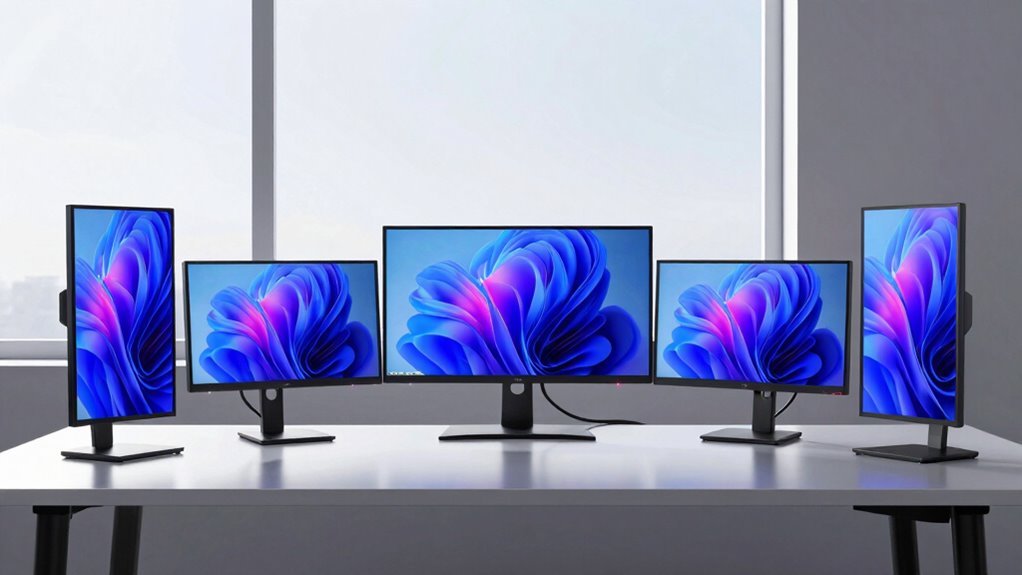
Sharp enough for spreadsheets, fast enough for headshots—your home office deserves a monitor that keeps up with both work and play.
The 5 best gaming monitors combine performance and versatility to transform your workspace into a hub of productivity and high-octane gaming.
You’re probably wondering if a 280 Hz refresh rate really matters when you’re just answering emails (it doesn’t—but it *feels* glorious when you’re not).
These monitors deliver speed where it counts, with 1 ms response times and adaptive sync technologies like VRR to eliminate tearing during intense gameplay.
Curved 27″ to 32″ displays provide immersive viewing angles ideal for multitasking and gaming alike.
Built-in eye-care modes help reduce strain during long workdays, keeping you sharp from 9 to 9 without sacrificing comfort.
The real question? Which one fits *your* setup without breaking the bank or your neck.
With the right balance of clarity, speed, and ergonomic design, these 5 best gaming monitors rise above the rest.
| Z-Edge 27″ Curved 240Hz Gaming Monitor | Highest Refresh Rate | Screen Size: 27″ | Resolution: FHD 1080P | Refresh Rate: 240Hz | VIEW LATEST PRICE | Read Our Analysis | |
| GTek 27″ Curved 280Hz Gaming Monitor | Premium Gaming Performance | Screen Size: 27″ | Resolution: FHD 1080P | Refresh Rate: 280Hz | VIEW LATEST PRICE | Read Our Analysis | |
| Samsung 27″ FHD Curved Monitor (S36GD) | Eye Comfort Leader | Screen Size: 27″ | Resolution: FHD 1080P | Refresh Rate: 100Hz | VIEW LATEST PRICE | Read Our Analysis | |
| Gawfolk 32″ Curved Gaming Monitor 165Hz | Big Screen Value | Screen Size: 32″ | Resolution: FHD 1080P | Refresh Rate: 180Hz | VIEW LATEST PRICE | Read Our Analysis | |
| Samsung 32″ Odyssey G55C QHD Gaming Monitor | QHD Immersive Experience | Screen Size: 32″ | Resolution: QHD 1440P | Refresh Rate: 165Hz | VIEW LATEST PRICE | Read Our Analysis |
More Details on Our Top Picks
Z-Edge 27″ Curved 240Hz Gaming Monitor
If you’re the kind of home office user who secretly (or not-so-secretly) craves a monitor that can keep up with fast-paced games while still looking sleek during video calls, the Z-Edge 27″ Curved 240Hz Gaming Monitor might be your sweet spot. It features a 1500R curved screen, delivering an immersive experience without sacrificing professionalism.
The monitor offers a 240 Hz refresh rate over HDMI and up to 280 Hz via DP 1.2, all on a no-nonsense FHD 1080P panel that keeps costs down. While the resolution is modest, it ensures smooth gameplay and solid everyday performance.
You get a 1 ms MPRT response time, 4000:1 contrast for deep blacks, and 350 nits brightness, making visuals sharp and vibrant. Flicker-free technology and low-blue-light modes help reduce eye strain during long Zoom calls or late-night gaming sessions.
With two HDMI 2.0 and two DP 1.2 ports, the monitor provides excellent setup flexibility for multiple devices. The edge-to-edge design gives it a premium look that elevates any workspace.
That said, the 1080P pixel density is noticeable if you sit too close, which may affect the overall sharpness for some users.
- Screen Size:27″
- Resolution:FHD 1080P
- Refresh Rate:240Hz
- Panel Curvature:1500R
- Response Time:1 ms MPRT
- Eye Comfort:Flicker-free, low blue light
- Additional Feature:280 Hz max refresh (DP)
- Additional Feature:Three-sided edge-to-edge display
- Additional Feature:Dual-monitor setup friendly
GTek 27″ Curved 280Hz Gaming Monitor
You’re getting serious about both work and play, so the GTek 27″ Curved 280Hz Gaming Monitor is built for the multitasker who wants high-speed performance without blowing the budget. This VA-panel display pushes 280Hz (or 240Hz in high-refresh readiness), which is overkill for office spreadsheets but glorious for late-night gaming.
Its 1500R curve and FHD 1920×1080 resolution pull you in, while 90% DCI-P3 and 4000:1 contrast make colors pop and blacks deepen. Perfect for streaming or editing, the panel delivers vibrant, immersive visuals.
At 300 nits with HDR, anti-flicker, and anti-glare, your eyes stay comfy during marathons. You’ll connect easily via HDMI 2.0, DP 1.4, or audio jack (sorry, no speakers).
Tweak the tilt from −5° to 20°, and mount it with VESA 75×75 for a clean setup. Is it the sharpest 4K beast? No—but for 1080p speed under $300, are you really complaining?
With a 3-year warranty (through Sept 2026+), it’s a smart, scrappy pick for the hybrid hustle.
- Screen Size:27″
- Resolution:FHD 1080P
- Refresh Rate:280Hz
- Panel Curvature:1500R
- Response Time:1 ms MPRT
- Eye Comfort:Anti-flicker, anti-glare
- Additional Feature:DisplayPort 1.4 support
- Additional Feature:90% DCI-P3 color gamut
- Additional Feature:3-year warranty included
Samsung 27″ FHD Curved Monitor (S36GD)
The Samsung 27″ FHD Curved Monitor (S36GD) is a solid pick for home office warriors who also like to unwind with the occasional evening game. Its 1800R curvature wraps around your field of vision just enough to boost focus by reducing peripheral distractions, without making your Zoom calls feel like a sci-fi cockpit experience.
You get a 100Hz refresh rate, so scrolling through documents and playing casual games feels smooth, with noticeably less motion blur than standard 60Hz displays. Game Mode tweaks contrast and color on the fly, helping you spot shadowed enemies—though this isn’t an esports-grade display.
TÜV-certified eye comfort means reduced blue light and flicker, so long work sessions or marathon Netflix binges won’t leave you with throbbing eyes. HDMI and D-sub ports let you connect your laptop, console, or older desktop without dongle drama—making setup straightforward and hassle-free.
- Screen Size:27″
- Resolution:FHD 1080P
- Refresh Rate:100Hz
- Panel Curvature:1800R
- Response Time:Not specified
- Eye Comfort:TÜV certified, reduces blue light, flicker-free
- Additional Feature:TÜV-certified eye comfort
- Additional Feature:Game Mode optimization
- Additional Feature:D-sub port included
Gawfolk 32″ Curved Gaming Monitor 165Hz
A 32-inch curved screen with a 180Hz refresh rate and 1800R curvature doesn’t just grab attention—it pulls you in, making the Gawfolk 32″ Curved Gaming Monitor a standout pick for gamers who also work from home. It’s designed to handle late-night FPS sessions and midday spreadsheets with ease.
You get smooth 180Hz performance over DisplayPort, or 144Hz via HDMI, along with AMD FreeSync for tear-free gameplay. The 4000:1 contrast ratio enhances immersion, though FHD resolution on a 32-inch screen means pixel spacing is noticeable up close.
The display is flicker-free and features blue-light reduction, helping reduce eye strain during long sessions. It includes HDMI, DisplayPort, and audio-out options, supports wall mounting, and works seamlessly with PCs, Xbox, and laptops.
Consider it a budget champ—delivering solid performance without pixel-perfect sharpness at this size and price point. For dorms, offices, or hybrid setups, it’s a reliable, responsive work-and-play partner backed by a 12-month GAWFOLK warranty.
- Screen Size:32″
- Resolution:FHD 1080P
- Refresh Rate:180Hz
- Panel Curvature:1800R
- Response Time:Not specified
- Eye Comfort:Flicker-Free, blue light-free
- Additional Feature:Xbox/PC/laptop compatible
- Additional Feature:Audio out port
- Additional Feature:12-month warranty
Samsung 32″ Odyssey G55C QHD Gaming Monitor
You’ll find the Samsung 32″ Odyssey G55C QHD Gaming Monitor fits best for hybrid workspaces where gaming and productivity intersect. Its 2560×1440 resolution delivers 1.7x the pixel density of Full HD, sharpening text for spreadsheets while keeping action sequences crisp.
The 1000R curve pulls you in, wrapping visuals around your field of view—great for immersion, though you might wonder if it’s a bit much for straight office work. With 165Hz refresh rates and 1ms MPRT, motion stays smooth and blur-free.
FreeSync keeps gameplay tearing at bay, and HDR10 adds pop with deep blacks. Eye Saver Mode is a win for long sessions—because yes, even epic boss fights need a break now and then.
- Screen Size:32″
- Resolution:QHD 1440P
- Refresh Rate:165Hz
- Panel Curvature:1000R
- Response Time:1 ms MPRT
- Eye Comfort:Eye Saver Mode, flicker reduction
- Additional Feature:1000R extreme curvature
- Additional Feature:QHD 2560×1440 resolution
- Additional Feature:HDR10 support
Factors to Consider When Choosing Gaming Monitors for Home Office

You’re probably wondering if a 27-inch monitor is too big for your desk — or too small for your gaming needs — but screen size impacts both immersion and workspace real estate, so balancing it with resolution (1440p vs. 4K) and pixel density matters more than you think. With refresh rates now hitting 165Hz or even 240Hz, you’ll get smoother gameplay, but ask yourself: do you really need that edge if your GPU only pushes 90 fps? Panel types (like IPS, VA, and TN) bring trade-offs in color accuracy, response times (~1ms), and viewing angles, while built-in eye comfort features — flicker-free backlights and blue light filters — keep strain low during long work-to-play sessions.
Screen Size Impact
Ever wonder why a 27-inch monitor feels like the sweet spot for both gaming marathons and spreadsheet sprints? You’re not alone—larger screens boost immersion with a wider field of view, pulling you into open-world games or intense cutscenes (hello, cinematic edge presence).
But hold up: if resolution doesn’t scale, pixel density drops—on a 32-inch 1080p panel, text starts looking fuzzy, and eye strain creeps in faster. You’ll need to sit farther back for clarity, which eats into desk real estate and workflow comfort.
Curved 32+ inch models help—wrapping visuals into your peripheral vision (less edge glare, more “inside the cockpit” vibes)—but only if your chair-to-screen distance is 80 cm or more.
Balance is key: go huge, and you might love the game, but hate editing that quarterly report. Think space, sightlines, and sanity.
Resolution and Clarity
Bigger isn’t always better unless your screen packs enough pixels to keep things sharp. So while that 32-inch display might look impressive slung across your desk, running it at 1080p (1920×1080) could leave text looking soft, like trying to read a magazine from across the room.
You’re better off with 2560×1440 (QHD), which delivers roughly 1.7x the pixel density of 1080p. This makes icons, text, and UI elements noticeably crisper.
That extra clarity really helps during long work sessions—whether you’re editing spreadsheets, coding, or juggling multiple windows. Sure, your GPU might work a bit harder, but for office use, you won’t hit performance limits like in gaming.
Fine details in documents pop, edges stay sharp, and everything just feels more precise. Think of it like upgrading from standard to high-definition—subtle until you notice how much easier it is to focus.
Refresh Rate Importance
Why does everything feel snappier when you scroll through a webpage or swipe between desktops on some monitors but not others? It’s your refresh rate—those 165 Hz to 280 Hz panels make motion look smoother and cut down on blur, especially during fast gaming sequences.
With a 1 ms MPRT, movement stays sharp so quick flicks and rapid actions stay clear. You’ll notice inputs feel lighter, stutter drops off, and your reactions get tighter visual feedback—key when you’re in competitive mode.
Drop down to 60–100 Hz, though, and suddenly panning or strafing feels choppy, even jarring. Sure, your GPU has to keep up, but with DisplayPort 1.2+ and VRR support, the monitor syncs seamlessly, releasing that buttery feel.
Without it, you’re not getting the full benefit, no matter how high the specs look on paper.
Panel Type Differences
You’re already seeing how high refresh rates sharpen gameplay and make desktop navigation feel fluid, but the panel behind that performance plays just as big a role in what you experience on screen.
VA panels, for instance, offer deeper blacks and a contrast ratio near 4000:1—great for movies, though color shifts can creep in at extreme angles, especially on curved screens. You’ll notice some models cover about 90% of DCI-P3, delivering richer, more saturated hues, while brightness hovers around 300–350 nits—decent, but not quite brilliant for bright rooms.
IPS panels provide better viewing angles and color consistency, making them ideal for color-accurate work and shared viewing. However, they often come with slightly lower contrast compared to VA panels.
TN panels still lead in pixel response, achieving speeds like 1 ms MPRT, which benefits competitive gamers. Their limited color reproduction and narrow viewing angles, though, might make the trade-off less appealing for general use.
Panel choice isn’t one-size-fits-all—it’s about balancing contrast, color, and clarity where you need it most.
Eye Comfort Features
While chasing high frame rates and vibrant colors, don’t overlook how your eyes hold up after hours of screen time—especially since you’re likely toggling between spreadsheets and shooters on the same display. Flicker-free operation keeps your vision steady during long sessions, reducing strain caused by rapid, invisible screen flickering that can trigger headaches.
Pair that with low blue light modes, which cut harmful blue wavelengths without turning everything orange like a sunset filter gone wrong. Look for TÜV-certified eye comfort tech—because, hey, third-party validation actually means something here.
Anti-glare coatings and anti-flicker features further shield your eyes from harsh reflections and brightness spikes. Eye Saver Mode quietly tweaks brightness and color temp in real time.
You won’t feel like you’re squinting through a microscope by noon. These aren’t gimmicks—they’re subtle safeguards that let you game hard and work longer, without paying for it later.
Connectivity Options
Ever wonder how you’ll juggle your PS5, work laptop, and that aging desktop without turning your desk into a cable maze? You’ll want multiple video inputs—think HDMI 2.0 (or newer) and DisplayPort 1.2 to 1.4—so you can switch between a gaming rig, console, and office machine without hassle.
DP 1.4 handles higher bandwidth, letting you push high refresh rates at 1440p or 4K, while HDMI ports keep your PS5 or Xbox Series X running smoothly. Some monitors even keep old gear relevant with legacy D-sub inputs.
Need audio? An integrated headphone jack or audio-out saves space and cuts clutter by skipping a separate amp.
And with edge-to-edge panels and VESA mounts, you can route cables neatly—because nobody wants a spaghetti nest on their beautifully organized desk.
Curvature and Immersion
If you’re chasing a more immersive experience without stepping into VR, a curved monitor might be the sweet spot—especially with models offering 1000R, 1500R, or 1800R curvature that bends the screen gently toward your peripheral vision to deepen focus and reduce eye strain during marathon gaming or long work sessions.
You’ll notice the wraparound effect pulls you in, making fast-paced games feel more dynamic, while the consistent focal distance (thanks to screen alignment with your eyes) boosts perceived depth and contrast—no VR headset required. Ultra-wide curved panels go further, minimizing peripheral distractions by filling your field of view like a digital cockpit.
A tighter curve (like 1000R) feels more immersive, sure—but does your desk have the depth to handle it? And are you sitting far enough back for it to matter?
It’s not all magic: improper setup can make curves feel distorted, not dazzling. So ask yourself: are you optimizing for immersion or just avoiding flat screens for the sake of flair?
Frequently Asked Questions
How Long Do Gaming Monitors Typically Last?
You can expect your gaming monitor to last around 3 to 5 years with regular use. You’ll notice dimming or dead pixels over time, but proper care helps you extend its life and keep performance sharp longer.
Can I Use a Gaming Monitor as a TV?
You can use a gaming monitor as a TV by connecting your cable box, streaming stick, or game console to its HDMI ports. It’ll display your shows just fine, though screen size and built-in speakers might not match a traditional TV’s setup.
Do Gaming Monitors Use More Electricity Than Regular Monitors?
You’re using more electricity with gaming monitors since they usually have higher refresh rates and brighter displays. They’re not always energy hogs, but compared to regular monitors, they’ll draw more power, especially when you’re gaming at max settings for long sessions.
Are Built-In Speakers in Gaming Monitors Good for Office Use?
No, built-in speakers in gaming monitors aren’t good for office use—you’ll barely hear whispers, and calls sound like they’re underwater. Skip the struggle and grab external speakers or headphones for clear, professional audio.
Can I Mount Any Gaming Monitor on a Wall?
You can’t mount every gaming monitor on a wall—check if yours has VESA-compatible holes. Use the right screws and wall mount, then secure it firmly. Not all designs support this, so verify first to avoid damage.
Conclusion
You’ve got speed, comfort, and immersion—all packed into sleek 27” and 32” frames that fit your desk like a glove, not a showpiece. Whether you’re chasing 280 Hz on the GTek or eye-friendly modes on the Samsung S36GD, these monitors balance performance (1 ms MPRT, VRR, curved screens) and practicality—because who *really* needs 360 Hz when 240 does the job smoother than a fresh controller’s trigger?